




We may not have the course you’re looking for. If you enquire or give us a call on 01344203999 and speak to our training experts, we may still be able to help with your training requirements.
PMI-RMP® Salary by Role and Location
ByThe Knowledge AcademyLast updated on: 24 November 2026
PMI-RMP® salary expectations depend on your role, location and project responsibilities. Compare annual salaries for related risk management roles in the UK, USA and India. See what influences pay and which details to check when comparing job offers.
The Gist
1. United Kingdom: Compare salaries across Junior Analyst, consultant and Project Risk Manager roles.2. United States: Salaries vary based on experience, responsibilities and industry.3. India: Compare salary ranges and check fixed pay when reviewing CTC offers.4. PMI-RMP® Certification: Explore how certification, experience and employer requirements influence salary expectations.
Your next risk role might give you the chance to:
a) Run your first risk workshop.
b) Model the cost of a missed milestone.
c) Explain to senior leaders where several projects share the same risk.
Which of those responsibilities would you want in your next job? Answer that before setting a salary target. The ranges in this blog give you a starting point for comparing Junior Analyst, consultant and Project Risk Manager roles in the UK, the USA and India. Let's begin!
PMI-RMP® Salary Based on Location and Role
Salaries for risk management roles vary by location, experience, and project responsibilities. The following salary ranges provide a solid starting point for comparing relevant opportunities in the UK, USA and India.

1) PMI-RMP® Salary in the United Kingdom
A Junior Risk Analyst might check risk data and flag overdue actions, while a Risk Management Consultant helps project teams assess exposure and choose a response. A Project Risk Manager has a wider remit, overseeing risk assessments, coordinating responses and monitoring threats across a project's lifecycle.
Use the salary ranges below to benchmark the role that best matches the decisions you’re ready to take on. Let's check them:
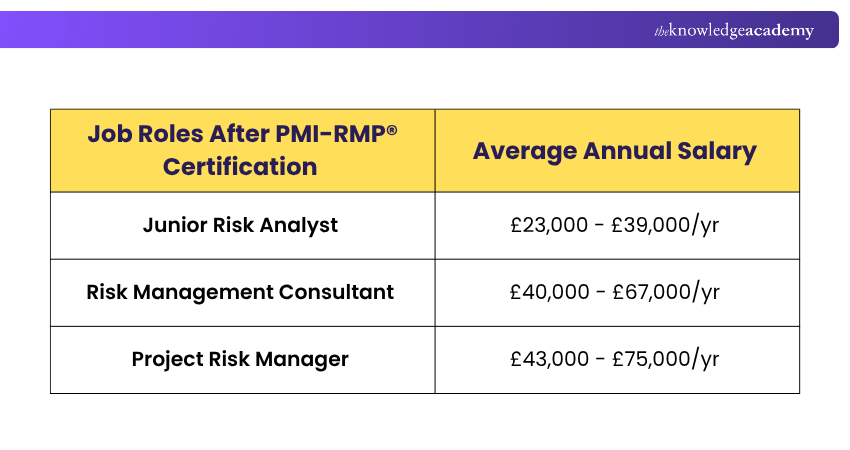
Source: Glassdoor
2) PMI-RMP® Salary in the United States
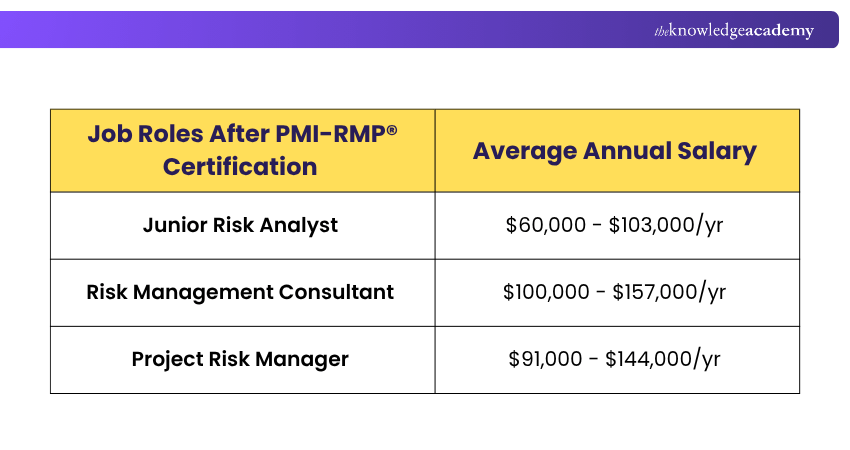
When comparing opportunities in the USA, read the job description for the type of risk you’ll handle. A Risk Management Consultant might assess whether a supplier's delay could push back a project milestone, while another role with the same title might focus on regulatory controls.
If you’re pursuing a project risk career, look for responsibilities tied to project delivery. Let's look at the annual salary ranges below:
3) PMI-RMP® Salary in India
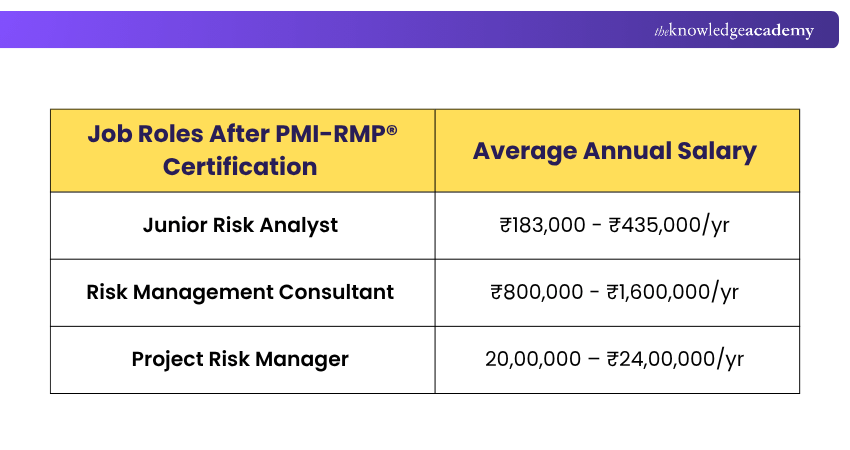
Use the India salary ranges as a starting point, then check how each employer structures its offer. If a recruiter quotes an annual cost to the company (CTC), ask for a breakdown of fixed pay, performance-linked pay, and employer contributions. Two offers with similar CTC figures can differ in how much fixed pay you receive, so compare that figure first.
Learn to turn project uncertainty into confident decisions by joining the Project Risk Management Course now!
Factors Affecting PMI-RMP® Salary
Start with the salary band for the role you want, then look at what the employer expects within that band. These factors can help you navigate where your experience fits:
a) Relevant Project Experience: Employers value experience in managing project risks independently. Monitoring risks, following up on responses and identifying remaining exposure demonstrate practical risk management skills.
b) Technical Risk Analysis Skills: Some roles require quantitative analysis to assess potential cost and schedule impacts. Being able to explain your assumptions and findings can strengthen your suitability for these positions.
c) Industry Knowledge: Risk priorities vary by sector. Infrastructure employers may value experience with contractor delays, while technology employers may prioritise knowledge of data migration and system dependencies.
d) Employer and Contract Type: Salaried roles offer different compensation structures from contract opportunities. When comparing them, consider billable days, unpaid leave, business expenses, taxes, and benefits.
e) How the Employer Values PMI-RMP®: Check whether PMI-RMP® is essential or desirable for the role. Demonstrate how your certification knowledge and practical experience support risk assessments, workshops and response planning.
Trainer’s Insight: Agree How Progression Will Be Assessed
If an employer mentions progression during the interview, ask for a concrete example of what someone had to demonstrate to move up a grade. Then ask when that decision is reviewed. You’ll have a clearer picture of what to work towards and when to discuss a pay review.

The Knowledge Academy develops accessible learning content across Project Management, IT, Cybersecurity, Data Science, Business Analysis, HR, Accounting and Finance, Leadership and Health and Safety. Its resources combine subject research with clear explanations to help professionals build practical knowledge across a wide range of disciplines.
View Detail

 If you wish to make any changes to your course, please


