




We may not have the course you’re looking for. If you enquire or give us a call on 01344203999 and speak to our training experts, we may still be able to help with your training requirements.
PMP® Audit Process: A Step-by-Step Guide
ByThe Knowledge AcademyLast updated on: 26 November 2026
This blog explains the PMP® audit process, including documentation requirements, submission deadlines, PMI review timelines, common audit issues and post-audit next steps.
Overview
1. PMP® applications can be selected for audit before the certification fee is paid.2. PMI allows 90 days to submit the requested audit documentation.3. The audit can verify education, professional experience and training records.4. PMI generally reviews complete audit packages within 5–7 business days.5. The one-year PMP® exam eligibility period begins when PMI confirms successful audit completion.
Imagine preparing for your PMP® exam, only to receive an unexpected audit notification from PMI. Suddenly, questions about documents, verification and deadlines can make the certification journey feel overwhelming.
However, a PMP® audit follows a defined verification process, so understanding each requirement can help you avoid unnecessary delays.
To help you navigate this process, this blog walks you through the audit stages, required documents and common mistakes to avoid. It also explains how to prepare and what happens after your audit is complete.
PMP® Audit Process: Step by Step
The PMP® audit process begins with submitting your certification application to the Project Management Institute (PMI). If selected, you must provide supporting documents for verification before continuing with your certification. The following steps explain each stage, from application submission to receiving your audit results.
Step 1: Submit Your PMP® Application
Start by creating an account or signing in to the official PMI website and completing your PMP® certification application. Provide accurate information about your educational qualifications, project management experience and professional training.
For each project, include the required details about its objectives, duration, your responsibilities and the outcomes achieved. Record each project separately and avoid counting overlapping experience periods more than once. Review the information carefully to make sure it meets PMI's eligibility requirements before submitting your application.

Step 2: Receive the Audit Notification
After you submit your application, PMI determines whether your application is selected for an audit. If selected, you will receive an email notification before paying the certification fee.
The notification explains the verification requirements and provides instructions for completing the audit through your PMI account. Since selection is primarily random, receiving an audit notification does not mean your application contains errors. PMI also reserves the right to audit candidates at other stages, including after certification has been awarded.
Step 3: Gather Your Documentation
Once selected, gather the supporting documents specified in your audit package. PMI can request copies of your diploma or degree, experience verification from supervisors or managers, and certificates or letters supporting the required project management education.
Check that each document is accurate and consistent with the information in your PMP® application before submission.
Step 4: Submit Your Documents Within 90 Days
PMI provides 90 days to submit the supporting documentation requested during the audit. Access your audit package through your myPMI dashboard and follow the instructions to complete the verification process.
Before submitting, confirm that all required documents are included, the information is consistent, and the necessary experience verifications have been completed. Submit the complete audit package within the deadline to avoid an unsuccessful audit and delays in your certification journey.
Step 5: PMI's Audit Review Process
After receiving your completed audit package, PMI reviews the submitted documents to verify your eligibility for PMP® certification. The review checks whether your academic qualifications, professional experience and training evidence satisfy the required criteria.
According to PMI, the audit generally takes approximately five to seven business days to complete when all necessary documentation has been received. Any additional verification requirements can affect the overall timeline. During this period, your certification application remains on hold until the audit is completed.
Keep This in Mind
The 90-day deadline applies to your document submission, not PMI's review. Allow enough time to obtain supervisor verification and resolve missing records before submitting your audit package.
Step 6: Get Your Audit Results
Once the review is complete, PMI informs you of the outcome of your audit. The result determines whether you can proceed with the PMP® certification process or must address an unsuccessful audit.
There are two possible outcomes:
If You Pass: Proceed with Your PMP® Application
After successfully completing the audit, your certification application can proceed. Your one-year exam eligibility period begins when PMI notifies you of your successful audit. You can then pay the applicable certification fee and continue toward scheduling your PMP® exam.
Quick Check: After Passing Your PMP® Audit
□ Have you received confirmation that your audit was successful?□ Have you paid the applicable PMP® certification fee?□ Have you checked your one-year exam eligibility period?□ Have you reviewed PMI's examination scheduling instructions?□ Have you planned your exam date and preparation timeline?
Completing these steps helps you plan your PMP® examination within your eligibility period.
If You Fail: Your Options and Next Steps
If your audit is unsuccessful, review the outcome and contact PMI for clarification where necessary. Under PMI's current policy, failing to fulfil the audit requirements or choosing not to comply results in a one-year suspension before you can reapply. Use this period to review your eligibility and prepare accurate supporting documentation for a future application.
If you believe the audit decision warrants review, PMI provides a certification appeals process for failed audits. Submit your appeal in writing to certappeals@pmi.org within 30 days of the relevant event or decision, including your name, email address, reasons for appealing and supporting evidence.
Strengthen your project management knowledge with the PMP® Certification Training Course – Register now!
Essential Documents for the PMP® Audit
Preparing the correct documents is essential for completing the PMP® audit process successfully. PMI requires applicants selected for an audit to provide evidence supporting the qualifications and experience declared in their applications. These records help verify that candidates meet the eligibility criteria for certification.
The following documents form the main requirements for the PMP® audit. Ensure each document is accurate, readable and consistent with your application before submitting it for review.
1) Copy of Your Diploma or Degree
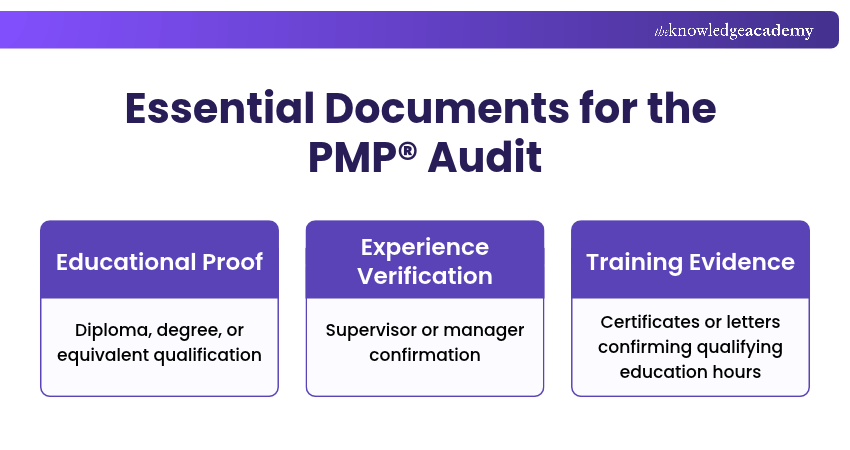
Provide a clear copy of your diploma, degree certificate or equivalent educational qualification. The document should verify the education level stated in your PMP® application. Ensure the qualification details are readable and correspond with the information submitted to PMI.
2) Professional Experience Verification
Obtain the required experience verification from supervisors or managers who can verify the professional project management experience listed in your application. Follow the verification instructions in your PMI audit package and ensure that the details accurately reflect your project responsibilities and experience.
3) Contact Hours Certificates
Submit copies of training certificates or letters from training providers for the courses used to meet the required 35 hours of project management education. These records should confirm the relevant course details and completed training hours.
Applicants using an active CAPM® certification to satisfy the training requirement should follow PMI's specific audit instructions.
Note: From 1 December 2026, live instructor-led PMP training must meet PMI's updated provider eligibility requirements. Training completed before this date remains eligible under the requirements that applied when it was completed. Candidates should verify that their training meets PMI's requirements before applying.
Build core project management skills with the CAPM® Certification Training – Sign up today!
How to Prepare for a PMP® Audit
Preparing for a PMP® audit involves anticipating verification requirements and making arrangements before an audit notification arrives. These practices can help you respond efficiently if your application is selected.
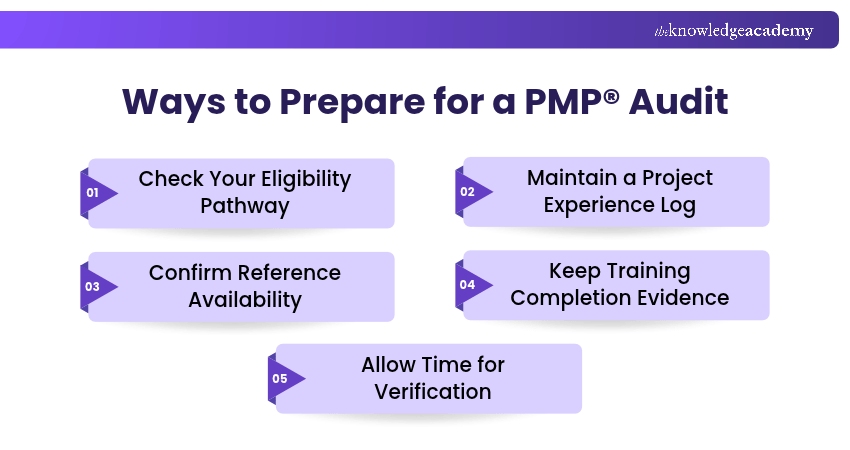
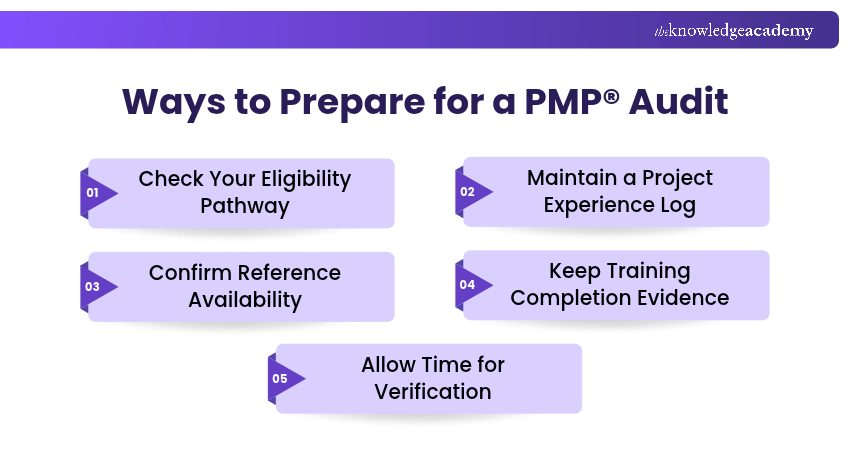
a) Check Your Eligibility Pathway: Identify the education and professional experience requirements that apply to your PMP® application.
b) Maintain a Project Experience Log: Record project dates, your responsibilities and the supervisors who can confirm your involvement.
c) Confirm Reference Availability: Contact former supervisors or managers to ensure they can respond to verification requests.
d) Keep Training Completion Evidence: Retain certificates showing completed project management education and the relevant training hours.
e) Allow Time for Verification: Consider how long it may take to contact previous employers or retrieve older records before submitting your application.
Trainer’s Pro Tip
Keep a copy of your submitted PMP® application and compare each project description, date and training record with the corresponding audit evidence before submission.
Common Reasons PMP® Audits Fail
Missing documents, inconsistent information or incomplete verification can cause problems during a PMP® audit. If these issues remain unresolved, candidates may be unable to meet PMI's requirements. Understanding these potential problems helps applicants prepare accurate submissions and avoid delays.
a) Incomplete or Missing Documents: Missing academic certificates, training records or supporting evidence can prevent PMI from verifying your eligibility.
b) Inconsistent Dates or Project Details: Incorrect dates, conflicting project information or mismatched qualifications can raise verification concerns.
c) Unsigned or Unverified Experience: Missing supervisor signatures or incomplete experience verification can leave your project management experience unsupported.
d) Missing the 90-Day Deadline: Failing to submit the required audit documentation within PMI's 90-day period can result in an unsuccessful audit and a one-year suspension before reapplying.
Understanding the PMP® audit requirements and preparing accurate documentation can help you avoid unnecessary delays. Once you successfully complete the audit, you can focus on your PMP® exam preparation and make the most of your eligibility period.
Bridge your project management knowledge gaps and understand the latest PMBOK® Guide updates with the PMP® Bridge Training – Join now!

The Knowledge Academy develops accessible learning content across Project Management, IT, Cybersecurity, Data Science, Business Analysis, HR, Accounting and Finance, Leadership and Health and Safety. Its resources combine subject research with clear explanations to help professionals build practical knowledge across a wide range of disciplines.
View Detail

 If you wish to make any changes to your course, please


