


 Top Rated Course

We may not have the course you’re looking for. If you enquire or give us a call on 01344203999 and speak to our training experts, we may still be able to help with your training requirements.
How to Pass the Azure Fundamentals Certification Exam (AZ-900)?
Richard Harris 28 August 2026This blog covers the current exam format, skills measured, preparation strategies, common mistakes and exam-day tips to help you prepare effectively.
Training Outcomes Within Your Budget!
We ensure quality, budget-alignment, and timely delivery by our expert instructors.
Table of Contents
Related Courses
Key Takeaways
1. AZ-900 is a fundamentals-level exam covering foundational Microsoft Azure and cloud knowledge.2. Effective preparation focuses on understanding concepts and services rather than memorising terminology.3. Azure Architecture and Services currently carries the highest exam weightage at 35–40%.4. Candidates need a scaled score of 700 or higher to pass the exam.5. Understanding concepts, practising regularly and reviewing weaker areas are important parts of AZ-900 preparation.
Your friend asks, "How is the AZ-900 preparation going?"
You say, "Pretty good."
Then comes the dangerous follow-up:
"So, are you ready for the exam?"
...Maybe?
That uncertainty is exactly where a good preparation strategy matters. Being exam-ready is about more than how many hours you have studied. It depends on whether you understand the key concepts, know your weaker areas and can apply what you have learned.
This blog explains How to Pass Azure Fundamentals Certification Exam (AZ-900) and helps you turn that "maybe" into a much more confident answer.
What is the Microsoft Azure Fundamentals (AZ-900) Exam?
The Microsoft Azure Fundamentals (AZ-900) exam assesses foundational knowledge of cloud computing and Microsoft Azure. It covers cloud concepts, Azure architecture and services and Azure management and governance.
It is designed for candidates who want to demonstrate foundational knowledge of Microsoft Azure and cloud concepts. There are no formal prerequisites, although familiarity with an area of IT, such as infrastructure, databases or software development, can support preparation.
Passing the AZ-900 exam earns the Microsoft Certified: Azure Fundamentals Certification. Although AZ-900 can provide a useful foundation for further Azure learning, it is not a prerequisite for Microsoft's role-based Azure certifications.
AZ-900 Exam Format and Details
Understanding the exam structure can help you plan your preparation and know what to expect.
|
Exam Detail
|
Information
|
|
Exam Code
|
AZ-900
|
|
Certification
|
Microsoft Certified: Azure Fundamentals
|
|
Level
|
Beginner
|
|
Prerequisites
|
No formal prerequisites
|
|
Exam Time
|
45 minutes
|
|
Typical Number of Questions
|
Usually 40–60, although this can vary
|
|
Passing Score
|
700 or higher on a scaled scoring system
|
|
Delivery
|
Proctored certification exam
|
The number of questions and other exam details can change, so candidates should check the current exam information before scheduling their test.
Did You Know?
A passing score of 700 is a scaled score. It does not necessarily mean you need to answer 70% of the questions correctly.
AZ-900 Skills Measured and Weightage
Understanding the AZ-900 exam weightage can help you organise your study time and focus on the areas that carry greater emphasis. The exam currently covers three main skill areas:
|
AZ-900 Skill Area
|
Weightage
|
|
Describe Cloud Concepts
|
25–30%
|
|
Describe Azure Architecture and Services
|
35–40%
|
|
Describe Azure Management and Governance
|
30–35%
|
1) Describe Cloud Concepts (25–30%)
This area assesses your understanding of fundamental cloud computing concepts, including:
a) Cloud computing and shared responsibility
b) Public, private and hybrid cloud models
c) Consumption-based pricing and serverless computing
d) Availability, scalability, reliability, security and governance
e) IaaS, PaaS and SaaS with their use cases
Focus on understanding how these concepts differ and when different cloud models and service types may be appropriate.
2) Describe Azure Architecture and Services (35–40%)
This area covers Azure's architecture and the core services available within the platform. Important topics include:
a) Azure regions, availability zones and datacentres
b) Resources, resource groups, subscriptions and management groups
c) Compute, virtual machines, containers and networking
d) Storage and migration services
e) Microsoft Entra ID, authentication and Conditional Access
f) RBAC, Zero Trust, defence-in-depth and Microsoft Defender for Cloud
Rather than simply memorising service names, understand the purpose of each service and the type of requirement it addresses.
3) Describe Azure Management and Governance (30–35%)
This area focuses on how Azure environments, resources, costs and policies are managed. Topics include:
a) Azure costs, pricing tools and Cost Management
b) Resource tags, Microsoft Purview, Azure Policy and resource locks
c) Azure portal, Cloud Shell, CLI and PowerShell
d) Azure Arc, Infrastructure as Code and ARM templates
e) Azure Advisor, Service Health and Azure Monitor
f) Log Analytics, alerts and Application Insights
Pay attention to the purpose of management and governance capability and the differences between related Azure tools.
Attain proficiency in deploying and managing Azure storage and networking solutions with the Microsoft Azure Administrator AZ104 Training - Register now!
How to Prepare for the AZ-900 Exam?
Passing AZ-900 requires more than memorising Azure terminology. Your preparation should focus on understanding cloud concepts, recognising the purpose of Azure services and distinguishing between related technologies.
Here are six practical steps that can help you prepare:
1) Understand the Exam Objectives
Start by reviewing the current AZ-900 skills measured. Divide the syllabus into its three main domains and identify the individual concepts covered within each area.
Using the exam objectives as a study checklist can help you stay focused and avoid spending unnecessary time on topics outside the scope of AZ-900.
2) Create a Study Plan
Divide your available preparation time across the three exam domains. Consider both their exam weightage and your existing level of knowledge.
Set smaller study goals rather than trying to cover everything at once. For example, complete cloud concepts before progressing to Azure architecture, services and governance.
Study Tip
Use the weightage to guide your preparation, not to decide what to skip. All three skill areas can contribute to your final exam score.
3) Understand Core Azure Concepts
Focus on understanding what Azure services and cloud concepts mean, how they work at a foundational level and why they are used.
Pay particular attention to concepts that can be easily confused:
a) IaaS vs PaaS vs SaaS
b) Regions vs availability zones
c) Authentication vs authorisation
d) Resource groups vs subscriptions
e) Azure Policy vs resource locks
f) Azure Advisor vs Azure Monitor
g) Public vs private endpoints
Learning through comparison can make these differences easier to understand and remember.
4) Gain Practical Familiarity with Azure
Advanced implementation experience is not required for a fundamental level exam. However, gaining practical familiarity with Azure can help connect theoretical concepts with their real-world context.
Become familiar with how resources, resource groups, subscriptions and management tools are organised. Seeing these concepts within Azure can make them easier to understand.
5) Take Practice Assessments
Practice assessments can help you evaluate your understanding and identify knowledge gaps before the actual exam.
Do not focus only on your score. Review incorrect answers and understand why your chosen option was wrong. This turns practice questions into an active learning exercise.
Trainer's Insight
Treat every incorrect practice answer as a diagnostic clue. Identify the concept behind the mistake, review it and test yourself again instead of simply memorising the correct answer.
6) Review Your Weak Areas
Use practice results to identify topics that need additional attention. If you repeatedly struggle with areas such as networking, governance or cloud service models, return to those concepts before attempting another assessment.
Continue reviewing until you can explain the major concepts confidently rather than simply recognise their definitions.
Common AZ-900 Preparation Mistakes to Avoid
Even with enough study time, certain preparation habits can make the process less effective. Common mistakes include:
1) Using Outdated Exam Objectives: Always check that your preparation material reflects the current AZ-900 skills measured.
2) Memorising Without Understanding: Learn what Azure services do and how similar services or concepts differ.
3) Ignoring Exam Weightage: Use the domain percentages to help prioritise your study time.
4) Skipping Practice Assessments: Practice can reveal knowledge gaps that may not be obvious during regular study.
5) Studying Advanced Topics Unnecessarily: AZ-900 focuses on fundamentals, so prioritise the concepts included within its current scope.
Avoiding these mistakes can make your preparation more focused and prevent you from spending valuable study time on less relevant areas.
AZ-900 Exam-day Tips
Good preparation should be supported by a sensible approach on exam day. Keep these tips in mind:
1) Complete any required check-in procedures early.
2) Read each question carefully before answering.
3) Look for keywords that affect what the question is asking.
4) Keep track of your available time.
5) Avoid spending too long on one difficult question.
6) Use available review functionality where appropriate.
7) Focus on the Azure concept being tested rather than overthinking the scenario.
The goal is to manage your time effectively while applying the knowledge you have developed during preparation.
Benefits of Earning the Azure Fundamentals Certification
Earning the Azure Fundamentals Certification can provide several benefits for candidates beginning or strengthening their cloud learning journey:
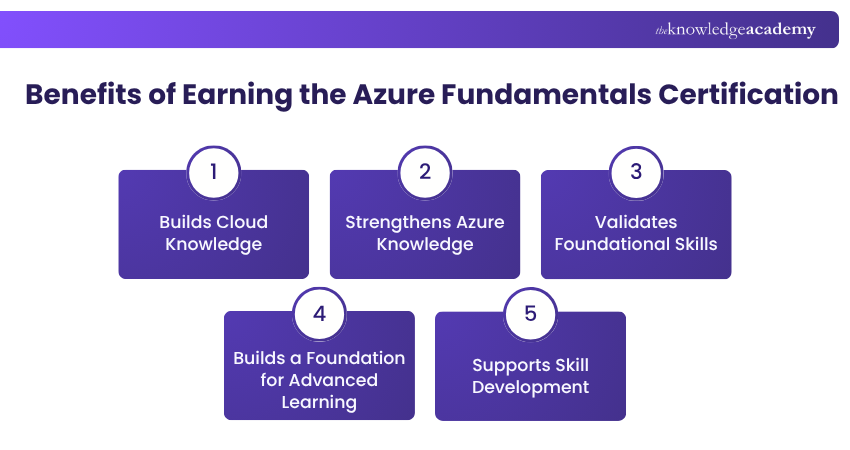
1) Builds Cloud Knowledge: Develops an understanding of cloud models, services and fundamental concepts.
2) Strengthens Azure Knowledge: Introduces Azure architecture, services, identity, security, management and governance.
3) Validates Foundational Skills: Earning the certification demonstrates foundational knowledge of Microsoft Azure.
4) Supports Further Azure Learning: Provides a foundation that can make more specialised Azure topics easier to approach.
Conclusion
Understanding How to Pass Azure Fundamentals Certification Exam (AZ-900) begins with knowing the exam objectives and following a focused preparation strategy. Build a strong foundation in cloud and Azure concepts, practise regularly and review weaker areas before exam day. With consistent preparation, you can approach the AZ-900 exam with greater confidence.
Learn how to design scalable and flexible solutions on Azure with the Microsoft Azure Certification Training – Join now!
Frequently Asked Questions
How Difficult is the AZ-900 Exam for Beginners?

The difficulty depends on your existing cloud knowledge and preparation. As a fundamentals-level exam, AZ-900 focuses on foundational concepts rather than advanced Azure implementation. Beginners can prepare effectively by following the current exam objectives and practising regularly.
Do I Need Coding Skills to Pass AZ-900?
No specific programming skills are required. AZ-900 focuses on foundational cloud concepts, Azure architecture and services, and Azure management and governance rather than programming ability.
How do I Know if I Am Ready for the AZ-900 Exam?
You may be ready when you can explain the main exam objectives without relying heavily on notes, distinguish between commonly confused Azure concepts and use practice assessments to identify and address remaining knowledge gaps.
Should I Memorise Azure Services for AZ-900?
Rather than memorising service names alone, focus on understanding what key Azure services do, when they may be used and how they differ from related services.

Richard Harris


Senior Full Stack Developer and Technology Educator
Richard Harris is a highly experienced full-stack developer with deep expertise in both frontend and backend technologies. Over his 12-year career, he has built scalable web applications for startups, enterprises and government organisations. Richard’s writing combines technical depth with clear explanations, ideal for developers looking to grow in modern frameworks and tools.


 If you wish to make any changes to your course, please


