Who Should Attend This Corporate Credit Analysis Training Course?
This Corporate Credit Analysis Training Course is ideal for individuals with a keen interest in expanding their knowledge of credit risk evaluation, financial statement interpretation, and corporate lending practices. It is particularly beneficial for:
- Credit Analysts and Credit Risk Officers
- Corporate and Commercial Bankers
- Relationship Managers and Lending Officers
- Investment and Portfolio Analysts
- Treasury and Finance Professionals
- Internal Auditors and Compliance Officers
- Risk Management and Underwriting Professionals
- Professionals aspiring to roles in corporate credit evaluation and approval
Prerequisites of Corporate Credit Analysis Training Course
There are no formal prerequisites to attend this Corporate Credit Analysis Training Course.
Corporate Credit Analysis Training Course Overview
Corporate Credit Analysis is the process of evaluating a company's financial health, risk profile, and ability to meet its debt obligations. It is a critical function for ensuring sound lending decisions and maintaining the stability of financial institutions. This training enables organisations to strengthen credit risk frameworks and reduce exposure to potential defaults. For individuals, it provides a structured approach to assessing creditworthiness using both financial and non-financial indicators. Delegates benefit from enhanced career prospects in credit risk, corporate banking, and financial analysis roles.
In this course, delegates will learn how to assess corporate borrowers by analysing financial statements, calculating key credit ratios, and evaluating cash flow strength. They will explore both quantitative and qualitative factors such as industry conditions, governance, business models, and regulatory considerations. The course covers credit risk methodologies, internal and external rating approaches, covenant structuring, and early warning signals for deteriorating credit quality. Delegates will also gain an understanding of credit documentation, pricing strategies, and legal implications. By the end of the training, participants will be equipped with the analytical skills and judgement required to make informed credit decisions and manage corporate lending exposures effectively.
Course Objectives
- To understand the fundamentals of corporate credit risk analysis
- To evaluate financial statements for assessing borrower creditworthiness
- To interpret key financial ratios and credit performance indicators
- To analyse qualitative factors including industry, governance, and business models
- To assess internal and external credit rating methodologies and frameworks
- To structure and price corporate credit facilities with risk alignment
- To identify early warning signals of financial stress and default
- To understand legal documentation and covenant structures in credit agreements
Delegates will be able to conduct comprehensive credit assessments of corporate borrowers using both quantitative and qualitative analysis techniques. They will be equipped to evaluate financial statements, calculate credit ratios, and assess cash flow reliability. Delegates will also understand how to factor in management quality, market dynamics, and regulatory risks when determining creditworthiness. Additionally, they will gain insight into rating systems, pricing structures, and legal considerations associated with corporate lending. This training will empower participants to make sound credit decisions, contribute to effective risk management, and support institutional credit approval processes with greater confidence.
Corporate Credit Analyst Career Path
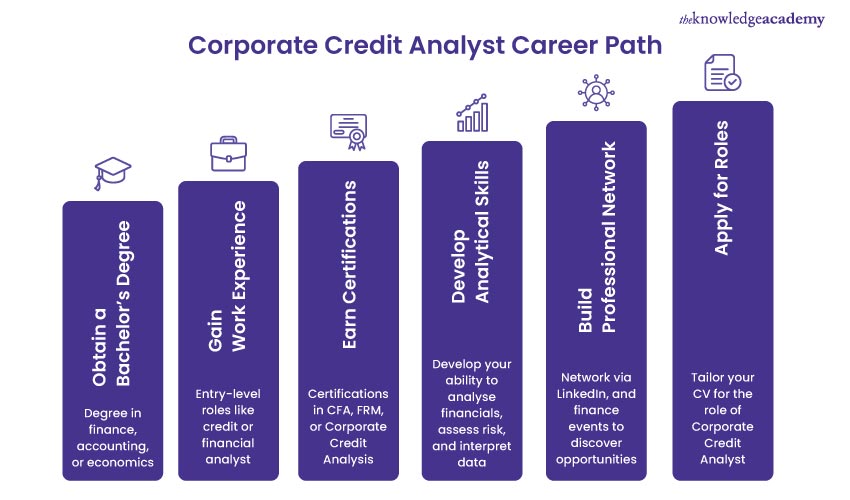
The Corporate Credit Analyst Career Path has few key milestones required to enter and grow in this specialised finance role. Whether you're just starting out or planning your next move, this roadmap simplifies the journey into six essential steps.
- Earn a Degree: Begin with a bachelor's degree in finance, accounting, or economics to build your foundational knowledge.
- Gain Experience: Start in an entry-level role such as a credit analyst or financial analyst to gain practical exposure.
- Pursue Certifications: Enhance your credibility with certifications like CFA, FRM, or Corporate Credit Analysis.
- Strengthen Analytical Skills: Learn to assess risk, analyse financial statements, and interpret data for better decision-making.
- Network Professionally: Connect via LinkedIn and attend finance-related events to grow your industry presence.
- Apply for Roles: Tailor your CV and begin applying for Corporate Credit Analyst positions in banks, credit agencies, and corporates.





 If you miss out, enquire to get
yourself
on the waiting list for the next day!
If you miss out, enquire to get
yourself
on the waiting list for the next day!













 If you wish to make any changes to your course, please


