


We may not have the course you’re looking for. If you enquire or give us a call on 01344203999 and speak to our training experts, we may still be able to help with your training requirements.
Talent Manager Job Description: Skills and Qualifications
ByThe Knowledge AcademyLast updated on: 10 November 2026
A Talent Manager supports career development in entertainment or manages employee talent within organisations. Explore the responsibilities, essential skills and qualifications required for both roles, along with a practical job description example.
At a Glance
1. Role Overview: Talent Managers manage talent development in corporate settings or guide the professional growth of artists and entertainers.2. Key Responsibilities: Entertainment roles involve client representation and career planning, while HR roles focus on employee development, succession planning and retention.3. Essential Skills: Communication, relationship management, strategic planning, problem-solving and industry knowledge.4. Qualifications: Relevant experience and qualifications vary between entertainment management and HR talent management.
What does it take to identify potential and support professional growth? Then, becoming a Talent Manager could be a rewarding path for you! They provide valuable guidance, identify opportunities and help individuals make important career decisions.
From managing professional relationships to developing long-term career strategies, their work plays an important role in helping people achieve their goals. Continue reading this blog to explore the Talent Manager job description and familiarise yourself with the expectations of working in this field.
Who is a Talent Manager?
A Talent Manager is a professional who helps individuals develop their capabilities, explore career opportunities and achieve professional goals. Depending on the industry, the role may involve representing creative professionals or managing employee talent within an organisation.
In Human Resources, Talent Managers help organisations identify, develop and retain employees while supporting workforce planning and succession management. In entertainment, they work with artists, actors, musicians and other creative professionals to support career planning, professional relationships and suitable opportunities.

Responsibilities of a Talent Manager
Talent Managers help maximise individuals' career growth by providing strategic guidance, identifying opportunities and managing professional relationships. Their key responsibilities include:
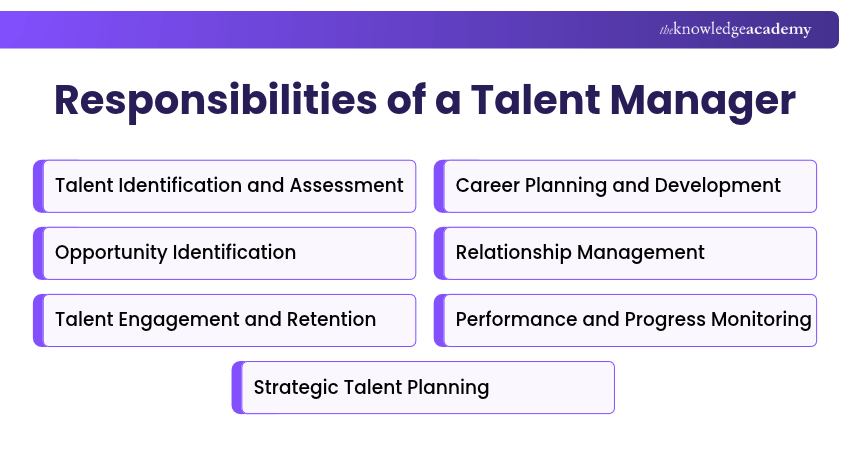
1) Talent Identification and Assessment
Talent Managers identify individuals with relevant skills, abilities and potential. They assess experience, achievements and development needs to determine suitable opportunities and areas for improvement.
2) Career Planning and Development
Talent Managers support individuals in setting professional goals and planning their career progression. They provide guidance, identify development opportunities and help individuals build the skills needed for future responsibilities.
3) Opportunity Identification
Talent Managers identify suitable career opportunities, projects and professional collaborations. They assess available opportunities against individuals' skills, interests and long-term career goals to support informed decisions.
4) Relationship Management
Talent Managers build and maintain professional relationships with individuals, employers, industry contacts and other relevant stakeholders. These connections help improve communication, strengthen collaboration and create opportunities for career development.
5) Talent Engagement and Retention
Talent Managers support efforts to maintain strong professional relationships and encourage continued engagement in career development. Depending on their role, they may address career concerns, recommend development opportunities and support employee retention or long-term client relationships.
6) Performance and Progress Monitoring
Talent Managers monitor professional development and progress towards established goals. They review achievements, identify areas requiring improvement and coordinate feedback or performance reviews where appropriate to support continued growth.
7) Strategic Talent Planning
Talent Managers develop strategies that align individuals' capabilities and career aspirations with available opportunities or organisational requirements. They consider changing industry demands, emerging skill requirements and long-term objectives when planning talent development activities.
Gain a strong understanding of modern HR practices with HR Course – Sign up soon!
Essential Skills of a Talent Manager
Talent Managers need strong interpersonal, business and organisational abilities to guide their clients effectively. Some of the most important skills include:
1) Communication Skills: Talent Managers communicate clearly with individuals and stakeholders to understand expectations, provide feedback and maintain effective professional relationships.
2) Relationship Management: They build trust, maintain professional connections and collaborate with stakeholders to support talent development and career opportunities.
3) Strategic Planning: They assess individual strengths and career goals to develop plans that support long-term growth and organisational objectives.
4) Negotiation Skills: Talent Managers may use negotiation skills to discuss opportunities, manage differing expectations and support mutually beneficial arrangements, depending on their responsibilities.
5) Organisational Skills: They manage priorities, coordinate activities and maintain records to ensure responsibilities are completed efficiently.
6) Adaptability: They adjust strategies to changing industry demands, emerging opportunities and evolving professional requirements.
7) Problem-solving Skills: They identify challenges, evaluate solutions and recommend practical actions to support professional development.
8) Industry Knowledge: They understand industry trends, skill requirements and market opportunities to make informed talent management decisions.
Pro Tip
Maintain accurate records of professional skills, development goals, opportunities and important follow-ups, where appropriate. Review this information regularly to support career planning and informed talent management decisions, while protecting personal information.
Qualifications Required to Become a Talent Manager
There are no universal educational requirements for becoming a Talent Manager. However, relevant qualifications and practical experience can help professionals build the knowledge needed for this role. Useful qualifications, experience and areas of knowledge include:
a) A degree in business, human resource management, communications, public relations or a related field may be beneficial.
b) Previous experience in HR, learning and development, talent management, marketing or a related industry is valuable.
c) Knowledge of relevant industry practices, talent development methods and professional agreements or client representation, where applicable.
d) Familiarity with career planning, talent assessment, professional networking and relevant business or organisational practices.
e) Relevant training in negotiation, communication or management can support professional development.
Build the capabilities required to lead talent acquisition with the Chief Human Resources Officer (CHRO) Training - Join today!
Talent Manager Job Description Example
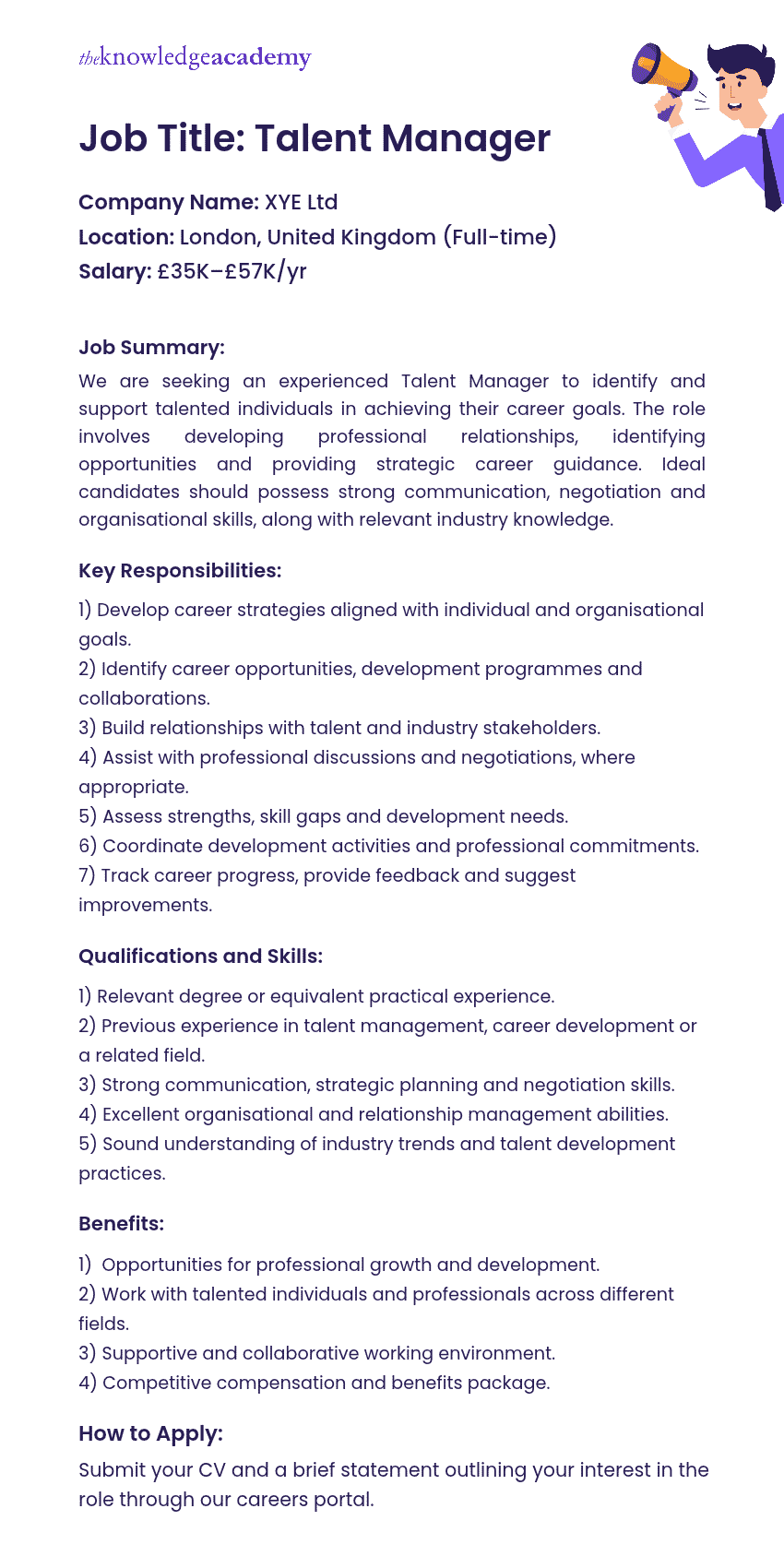
The following example illustrates how organisations can outline the responsibilities and qualifications required when hiring a Talent Manager:

The Knowledge Academy develops accessible learning content across Project Management, IT, Cybersecurity, Data Science, Business Analysis, HR, Accounting and Finance, Leadership and Health and Safety. Its resources combine subject research with clear explanations to help professionals build practical knowledge across a wide range of disciplines.
View Detail

 If you wish to make any changes to your course, please


