




We may not have the course you’re looking for. If you enquire or give us a call on 01344203999 and speak to our training experts, we may still be able to help with your training requirements.
NEBOSH Career Path: Explained in Detail
ByThe Knowledge AcademyLast updated on: 23 November 2026
Explore NEBOSH jobs, career progression and the qualifications that support professional growth. Discover the responsibilities and experience needed for different health and safety roles and practical steps to build your career.

What's in This Guide?
1. Career Path: Understand four possible stages of occupational health and safety career progression.2. Job Opportunities: Explore seven health and safety roles and their key responsibilities.3. Essential Skills: Discover the practical and interpersonal skills that support career growth.4. Career Development: Learn five practical steps to build your career with NEBOSH qualifications.
Construction sites operate safely.
A manufacturing plant reduces workplace hazards.
An organisation strengthens its safety culture.
Behind these outcomes are professionals making important decisions every day.
But who are these professionals, and how do they build their careers?
The NEBOSH career path provides opportunities across industries where occupational health and safety expertise matter. This blog explores the available jobs, career routes, and professional development opportunities. Let's get started!
NEBOSH Career Path and Progression Stages
A career in occupational health and safety can develop through several stages, depending on professional experience, qualifications, and industry requirements. The following stages illustrate a possible NEBOSH career progression route.
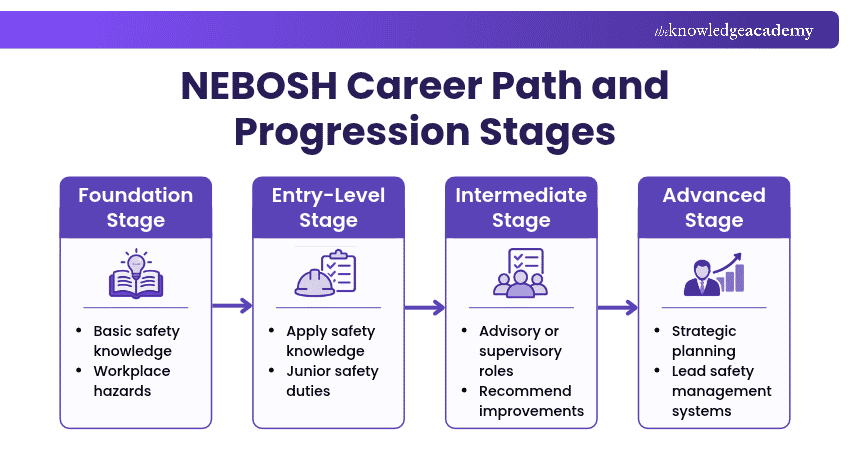
1) Foundation Stage
This stage focuses on gaining an understanding of workplace hazards and basic safety practices. The NEBOSH Health and Safety at Work Award can provide an introduction for individuals exploring the field or taking on initial safety responsibilities.

2) Entry-level Stage
At this stage, individuals begin applying occupational health and safety knowledge in practical workplace situations. The NEBOSH National General Certificate or International General Certificate in Occupational Health and Safety can support those pursuing junior safety positions.
3) Intermediate Stage
Professionals with relevant experience can move into advisory or supervisory positions. These roles involve greater responsibility for evaluating safety performance, recommending improvements, and supporting organisational risk management.
4) Advanced Stage
Senior positions involve strategic planning, organisational leadership and oversight of safety management systems. Experienced professionals can advance into managerial or leadership roles by strengthening their risk management expertise, developing leadership skills and gaining practical experience in complex workplace safety operations.
Pro Tip
Career progression does not always follow a fixed sequence. Reviewing the qualifications and experience requested in job advertisements can help identify the most suitable development route.
Top Career Opportunities After NEBOSH
NEBOSH qualifications are relevant to various occupational health and safety careers. However, the responsibilities and entry requirements differ depending on the industry, organisation and seniority of the position.
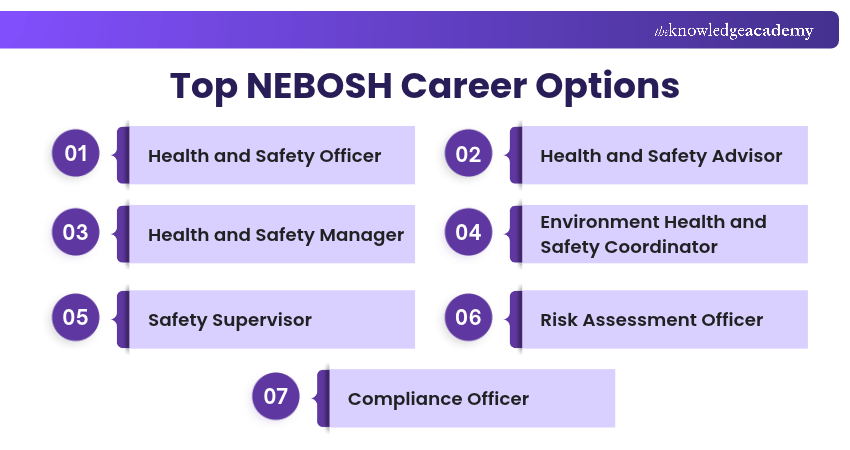
1) Health and Safety Officer
A Health and Safety Officer helps organisations implement workplace safety procedures and maintain appropriate working conditions. The position generally involves operational activities and supporting compliance with established safety requirements.
Key Responsibilities:
a) Workplace Inspections: Examine working environments to identify unsafe conditions and practices.
b) Safety Monitoring: Check whether established safety procedures are being followed.
c) Incident Documentation: Maintain records of workplace incidents, observations and corrective actions.
d) Preventive Measures: Support the implementation of controls that reduce occupational hazards.
2) Health and Safety Advisor
A Health and Safety Advisor provides professional guidance on occupational risks and helps organisations improve their approach to workplace safety. The position typically involves working with management and operational teams to interpret safety requirements and recommend suitable improvements.
Key Responsibilities:
a) Regulatory Guidance: Advise departments on applicable occupational health and safety requirements.
b) Policy Reviews: Evaluate organisational safety procedures and identify areas requiring improvement.
c) Risk Consultation: Provide recommendations for managing hazards associated with workplace activities.
d) Management Support: Help decision-makers incorporate safety considerations into operational planning.
3) Health and Safety Manager
A Health and Safety Manager oversees an organisation's approach to occupational health and safety. The position involves leadership, coordination, and accountability for maintaining effective safety management arrangements.
Key Responsibilities:
a) Safety Strategy: Develop plans that align occupational health and safety objectives with organisational priorities.
b) Management Systems: Oversee the implementation and maintenance of formal safety management processes.
c) Performance Evaluation: Review safety indicators, incident trends and organisational improvement opportunities.
d) Team Coordination: Direct safety-related activities and allocate responsibilities across relevant functions.
Learn safety essentials and make workplaces safer by signing up with the NEBOSH Award in Health and Safety at Work Training now!
4) Environment Health and Safety Coordinator
An Environmental Health and Safety Coordinator supports workplace safety and environmental management activities. The position involves coordinating safety procedures, monitoring compliance and helping organisations reduce risks to people and the environment.
Key Responsibilities:
a) Safety Coordination: Support workplace inspections, safety programmes and preventive activities.
b) Environmental Monitoring: Help monitor waste management, emissions and environmental practices.
c) Compliance Support: Assist with meeting applicable environmental and workplace safety requirements.
d) Incident Reporting: Maintain records of safety incidents, environmental concerns and corrective actions.
Bonus Tip: Explore Different Working Arrangements
Consider whether you prefer working within one organisation, supporting multiple sites or providing independent consultancy services. Each arrangement offers different opportunities for professional exposure, autonomy, and career development.
5) Safety Supervisor
A Safety Supervisor monitors daily workplace activities to ensure that employees follow established safety procedures. The position involves identifying unsafe practices, guiding workers and supporting the implementation of appropriate preventive measures.
Key Responsibilities:
a) Workplace Monitoring: Observe daily operations and identify unsafe conditions or practices.
b) Safety Guidance: Explain safe working procedures and reinforce workplace safety requirements.
c) Hazard Reporting: Report safety concerns, near misses and incidents to relevant personnel.
d) Control Implementation: Support the application of preventive measures and corrective actions.
6) Risk Assessment Officer
A Risk Assessment Officer helps organisations identify workplace hazards, evaluate potential risks and recommend appropriate control measures. The position involves examining work activities and supporting improvements that reduce the likelihood of accidents and injuries.
Key Responsibilities:
a) Hazard Identification: Examine workplace activities to identify potential health and safety risks.
b) Risk Evaluation: Assess the potential and severity of harm associated with identified hazards.
c) Control Recommendations: Suggest practical measures to eliminate hazards or reduce risks.
d) Risk Documentation: Maintain risk assessment records and review controls when workplace conditions change.
7) Compliance Officer
A Compliance Officer helps organisations meet relevant health, safety and environmental requirements. The position involves reviewing internal procedures, monitoring compliance activities and identifying areas where improvements may be necessary.
Key Responsibilities:
a) Regulatory Compliance: Monitor adherence to applicable health, safety and environmental regulations.
b) Compliance Reviews: Examine organisational procedures and identify gaps in existing practices.
c) Record Management: Maintain compliance records, inspection findings and relevant documentation.
d) Corrective Actions: Recommend improvements and monitor progress in addressing compliance issues.
Strengthen your safety skills and expand your horizons with the NEBOSH International General Certificate in Occupational Health and Safety Training – Join now!
How to Build a Career With NEBOSH Qualifications?
Building a career in occupational health and safety involves combining formal knowledge with relevant workplace experience, practical skills, and professional development. Here are some practical steps to consider:
a) Identify Your Career Goals: Consider the type of occupational health and safety work that interests you, such as general workplace safety, construction safety or environmental management.
b) Gain Practical Experience: Search for opportunities to participate in safety activities, develop risk assessment and problem-solving skills, observe operational processes, and understand how risk management works in real workplace situations.
c) Build Industry Knowledge: Develop familiarity with relevant regulations, equipment, operating conditions, and technical challenges associated with your preferred industry. Also, communication and analytical skills support better workplace safety decisions.
d) Maintain Professional Development: Keep your knowledge current by following relevant regulatory updates, industry guidance and developments in occupational health and safety practices.
e) Apply for Suitable Career Opportunities: Review job descriptions to understand employer expectations and present relevant qualifications, workplace achievements, and transferable skills in your applications.
Trainer's Insight
When preparing for a health and safety job interview, use specific examples of how you identified a hazard, evaluated a situation or contributed to a workplace improvement. This can demonstrate practical understanding more effectively than listing qualifications alone.

The Knowledge Academy develops accessible learning content across Project Management, IT, Cybersecurity, Data Science, Business Analysis, HR, Accounting and Finance, Leadership and Health and Safety. Its resources combine subject research with clear explanations to help professionals build practical knowledge across a wide range of disciplines.
View Detail

 If you wish to make any changes to your course, please


