


We may not have the course you’re looking for. If you enquire or give us a call on 01344203999 and speak to our training experts, we may still be able to help with your training requirements.
Inventory Accountant Job Description
ByThe Knowledge AcademyLast updated on: 11 November 2026
Interested in becoming an Inventory Accountant? Explore the responsibilities and skills required for this role, along with salary insights and a sample job description.
A Quick Look
1. Inventory Accountants maintain accurate inventory valuations and financial records.2. Their responsibilities include stock reconciliation, cost analysis, financial reporting and period-end activities.3. Cost accounting, inventory valuation, ERP and spreadsheet proficiency, and analytical skills are important for the role.4. Employers commonly look for accounting knowledge, relevant qualifications and attention to detail.5. Salary opportunities vary depending on experience, industry, location and job responsibilities.
For a business, managing thousands of products while maintaining accurate financial records can be a challenging task. Inventory Accountants play an important role in this process, ensuring that stock records and financial information remain accurate and consistent.
If you enjoy working with numbers and solving problems, a career in inventory accounting could be worth exploring. But what does working as an Inventory Accountant actually involve and could it be the right career path for you? Let's find out.
Who is an Inventory Accountant?
An Inventory Accountant is a finance professional responsible for monitoring, recording and reporting the financial value of an organisation's inventory. They ensure that inventory transactions are accurately reflected in accounting records and that stock valuations align with applicable accounting standards and company policies.

Responsibilities of an Inventory Accountant
Inventory Accountants perform several tasks to maintain accurate financial records and support effective inventory management. Their responsibilities commonly include:
1) Maintain Accurate Inventory Records: Record inventory transactions promptly and ensure that accounting records reflect stock movements and costs.
2) Reconcile Inventory Balances: Compare inventory ledger balances with stock records and investigate differences to maintain financial accuracy.
3) Support Physical Stock Counts: Work with warehouse teams during stock counts, review count results and investigate discrepancies.
4) Calculate Inventory Costs and Valuations: Analyse inventory costs, apply appropriate valuation methods and assess cost variances and potential write-downs for damaged, obsolete or slow-moving stock where its net realisable value falls below cost.
5) Prepare Financial Reports: Produce inventory-related reports covering stock values, cost of goods sold, inventory adjustments and other relevant financial information.
6) Assist With Period-end Closing: Support month-end and year-end accounting activities, including inventory reconciliations, adjustments and reporting.
7) Maintain Internal Controls and Compliance: Follow inventory accounting controls, help identify weaknesses in existing procedures, support audit requirements and ensure compliance with applicable accounting standards and company policies.
8) Collaborate With Other Departments: Work with warehouse, procurement and finance teams to improve inventory accuracy, resolve issues and identify cost-saving opportunities.
Pro Tip
When inventory records do not match physical stock counts, review transaction records, goods receipts and stock movements before making adjustments. Identifying the underlying cause can help prevent recurring discrepancies and maintain more reliable financial records.
Essential Inventory Accountant Skills
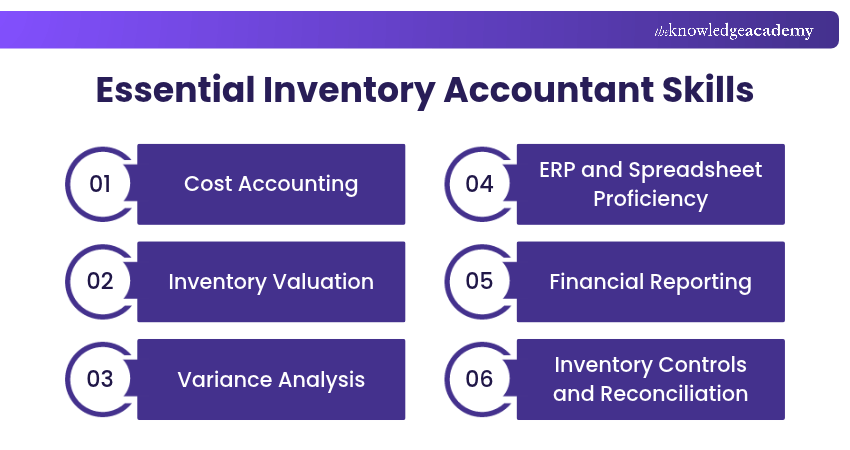
Inventory Accountants need a combination of accounting knowledge, analytical abilities and technical proficiency to manage inventory-related financial information. Here are the essential skills required for this role:
1) Cost Accounting
Cost accounting helps Inventory Accountants understand and analyse costs associated with purchasing and producing inventory, as well as relevant costs incurred in bringing it to its present location and condition. They need to understand relevant costs, including raw materials, direct labour and production overheads.
This skill supports accurate inventory costing, cost analysis and financial decision-making. It also helps Inventory Accountants identify cost differences and opportunities to improve efficiency.
2) Inventory Valuation
Inventory valuation involves determining the appropriate monetary value of stock held by a business. Inventory Accountants must understand costing methods such as First-in, First-out (FIFO), weighted average cost and specific identification for inventory items that are not ordinarily interchangeable or are allocated to specific projects.
Under International Accounting Standard (IAS) 2, inventories are usually measured at the lower of cost and net realisable value. Understanding these requirements helps Inventory Accountants prepare accurate financial information and identify when inventory values need adjustment.
Trainer's Insight
Imagine a retailer holding seasonal products that remain unsold after the peak shopping period. Even if the stock is physically undamaged, reduced demand may affect its selling value. Inventory Accountants should consider such changes when reviewing stock valuations.
3) Variance Analysis
Variance analysis helps Inventory Accountants investigate differences between expected and actual inventory costs, quantities or financial results. For example, if the recorded cost of materials differs from the actual purchase cost, the Inventory Accountant may investigate the cause.
Understanding the causes of these variances can help organisations improve cost control, correct recording errors and address operational inefficiencies.
4) ERP and Spreadsheet Proficiency
Enterprise Resource Planning (ERP) systems help businesses manage inventory transactions, purchasing information and financial records through integrated software. Inventory Accountants should be comfortable working with relevant ERP systems and spreadsheet tools such as Microsoft Excel.
These skills help them review transactions, analyse inventory data, prepare reports and reconcile financial information efficiently.
5) Financial Reporting
Financial reporting involves preparing and reviewing accurate financial information related to inventory. Inventory Accountants must understand how inventory balances, cost of goods sold and inventory adjustments affect financial statements.
They use this knowledge to prepare reports, support period-end accounting activities and provide management with reliable financial information. Strong reporting skills also help maintain consistency with applicable accounting policies and standards.
6) Inventory Controls and Reconciliation
Inventory controls and reconciliation support accurate transaction recording and help identify discrepancies in inventory records promptly. Inventory Accountants need to understand stock reconciliation procedures, transaction approvals, record verification and audit documentation.
These skills help protect inventory assets, reduce the risk of errors and support reliable financial reporting.
Learn how accounting provides the foundation for financial stability and profitability. Sign up for the Accounting Course now!
Inventory Accountant Job Description Example
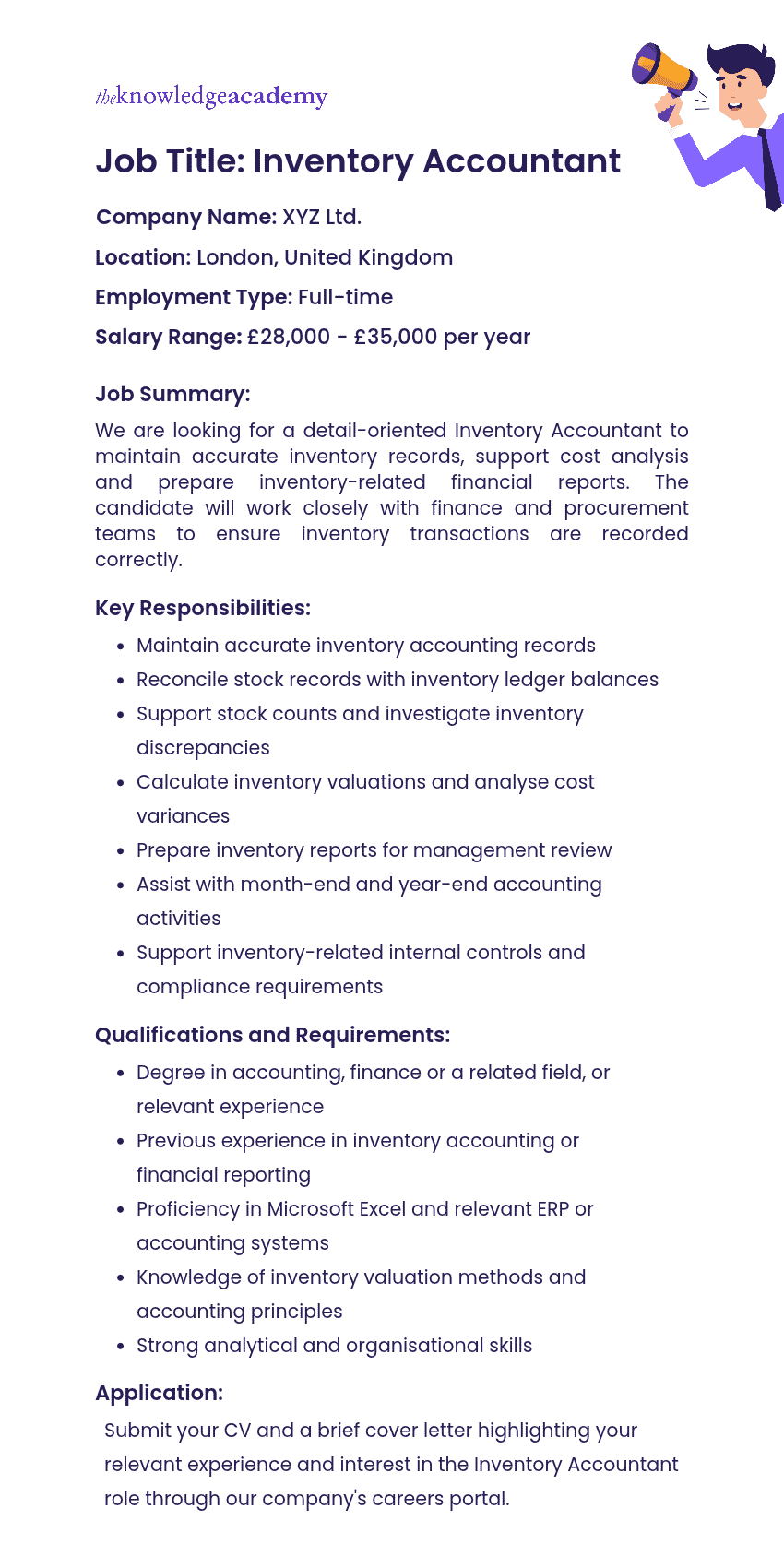
The following example illustrates how an organisation may structure an Inventory Accountant job description when recruiting a suitable candidate:
Inventory Accountant Salary
An Inventory Accountant's salary depends on several factors, including experience, qualifications, location, industry and the complexity of the organisation's inventory operations. Here are the annual salary ranges in the UK:
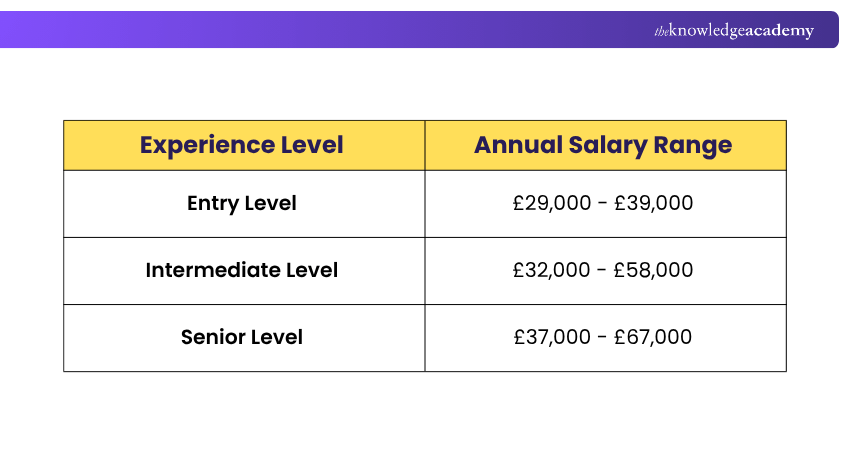
Source: Glassdoor
It's important to remember that Inventory Accountant responsibilities can vary by industry. Manufacturing businesses may emphasise production costs and work-in-progress valuation, while retail and distribution companies may focus more on stock reconciliation, inventory movements and cost of goods sold. These differences can influence the expertise employers require and the salaries they offer.
Inventory Accountant Hiring Checklist
Before publishing an Inventory Accountant job description, ensure that it:
□ Clearly defines the position and reporting relationship.□ Lists the main inventory accounting responsibilities.□ Specifies relevant accounting knowledge and qualifications.□ Identifies required ERP and spreadsheet skills.□ Includes the job location, employment type and salary range.□ States the required experience level.□ Reflects the organisation's actual inventory accounting requirements.
Maintain financial stability and support business development with the Cash Flow Management Course – Join now!

The Knowledge Academy develops accessible learning content across Project Management, IT, Cybersecurity, Data Science, Business Analysis, HR, Accounting and Finance, Leadership and Health and Safety. Its resources combine subject research with clear explanations to help professionals build practical knowledge across a wide range of disciplines.
View Detail

 If you wish to make any changes to your course, please


