


We may not have the course you’re looking for. If you enquire or give us a call on 01344203999 and speak to our training experts, we may still be able to help with your training requirements.
Data Science Career: Skills, Qualifications and Salary
ByThe Knowledge AcademyLast updated on: 12 November 2026
A data science career combines analytical thinking, programming and statistical knowledge to solve real-world problems. Explore essential skills, qualifications, job roles, salary expectations and practical steps to start and develop a career in this field.

The Gist
1. Career Options: Data science offers pathways such as Data Analyst, Data Scientist, Data Engineer, Machine Learning Engineer and Business Intelligence Analyst.2. Essential Skills: Programming, statistics, machine learning, data visualisation and domain knowledge form a strong technical foundation.3. Qualifications: Relevant degrees are a common entry route, but practical experience and alternative qualifications may also be considered.4. Career Development: Building a portfolio, gaining hands-on experience and preparing for technical interviews can support career progression.5. Salary Expectations: Data Scientist salaries vary according to experience, location, industry and technical expertise.
Data increasingly shapes how organisations make decisions, develop products and improve services. With advancements in technology and the growing adoption of artificial intelligence (AI), data science has become an important career field across multiple industries.
For those interested in entering this evolving field, exploring the available career pathways is an important first step. Understanding what different roles involve can help you identify a direction that aligns with your interests and long-term ambitions.
Skills Required for a Data Science Career
Building a career in data science requires technical knowledge alongside communication, problem-solving and critical-thinking skills. Staying informed about emerging data science trends also helps Data Scientists keep their skills relevant. Here are five important skills:
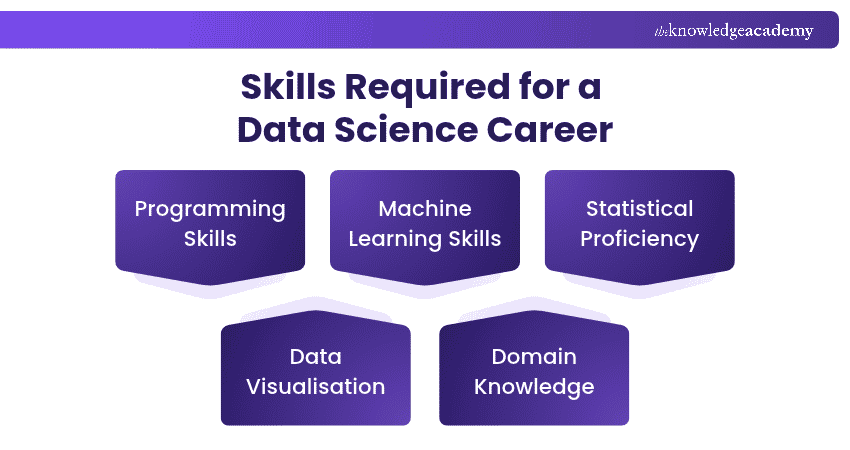
1) Programming Skills
Programming skills are important for a data science career. Python and R are widely used to handle and analyse data, perform statistical analysis, and build machine learning models. SQL is also valuable for retrieving, filtering, and manipulating data stored in databases.

2) Machine Learning Skills
Understanding machine learning techniques helps Data Scientists develop predictive models, identify patterns and evaluate outcomes. The level of expertise required varies by role, with specialised machine learning positions demanding more advanced knowledge of algorithms and model development.
3) Statistical Proficiency
A solid foundation in statistics is essential for a data science career. Understanding statistical concepts helps Data Scientists draw meaningful insights, validate hypotheses and support data-informed decision-making.
4) Data Visualisation
Data visualisation skills are crucial for clearly presenting complex findings. Tools like Matplotlib, Seaborn, and Tableau help Data Scientists turn raw data into easy-to-understand visual stories, making them accessible to both technical and non-technical audiences.
5) Domain Knowledge
A deep understanding of the specific industry or field you work in is vital. Domain knowledge equips Data Scientists to pose pertinent questions, interpret results within a context, and devise tailored solutions for sector-specific challenges.
Data Science Career Readiness Checklist
1. I can explain the difference between descriptive and predictive analysis.2. I can identify missing values and potential errors in a dataset.3. I understand why correlation does not necessarily imply causation.4. I can interpret findings without overstating their significance.5. I can explain the limitations of an analytical result.6. I know how to protect sensitive information when handling datasets.
Why Choose a Data Science Career?
A career in data science can offer opportunities across industries, varied responsibilities and competitive salaries. Here are four reasons to consider this field:
1) High Demand
Data science professionals are in demand across many industries as businesses and organisations increasingly rely on data to support their decisions. Professionals who can analyse complex datasets, develop predictive models, and communicate insights can find opportunities in various sectors.
For example, the US Bureau of Labor Statistics (BLS) projects 35% employment growth for Data Scientists from 2025 to 2035, although opportunities vary by country and industry.
2) Competitive Salaries
Data science is known for its competitive compensation packages. The combination of specialised technical skills and the ability to extract valuable insights from data can result in attractive remuneration for Data Scientists.
Salary expectations vary considerably by country and region, reflecting differences in local demand and employment markets.
Actual earnings depend on experience, qualifications, location, employer, and industry. Salary comparisons should also distinguish between base salary and total compensation.
3) Diverse Applications
Data science isn't confined to a single industry; it's a universal toolkit. Its applications span numerous fields, including healthcare, finance, e-commerce, marketing, and more. This versatility allows you to shape your data science career around your interests and work on problems that match your professional goals.
4) Meaningful Impact
Data science provides a platform to make a meaningful impact. Data Scientists play a pivotal role in informed decision-making, complex problem-solving, and driving innovation by deriving actionable insights from data. Whether improving healthcare, enhancing customer experiences or optimising supply chains, data-driven solutions can contribute to positive change.
Develop practical programming and analytical skills with our Python Data Science Course – Join today!
Responsibilities of a Data Scientist
Responsibilities of a Data Scientist include:
a) Collaborating with business teams to identify issues and propose data-driven solutions for decision-making.
b) Developing analytical models and conducting experiments to process data, identify patterns and generate insights for stakeholders.
c) Assessing and improving data collection methods and evaluating data sources.
d) Communicating findings verbally and in writing to convey insights and recommendations.
e) Creating reports that tell compelling stories about customer behaviour and business interactions.
f) Researching to develop prototypes and proofs of concept.
g) Identifying opportunities to apply insights across different departments, such as HR and marketing.
h) Apply critical thinking and analytical judgement to evaluate findings, identify limitations and recommend appropriate solutions.
In senior roles, you will also:
a) Define and oversee the organisation’s data science strategy.
b) Collaborate with data engineering and technology teams to establish and optimise the data systems and processes supporting data science projects.
c) Evaluate emerging technologies and represent the company at conferences.
d) Build relationships with clients and stakeholders.
Qualifications Required to Become a Data Scientist
To pursue a career as a Data Scientist, a degree in computer science, mathematics, statistics or a related discipline is a common entry route. However, some employers also consider applicants with relevant technical skills, practical experience, or alternative qualifications. Relevant degree subjects include:
a) Computer Science
b) Data Science or Computer and Data Science
c) Engineering
d) Mathematics
e) Mathematics and Operational Research
f) Physics
g) Statistics
Alongside formal qualifications, employers often value practical experience with programming, statistical analysis and data handling. The exact technical requirements vary by role and industry.
How to Start a Career in Data Science?
Starting a career in data science involves gaining the right education and developing key skills. Here are the essential steps to help you begin your journey in this exciting field.
1) Gain Relevant Education
Start by building a foundation in Computer Science, Statistics, Mathematics or a related discipline. Many universities offer specialised degrees and postgraduate courses in data science. Apprenticeships, online courses and relevant professional experience can also support entry into the field, depending on employer requirements.
2) Develop Key Skills
Learn essential skills such as programming with Python or R, data manipulation and statistical analysis. Familiarise yourself with data visualisation tools and machine learning techniques. Practical experience with real datasets is crucial.
3) Build a Strong Portfolio
Work on projects that showcase your data science abilities. Participate in competitions, contribute to open-source projects or create your own data analysis projects. A strong portfolio demonstrates your skills to potential employers.
4) Gain Practical Experience
Search for internships or part-time jobs to gain hands-on experience. Real-world experience is invaluable in understanding how to apply data science techniques to resolve actual problems.
5) Network and Stay Updated
Join data science communities, attend conferences, and connect with professionals. Networking can provide insights into industry trends. Keep up with developments in data science technologies and practices.
6) Apply for Jobs
With your education, skills, portfolio, and experience, start applying for data science positions. Customise your CV to highlight your relevant skills and experiences. Prepare for role-specific technical assessments involving SQL, statistical analysis, data interpretation or machine learning, depending on the position.
Trainer's Insight
During technical interviews, clearly explaining assumptions can be as important as reaching the correct answer. Interviewers may explore how candidates respond to incomplete information, select evaluation methods, and recognise limitations in their conclusions.
Gain in-depth knowledge of different phases of the data analytics lifecycle in big data with our Advanced Data Science Certification – Join now!
Data Science Career Pathways
The field of data science offers several career paths suited to different interests and skills. Here are five roles to consider:
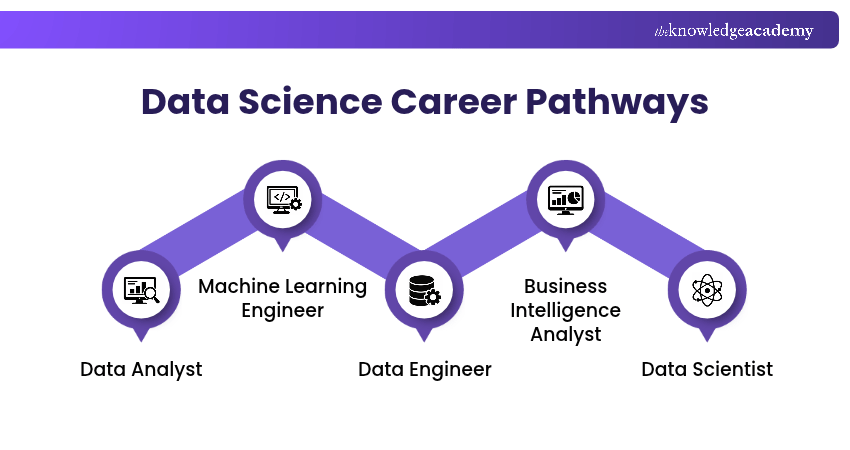
1) Data Analyst
Data Analysts collect, process and analyse data to identify trends and support business decisions. They present findings through reports, dashboards and visualisations, helping organisations understand customer behaviour, financial performance and operational efficiency.
They commonly use SQL, Excel, Power BI and Tableau to analyse and visualise data. Python and R may also support advanced analysis. The role offers opportunities for career progression across different experience levels.
2) Machine Learning Engineer
Machine Learning Engineers develop predictive systems using machine learning algorithms and programming languages such as Python. They build models for tasks including classification, prediction and automated decision-making.
Their work covers applications such as recommendation systems, Natural Language Processing (NLP) and image recognition. They also deploy, monitor and maintain models to support reliable performance in production.
3) Data Engineer
Data Engineers design and maintain data pipelines that collect, process and store information. They use technologies such as Apache Spark and Apache Hadoop, alongside SQL databases, to build reliable data infrastructure for Data Scientists and Data Analysts.
They also develop data warehouses and Extract, Transform, Load (ETL) processes to prepare data for analysis. Their work supports efficient data management and the organisation's wider data science activities.
4) Business Intelligence Analyst
Business Intelligence Analysts transform data into insights that support business strategies. They use tools such as Tableau, Power BI and Qlik to create dashboards and reports that track organisational performance.
They collaborate with teams across marketing, finance and operations to identify trends, monitor performance and uncover opportunities. Their findings help managers make informed business decisions.
5) Data Scientist
Data Scientists combine statistics, programming and machine learning to analyse complex datasets, identify patterns and develop predictive models. They also consider business requirements to ensure their findings address practical challenges.
Their responsibilities include data preparation, statistical modelling, experimentation and model evaluation. They communicate findings to stakeholders to support informed decisions.
Salary of a Data Scientist
Data Scientist salaries in the UK vary depending on experience, qualifications, industry and technical expertise. The following table provides indicative annual salary ranges across different career levels.
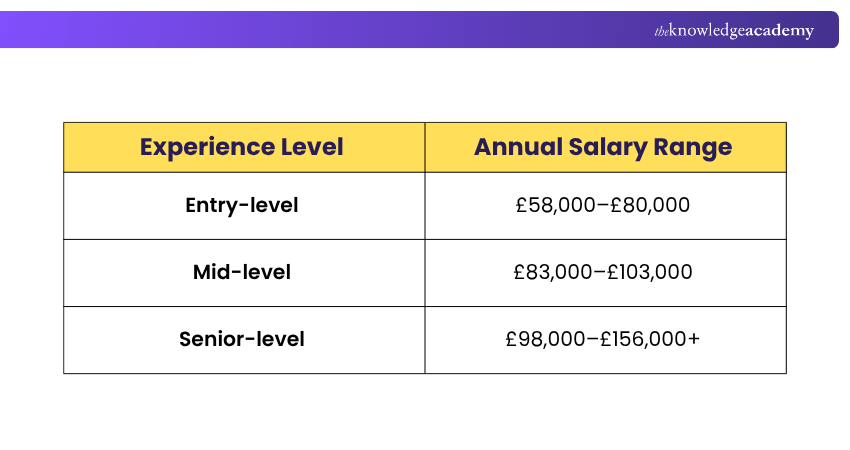
Source: Glassdoor
Keep This in Mind
A career in data science offers opportunities across analytics, machine learning and data engineering. By building technical skills, gaining practical experience and continuously learning, you can pursue career paths that match your interests and goals.
Learn to communicate data insights with our Data Science with R Training – Join today!

The Knowledge Academy develops accessible learning content across Project Management, IT, Cybersecurity, Data Science, Business Analysis, HR, Accounting and Finance, Leadership and Health and Safety. Its resources combine subject research with clear explanations to help professionals build practical knowledge across a wide range of disciplines.
View Detail

 If you wish to make any changes to your course, please


