




We may not have the course you’re looking for. If you enquire or give us a call on 01344203999 and speak to our training experts, we may still be able to help with your training requirements.
Top 12 Reasons Why Projects Fail and Their Solutions in 2026
ByGrace MitchellLast updated on: 19 August 2026
Projects can fail due to unclear objectives, poor planning, weak governance, scope creep, resource gaps, and unmanaged risks. Discover 12 common reasons why projects fail, how to prevent them, key warning signs, and ways to recover a struggling project.

Key Takeaways
1. Projects often fail because several delivery problems build up rather than one isolated mistake.2. Unclear objectives, weak governance, scope creep, and poor communication can derail progress.3. Risk, resource, stakeholder, and requirement issues should be addressed before they escalate.4. Missed milestones, repeated rework, and unresolved issues can signal that a project is struggling.5. Failing projects may recover through reassessment, reprioritisation, and stronger project controls.
The deadline slips. The budget stretches. Requirements keep changing. Everyone is busy, but somehow, the project is moving backwards.
Project failure rarely begins with one dramatic mistake. More often, small issues such as unclear objectives, weak communication, uncontrolled changes, or ignored risks gradually combine until delivery becomes difficult to recover.
The good news? Many of these problems leave warning signs. Understanding why projects fail can help teams recognise trouble earlier, correct course, and improve the chances of delivering the intended outcomes.
What is Project Failure?
Project Failure occurs when a project doesn't achieve its intended objectives, outcomes, or expected value. This may appear as missed deadlines, budget overruns, unmet requirements, poor-quality deliverables, or benefits that fall short of expectations.
Importantly, failure doesn't always mean a project was cancelled. A project can reach completion and still be unsuccessful if it delivers the wrong solution, fails to meet stakeholder needs, or doesn't create the value it was intended to provide.

Why Do Projects Fail?
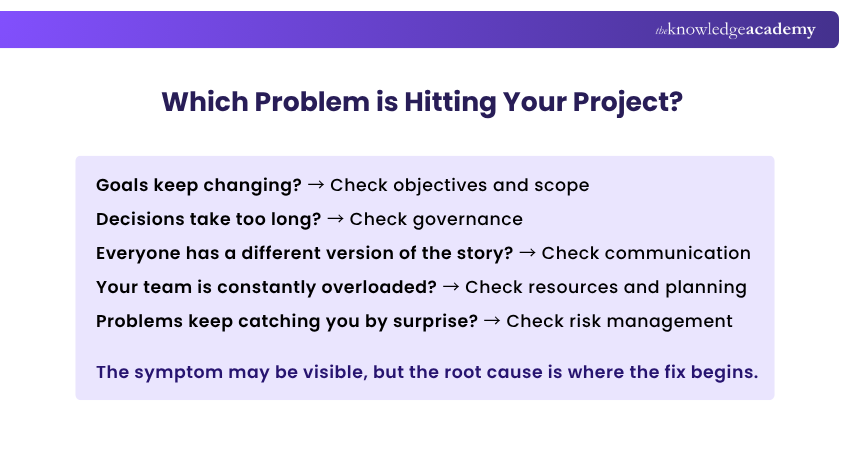
Projects fail when small weaknesses are left unresolved and begin affecting other areas of delivery. An unclear objective can trigger requirement changes, scope creep, resource pressure, missed deadlines and eventually stakeholder dissatisfaction.
The causes may come from inside the project such as poor planning, weak governance, communication gaps or limited resources, or from outside it, including supplier delays, regulatory changes, market shifts and changing business priorities.
The Project Failure Domino Effect
One problem can quickly knock over the next:Unclear Direction↓Changing Requirements↓Scope Expands↓Resources Get Stretched↓Milestones Slip↓Costs Rise↓Project at Risk
The lesson: Don't wait for the final domino to fall. The earlier the first warning signs are addressed, the easier it is to protect the project.
12 Reasons Why Projects Fail and How to Prevent Them
Project failure usually has identifiable causes rather than appearing without warning. From unclear objectives and weak governance to unmanaged risks and resource gaps, these issues can gradually push delivery off course.
Below are 12 common reasons projects fail, the problems they create, and practical ways to prevent them from escalating.
1) Unclear Objectives and Success Criteria
Projects can lose direction when teams don't have a shared understanding of what needs to be achieved or how success will be measured. This can lead to conflicting priorities and effort being spent on the wrong outcomes.
1) What Goes Wrong: Teams move in different directions, priorities conflict, and success becomes difficult to measure.
2) Fix It: Set clear, measurable objectives and success criteria from the start, ensuring key stakeholders agree on the expected outcomes.
3) Quick Example: A marketing project aims to “increase brand awareness” but never defines whether success means more reach, engagement, leads, or conversions.
2) Weak Sponsorship and Governance
Projects need clear decision-making structures and active sponsorship. Without them, approvals may stall, accountability can become unclear, and important issues may remain unresolved.
1) What Goes Wrong: Slow decisions, unclear accountability, unresolved escalations, and insufficient organisational support.
2) Fix It: Define clear roles, decision-making authority, and escalation routes. Keep project sponsors actively involved at key stages of delivery.
3) Quick Example: A transformation project repeatedly stalls because no senior stakeholder has clear authority to approve major changes.
3) Poor Communication
Projects can quickly go off track when important information doesn't reach the right people at the right time. Unclear or inconsistent communication can create misunderstandings, incorrect assumptions, and unnecessary rework.
1) What Goes Wrong: Updates are missed, work is duplicated, and teams make decisions using outdated information.
2) Fix It: Set clear communication channels, reporting routines, responsibilities, and escalation processes so everyone receives the information they need.
3) Quick Example: A development team works from an outdated requirement because a client change was discussed but never communicated through the agreed channel.
4) Scope Creep and Weak Change Control
Projects naturally evolve, but problems arise when new requirements are added without assessing their impact. Even small changes can collectively place significant pressure on budgets, resources, and deadlines.
1) What Goes Wrong: Growing workloads, shifting priorities, budget pressure, and delayed delivery.
2) Fix It: Define scope clearly and use a formal change-control process. Evaluate proposed changes for their impact on cost, time, resources, risk, and expected value before approval.
3) Quick Example: New features are repeatedly added to a software project while its original deadline and budget remain unchanged.
Trainer's Insight:
A change isn't automatically a problem. An uncontrolled change is. Good Project Management makes the impact visible before a decision is made.
5) Unrealistic Planning and Estimates
Projects can struggle from the start when timelines, budgets, or workloads are based on overly optimistic assumptions. Ignoring complexity, dependencies, and team capacity can create targets that are difficult to achieve.
1) What Goes Wrong: Constant deadline pressure, rushed work, declining quality, and repeated replanning.
2) Fix It: Build estimates around realistic capacity, dependencies, risks, and available data. Review and adjust them when project conditions change.
3) Quick Example: A system migration is given a fixed deadline without allowing enough time for data cleansing, integration testing, and user acceptance testing.
6) Resource and Capability Gaps
Projects can fall behind when teams lack the people, skills, budget, tools, or time needed for delivery. Even a well-planned project can struggle if critical resources are unavailable when required.
1) What Goes Wrong: Overloaded teams, delayed tasks, capability gaps, and reduced quality.
2) Fix It: Identify resource and skill requirements early, monitor capacity throughout the project, and address gaps through training, specialist support, reprioritisation, or scope adjustments.
3) Quick Example: A technical project relies on one specialist who is also committed to several other projects, creating a critical bottleneck.
7) Poor Risk Management
Uncertainty exists in every project. Problems arise when risks are not identified, assessed, assigned, monitored, or treated until they become active issues.
1) What Goes Wrong: Teams become reactive, contingencies are inadequate, and preventable problems cause disruption.
2) Fix It: Identify risks early, assess their likelihood and impact, assign clear owners, plan appropriate responses, and review them regularly throughout the project lifecycle.
3) Quick Example: A team relies on a critical external supplier without planning what will happen if delivery is delayed.
8) Stakeholder Misalignment
Projects can lose direction when stakeholders have different priorities, expectations, or views of success. If these differences remain unresolved, the project can be pulled in competing directions.
1) What Goes Wrong: Conflicting priorities, delayed approvals, repeated changes, and dissatisfaction with project outcomes.
2) Fix It: Identify key stakeholders early, understand their expectations, agree on shared priorities, and maintain regular engagement throughout the project.
3) Quick Example: A product team prioritises additional functionality while senior leadership expects the project to reduce operating costs.
9) Poor Requirements Management
Projects can go off track when requirements are unclear, incomplete, misunderstood, or poorly documented. Teams may build something that does not fully meet stakeholder or user needs, resulting in rework, delays, and acceptance problems.
1) What Goes Wrong: Teams work from incomplete or misunderstood requirements, increasing rework and the risk of unsuitable deliverables.
2) Fix It: Gather, document, validate, and prioritise requirements with relevant stakeholders. Define clear acceptance criteria and manage approved changes through the agreed change-control process.
3) Quick Example: A feature reaches testing before stakeholders realise that an important user requirement was never documented.
10) Poor Solution and Technology Decisions
Projects can struggle when the chosen solution, technology, or approach does not match the actual requirements. Poor decisions can create implementation difficulties, additional costs, integration problems, or unsuitable outcomes.
1) What Goes Wrong: The chosen solution creates unexpected limitations, complexity, costs, or implementation problems.
2) Fix It: Evaluate possible solutions against requirements, feasibility, costs, risks, existing systems, scalability, and available capabilities before committing.
3) Quick Example: A new platform is selected without checking whether it can integrate with critical existing business systems.
11) Weak Monitoring and Project Controls
A project cannot be effectively managed if the team does not know whether it is on track. Without effective monitoring, problems with cost, schedule, scope, quality, or risk may remain hidden until they become difficult to correct.
1) What Goes Wrong: Issues surface too late, forecasts become unreliable, and corrective action is delayed.
2) Fix It: Establish relevant baselines, milestones, metrics, reporting routines, and tolerances. Compare actual performance against plans and address significant deviations early.
3) Quick Example: A project remains marked “green” because reports show completed tasks, while several critical milestones are quietly falling behind.
Build practical skills to plan, manage, and deliver successful projects with PRINCE2® Training - Register Now!
12) Poor Organisational Change Management and Adoption
Delivering a new system, process, or capability does not guarantee that people will use it successfully. A project may meet its technical requirements but still fail to deliver the intended benefits if users are not prepared for the change.
1) What Goes Wrong: Low adoption, resistance, inconsistent use, and expected benefits fail to materialise.
2) Fix It: Consider affected users early and plan communication, training, stakeholder engagement, transition activities, and adoption support alongside project delivery.
3) Quick Example: A new digital system launches successfully, but employees continue using old processes because they were not adequately prepared for the change.
Early Warning Signs of Project Failure
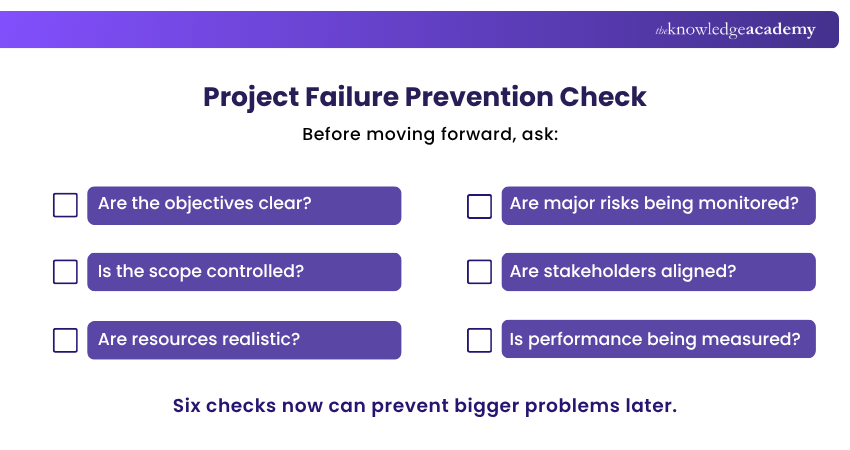
Project failure rarely happens suddenly. Warning signs often emerge during delivery and recognising them early can help teams investigate the cause and take corrective action before problems escalate.
Here are some common warning signs to watch for:
1) Repeatedly Missed Milestones
Tasks and key deliverables consistently fall behind schedule, even after timelines have been revised.
2) Growing Scope
New requirements and requests continue to enter the project without corresponding changes to time, budget, or resources.
3) Rising Costs
Project spending repeatedly exceeds forecasts or requires additional funding to maintain progress.
4) Increasing Rework
Deliverables frequently need corrections because of unclear requirements, quality issues, or changing expectations.
5) Unresolved Risks and Issues
Known problems remain open for long periods or continue to reappear without effective action.
6) Overloaded Project Teams
Workloads become difficult to manage, key resources become bottlenecks, and productivity or quality begins to suffer.
7) Declining Stakeholder Engagement
Stakeholders become less responsive, approvals slow down, or confidence in the project's direction begins to fall.
8) Unreliable Status Reporting
Reports continue to show positive progress even when missed milestones, rising costs, or unresolved issues suggest otherwise.
Key Insight:
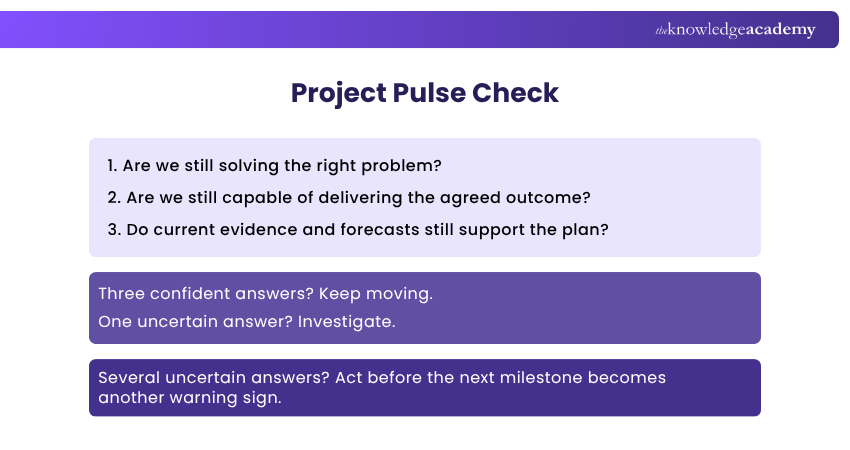
Spotting one warning sign doesn't necessarily mean a project will fail. But when several appear together, it's a strong signal that the project needs closer attention.
How to Recover a Failing Project
A struggling project does not always need to be abandoned. Recovery begins by understanding what has gone wrong, determining what remains achievable, and deciding whether continuing still provides sufficient value.
A simple recovery approach is:
STABILISE → DIAGNOSE → PRIORITISE → RESET → DELIVER → MONITOR
1) STABILISE: Control urgent issues and pause unnecessary changes so existing problems do not continue to grow..
2) DIAGNOSE: Identify the root causes behind delays, cost pressure, quality problems, or stakeholder concerns.
3) PRIORITISE: Decide which outcomes, requirements, and activities remain essential.
4) RESET: Agree realistic scope, resources, responsibilities, budgets, and timelines.
5) DELIVER: Refocus the team on achievable priorities and agreed outcomes.
6) MONITOR: Track progress closely and intervene when recovery indicators move off course.
Recovery Rule
Don't protect the original plan simply because it was the original plan. Protect the outcome that still creates value.
Sometimes, the evidence may show that continuing the project is no longer justified. In that situation, an orderly closure can be a better management decision than continuing to invest in an initiative that no longer supports its intended business case.
Conclusion
Projects rarely fail because of one dramatic mistake. Failure usually develops through a combination of unclear objectives, weak planning, unmanaged risks, resource constraints, poor communication, and delayed intervention.
Successful Project Management therefore isn't about eliminating every problem. It's about spotting issues early, understanding their impact, making informed decisions, and adapting before small setbacks become project-wide failures.
Strengthen your ability to manage Agile projects effectively with PRINCE2 Agile® Practitioner (Version 2) Course - Sign Up Today!

Grace Mitchell creates practical Project Management content covering project delivery, governance, stakeholde engagement and programme coordination. Her knowledge of established methodologies helps readers understand complex project environments and approach project delivery with greater structure and confidence.
View Detail

 If you wish to make any changes to your course, please


