




We may not have the course you’re looking for. If you enquire or give us a call on 01344203999 and speak to our training experts, we may still be able to help with your training requirements.
What is Trading: Understand Markets, Styles and Risks
ByOlivia TaylorLast updated on: 19 September 2026
Trading involves buying and selling assets such as stocks, Forex, or Crypto to profit from short-term price movements by speculating on market fluctuations. Traders rely on Market Analysis and Risk Management to make quick decisions in fast-moving markets.
In a Nutshell
1. Trading is the exchange of financial instruments in response to changing market prices.2. Traders can participate in markets involving shares, Forex, bonds and other financial products.3. Different approaches vary by holding period, trading frequency and strategy.4. Technical and fundamental analysis can help traders evaluate opportunities.5. Every trade carries the possibility of loss, making planning and risk control essential.
Trading is the driving force of financial markets, turning opportunities into profits and ideas into action. It involves buying and selling assets like stocks and currencies using strategies that suit your goals and risk level. When we ask what is trading, it simply means choosing the right moment to enter and exit the market to benefit from price changes. Whether it is fast day trading or steady long-term trading, there is a style for everyone.
This blog will help you understand what is trading, its different types, proven strategies, and practical steps to help you get started. So read on, uncover winning strategies and step into the exciting world of financial trading!
What is Trading?
Trading is the process of buying and selling financial assets, such as stocks, currencies, Crypto, and commodities, with the aim of earning a profit from price changes. These prices move up and down constantly, giving Traders opportunities to speculate and act quickly.
A simplified trading process looks like this:
Choose a Market↓Analyse the Opportunity↓Plan Entry and Risk↓Open the Position↓Monitor the Trade↓Exit the Position↓Profit or Loss
Successful Traders study market trends, analyse charts, and use strategies based on economic data and behaviour. In simple terms, this means making smart decisions to earn profit while managing risk. They trade through brokers or online platforms and depend on discipline, research, and strong risk control to succeed.

Styles of Trading
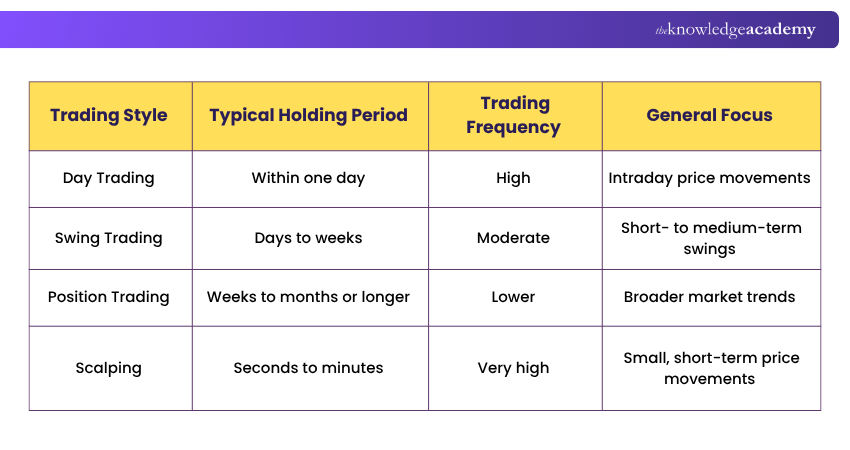
Trading styles are commonly distinguished by how long positions are held and how frequently trades are made. The four main styles are day trading, swing trading, position trading and scalping.
1) Day Trading
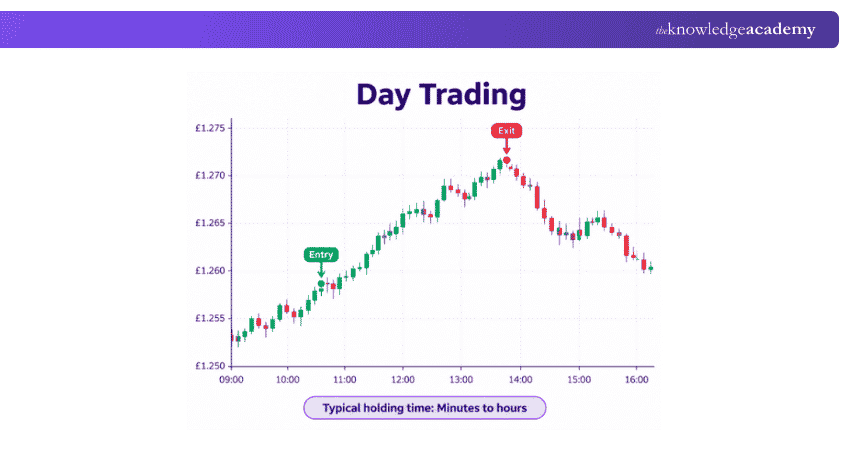
Day trading involves opening and closing positions within the same trading day. Traders focus on short-term price movements and generally avoid keeping positions open overnight.
How it Works:
a) Positions are opened and closed on the same trading day
b) Traders closely monitor short-term market movements
c) Technical analysis and charts are commonly used to identify opportunities
For Example: A trader buys shares at 10:00 AM and sells them at 2:00 PM on the same day.
Pro Tip
Closing positions within the same day reduces exposure to overnight price movements, but Day Trading can still involve significant market risk.
2) Swing Trading
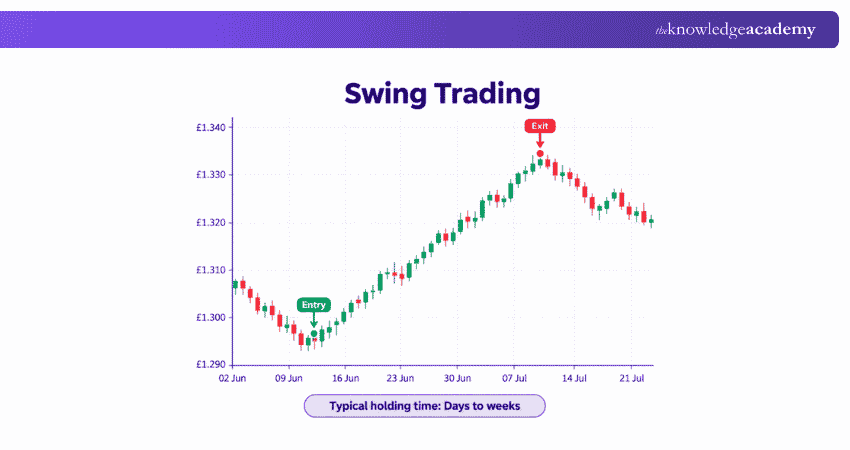
Swing trading involves holding positions for several days or weeks to capture short- to medium-term price movements.
How it Works:
a) Positions are typically held for several days or weeks
b) Traders look for trends, momentum and potential price swings
c) It generally requires less continuous monitoring than day trading
For Example: A trader buys a share and holds the position for 10 days while anticipating a favourable price movement.
3) Position Trading
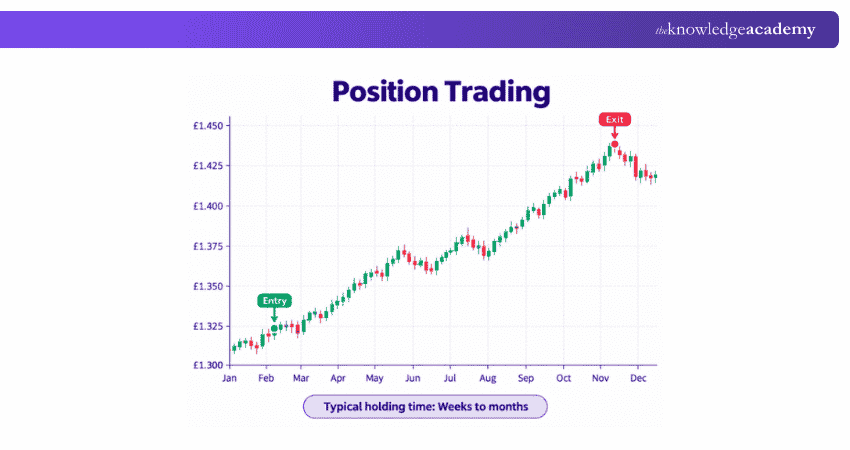
Position trading is a longer-term approach in which traders hold positions for weeks, months or potentially longer based on broader market trends.
How it Works:
a) Traders focus on longer-term market movements
b) Fundamental and technical analysis may be used
c) Short-term price fluctuations are generally less important to the overall strategy
For Example: A trader takes a position based on a broader market trend and holds it for several months.
4) Scalping
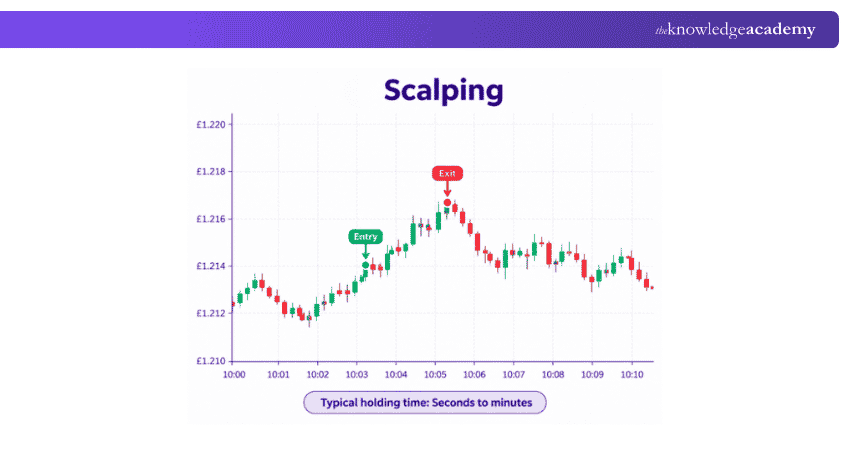
Scalping is a very short-term trading style involving frequent trades that aim to capture relatively small price movements.
How it Works:
a) Positions may remain open for only seconds or minutes
b) Traders may execute many trades during a trading session
c) Quick decision-making and close market monitoring are important
For Example: A trader makes several short-duration trades during the day to target small price movements.
Here are the trading styles at a glance:
Other Trading Strategies and Markets
Beyond the main Trading styles, traders can use different strategies, technologies, financial instruments and markets. These should be distinguished from Day, Swing, Position and Scalping styles.
1) Momentum Trading
Momentum trading is a strategy that focuses on assets showing strong price movement in a particular direction. Traders attempt to identify and follow existing market momentum.
How it Works:
1) Traders identify assets showing strong upward or downward movement
2) Price trends, volume and technical indicators may be considered
3) Positions are managed according to whether the momentum continues or weakens
For Example: A trader identifies strong upward price momentum following a company announcement and takes a position based on that movement.
2) Algorithmic Trading
Algorithmic trading uses computer programs to execute trades according to predefined instructions or rules.
How it Works:
a) Trading conditions are defined through programmed rules
b) Algorithms monitor relevant market information
c) Orders can be generated or executed automatically when specified conditions are met
For Example: An algorithm executes a trade when predefined moving-average conditions occur.
3) Options Trading
Options trading involves contracts that give the buyer the right, but not the obligation, to buy or sell an underlying asset according to specified terms.
How it Works:
1) Call options provide rights related to buying the underlying asset
2) Put options provide rights related to selling the underlying asset
3) Options can be used for purposes including speculation and risk management
For Example: A trader purchases a call option because they expect the underlying share price to rise.
Want to master the global currency game? Let our Forex Trading Course show you the way– Sign up now!
4) Forex Trading
Forex Trading involves buying and selling currencies in pairs, such as GBP/USD or EUR/USD, to respond to changes in exchange rates.
How it Works:
a) Currencies are traded in pairs
b) Traders take positions based on expected exchange-rate movements
c) Trading is generally available throughout the working week across global markets
For Example: A trader takes a position on GBP/USD based on an expected change in the exchange rate.
Pro Tip
Do not confuse a trading style with a market or instrument. For example, day trading is a style, while Forex is a market. A trader could therefore use a day trading approach within the Forex market.
5) Commodity Trading
Commodity trading involves gaining exposure to commodities such as gold, silver, crude oil, natural gas and agricultural products. This can be done through instruments such as commodity futures.
How it Works:
a) Traders select a commodity market
b) They analyse factors affecting supply, demand and prices
c) They take positions according to their market expectations
For Example: A trader buys a gold futures contract because they anticipate an increase in gold prices.
6) Cryptocurrency Trading
Cryptocurrency trading involves buying, selling or taking positions in digital assets such as Bitcoin and Ethereum.
How it Works:
a) Traders analyse cryptocurrency price movements
b) Many Crypto markets operate continuously, including weekends
c) Prices can be highly volatile, creating substantial potential gains and losses
For Example: A trader buys Bitcoin and later sells it after its market price rises.
Decode the blockchain and the market with our up-to-date Cryptocurrency Trading Training – Register now!
How to Start Trading?
If you are planning to trade, here are some steps you need to follow:
1) Learn the Fundamentals: Understand asset classes like stocks, Forex and commodities, along with trading terminology like spread, leverage and pips. Also, learn the difference between long vs short positions.
2) Choose Your Market: Decide which markets suit you. It could be stocks, currencies, indices, etc. Pick what you understand and what matches your risk tolerance.
3) Select a Reliable Broker: Ensure that the Broker is regulated, has fair fees, good spreads, strong customer service, and a platform you’re comfortable using.
4) Open and Fund an Account: You’ll usually start with either a demo account or a live account. Fund it with an amount you are willing to risk.
5) Create a Trading Plan: Define your financial goals, risk limits, strategies for entry and exit, and how much you will risk per trade. A clear plan can keep your decision-making disciplined.
6) Study Market Analysis Techniques: Learn both technical analysis, like charts and indicators and fundamental analysis, like news and economic data, to inform your trades.
7) Use a Demo or Paper Trading First: Practice without real money to test strategies and understand platform tools.
8) Start Small & Manage Risk: When you finally move to live trading, use small positions, apply stop-loss orders and limit how much of your capital you risk in each trade.
9) Monitor and Review Trades: Track your trades, review what worked and what didn't and adjust your strategy over time. Keeping a trading journal is very helpful.
10) Continuous Learning: Markets evolve, so you must keep reading, practising and learning new methods. Stay aware of global economic events that affect markets.
The Role of Emotions in Trading
Trading is not only about using tools and strategies. It is also about staying calm and controlling emotions. Feelings like fear and greed can make Traders act too fast. Fear may cause them to sell early, while greed can make them take unnecessary risks. These emotional decisions often lead to mistakes.
To trade well, a person must stay disciplined. This means following a plan, using limits to control losses, and taking a break when feeling stressed. When emotions are managed, Traders can think clearly, make better choices, and increase their chances of success.
Importance of Trading
These points illustrate the importance of Trading:
1) Economic Growth: By enabling the exchange of assets such as stocks, commodities and currencies, markets channel capital to where it’s most productive.
2) Opportunity Through Volatility: Short-term price changes allow Traders to potentially profit from market swings.
3) Access and Flexibility: Online platforms and mobile apps make global markets accessible anytime, from anywhere.
4) Diverse Strategies for Every Style: Whether one prefers fast-paced day trading or more patient position Trading, each can adapt to risk tolerance and goals.
5) Learning Risk Management: Trading cultivates discipline in controlling losses, researching and making informed decisions rather than reacting emotionally.
Challenges of Trading
Here are the challenges and risks associated with trading:
1) Poor Risk Management: Many Traders don’t set stop-losses or ignore position sizing. When losses occur, they chase the returns and magnify the risk instead of preserving capital.
2) Overtrading and Excess Leverage: Using too much leverage and trading too frequently increases exposure to losses. Small losses compound when the leverage amplifies both gains and losses.
3) Emotional Decision-making: Fear and greed often overpower rational thinking and strategy-making. Traders either let losses become huge or exit winners too early. This undercuts long-term profitability.
4) Lack of Strategy or Discipline: Without a well-tested trading plan, many Traders act impulsively. They fail to adapt to market changes or deviate from rules in volatile times.
5) Misjudged Expectations and Learning Curve: Some enter trading expecting quick profits without understanding the learning that goes into it. Underestimating costs, slippage, commissions, or psychological strain leads to disappointment and losses.
Understand Market Analysis techniques to make informed trading decisions. Join our Stock Trading Course now!
Example of a Trade
Let us say a trader thinks the price of a company’s stock will go up. They buy 10 shares at £50 each, so they spend £500 on stock. After a few days, the price rises to £60 per share. The trader then sells all 10 shares for £600.
Here, the trader earns a £100 profit from the difference in price. This shows the basic idea of Trading. You buy a stock when the price is low and sell it when the price increases. The profit or loss depends on how the market moves.
Is Trading Gambling?
Trading, especially day Trading, shares some features with gambling, but it isn’t gambling by definition. Some research highlights that Day Traders often face rapid wins and losses, speculative behaviour and emotional decision-making. These are reminiscent of those in skill-based or online gambling.
However, unlike pure gambling, trading involves analysis, strategy and risk controls. Traders who use technical or fundamental analysis and manage risk differentiate themselves from games of chance. So, trading can resemble gambling under high volatility or poor discipline. But with proper tools and a mindset, it's a different discipline altogether.
What is the 90% Rule in Trading?
The 90-90-90 rule suggests that 90% of new Traders lose 90% of their money during the first 90 days. It is not a proven fact, but it highlights how beginners often trade without a plan, take big risks, or let emotions like fear and greed drive decisions, which can lead to quick losses.
To avoid this, Traders must follow a strategy, use stop losses, and risk only a small part of their capital on each trade. Learning market basics, practising first, and staying disciplined can increase the chances of long-term success in trading.
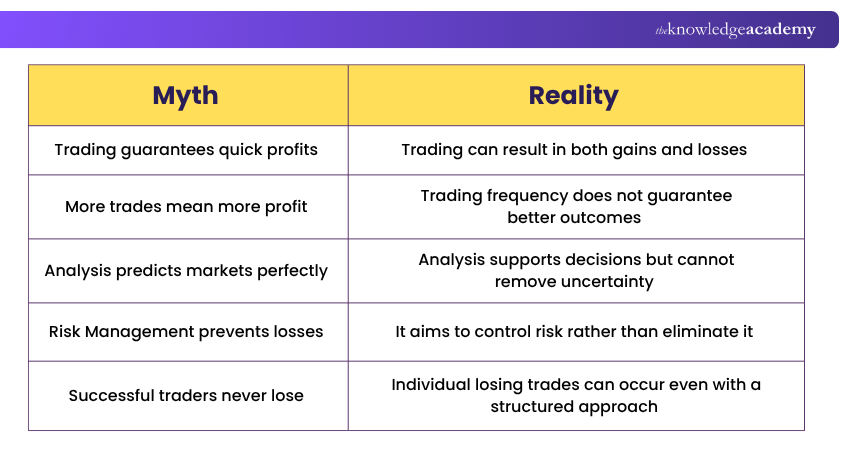
Consider these myths associated with trading:

Olivia Taylor makes complex financial subjects easier for professionals to understand and apply. Her content connects accounting principles with the practical requirements of financial control, organisational planning and responsible decision-making.
View Detail

 If you wish to make any changes to your course, please


