


We may not have the course you’re looking for. If you enquire or give us a call on 01344203999 and speak to our training experts, we may still be able to help with your training requirements.
Project Scope: Meaning, Importance, and Steps to Define It
BySienna RobertsLast updated on: 21 October 2026
Explore what project scope is, why it matters, what a scope statement includes, and eight practical steps to define and manage it effectively. Discover how clear scope boundaries help align stakeholders, clarify deliverables and manage changes throughout the project lifecycle.

A Quick Look
1. Project scope defines a project's objectives, deliverables and boundaries, including what is included and excluded.2. Clear scope definitions support realistic timelines, budgets and resource planning.3. A project scope statement outlines key deliverables, exclusions, constraints, assumptions and acceptance criteria.4. Stakeholder approval helps establish a shared understanding of the agreed work.5. A structured change control process helps teams evaluate proposed changes without losing focus.
Ever started a project with a clear plan in mind, only to find new requests and unexpected tasks piling up? Before you know it, deadlines start slipping, and the team loses focus. This is what can happen when project scope isn't clearly defined from the beginning.
So, how do you keep a project from going off track? It starts with setting clear boundaries and ensuring everyone is on the same page. A well-defined project scope helps teams avoid unnecessary work, manage expectations and stay focused on what matters most. Let’s learn more about it in detail!
What is Project Scope?
Project scope defines the boundaries of a project by outlining what work is included, what is excluded and what needs to be delivered. It identifies key deliverables, objectives, acceptance criteria and constraints to ensure everyone understands what the project aims to achieve.
A clearly defined project scope helps align stakeholders, guide decision-making and limit scope creep by ensuring changes are formally reviewed. These details are typically documented in a project scope statement, which serves as a reference for managing expectations and keeping the project on track.

Why is Defining Project Scope Important?
Defining project scope is crucial for establishing clear expectations, managing resources and keeping projects aligned with their objectives. Without well-defined boundaries, additional tasks and changing requirements can lead to scope creep, delays and additional costs. Here are the key reasons why defining project scope matters:
1) Setting Realistic Timelines
A clearly defined project scope helps teams understand the work involved and estimate how long each activity will take. This makes it easier to establish achievable deadlines, plan milestones and minimise delays caused by unexpected tasks.
2) Improving Project Efficiency
When everyone understands what needs to be delivered, teams can focus on essential activities and avoid unnecessary work. Clear scope boundaries also help teams prioritise activities, coordinate responsibilities and use available resources more efficiently.
Trainer's Insight
Scope creep often begins with small, seemingly harmless requests. Before accepting additional work, teams should assess how it could affect timelines, budgets and resources. Even minor changes can create significant challenges when their combined impact is overlooked.
3) Maintaining Accurate Budgets
Defining project scope helps teams estimate costs based on agreed requirements, deliverables and resources. Monitoring scope throughout the project also helps control additional expenses and keep spending aligned with the approved budget.
What is a Project Scope Statement?
A project scope statement refers to a formal document that defines a project's boundaries, objectives, deliverables and key requirements, along with important assumptions, constraints and acceptance criteria. It outlines what is included and excluded from the project, helping teams and stakeholders understand the agreed work and expected outcomes.
Depending on the project's complexity, the project scope statement can be part of a project plan, project brief or a standalone document. It serves as a reference throughout the project, guiding decisions and managing changes. When working with external teams or agencies, it may also inform a Statement of Work (SOW) that formalises the agreed responsibilities and deliverables.
Build the expertise to manage projects with clarity and confidence by joining the PMP® Certification Training now!
What Should a Project Scope Statement Include?
A project scope statement should include the key details that define what the project will deliver and the boundaries within which it will be delivered. While the exact content varies by project size and organisation, most statements include the following elements:
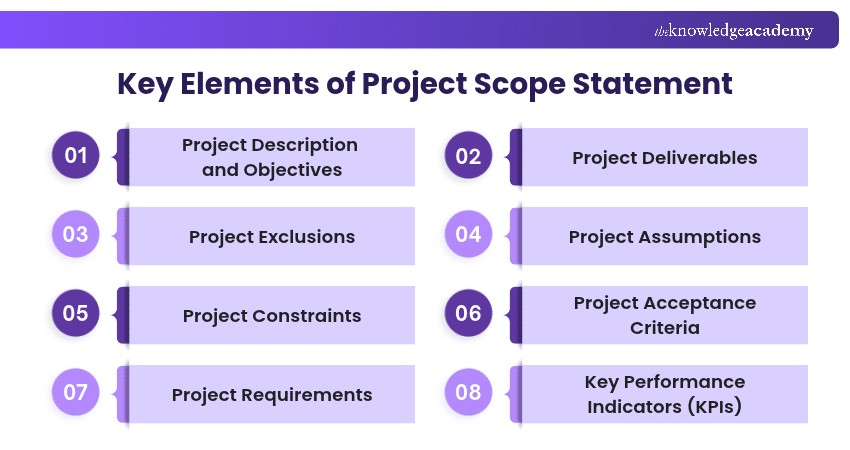
1) Project Description and Objectives
This section explains the project's purpose, intended outcomes and overall direction. It helps stakeholders understand what the project aims to achieve and how the planned work supports those objectives.
2) Project Deliverables
Project deliverables are the specific products, services or results expected upon completion. Clearly identifying them helps teams understand what must be produced and ensures the final outcomes meet agreed requirements.
3) Project Exclusions
Project exclusions specify the tasks, features or activities that are not included in the project. Defining these boundaries helps prevent misunderstandings, manage stakeholder expectations and minimise the risk of scope creep.
4) Project Assumptions
Project assumptions are conditions considered true for planning purposes, even when they have not been fully confirmed. These may include resource availability, stakeholder participation or access to necessary information.
5) Project Constraints
Project constraints are limitations that influence how the project can be completed. They may involve budget restrictions, fixed deadlines, limited resources or regulatory requirements that teams must consider during planning and execution.
6) Project Acceptance Criteria
Project acceptance criteria define the conditions that deliverables must meet to receive formal approval. They provide a clear basis for evaluating completed work and confirming whether the agreed requirements have been satisfied.
Bonus Tip
Deliverables and acceptance criteria are often confused. A deliverable describes what the project must produce, while acceptance criteria explain how its completion will be evaluated. Defining both helps prevent disagreements during project approval.
7) Project Requirements
Project requirements describe the essential features, functions and conditions that the project's deliverables must satisfy. Relevant requirements may be summarised in the scope statement, while detailed specifications are often maintained in separate requirements documentation. This helps teams understand stakeholder expectations and establish what needs to be achieved within the agreed scope.
8) Key Performance Indicators (KPIs)
KPIs are measurable metrics used to evaluate a project's progress and performance against established objectives. While not a mandatory component of every project scope statement, including relevant KPIs can help teams track success, monitor outcomes and ensure the project remains aligned with its intended goals.
Plan, monitor, and deliver successful projects with Project Planning and Control™ (PPC) Foundation and Practitioner Training – Sign up soon!
How to Define Project Scope in Eight Steps?
Defining project scope involves identifying objectives, gathering requirements and establishing clear boundaries for the work to be completed. A structured approach helps teams align expectations, manage resources, and reduce the risk of scope creep. Here are eight practical steps to define project scope effectively:
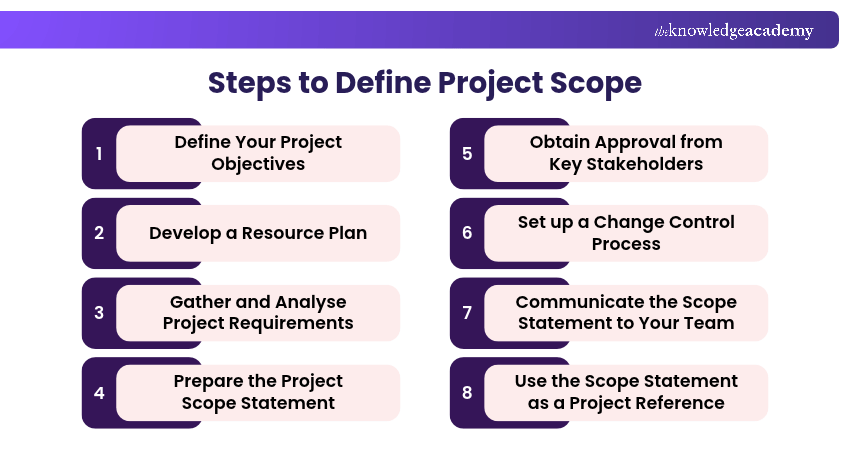
1) Define Your Project Objectives
Begin by identifying what the project aims to achieve and the outcomes it should deliver. Establish clear, measurable objectives that align with stakeholder expectations and organisational goals. These objectives provide a foundation for determining which activities and deliverables fall within the project scope.
2) Develop a Resource Plan
Identify the resources required to complete the project, including team members, budget, equipment and technology. Assess their availability and any limitations to understand what can realistically be achieved. This helps establish a feasible project scope and avoid overcommitting resources.
3) Gather and Analyse Project Requirements
Collect and document requirements from stakeholders to understand their needs and expectations. Consider functional requirements, quality standards, deadlines and relevant constraints. Reviewing these details helps identify the work needed to achieve the project's objectives and reduces misunderstandings.
4) Prepare the Project Scope Statement
Bring the agreed requirements together in a clear document outlining the project's deliverables, boundaries, exclusions, assumptions and acceptance criteria. The scope statement establishes what work is included and provides a reference for planning, execution and scope control.
5) Obtain Approval from Key Stakeholders
Review the proposed scope statement with relevant stakeholders to confirm that the objectives, deliverables and boundaries meet their expectations. Address disagreements or unclear requirements before obtaining formal approval from the authorised stakeholders. This helps establish an agreed scope and provides a foundation for creating or approving the project's scope baseline.
6) Set up a Change Control Process
Establish a process for submitting, reviewing and approving proposed scope changes. Assess each request's impact on project timelines, costs, resources and deliverables before deciding. This allows necessary adjustments while preventing uncontrolled scope creep.
7) Communicate the Scope Statement to Your Team
Share the approved scope statement with project team members and ensure everyone understands the agreed deliverables, exclusions and responsibilities. Keep the document accessible so the team can refer to it when planning activities, resolving uncertainties or evaluating new requests.
8) Use the Scope Statement as a Project Reference
Refer to the approved scope statement throughout the project to check whether activities and deliverables remain within the agreed boundaries. Compare proposed changes against the scope baseline and follow the change control process when adjustments are necessary. This helps maintain alignment and prevent unauthorised work.
Project Scope Readiness Check
Before finalising your project scope, use this checklist to ensure all essential elements are clearly defined:
□ Are the project objectives clearly defined?□ Are the project deliverables and exclusions documented?□ Have project assumptions and constraints been identified?□ Are the acceptance criteria clearly established?□ Have key stakeholders reviewed and approved the project scope?□ Is there a clear process for managing scope changes?
Project Scope Statement Example
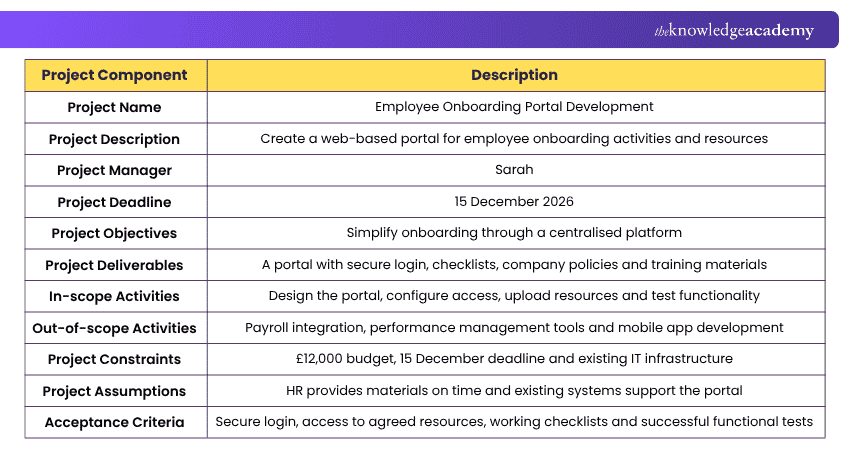
A project scope statement provides a clear overview of what a project aims to achieve, the work involved and its limitations. To understand how it works in practice, consider a company planning to launch a new employee onboarding portal. The following example shows how its project scope statement can be structured:
Start your project management journey with skills that deliver real results by signing up for the Introduction to Project Management Course today!

 If you wish to make any changes to your course, please


