




We may not have the course you’re looking for. If you enquire or give us a call on 01344203999 and speak to our training experts, we may still be able to help with your training requirements.
What is a Search Engine: Types, Components, Examples, and Uses
ByJames SmithLast updated on: 10 October 2026
Search engines are software systems that index and retrieve vast amounts of online data, delivering fast, relevant results from billions of web pages. They leverage web crawling, indexing, and ranking algorithms to present updated information. From Google to specialised niche engines, they enable enhanced digital research and navigation.

In a Nutshell
1. Search engines crawl, index, process, and rank online information to answer user queries.2. Key components typically include crawlers, indexes or databases, query-processing systems, ranking systems, and search interfaces.3. Different types include Internet, Enterprise, Desktop, Academic, Social Media, Meta, and Specialised Search Engines.4. Search engines support activities such as finding information, places, people, entertainment, and educational resources.5. Popular examples include Google, Bing, Yahoo, and DuckDuckGo.
Envision a digital compass guiding you through the vast internet. Search engines retrieve and rank information from their indexes when a user submits a query, helping deliver relevant results in seconds. They are the unsung heroes of our online experience who transform endless data into accessible knowledge.
This exploration delves into their definition, underlying principles, diverse types, advanced features, and everyday uses. Discover how these powerful tools shape your digital journey and empower you to leverage the full potential of the web!
What are Search Engines?
Search engines are software systems designed to carry out web searches by indexing vast amounts of information from the internet and retrieving relevant results based on user queries.
A common example of a search engine is Google. Known for its user-friendly interface and robust algorithms, Google indexes billions of web pages, providing fast and accurate search results. Advanced search operators can be used to refine Google searches and locate specific publicly indexed information more efficiently.

How do Search Engines Function?
Search engines use several interconnected processes to discover content, organise it, interpret user queries, rank relevant results, and present them in a searchable interface. Here are the key functions of search engines:
1) Web Crawling: Automated bots systematically traverse websites for new or updated content discovery and collection.
2) Content Indexing: The organisation and storage of this gathered data are performed in a searchable index to enable fast retrieval during queries.
3) Query Processing: The search engine analyses the user’s query, interprets likely intent, and matches it against indexed content.
4) Ranking Systems: Search engines evaluate many signals, such as relevance, quality, freshness, context, and user intent, to order results.
5) Results Display: The final ranked results, often enhanced with snippets and related information, are then presented to the user.
Search Engine Flow
Crawl → Index → Process Query → Rank Results → Display Results
Importance of Search Engines
Search engines play a vital role in the digital experience through efficient user connection with vast amounts of data. Here is a brief overview of their importance:
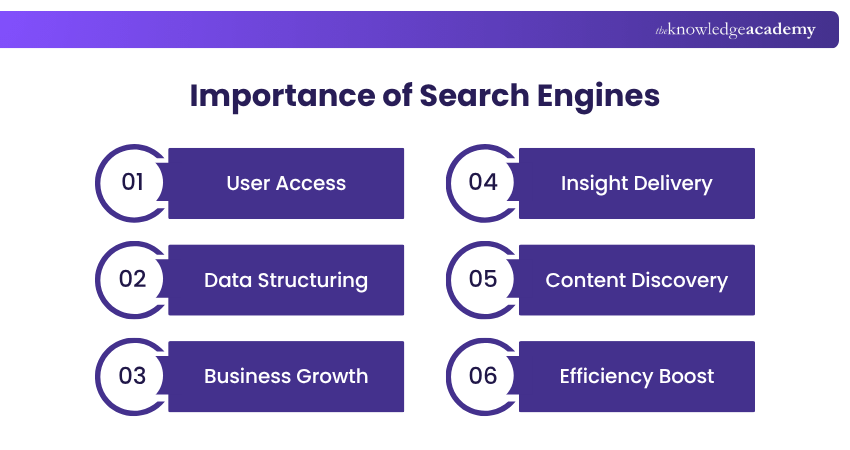
1) User Access: They provide access to several online resources, enabling quicker informational discovery.
2) Data Structuring: Organised indexing helps transform raw data into searchable content, ensuring fast, relevant result delivery.
3) Business Growth: Enhancing online visibility, search engines play a key role in digital marketing and in better customer engagement.
4) Insight Delivery: Search engines help users compare sources, discover information, and gather material that can support research and decision-making.
5) Content Discovery: Enabling new ideas and trend exploration, they serve as a continuous learning and innovation gateway.
6) Efficiency Boost: Through quicker, large-scale data processing, search engines enhance productivity and user experience.
Master web analytics and turn visitor data into powerful marketing and business insights with our Web Analytics Course – join now!
Key Components of a Search Engine
Search engines rely on several core components that work in tandem for fast and relevant search results delivery. Here are those key components listed:
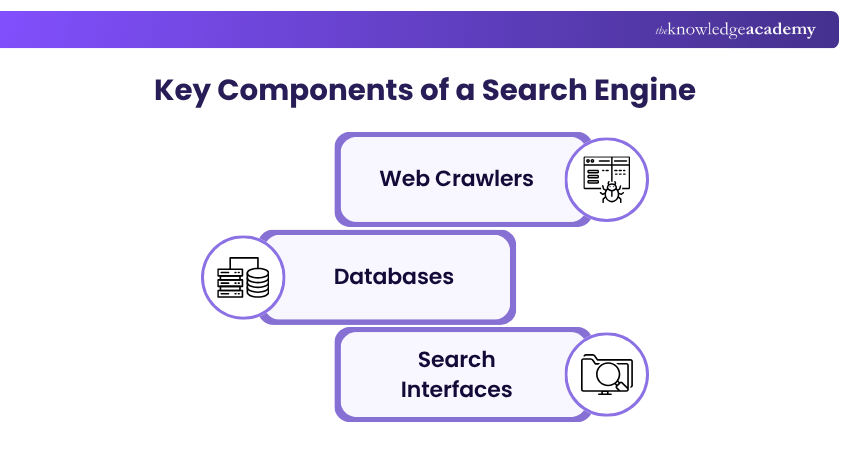
1) Web Crawlers
Automated bots, known as Spiders or Crawlers, systematically perform internet traversal following hyperlinks for new and updated content discovery. They also gather metadata and contextual information from web pages to help ensure that indexes are comprehensive and current.
2) Databases
Robust databases store the big data storage that is collected by web crawlers, ensuring the structure of information for quick retrieval. This database indexing process helps in search query optimisation, allowing the rapid matching of user inputs with relevant content.
3) Search Interfaces
The search interface allows users to enter queries and view ranked results. It may also provide features such as autocomplete, filters, snippets, and related searches. It then displays the sorted and relevant results intuitively, often enhanced with autocomplete suggestions and contextual snippets, among other key features.
Types of Search Engines
Search engines come in various forms, each tailored to specific needs and environments. Here are the key search engine types described:
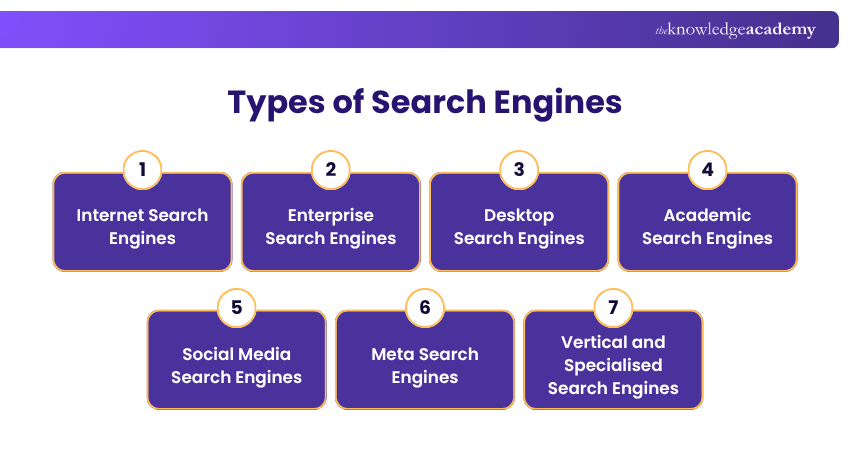
1) Internet Search Engines
Internet search engines are the most common type, designed to crawl and index large portions of the web. They use sophisticated algorithms to deliver relevant results to user queries, making them essential tools for navigating the vast online landscape.
2) Enterprise Search Engines
Enterprise search engines are tailored for organisations to help employees quickly find internal information. They perform corporate data, document, and intranet resource indexing, enabling efficient proprietary knowledge access within a secure environment.
3) Desktop Search Engines
Desktop search engines focus on searching local files and data stored on personal computers. They provide users with fast access to documents, emails, and other files on their devices, streamlining personal productivity and file management.
4) Academic Search Engines
Academic search engines specialise in retrieving scholarly articles, research papers, and academic publications. They help students, researchers, and educators find scholarly literature, including journal articles, conference papers, theses, preprints, and other academic sources.
5) Social Media Search Engines
Social media search engines are designed to search for content and index it across social platforms. They help users find posts, profiles, and discussions in real-time, making them valuable for trend and public sentiment tracking.
6) Meta Search Engines
Meta search engines aggregate multiple search engine results to provide a broader range of results. They offer a consolidated view through the strengths of various search engines, enhancing the overall search experience.
7) Vertical and Specialised Search Engines
Vertical and specialised search engines focus on specific industries or topics, such as travel, jobs, or shopping. These engines provide tailored results, often with additional filters and features that cater to niche audiences, ensuring a more precise search experience.
Did You Know?
Different search engines can return different results for the same query because they may use different indexes, ranking systems, and data sources.
Usage of Search Engine
Search engines serve as powerful tools to navigate and extract valuable data from the vast online world. They support a diverse range of activities, from general research to multimedia discovery and educational enrichment.
1) Finding Information
Users rely on search engines for quick facts, articles, and resource locations on any topic of interest. They enable efficient, up-to-date content and retrieval of detailed explanations across various subjects.
2) Locating Places
With integrated mapping and location services, search engines help users find addresses, businesses, and landmarks. They provide directions, reviews, and geographical data to enhance local exploration.
3) Finding People
Search engines can help users find publicly available information about people, such as professional profiles, organisational pages, publications, or public social-media accounts.
4) Entertainment Purposes
Users utilise search engines to access entertainment content such as movies, music, games, and news. They serve as gateways to streaming platforms and various digital media offerings.
5) Educational Uses
Search engines are invaluable in education, providing access to academic articles, research papers, tutorials, and learning resources. They empower students and educators to explore topics deeply and broaden their knowledge.
Search Smarter Tip
Use specific keywords, quotation marks for exact phrases, and filters such as date or file type to narrow your search results.
Examples of Different Search Engines
The search engine landscape is diverse, offering a range of choices tailored to various user needs. Each engine brings its unique features and strengths, ensuring that users can search exactly what they are looking for.
1) Google
Google is the most widely used web search engine globally. It uses automated crawling, indexing, and ranking systems to retrieve relevant information from its search index.
Its user-friendly interface and rapid, accurate search results have made it the go-to tool for finding a wide array of information.
2) Bing
Microsoft’s Bing offers an interface that is visually appealing with rich multimedia results and integrated services. It stands out with usage and seamless Microsoft product integration rewards, providing a competitive alternative to Google.
3) Yahoo
Yahoo Search combines its own technology with Bing-powered results, offering a unique blend of search capabilities. Known for its comprehensive news and entertainment sections, Yahoo serves a diverse audience with an informational and lifestyle content balance.
4) DuckDuckGo
DuckDuckGo prioritises user privacy by not tracking search histories or personal data. It offers a clean, straightforward search experience that has a key emphasis on unbiased results, appealing to security- and anonymity-valued users.
5) Niche Search Engines
Niche Search Engines specialise in specific topics or industries, such as academic research, travel, or local business directories. These platforms deliver search results that are highly targeted and offer advanced filtering options, meeting the unique needs of their specialised user base.
Develop the skills to maximise online visibility with Search Engine Marketing (SEM) Training – Join now!

James Smith produces results-focused content that helps marketers plan, evaluate and improve their online activities. His writing connects channel selection, audience behaviour and performance data with measurable marketing objectives.
View Detail

 If you wish to make any changes to your course, please


