




We may not have the course you’re looking for. If you enquire or give us a call on 01344203999 and speak to our training experts, we may still be able to help with your training requirements.
Home
 Resources
Programming & DevOps
What Does a Java Developer Do: Roles, Skills and Responsibilities
Resources
Programming & DevOps
What Does a Java Developer Do: Roles, Skills and Responsibilities
Resources
Programming & DevOps
What Does a Java Developer Do: Roles, Skills and Responsibilities
What Does a Java Developer Do: Roles, Skills and Responsibilities
ByScarlett AdamsLast updated on: 18 August 2026
Java Development powers a wide range of modern applications across industries. Explore the role, career path, and real-world impact of Java DSevelopers.

KEY TAKEAWAYS
1. Java Developers build, test and maintain reliable Java applications.2. Their work often involves backend systems, databases, APIs, and application security.3. Key skills include Java, OOP, SQL, Spring Boot, Git, testing, and debugging.4. Problem-solving and collaboration help them tackle challenges and work effectively with teams.5. Practical projects and a strong portfolio can help aspiring Java Developers apply their knowledge and build job-ready skills.
10:05 AM: Checkout slows down.
10:12 AM: Application logs show unusual response times.
10:25 AM: A slow database query is identified.
10:40 AM: The fix is tested.
11:00 AM: Checkout is running normally again.
One problem, several skills at work. A Java Developer's role goes far beyond writing code. They build applications, work with databases and APIs, test solutions and troubleshoot issues to keep software running reliably.
From fixing bugs to building backend functionality, Java Developers solve problems that users may never see. So, What Does a Java Developer Do behind the scenes? Let's explore their responsibilities, skills and real-world impact.
What Does a Java Developer Do?
A Java Developer designs, builds, tests and maintains applications using Java. They use Java, Object-oriented Programming (OOP) and Software Development practices to create reliable and maintainable software.
Their work often includes writing server-side code, developing APIs, connecting databases, testing software and fixing technical issues. Depending on the project, they may work on backend applications, enterprise systems, cloud services or existing Android applications.
Pro Tip: When exploring Java Developer roles, read the full job description rather than focusing only on the title. The required technologies and responsibilities can vary significantly between projects and organisations.
Spot the Misconception
“A Java Developer's job is mainly about writing Java code.”
Can you spot what's missing?
Writing Java code is an important part of the role, but the work can go much further. Java Developers may also build APIs, work with databases, test and debug applications, monitor performance and support application security.
Reality Check: Java knowledge is at the heart of the role, but Java Developers also need broader Software Development and problem-solving skills to build and maintain reliable applications.

What is Java Development?
Java Development is the process of creating software using the Java Programming Language and its wider ecosystem of frameworks, libraries and development tools. It is commonly associated with backend, enterprise and server-side applications.
The Java ecosystem includes frameworks and libraries such as Spring, Spring Boot, Jakarta EE, Hibernate, and JUnit. Developers also use supporting tools such as Maven, Gradle, and Git during development.
Did You Know?
Java was first released in 1995, yet it continues to evolve through regular Java releases.
Why are Java Developers Important?
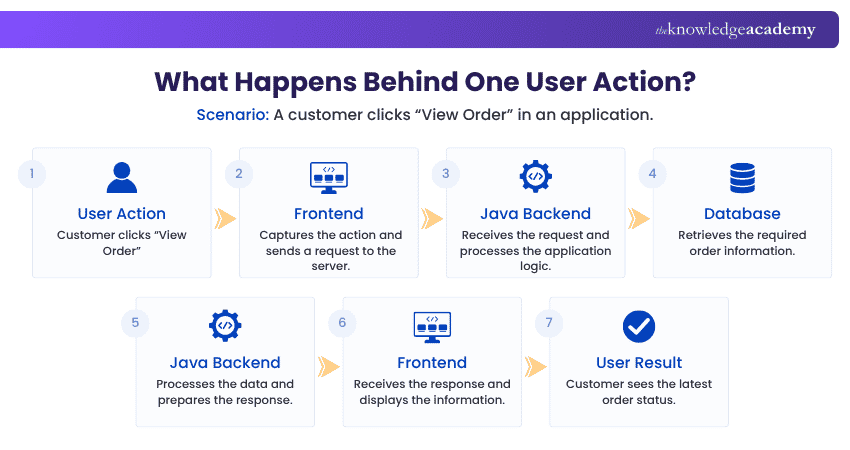
Java Developers help organisations create and maintain applications that need to remain reliable, scalable, and secure. Their contribution goes beyond coding because they also integrate systems, manage data, solve technical problems, and support applications after deployment.
1) Building Reliable Applications:
Java Developers create application logic and backend services that support business operations. Well-structured applications are easier to test, maintain, and extend as requirements change.
2) Supporting Enterprise Systems:
Java is used across many enterprise environments. Developers can build and maintain systems supporting finance, inventory, customer management, and other business processes.
3) Connecting Systems and Services:
Applications frequently need to communicate with databases and external services. Java Developers develop and integrate APIs that enable this exchange of information.
4) Maintaining Application Performance:
Developers monitor applications, analyse performance issues, and optimise code where required. This helps applications continue to perform effectively as workloads change.
5) Supporting Application Security:
Java Developers follow secure coding practices and may implement authentication, authorisation, encryption and input validation to help protect applications and data.
6) Maintaining Existing Applications:
Java Developers also fix bugs, update dependencies, improve existing features and adapt applications to changing technical and business requirements.
The Java Developer Ripple Effect
A Java Developer's work can create an impact beyond the code. Even a small technical improvement can influence application performance and the user experience.
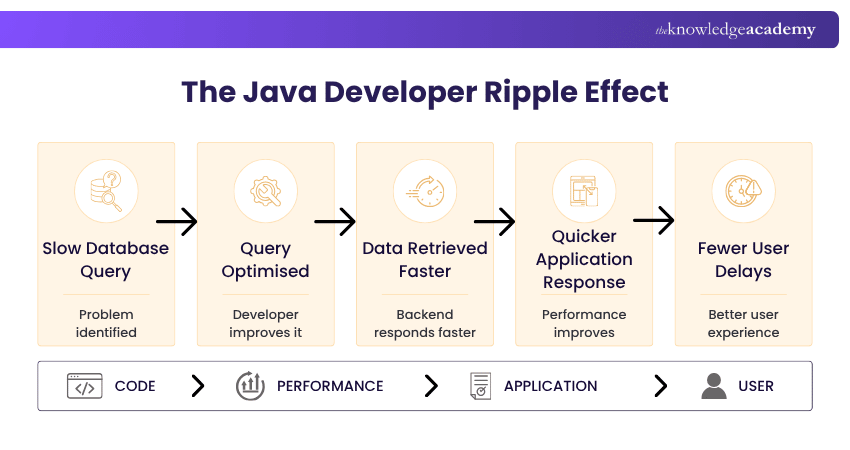
The Bigger Picture: A single technical improvement can create a chain reaction. By improving performance, reliability and maintainability, Java Developers can contribute to a smoother experience for the people using the application.
Roles and Responsibilities of a Java Developer
The importance of Java Developers comes from the impact of their work, but what does that work involve day to day? Their responsibilities vary by organisation, project and experience level, but commonly include the following:
1) Writing Server-side Code:
Java Developers write backend logic that processes requests, applies business rules and communicates with databases and other services.
2) Developing and Integrating APIs:
Java Developers build and integrate APIs that allow applications and services to exchange data. Frameworks such as Spring Boot can be used to create RESTful services and connect different software components.
3) Working With Databases:
They store, retrieve and manage application data. Technologies such as JDBC, JPA and Hibernate help Java applications interact with relational databases.
4) Testing and Debugging Applications:
Developers identify bugs, investigate their causes and implement fixes. Tools such as JUnit and Mockito can help verify whether application components behave as expected.
5) Monitoring Application Performance:
They may analyse logs, monitor application behaviour and investigate performance problems to identify bottlenecks and areas for optimisation.
6) Collaborating With Development Teams:
Java Developers work with Frontend Developers, Testers, DevOps professionals and other stakeholders to ensure application components work together effectively.
Acquire skills in Java programming for developing applications and embedded systems with our Java Engineer Training – Register now!
Your Turn: Find the Bottleneck
An online store normally processes orders quickly. During a major sale, checkout becomes extremely slow.
What should the Java Developer investigate?
A. Website coloursB. Database queries and API response timesC. Product photographsD. Logo placementAnswer: B
A Java Developer may inspect application logs, database queries, API response times and server resources to identify the slowdown.
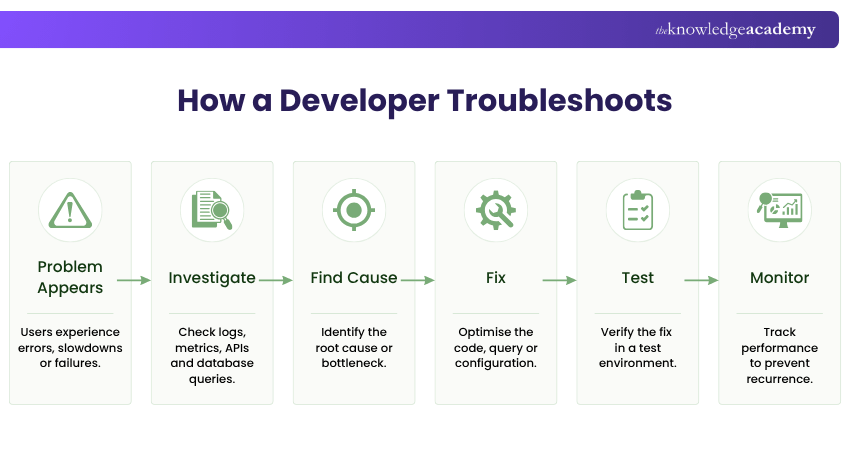
Developer Insight: Finding a bug is only part of troubleshooting. Java Developers also need to understand why it occurred, test the fix and monitor the application to reduce the chance of the problem returning.
Essential Skills for Java Developers
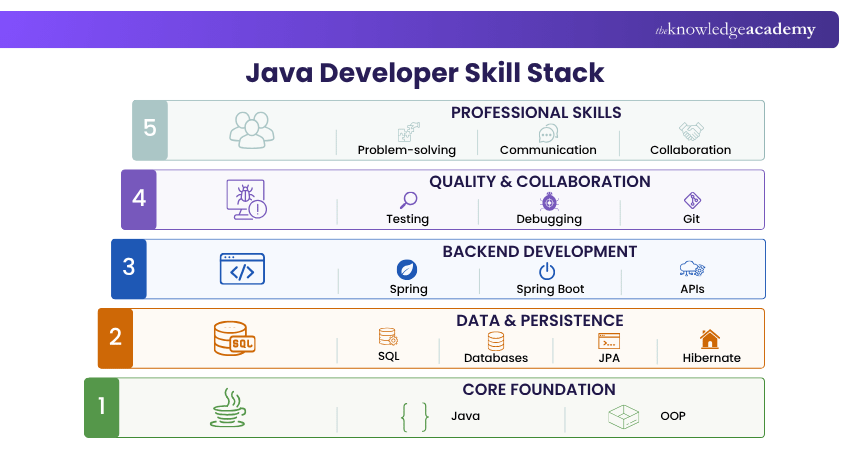
Java Developers need both technical and interpersonal skills to create reliable applications and work effectively within Development Teams.
1) Core Java and OOP:
Developers should understand Java fundamentals and concepts such as classes, objects, inheritance, polymorphism, interfaces, collections and exception handling.
2) Framework Knowledge:
Knowledge of Spring and Spring Boot can help Developers build backend and enterprise applications efficiently.
3) Databases and SQL:
Understanding relational databases, SQL and persistence technologies such as JPA and Hibernate helps Developers manage application data.
4) API Development:
Knowledge of HTTP, RESTful services, JSON and API integration is valuable for backend Java Development.
5) Testing and Debugging:
Developers need to identify problems and verify that applications behave as expected. JUnit and Mockito are commonly used for testing Java applications.
6) Version Control:
Git helps Developers track changes, collaborate with others and manage different versions of their code.
7) Problem-solving:
Java Developers regularly encounter bugs, performance issues and changing requirements. Analytical thinking helps them identify causes and develop practical solutions.
8) Communication and Collaboration:
Developers need to communicate technical information clearly, participate in code reviews and work effectively with technical and non-technical stakeholders.
Match the Problem to the Skill
You've explored the essential skills. Now, can you match each problem with the skill that could help solve it?
1) Application data needs to be retrieved efficiently.
2) Two Developers need to manage changes to the same project.
3) One application needs to communicate with another.
4) A feature stops working after an update.
Which skills would help?
1 → Databases and SQL
2 → Git and Version Control
3 → API Development
4 → Testing and Debugging
Trainer Insight: Don't try to master every Java technology at once. Start with Java and OOP fundamentals. Then progress to databases, APIs, Spring Boot, testing, and practical projects.
Understand how to integrate Java with from-end technologies efficiently with our Web Development Using Java Training – Join now!
How to Become a Java Developer?
There is no single path to becoming a Java Developer. A practical approach is to build strong fundamentals first and gradually apply them through increasingly complex projects.
Step 1: Learn Java Fundamentals
Start with Java syntax, variables, data types, operators, loops, methods, arrays, collections and exception handling.
Step 2: Master Object-oriented Programming
Understand classes, objects, inheritance, polymorphism, abstraction and encapsulation.
Step 3: Learn Databases and SQL
Practise SQL and understand how Java applications store and retrieve information from relational databases.
Step 4: Learn Git and Version Control
Become familiar with tracking code changes and collaborating with other Developers.
Step 5: Explore Spring and Spring Boot
Once your Java foundation is strong, learn how Spring and Spring Boot can be used to create backend applications and APIs.
Step 6: Practise Testing and Debugging
Learn to investigate problems and write automated tests using tools such as JUnit and Mockito.
Step 7: Build Practical Projects
Apply your knowledge by creating projects such as a booking system, task manager, inventory application or REST API.
Portfolio Tip: Don't build projects simply to fill your portfolio. Choose projects that demonstrate different skills, such as database integration, APIs, testing and problem-solving. Be ready to explain the problem, your approach and what you learned.
Step 8: Build a Portfolio and Apply for Roles
Organise your strongest projects into a clear portfolio. Explain the problems you solved, technologies you used and decisions you made, then use these examples when applying for relevant Java Developer roles.
Real-world Applications of Java
Java is used across many software environments. Its mature ecosystem and suitability for large applications have contributed to its continued use in enterprise systems, backend services and other applications.
1) Enterprise Applications:
Java is commonly used in enterprise applications that process business logic and integrate with multiple internal systems.
2) Financial Systems:
Java can be used in banking, payment processing and other financial applications that require reliable backend services.
3) E-commerce Platforms:
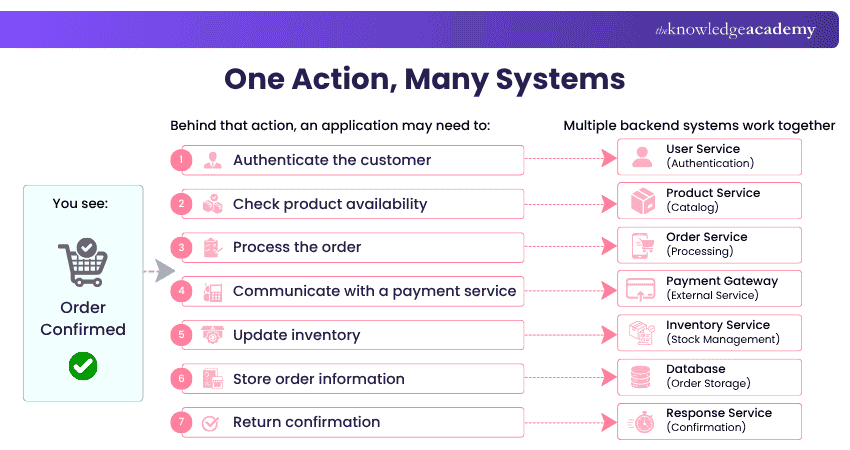
Java-based backend services can support customer accounts, product catalogues, inventory, orders and payment integrations.
4) Android Applications:
Java has played an important role in Android Development and remains relevant to many existing Android applications and codebases. However, Android now follows a Kotlin-first approach for modern development.
5) Cloud and Microservices:
Frameworks such as Spring Boot can be used to build services deployed in cloud environments and microservices architectures.
6) Data and Distributed Systems:
Java is also used within data-processing and distributed-system ecosystems where applications may require concurrency, reliability, and mature libraries.
Industry Insight: Java Developers rarely work with Java in isolation. Real applications may combine Java with databases, APIs, cloud services, testing tools, and other technologies. Understanding how these components connect can be as valuable as knowing the language itself.
Conclusion
Java Developers build application logic, connect systems, manage data, test solutions, and solve technical problems. Understanding What Does a Java Developer Do can help you explore the role, assess your interests and identify the skills needed to start your Java Development journey.
Implement standard SQL queries with databases with our Java Programming Training – Join now!

 If you wish to make any changes to your course, please


