




We may not have the course you’re looking for. If you enquire or give us a call on 01344203999 and speak to our training experts, we may still be able to help with your training requirements.
Virtual Teams vs Traditional Teams: A Detailed Comparison
ByAishwarya UnniLast updated on: 03 October 2026
This comprehensive blog explores the nuances of virtual vs traditional teams. It delves into their differences, providing insights into organisational structures, strategies, and more. It also highlights what organisations should consider when choosing between these team structures.

Ever had a teammate sitting five feet away who still sends you a message instead of speaking? Now imagine that teammates are five time zones away, possibly having lunch while you are wrapping up your day. Welcome to modern teamwork.
Where people work changes more than just where meetings happen. It can shape team chemistry, decision-making, trust, routines, and even how quickly a simple “Can you check this?” gets answered. That is where virtual and traditional teams start to feel very different.
What are Virtual Teams?
Virtual teams are groups of professionals who work together from different locations using digital communication and collaboration tools. They may rely on video conferencing, messaging platforms, cloud-based applications, and shared project tools to coordinate tasks, communicate, and achieve common goals.

What are Traditional Teams?
Traditional teams are groups of professionals who usually work together in the same physical location. They typically have greater opportunities for face-to-face communication and in-person collaboration, while also using digital tools to coordinate tasks, solve problems, and achieve shared goals.
Difference Between Virtual Teams vs Traditional Teams
Now that you know what virtual and traditional teams are, let's dive into their differences. Read along to understand the differences between the two in detail.
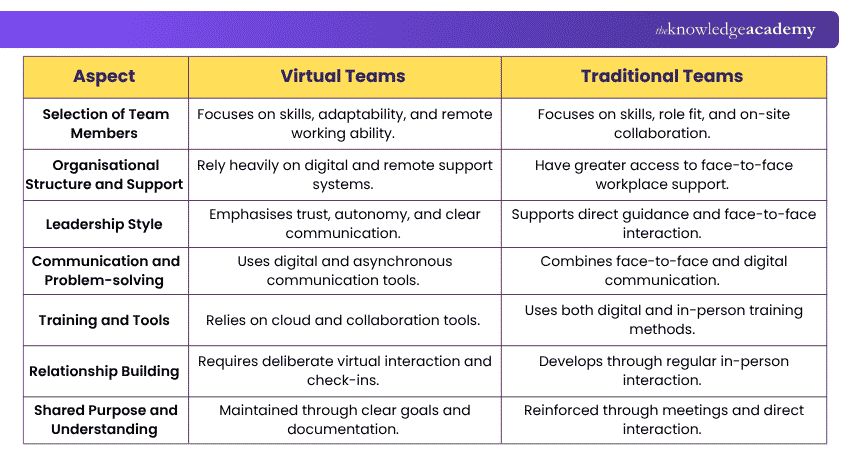
1) Selection of Team Members
Selecting the right members for virtual teams is crucial. They need to possess the required skills and be adaptable to work independently and effectively in a remote setting. Virtual teams may also benefit from members who can communicate effectively across digital channels and coordinate work across different locations, time zones, and cultural contexts.
Unlike co-located teams, virtual teams may place greater emphasis on a person's ability to communicate digitally, work independently, manage time effectively, and collaborate across locations or time zones.
2) Organisation Structure and Support
Virtual teams can operate within centralised, decentralised, hierarchical, or flat organisational structures. What distinguishes them is their greater dependence on digital systems for communication, resource access, coordination, and technical support across locations.
Traditional teams can also follow different organisational structures, but co-location provides easier access to face-to-face support from managers, colleagues, IT, HR, and administrative teams.
3) Leadership Style
Leading virtual teams often requires deliberate communication, trust-building, clear expectations, and effective coordination across digital channels. Leaders may give team members greater autonomy while ensuring they remain aligned on responsibilities and goals.
Traditional teams may allow leaders more opportunities for direct interaction, observation, and immediate feedback. However, leadership style in either team depends on factors such as the task, organisational culture, team maturity, and individual needs rather than physical location alone.
4) Communication and Problem-solving
Virtual teams rely more heavily on digital platforms and may use asynchronous communication when members work across different locations or time zones. Problem-solving can take place through virtual meetings, messaging, and collaborative tools.
Traditional teams have greater opportunities for face-to-face communication, which can support immediate clarification and spontaneous discussion. However, they may also use digital tools for communication and problem-solving.
Become the go-to consultant for virtual teams with our Virtual Consultant Training - Register Now!
5) Training and Tools
Virtual teams may benefit from training that helps members navigate the challenges of remote collaboration effectively. Training programs may include:
1) Sessions on utilising digital tools
2) Managing time effectively in a remote setting
3) Fostering effective communication and collaboration
Virtual teams rely on various digital tools and technologies to facilitate their work, such as project management software, video conferencing platforms, and cloud-based storage solutions.
Traditional teams may have greater access to in-person training and hands-on support, although they can use many of the same digital collaboration, project management, and cloud-based tools as virtual teams.
Pro Tip
Before choosing a team setup, map the work itself. Tasks that can be coordinated asynchronously may suit virtual teams, while activities requiring frequent real-time discussion or hands-on coordination may benefit from more in-person interaction.
6) Relationship Building
Building strong relationships within virtual teams requires intentional effort and the use of digital platforms to facilitate interactions and foster a sense of camaraderie among team members. Strategies such as virtual team-building activities, regular check-ins, and informal communication channels can help bridge the gap created by physical distance and promote a sense of belonging.
In traditional teams, relationship building can be supported by frequent in-person interactions, informal workplace conversations, team activities, and face-to-face meetings, helping create opportunities to build trust and collaboration.
7) Shared Purpose and Understanding
Creating a shared purpose in virtual teams involves clearly defining goals, values, and expectations through virtual meetings and collaborative documents. Emphasising transparency and open communication channels helps ensure alignment despite physical distance.
Traditional teams foster shared understanding through face-to-face interactions, reinforcing organisational missions and values. Both approaches aim to unite team members towards common objectives, regardless of the team's structure.
Keep This in Mind
1. Virtual and traditional teams can both be effective when roles, goals, and communication are clear.2. Virtual teams rely more on digital coordination, while traditional teams benefit from regular face-to-face interaction.3. Leadership style should match the team’s needs rather than the team’s location.4. Strong relationships and shared purpose matter in both working models.5. Hybrid working increasingly combines elements of both approaches, so the distinction is not always absolute.
Learn how to manage a team from anywhere! Sign up for our Managing Remote Teams Training - Register now!

Aishwarya Unni is a Copywriter with 2+ years of experience in reporting, web content, blogs, email marketing, and case studies. Her journalism background, combined with her research and writing experience across Business Skills and Human Resources, helps her create clear, engaging content for different audiences.
View Detail

 If you wish to make any changes to your course, please


