


 Top Rated Course

We may not have the course you’re looking for. If you enquire or give us a call on 01344203999 and speak to our training experts, we may still be able to help with your training requirements.
What is Wealth Management?
Olivia Taylor 25 August 2026Wealth Management is a professional service that coordinates areas such as financial planning, investments, risk, tax and estate planning. It aims to help individuals manage, protect and organise their wealth according to their financial goals and circumstances.
Training Outcomes Within Your Budget!
We ensure quality, budget-alignment, and timely delivery by our expert instructors.
Table of Contents
Related Courses

Key Takeaways
1) Wealth Management combines different financial services within a coordinated strategy.2) Common services include financial planning, investment management, risk management, tax planning and estate planning.3) Strategies are typically shaped by financial goals, time horizon, circumstances and risk tolerance.4) Wealth Management can help coordinate financial decisions rather than treating each goal separately.5) There is no universal minimum amount required, as eligibility and service models vary between providers.
Imagine someone in their 40s who is earning more than before and has several financial priorities:
Build retirement savings
Manage an investment portfolio
Plan for tax considerations
Protect their family financially
Think about passing wealth to the next generation
Each goal can be managed separately. However, a decision in one area may affect another. For example, an investment decision can influence risk exposure, tax considerations and progress towards long-term goals.
This is where Wealth Management becomes useful. Instead of managing each financial priority separately, it brings different areas together within a coordinated strategy based on an individual's goals and circumstances. In this blog, we'll explore what Wealth Management is, how it works, its key services, benefits and when it may be worth considering.

Understanding What is Wealth Management
Wealth Management is a coordinated financial advisory service that can bring together areas such as financial planning, investment management, risk management, tax considerations and estate planning.
Rather than addressing each financial need separately, Wealth Management considers how different decisions may affect one another and develops a strategy around the client's goals, circumstances, time horizon and risk tolerance.
How Does Wealth Management Work?
The process can vary between providers, but a typical Wealth Management approach may involve:
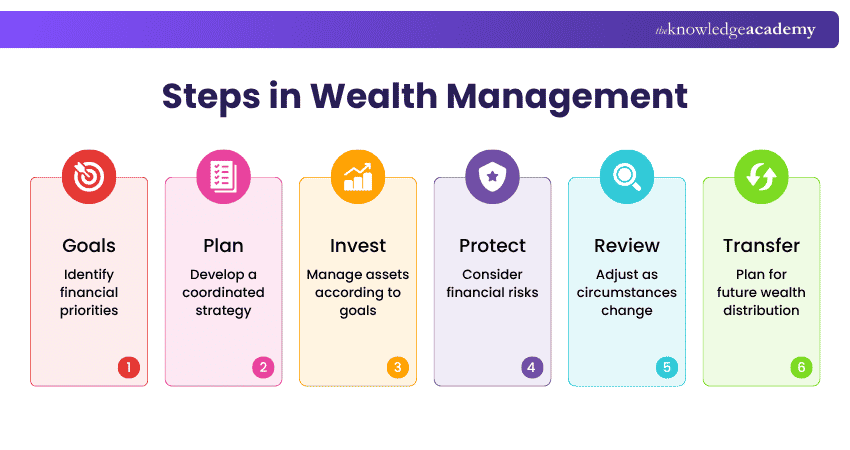
1) Identify Goals: Understand financial priorities, circumstances and long-term objectives.
2) Develop a Plan: Build a coordinated financial strategy around those objectives.
3) Manage Investments: Structure investments according to goals, time horizon and risk tolerance.
4) Manage Risk: Identify financial risks and consider appropriate ways to address them.
5) Review the Strategy: Monitor progress and adjust the approach when circumstances change.
6) Plan Wealth Transfer: Consider how assets may eventually be transferred according to the client's wishes and applicable laws.
Key Wealth Management Services
Wealth Management can combine several financial services depending on the client's goals and circumstances. These services work together to create a more coordinated approach to managing wealth.
1) Financial Planning: This begins with understanding the client's overall financial position. This may include income, expenses, assets, liabilities and short- and long-term goals. The resulting financial plan provides a framework for decisions related to saving, investing, retirement and other financial priorities.
2) Investment Management: This involves building and monitoring a portfolio based on factors such as financial goals, investment horizon and risk tolerance. Investments may be diversified across different asset classes to manage concentration risk.
KEY INSIGHT
Appropriate investment risk depends on more than the desire for higher returns. Goals, time horizon, financial capacity and tolerance for losses also matter.
3) Tax Planning: Tax planning considers how financial decisions may affect a client's tax position. Depending on the jurisdiction and circumstances, suitable strategies may help clients structure their finances more tax-efficiently.
4) Risk Management: Risk Management identifies events that could disrupt financial goals. This can involve reviewing portfolio risk, financial reserves and appropriate insurance arrangements. The aim is not to eliminate every risk but to understand and manage risks in line with the client's circumstances.
5) Estate Planning: Estate Planning considers how assets should be managed and eventually transferred to beneficiaries. It may involve wills, trusts, inheritance considerations and succession arrangements depending on the jurisdiction and individual circumstances.
6) Regular Review and Adjustment: Financial circumstances rarely remain unchanged. Income, family responsibilities, markets, goals and risk tolerance can evolve. Regular reviews allow the financial strategy and portfolio to be adjusted when necessary.
MYTH:
“Wealth Management is only for millionaires.”REALITY:
Traditional Private Wealth Management may target high-net-worth clients, but the broader market includes different service models and eligibility requirements. The appropriate option depends on the individual's needs, provider and cost.
Gain practical personal finance skills that deliver for a lifetime with our Personal Finance Course - Register today!
Benefits of Wealth Management
The main value of Wealth Management comes from coordinating different financial decisions within a broader strategy. Depending on individual circumstances and the services provided, potential benefits include:
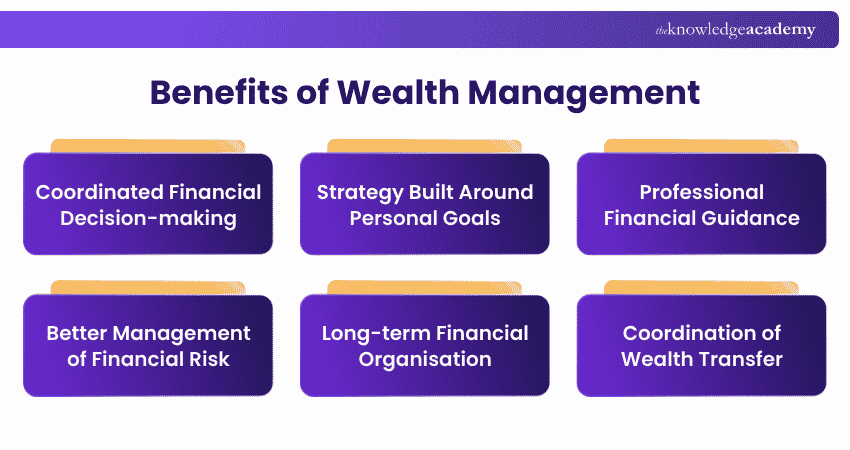
1) Coordinated Financial Decision-making
Investment, retirement, tax, risk and estate decisions can affect one another. Wealth Management can help consider these areas together rather than managing each independently.
2) Strategy Built Around Personal Goals
Financial decisions can be structured around individual objectives, time horizons, circumstances and tolerance for risk.
3) Professional Financial Guidance
Access to qualified financial professionals can provide additional expertise when evaluating complex financial decisions and available options.
4) Better Management of Financial Risk
A coordinated strategy can help identify different sources of financial risk and determine appropriate ways to manage them. However, no strategy can eliminate investment risk entirely.
5) Long-term Financial Organisation
Wealth Management can provide a structured approach for monitoring financial goals and adjusting plans as circumstances evolve.
6) Coordination of Wealth Transfer
Where estate planning forms part of the service, Wealth Management can help coordinate financial arrangements for transferring assets according to the client's objectives and applicable legal requirements.
Trainer Insight
The strength of Wealth Management is coordination. A decision about investments may affect tax, risk or estate considerations, so looking at the complete financial picture can be more useful than treating every decision separately.
Alternatives to Full Wealth Management
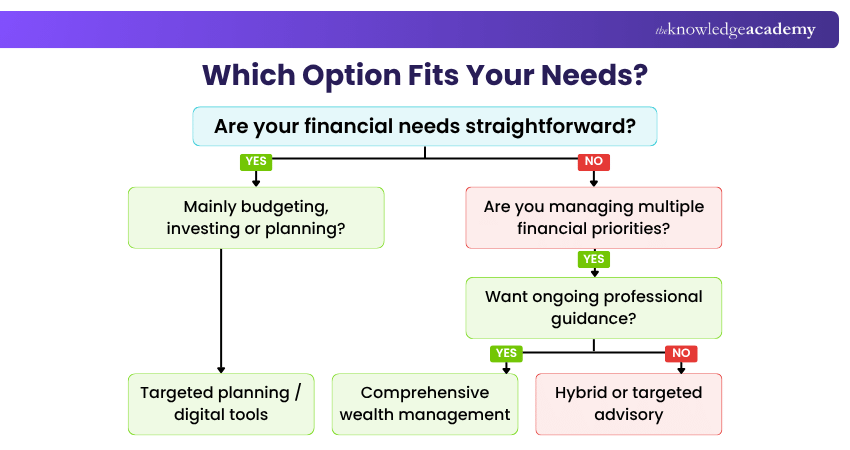
Full Wealth Management is not necessary for everyone. The appropriate alternative depends on the complexity of your finances, how much support you need and whether you prefer professional or self-directed management. Here are some popular choices:
1) Robo-advisers: Robo-advisers use automated systems to build and manage investment portfolios based on information such as goals and risk tolerance. They can offer a lower-cost alternative to highly personalised advisory services.
2) Online Financial Planning Tools: Budgeting applications, calculators and planning tools can help people organise financial information, track progress and manage relatively straightforward goals independently.
3) Financial Planners: People who need help with specific areas such as retirement, budgeting or broader financial planning may consider professional Financial Planning without requiring comprehensive Wealth Management.
4) Self-directed Investing: People with suitable knowledge and relatively straightforward requirements may choose to manage their own investment portfolios through brokerage platforms.
5) Hybrid Advice: Hybrid models combine digital tools or automated portfolio management with access to human advisers, providing a middle ground between fully digital and traditional advisory services.
Financial Needs Check
Before deciding whether Wealth Management is suitable, ask yourself:
☐ Do I have several financial goals that affect one another?☐ Are my investments becoming difficult to manage independently?☐ Do I need help coordinating retirement, risk, tax and estate considerations?☐ Have major life events changed my financial priorities?☐ Would ongoing professional reviews be valuable?☐ Do I understand the fees involved and the services I would receive?More “Yes” answers do not automatically mean you need Wealth Management. They can indicate that your financial situation may benefit from a more coordinated review.
Pro Tip
Before choosing a Wealth Management provider, understand what services are included, how fees are calculated, any minimum asset requirements and potential conflicts of interest. Even relatively small ongoing fees can affect investment returns over time.
Conclusion
Wealth Management brings financial planning, investments, risk management, estate planning and tax considerations into one coordinated approach. Understanding What is Wealth Management can help individuals make informed financial decisions and align their wealth with long-term goals. With regular reviews and proper strategies, it can protect assets and prepare finances for changing needs over time.
The future belongs to financial leaders. Find new career opportunities with our range of Finance Courses - Sign up now!
Frequently Asked Questions
How Much Money do You Need for Wealth Management?

There is no universal minimum amount required for Wealth Management. Eligibility varies between providers and service models. Some firms primarily serve high-net-worth clients, while others offer advisory or digital services at lower asset levels.
How Much Does Wealth Management Cost?
Wealth Management costs vary according to the provider and services offered. Charges may include asset-based fees, fixed or flat fees, hourly fees or other arrangements. Clients should understand both advisory fees and any additional investment or account costs before choosing a service.
What is the Difference Between Wealth Management and Financial Planning?
Financial Planning focuses on developing a plan around financial goals such as saving, retirement and budgeting. Wealth Management can have a broader scope by coordinating Financial Planning with areas such as Investment Management, risk, tax considerations and Estate Planning, depending on the services offered.
What Should You Look for in a Wealth Manager?
Consider the professional's qualifications, experience, services, fees, investment approach and any potential conflicts of interest. It is also important to understand how frequently your finances will be reviewed and whether the services offered match your actual needs.

Olivia Taylor


Chartered Accountant and Financial Training Specialist
Olivia Taylor is a qualified chartered accountant with over a decade of experience in financial management, auditing and corporate reporting. Having worked with leading firms in both the public and private sectors, Olivia brings clarity to complex financial topics. Her writing focuses on helping professionals build confidence in key areas of accounting, compliance and financial planning.
View Detail

 If you wish to make any changes to your course, please


