


 Top Rated Course

We may not have the course you’re looking for. If you enquire or give us a call on 01344203999 and speak to our training experts, we may still be able to help with your training requirements.
Types of Shots in Film: Complete Filmmaker Guide
The Knowledge Academy 25 July 2026Types of Shots in Film are essential to visual storytelling, guiding audience focus, emotion, and perspective through camera distance and framing techniques. Each shot serves a unique purpose in shaping a scene's impact and narrative. Understanding them helps create more engaging and visually compelling films.

Training Outcomes Within Your Budget!
We ensure quality, budget-alignment, and timely delivery by our expert instructors.
Table of Contents

When we watch a film, we remember the characters, dialogue, or music. However, every memorable scene is built using different Types of Shots in Film. Each shot influences our emotions, directs our attention, and helps tell the story more effectively. Understanding this visual language is essential for creating impactful films.
In this blog, we’ll explore different Types of Shots in Film and how they bring stories to life, captivate audiences, and convey emotions beyond words. This knowledge helps you see films with fresh eyes and appreciate the artistry that transforms simple scenes into cinematic masterpieces.
Table of Contents
1) What are Camera Shots?
2) Types of Shots in Filmmaking
3) Camera Angles in Film
4) Compositional Shot Types
5) Camera Movements
6) Lens-based Shots
7) How Shot Selection Enhances Storytelling?
8) Conclusion
What are Camera Shots?
Camera Shots are different ways of framing a subject to help Filmmakers communicate each moment. They act as the visual language of Filmmaking, ensuring that Directors, Cinematographers, and the production team work on designing a scene. The Types of Shots in Film determine the direction of the audience’s attention and add context to the story.
In earlier times, cameras were fixed in one place, simply recording movement within the frame. As Filmmaking kept evolving, it began exploring different Types of Shots in Film to build real and impactful narratives. Also, it is important to note that shot types refer to how much of the scene is shown, while camera angle describes the camera’s position. Each shot informs the audience, adds emotion, and reveals key moments.
Types of Shots in Filmmaking
There are various shots that Directors and Cinematographers employ to craft compelling cinematic experiences. Understanding the different types of camera shots in film helps enhance visual storytelling and is integral to the filmmaking process. Given below is a comprehensive list:
1) The Extreme Wide Shot
The Extreme Wide Shot (EWS), sometimes called the Extreme Long Shot, is all about scale and context. In this shot, the subject is either very small within the frame or sometimes barely visible at all. Instead, the environment dominates the screen, with vast landscapes, towering cityscapes, or sweeping battlefields.

Filmmakers use the EWS to set the stage. It tells the audience where the story takes place and can create a sense of grandeur and isolation. It is like an opening shot in a Western film showing endless desert plains, or a superhero movie revealing a skyline before zooming into the action.
2) Long Shot (LS)
A Long Shot, referred to as a Wide Shot, provides a broad perspective of the scene. It enhances creativity in filmmaking by capturing the full essence of the environment. It’s like stepping back to take in everything within a single frame. This shot is commonly used to establish the setting and convey a sense of the surroundings. It helps the audience understand where the story unfolds.
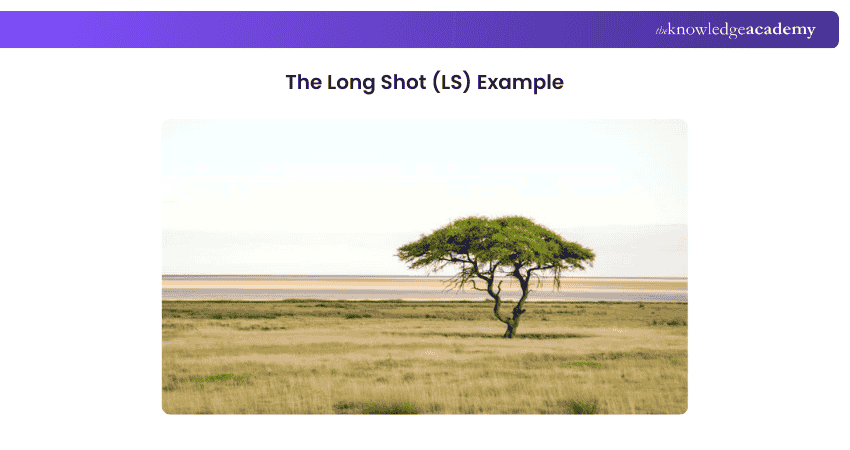
This shot is effective for showing the relationship between the character and their environment. It can make characters appear small to emphasise isolation or vulnerability. In the arena of action films, this shot provides audiences with context and scale to make the storytelling a visually immersive experience.
3) The Full Shot
The Full Shot frames the subject from head to toe, showing the entire body within the frame. Unlike a wide shot that emphasises the environment, the focus here is firmly on the person, their movement, and how they physically interact with the space around them.
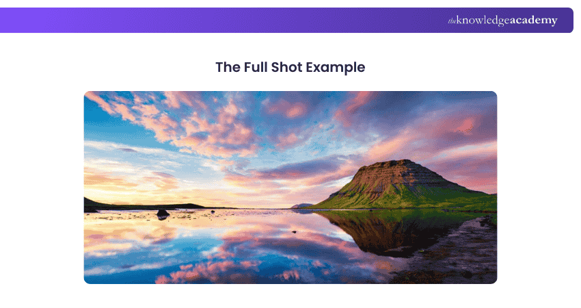
This shot is great for highlighting body language, costume, and action. For example, a character pacing nervously, a dancer performing, or a superhero striking a pose. It gives the audience a complete view of the subject while still keeping some context of the background. Full Shots are often used to introduce characters or to showcase dramatic physical performances.
4) Medium Shot (MS)
In a Medium Shot, you see a person or people from about their waist up. It will look like having a conversation with someone, and you can see their body language and expressions. Medium Shots are used for dialogues and interactions between characters. They help you connect with the characters better.
This shot gives the audience a clear view of both facial expressions and body language. Unlike a close-up that zooms in on emotions, the Medium Shot allows us to see gestures and movement. Filmmakers rely on this shot as a kind of “workhorse” of storytelling, and find it effective for keeping the audience engaged.
5) Close-up (CU)
Close-ups shot is really close to something, usually a person's face. It's like seeing every little detail, like their eyes and lips. Close-ups are used to capture strong emotions, highlight important moments, or focus on specific things. They make you feel intimately connected to what you're seeing.
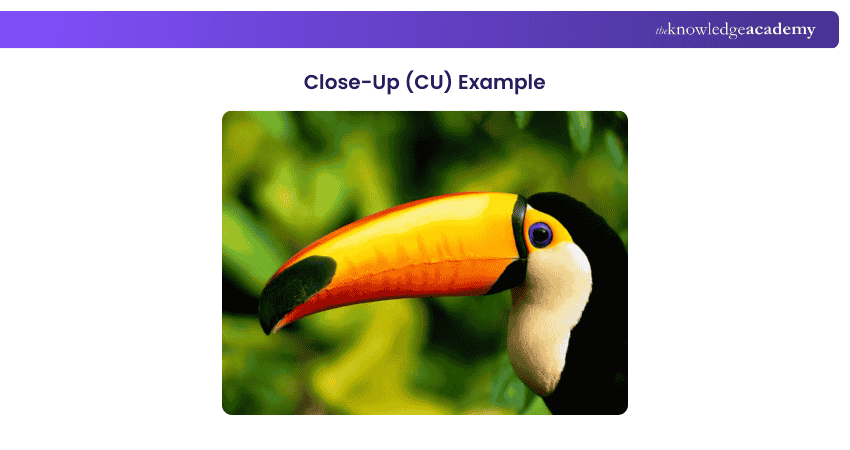
The real strength of Close-Up lies in its ability to create intimacy and connection. It shrinks the distance between the viewer and the subject, almost as if we’re reading their thoughts. When used sparingly, it can heighten drama and deliver emotional impact.
6) Extreme Close-up (ECU)
An Extreme Close-up goes even closer, showing only a tiny part of something, like an eye or a hand. It's super close and dramatic. Extreme Close-ups are used to make things look very important and create tension. They focus on the tiniest details and emphasise their significance.
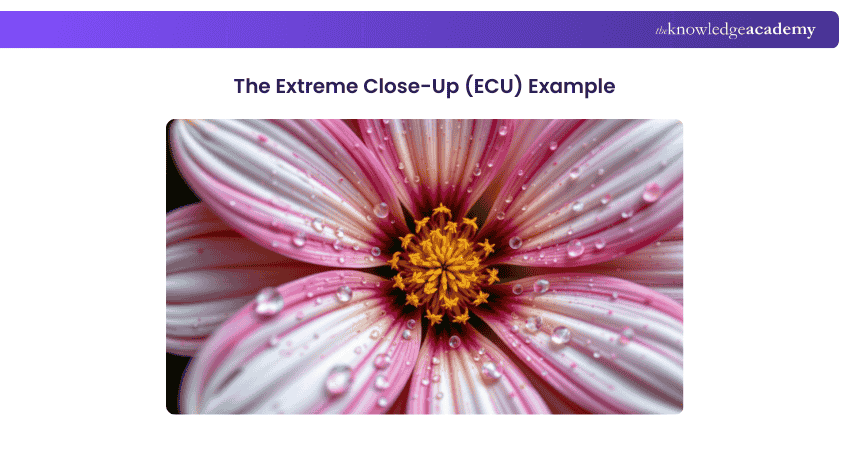
A bead of sweat rolling down a character’s face might reveal fear. An ECU of an eye can show determination, shock, or even secrecy. On objects, it signals to the audience, “this detail matters”, whether it’s a trigger being pulled or a ring being slipped onto a finger.
Camera Angles in Film
The camera angles below show how perspective can shape a scene's mood and visual impact.
1) Eye Level Shot
An Eye Level Shot places the camera at the same height as the character’s eyes. This provides a natural perspective and mirrors the way we view the world. This is particularly useful to make the audience comfortable and focused on what the character is doing or about to say.
The shot is greatly suited for everyday interactions, dialogue scenes, interviews, and documentaries. It presents characters as genuine and relatable because it avoids the emotional influence through this angle. This establishes a strong connection and equality between the audience and the subject.
2) High Angle Shot
A High Angle Shot positions the camera above the subject and points it downward. The visual choice makes the subject smaller to create feelings of vulnerability, fear, or power imbalance. It is used in action sequences or dramatic moments to show the character being overwhelmed by the situation.
This Type of Shot in Film utilises high angles to reveal large environments, such as crowds. This is achieved by using cranes, drones, or elevated platforms. The higher the camera is placed, the more dramatic the effect and impact is achieved.
3) Low Angle Shot
A Low Angle Shot is captured from below the subject, with the camera pointing upwards. This angle makes the subject appear larger, stronger, or more dominant, helping establish authority, confidence, or importance within a scene.
Filmmakers often use Low Angle Shots to emphasise powerful characters, dramatic moments, or heroic actions. Depending on the context, they can also create a sense of intimidation, making the audience perceive the subject as imposing or influential.
4) Bird's-eye View
A Bird's-Eye View is filmed from directly above the subject, providing an overhead perspective of the scene. This angle highlights the spatial relationship between people, objects, and their surroundings while offering a unique visual viewpoint.
It is commonly used to establish location, show movement, or make characters appear small within a larger environment. Bird's-Eye View shots can also create feelings of isolation, vulnerability, or detachment, depending on the story being told.
5) Dutch Angle Shot
A Dutch Angle Shot, also known as a tilted shot, is created by deliberately tilting the camera so that the horizon is no longer level. This unusual framing immediately creates visual tension and draws attention to the scene.
Directors use Dutch Angle Shots to convey unease, confusion, instability, or psychological conflict. They are frequently seen in thrillers, horror films, and action sequences to heighten suspense and make audiences feel that something is out of balance.
Compositional Shot Types
The following shot types highlight how composition is used to guide focus and strengthen visual storytelling.
1) The Establishing Shot
The Establishing Shot is often the very first shot of a scene, designed to set the stage. It usually shows a wide view of the location, a city skyline, a school building, a battlefield, or even just the exterior of a house. It gives confidence to the audience regarding where the story is happening before moving into character centric shots.
Its purpose is to orient the audience: it tells them where the action is taking place and sometimes even when. Establishing shots help avoid confusion and give context before cutting into closer, more detailed shots. They also set the mood; a peaceful sunrise suggests calm, while a stormy sky signals tension or conflict.
Unlock your creativity and craft professional tracks with structured guidance - Register for the Music Production Course today!
2) Master Shot
A Master Shot captures the entire scene from a wide perspective, showing all the main characters and their surroundings in a single continuous take. It establishes the setting, spatial relationships, and overall action before moving to closer shots.
Filmmakers use a Master Shot as the foundation for a scene, allowing editors to cut to medium or close-up shots while maintaining continuity. It also helps audiences understand the context of the action and how each character fits within the scene.
3) Over-the-shoulder Shot
The Over-the-shoulder (OTS) Shot is a classic framing used in conversations and confrontations. The camera is positioned behind one character’s shoulder, looking at the person they’re speaking to. This gives the audience the perspective of being part of the exchange while still showing both characters in the frame.

OTS shots are great for dialogue scenes because they maintain a sense of connection between characters. They can also reveal power dynamics, for example, showing more of one character’s back might suggest dominance, while keeping the focus tightly on the other could highlight vulnerability. The OTS helps the audience feel immersed in the interaction, almost as if they are standing right there in the conversation.
3) Reaction Shots
A Reaction Shot focuses on a character’s emotional response instead of the main action. These Types of Shots in Film are close-ups to capture the subtle expressions, such as joy, fear, or surprise. They help the audience connect emotionally and understand the story beyond the dialogue.
Also, Filmmakers use this shot to build tension, integrate humour, or emphasise dramatic transitions. By showing how characters respond to events and conversations, storytelling depends on it and makes scenes more engaging for the audience.
Camera Movements
1) Pan
Pan means moving the camera smoothly from side to side, like turning your head. It's used to show what's happening in a wider area or to follow something that's moving horizontally. Panning Shots help you get a sense of the surroundings and follow the action.
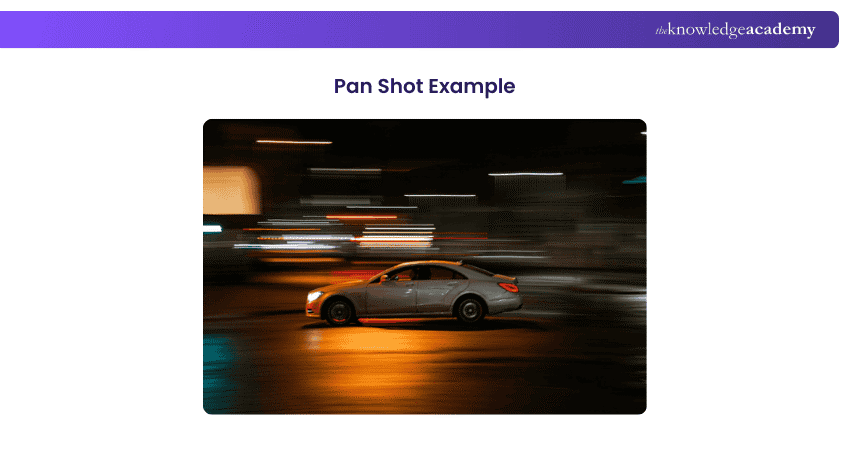
A slow pan can build suspense, for example, when revealing an important detail on the far side of a room. Faster pans can add energy when tracking quick movements. When executed well, a pan feels natural and guides the audience’s eyes across the scene with ease.
2) Tilt
Tilt is when the camera looks up or down without moving its position. It's like tilting your head to see something above or below you. Tilt Shots are used to show tall things, like buildings, or to reveal things at different heights in the scene. They help you look up or down within a frame.
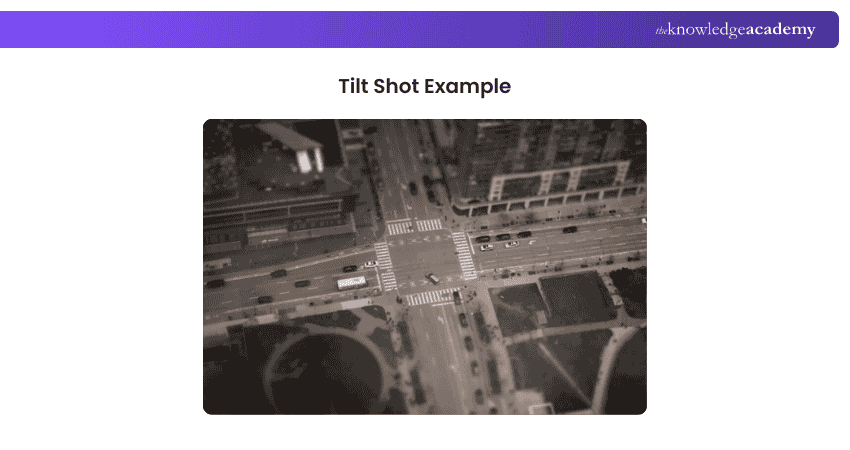
Tilts can also be used for reveals, such as looking down to discover a hidden object or tilting up to unveil a character dramatically entering a scene. This movement shifts perspective and adds visual interest while keeping the audience focused within a single frame.
3) Tracking Shot (Dolly Shot)
A Tracking Shot is like the camera riding on a moving platform, smoothly following people or things as they move. It's used to create a sense of movement and flow. Tracking Shots make you feel like you're right there with the characters, moving along with them.
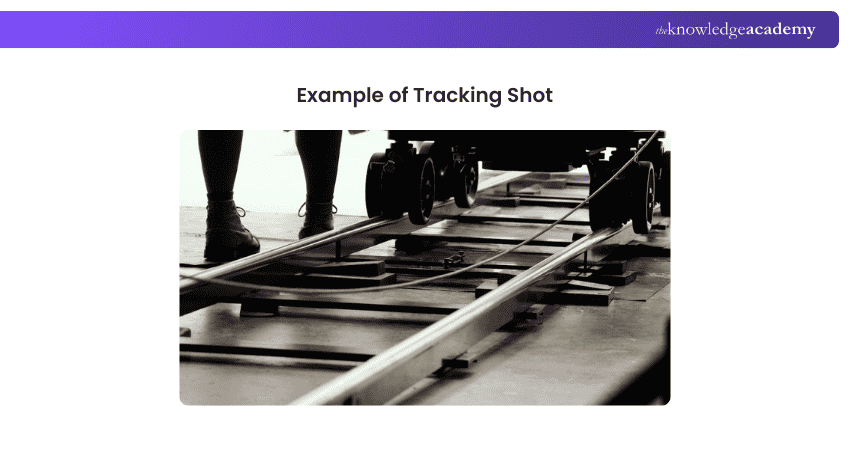
Famous filmmakers like Martin Scorsese and Stanley Kubrick used tracking shots to give scenes an almost dreamlike, uninterrupted flow. Whether used in quiet moments (like following a character through a hallway) or in action-packed sequences, the dolly shot adds fluid motion that keeps viewers engaged.
Lens-based Shots
Lens-based Shots create a distinct visual effect that enhances the mood and storytelling of a scene. This Type of Shot in Film directs the audience’s focus, adds suspense, and emphasises important actions or subjects.
1) Zoom Shot
A Zoom Shot uses the camera lens to make subjects appear closer or farther away without physically moving the camera. This technique is commonly used when a Filmmaker wants to direct the audience’s attention to a character’s reaction and reveal important details of a scene. A fast zoom creates suspense while a slower zoom builds tension.
By adjusting the lens of the camera during filming, the frame appears to shift smoothly inward or outward. This provides the audiences with a feeling of moving with the point of the view of the character. It can highlight a crucial subject or intensify a dramatic moment, controlling focus and energy on screen.
2) Reverse Zoom Shot
A Reverse Zoom Shot starts closing on the subject and then proceeds to zoom outward to show the environment. It is useful for revealing a character’s surroundings or how small they appear compared to their environment. This technique can transform a scene from intimate to expansive by adding scale and context seamlessly.
Filmmakers use this Type of Shot in Film to reveal dramatic scenes or actions. It expands the frame to add excitement and create a visual impact. By slowly pulling back, the audience discovers new elements of the scene, making storytelling visually immersive.
Bring fashion design to elevate the big screen with Fashion Designing Training – Register today!
How Shot Selection Enhances Storytelling?
Shot selection is a powerful storytelling tool in filmmaking. Every framing, angle, or movement shapes how the audience experiences a scene. A wide shot sets context, a close-up reveals emotion, and a tracking shot immerses viewers in action. Thoughtful shot choices guide perspective, build mood, and convey meaning beyond dialogue.
How Many Types of Shots do we Have?
Filmmakers mostly use three main Types of Shots in Film:
1) Long Shots: Shows the subject from a distance to emphasise the setting
2) Medium Shots: Provides balance between the character and surroundings
3) Close Shots: Useful for revealing subtle details and emotions
Conclusion
The different Types of Shots in Film are powerful visual tools that Filmmakers use to shape storytelling and evoke emotions. Each shot serves a specific purpose, whether establishing the setting, highlighting a character's emotions, or advancing the narrative. By understanding the different shot types, Filmmakers can elevate their craft and create more compelling, cinematic stories.
Make time for yourself - Start by joining Hobbies & Interests Training that inspires and energises now!
Frequently Asked Questions
What is a Shot List in Film?

A shot list is a filmmaker’s blueprint, detailing every planned shot for a scene. It outlines camera angles, framing, and movements, helping the crew stay organised. By breaking down the director’s vision into specific visuals, a shot list ensures efficiency and clarity on set.
What is the Most Popular Shot in Filmmaking?
Medium Shot is the most popular in filmmaking. Framed from the waist up, it balances expressions and body language, making it perfect for dialogue and character interactions. It is natural, an eye-level perspective feels familiar and keeps the audience emotionally connected.

The Knowledge Academy


Global Training Provider
The Knowledge Academy is a world-leading provider of professional training courses, offering globally recognised qualifications across a wide range of subjects. With expert trainers, up-to-date course material, and flexible learning options, we aim to empower professionals and organisations to achieve their goals through continuous learning.


 If you wish to make any changes to your course, please


