


 Top Rated Course

We may not have the course you’re looking for. If you enquire or give us a call on 01344203999 and speak to our training experts, we may still be able to help with your training requirements.
Swing Trading vs Day Trading: Pros, Cons, and Key Differences
The Knowledge Academy 15 July 2026The key Swing Trading vs Day Trading difference is that Day Traders aim to profit from price fluctuations in a day, while Swing Traders hold positions longer. Day Trading requires constant monitoring and quick decision-making, whereas Swing Trading allows for a more patient approach, focusing on identifying and riding market trends.

Training Outcomes Within Your Budget!
We ensure quality, budget-alignment, and timely delivery by our expert instructors.
Table of Contents
Related Courses
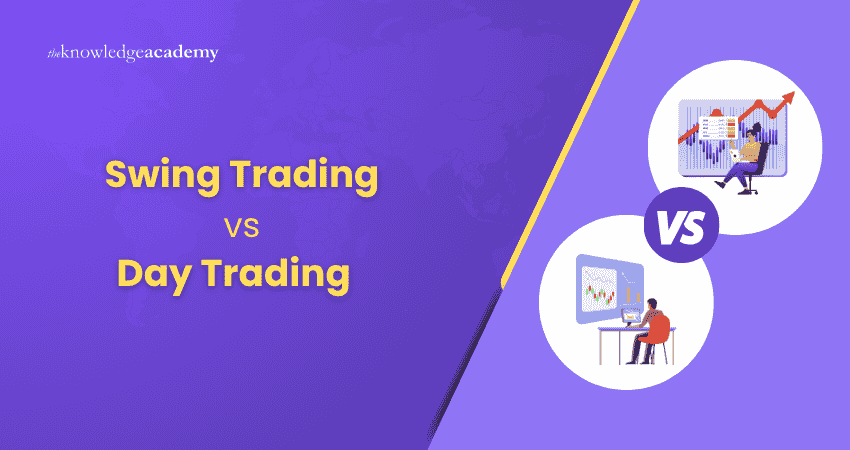
Swing Trading and Day Trading are like two sides of the same coin; both aim to profit from market moves, but their strategies move to different rhythms. While Day Traders chase quick wins within a span of hours, Swing Traders ride the trends over days. Each style has its own tempo, tools and temperament.
In this blog, we’ll break down the pros, cons, and key differences between Swing Trading vs Day Trading. So read on, learn what makes these trading approaches tick and pick the one that best suits your financial groove. Let’s dive in!
Table of Contents
1) What is Day Trading?
2) What is Swing Trading?
3) Differences between Day Trading and Swing Trading
4) Pros and Cons of Day Trading
5) Pros and Cons of Swing Trading
6) How Do I Start Trading?
7) Which is Better, Day Trading or Swing Trading?
8) Conclusion
What is Day Trading?
Day trading, or intraday trading, involves buying and selling financial instruments within the same trading day. Traders seek to profit from short-term price movements, holding positions that can last from just a few minutes to several hours. This fast-paced approach requires sharp focus and discipline, because Traders must constantly monitor charts and react swiftly to market changes.
Because of its demanding nature, day trading is typically better suited for those who can commit full attention to the markets. Day Traders often favour markets with high liquidity, volume and volatility such as stocks, indices, forex, or commodities. Most Day Traders use derivative instruments like Contract for Difference (CFD), which allow trading on both rising and falling prices.

What is Swing Trading?
Swing trading is a popular medium-term trading strategy in which Traders hold positions for several days or weeks, depending on their trading plan. It’s ideal for those who cannot monitor markets continuously, making it suitable for part-time Traders. Like Day Traders, Swing Traders often use derivative instruments such as CFDs, which allow trading on both rising and falling markets.
Swing Traders typically focus on highly liquid markets such as stocks, indices, commodities and major forex pairs like EUR/USD, USD/JPY, and GBP/USD. They aim to capture profits from price “swings” that occur within broader market trends. Some Traders also look for early-stage reversals to benefit from emerging trends.
Become familiar with all crucial aspects of investing and trading with Our Investment and Trading Training – Sign up now!
Differences between Day Trading and Swing Trading
Here are the key distinctions between Swing Trading vs Day Trading:
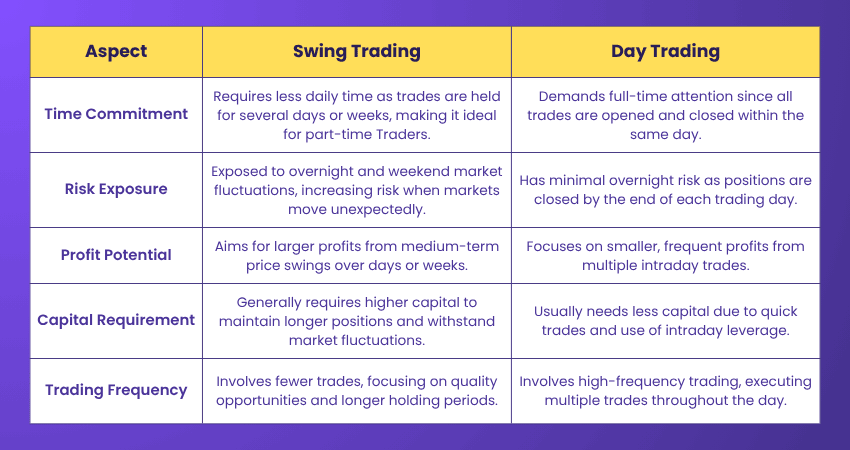
Let’s explore these differences in detail:
1) Time Commitment
Time commitment defines how much daily attention and screen time Traders must dedicate to their trades.
1) Swing Trading
Swing Trading requires far less daily involvement. Since trades can remain open for several days or even weeks, Traders only need to check the charts periodically. They identify potential entry or exit points and make adjustments as market trends shift. This makes Swing Trading suitable for individuals who manage other responsibilities such as full-time work or academic schedules.
2) Day Trading
On the other hand, Day trading is highly time-intensive. Traders enter and close positions within a single trading day, which means constant chart analysis, news monitoring and rapid-fire decision-making are essential. Therefore, day trading suits individuals who can dedicate full-time hours to active market engagement.
2) Risk Exposure
Risk exposure reflects how susceptible a Trader’s positions are to sudden market changes or unforeseen events.
1) Swing Trading
Swing Traders face higher risk exposure because they hold positions overnight or over weekends. Unexpected news events, economic data releases, or geopolitical developments can trigger sharp price gaps when the market reopens. These overnight changes can impact open positions before a Trader can react.
2) Day Trading
Day Traders significantly reduce their risk exposure by closing all positions before the market closes. Since they avoid holding trades overnight, they are less vulnerable to price gaps or sudden market shocks. However, intraday volatility can still be intense, requiring Traders to manage risk in real time.
3) Profit Potential
Profit potential refers to how much a Trader can realistically earn based on their strategy, time horizon, and risk tolerance.
1) Swing Trading
Swing trading targets larger market movements over a medium-term horizon. By capturing the “swings” in price trends, Traders can aim for higher profit margins on individual trades. This method is particularly effective during strong uptrends or downtrends, where holding a position for several days can yield substantial returns.
2) Day Trading
In contrast, Day Trading depends on smaller, consistent profits gained from multiple trades within a single day. Traders aim to exploit short-term volatility and price fluctuations, making many quick trades that accumulate over time. Although individual profits are smaller, the high trade volume can still generate significant overall returns if executed skilfully.
4) Capital Requirement
Capital requirement determines the financial resources needed to start and maintain trading positions effectively.
1) Swing Trading
Swing trading often requires higher capital since positions are held for longer durations and must withstand price fluctuations. Traders need sufficient funds to cover margin requirements, accommodate drawdowns, and maintain open positions over time. A well-capitalised account gives Swing Traders the flexibility to diversify trades across different instruments.
2) Day Trading
Day trading typically requires less starting capital, especially when using leveraged products like CFDs. Since positions are closed within hours, Traders can take advantage of intraday margin rules that allow them to control bigger positions with smaller investments. However, such leverage amplifies both gains and losses, so Traders must use it carefully to avoid substantial drawdowns.
5) Trading Frequency
Trading frequency indicates how often a Trader opens and closes positions within a given timeframe.
1) Swing Trading
Swing Traders make fewer trades because each position is designed to capture a broader price movement. They prioritise quality over quantity, focusing on high-probability setups that align with their technical and fundamental analysis. This lower frequency allows Traders to maintain a calmer pace based on well-researched insights rather than momentary fluctuations.
2) Day Trading
Day trading involves executing multiple trades throughout the day to take advantage of every potential price movement. Traders enter and exit positions rapidly, sometimes within minutes, depending on their strategies. This fast-paced environment demands agility, sharp reflexes, and a strong grasp of short-term market behaviour. While this approach increases trading opportunities, it also raises transaction costs and emotional intensity.
Sign up for our Cryptocurrency Trading Course today and master the skills to profit in the digital currency market - Sign up now!
Pros and Cons of Day Trading
Now that we’ve explored the key distinctions between Swing Trading vs Day Trading, let’s explore their pros and cons, starting with Day Trading:
1) Advantages of Day Trading
1) Independence: Day Traders can work for themselves, choose their trading hours and operate from basically anywhere. This gives them full control over their schedule and trading lifestyle.
2) No Formal Education Required: Unlike many finance-related careers, Day Trading doesn’t require a degree or certification. Some knowledge in technical analysis and trading strategies is more than enough which can be gained through self-study.
3) Potential for Quick Returns: Thanks to multiple trades in a single day, Traders can capitalise on rapid market movements and earn profits quickly.
4) Excitement and Challenge: This fast-paced environment is fertile for an adrenaline-fuelled experience that appeals to those who thrive under pressure.
5) Opportunities Across Global Markets: Traders can participate in different time zones, thus taking advantage of 24-hour trading markets like Forex and Cryptocurrencies.
2) Disadvantages of Day Trading
1) High Financial Risk: Many new Traders experience heavy losses early on. Day Trading often leads to severe financial setbacks, particularly for beginners.
2) Significant Capital Requirements: Competing with institutional Traders requires huge investment in trading platforms, analytical tools and fast computing systems.
3) Ongoing Expenses: Frequent trading results in higher transaction fees, commissions or costs for live data feeds and advanced charting software.
4) Full-time Commitment: Successful day trading demands total focus during market hours, owing to rapid decision-making and constant monitoring of multiple securities.
5) Emotional and Mental Stress: The speed and uncertainty of the markets can lead to fatigue, anxiety and burnout if not managed properly.
Master the world’s largest market. Sign up for our Forex Trading Course now!
Pros and Cons of Swing Trading
Let’s take a look at the benefits and drawbacks of Swing Trading:
1) Advantages of Swing Trading
1) Flexible Time Management: Swing trading doesn’t require constant monitoring. This allows Traders to maintain full-time jobs while managing trades over days or weeks.
2) Automated Control: Traders can set stop-loss and take-profit levels. This reduces the need for continuous oversight while maintaining disciplined risk management.
3) Lower Equipment Cost: Swing trading requires minimal setup (typically just a computer and basic trading software) unlike the high-end systems used in day trading.
4) Potential for Larger Returns: Holding positions for longer durations increases the chance of benefiting from bigger price movements and market trends.
5) Reduced Stress Levels: With fewer trades and less screen time, Swing Traders experience a calmer and more manageable trading environment.
2) Disadvantages of Swing Trading
1) Delayed Outcomes: Trades can take days or weeks to play out, meaning that the profits aren’t realised immediately and patience is required.
2) Capital Lock-In: Funds remain tied up in positions for extended periods. This reduces liquidity and flexibility to enter new trades.
3) Exposure to Market Changes: Overnight and weekend price movements can create unfavourable gaps which increases the potential for unexpected losses.
4) Risk of Larger Losses: Just as extended positions can lead to higher profits, they can also result in deeper losses if market direction reverses.
5) Lower Excitement Level: Compared to day trading, swing trading can feel slower and less dynamic. This offers fewer adrenaline-driven opportunities.
How Do I Start Trading?
Follow these steps to get into Trading:
1) Learn the Basics: Understand market fundamentals and trading principles.
2) Study Trade Examples: Review real trading scenarios to see how trades work.
3) Research Markets: Explore forex, stocks, indices and commodities.
4) Manage Risks: Learn key risk control and capital protection techniques.
5) Choose a Strategy: Identify trading styles that fit your goals.
6) Create a Plan: Define the entry, exit and risk parameters.
7) Practise First: Use a demo account to test your strategy safely.
8) Trade Live: Open a live account and start trading responsibly.
Which is Better, Day Trading or Swing Trading?
Swing Trading and Day Trading use different approaches to benefit from the stock market. You can decide which suits you well depending on your time availability and capital. If you are someone who is generally calm, then Swing Trading is best for you. Otherwise, go with Day Trading, where you must monitor your trades. Always pick a trading style depending on risk-taking attitude, time allocation, stress tolerance, decision-making skill and passion.
Conclusion
Swing Trading and Day Trading both offer unique paths to market success; while one is focused on patience, the other prioritises speed. Picking the right one out of Swing Trading vs Day Trading that aligns with your style depends on time, temperament and risk appetite. Whether you prefer calculated swings or rapid trades, mastering discipline, analysis and risk management is what truly defines a successful trader.
Learn the language of the markets. Sign up for our Stock Trading Course and become a confident investor!
Frequently Asked Questions
Who Makes More Swing Traders or Day Traders?

Swing Traders reap high profits as they hold stocks for a longer time. However, Day Traders with better market understanding can also make decent daily profits. Swing Traders make less profit as they need to wait for profit and manage risk simultaneously. The profitability of both styles varies because of capital and risk management.
How Many Hours a Day for Swing Trading?
Usually, Swing Traders look for four hours and daily charts to make informed decisions. Day Traders use one hour and 15 min charts to enter and exit trades. Swing Trading is manageable as it requires less commitment than day trading. However, the time needed depends on experience, strategy, and conditions.

The Knowledge Academy


Global Training Provider
The Knowledge Academy is a world-leading provider of professional training courses, offering globally recognised qualifications across a wide range of subjects. With expert trainers, up-to-date course material, and flexible learning options, we aim to empower professionals and organisations to achieve their goals through continuous learning.


 If you wish to make any changes to your course, please


