


 Top Rated Course

We may not have the course you’re looking for. If you enquire or give us a call on 01344203999 and speak to our training experts, we may still be able to help with your training requirements.
Software Engineer Job Description and Responsibilities
Richard Harris 16 July 2026A Software Engineer designs, builds, tests, and maintains software systems and applications that power modern technology, users, and digital innovation. Their role involves solving problems, writing efficient code, improving systems, and working with teams. It is a high-demand career with long-term growth opportunities.

Training Outcomes Within Your Budget!
We ensure quality, budget-alignment, and timely delivery by our expert instructors.
Table of Contents

Software Engineers play a critical role in keeping the digital world running. From mobile apps and online banking to smart devices and global business systems, their work quietly supports many of the technologies people rely on every day.
If you are looking for a career that offers stability, continuous learning, global opportunities, and the chance to work on meaningful technology, Software Engineering can be a strong choice. This blog outlines a typical Software Engineer Job Description, key skills, and salary expectations to help you assess whether this career path suits your goals.
Table of Contents
1) Who is a Software Engineer?
2) What do Software Engineers do?
3) Roles and Responsibilities of a Software Engineer
4) Essential Skills for Software Engineering
5) Average Salary for Software Engineers
6) Examples Software Engineer Job Description
7) Conclusion
Who is a Software Engineer?
A Software Engineer is a professional who creates, tests, and manages software systems that solve real-world problems. They may build mobile applications, websites, enterprise systems, embedded software for devices, or cloud platforms that support millions of users. They apply engineering principles to Software Development, ensuring that applications are reliable, scalable, secure and efficient.

What do Software Engineers do?
The day-to-day work of a Software Engineer can vary greatly depending on their role, industry, and level of experience. However, the core purpose remains the same, that is, to create software that works efficiently and meets user needs. Their work is not only to write code, but it also includes planning, testing, improving, and supporting software.
Most Software Engineers start by understanding the problem that needs to be solved by speaking with clients, managers, or users to learn what the software should do. They then design, write, and test code to identify and fix issues early. After deployment, they continue to monitor performance, resolve bugs, and enhance features to ensure the software remains stable, secure, and efficient.
Roles and Responsibilities of a Software Engineer
The roles and responsibilities of a Software Engineer go beyond writing code. Their work supports the full Software Development Life Cycle (SDLC) and ensures that applications perform reliably in real-world conditions. Here is what they do:
1) Code Development and Maintenance: Write, test, and maintain clean and efficient source code using one or more programming languages.
2) Code Quality and Version Control: Follow coding best practices, use version control tools, and take part in peer code reviews.
3) Debugging and Problem Solving: Identify, debug, and resolve technical issues, often under tight deadlines.
4) System Architecture Design: Design system architecture that supports smooth functionality, strong security, and future scalability.
5) User Requirement Analysis: Analyse user needs and convert them into clear technical requirements that align with business goals.
6) Software Testing and Validation: Develop unit tests, integration tests, and performance tests to ensure software reliability.
7) Performance Monitoring and Support: Monitor software performance after deployment and resolve production issues when they arise.
8) System Updates and Security Patches: Apply updates, patches, and improvements to keep systems secure and up to date.
9) Database Management and SQL Queries: Write and optimise SQL queries to manage, retrieve, and update data efficiently within software systems.
Essential Skills for Software Engineering
Becoming a successful Software Engineer requires both technical expertise and strong personal skills. The following are the most important skills every aspiring Software Engineer should focus on building:
1) Programming Languages
Software Engineers must be skilled in one or more coding languages such as Python, Java, C, C++, JavaScript, Scala, or C#. These languages are used to build applications, websites, and system software.
2) Object-Oriented Programming (OOP)
OOP helps Developers create reusable, well-structured, and easily maintainable code. It is a core concept used in most modern software applications.
3) Database Architecture and SQL Queries
Software Engineers need to understand how data is stored and managed. This includes working with databases and writing SQL queries to retrieve, update, and organise data efficiently.
4) Agile and Scrum Project Management
Most software teams follow Agile and Scrum methods. These help teams stay organised, deliver work in small stages, and adapt quickly to changes.
5) Cloud Computing
Many modern applications run on cloud platforms. Knowledge of cloud systems helps engineers build scalable and accessible software.
6) Artificial Intelligence and Emerging Technologies
Artificial Intelligence (AI) has become an in-demand skill for tech professionals. Understanding AI, automation, and modern technologies improves career growth and job opportunities.
Learn, design, and build better systems with our Software Design and Architecture Training – Register today!
Average Salary for Software Engineers
Software Engineering is widely recognised as one of the highest-paying careers in the technology sector. Salaries vary based on experience level, location, industry, and technical specialisation. Here is a breakdown of the average annual Salary of Software Engineers in various locations:
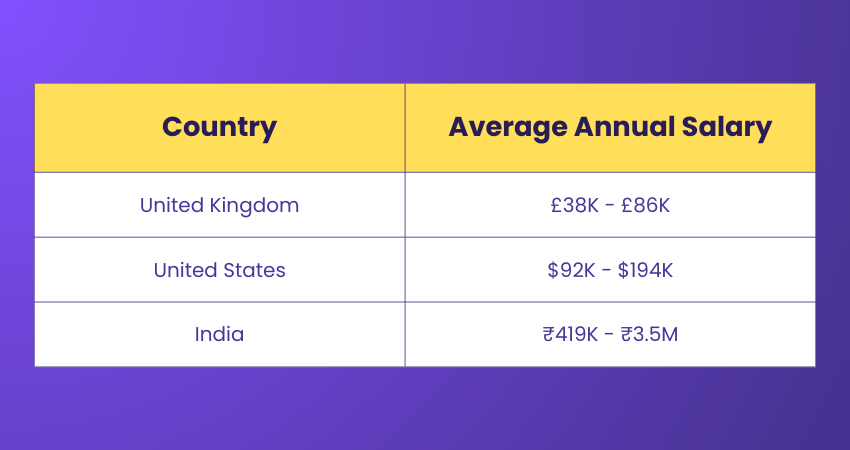
Source: Glassdoor
Examples Software Engineer Job Description
Below are two realistic job description examples that reflect how employers typically present Software Engineering roles in the workplace.
Example 1
The example below shows how a Software Engineer role is outlined in a real hiring scenario:

Example 2
Now, let’s check the Senior Software Engineer Job Description example to understand the role better:

Conclusion
Software Engineering continues to be one of the most powerful career choices in today’s digital age. With strong demand across every industry and endless opportunities to learn and grow, this role offers both stability and excitement. Whether you are just starting your journey or planning a career change, understanding the Software Engineer Job Description, key responsibilities, and skills can help you make confident, informed decisions.
Boost your technical skills and design confidence with our Systems Modelling Techniques Course – Sign up soon!
Frequently Asked Questions
What is the Single Responsibility Principle of Software?

The Single Responsibility Principle (SRP) means that a piece of software needs to focus on doing one main task well rather than many different tasks. This makes the software easier to understand, test, fix, and improve. When software has one clear goal, it becomes more reliable and easier to manage over time.
Is it Hard to be a Software Engineer?
Being a Software Engineer can feel challenging at the beginning, but it is achievable with the right mindset and consistent practice. As skills grow, many people find the work exciting and rewarding. The learning curve becomes a strength, opening doors to creativity, problem-solving, and long-term career growth.

Richard Harris


Senior Full Stack Developer and Technology Educator
Richard Harris is a highly experienced full-stack developer with deep expertise in both frontend and backend technologies. Over his 12-year career, he has built scalable web applications for startups, enterprises and government organisations. Richard’s writing combines technical depth with clear explanations, ideal for developers looking to grow in modern frameworks and tools.


 If you wish to make any changes to your course, please


