




We may not have the course you’re looking for. If you enquire or give us a call on 01344203999 and speak to our training experts, we may still be able to help with your training requirements.
5 Phases of the Project Management Lifecycle: An Overview
ByThe Knowledge AcademyLast updated on: 09 October 2026
This blog explores the five phases of the project management lifecycle, including the key activities in each phase, how the phases work together and why they matter.
Quick Overview
1. The project management lifecycle describes a project's progression from beginning to end.2. The five phases often overlap and repeat during a project instead of following a strict one-way sequence.3. Project initiation and planning establish the foundation for informed decisions and organised work.4. Execution and monitoring often happen simultaneously to support project delivery and control.5. Project closing involves formal acceptance, handover, documentation and lessons learned.
Every successful project begins with an idea, but turning that idea into reality requires more than assigning tasks and meeting deadlines. From identifying project objectives to managing resources and delivering results, each activity contributes to the project's overall success. But how do Project Managers keep everything organised?
One established approach organises project work into five phases that take a project from initiation to closure. These phases provide a structured way to organise project management activities. Although they are often presented in sequence, they can overlap and repeat throughout the project. Understanding how the project management lifecycle phases connect, and where they overlap, makes it easier to plan work, track progress and close a project properly.
What are the Five Phases of Project Management Lifecycle?
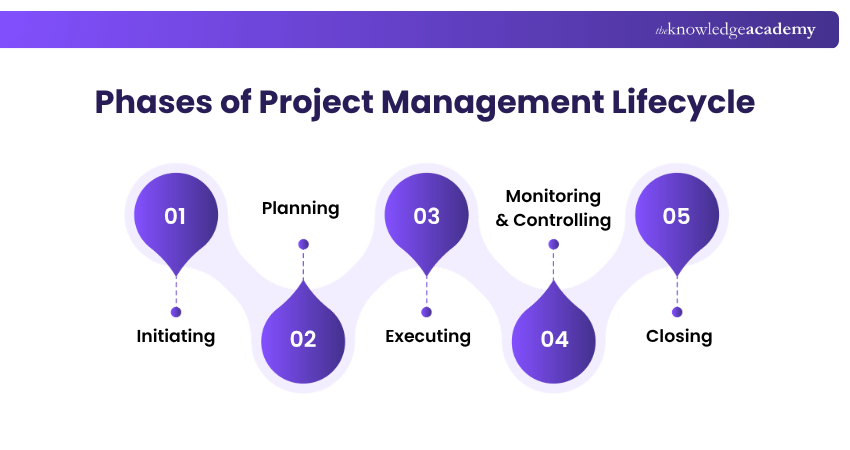
Each stage of the project lifecycle has a distinct purpose and set of objectives. They are usually presented as a sequence, but in practice they can overlap and repeat, and each one produces outputs that feed the next. The five phases of the project management lifecycle are:
1) Project Initiation
Project initiation establishes the foundation for a project by defining its purpose, identifying key stakeholders and obtaining the necessary authorisation. During this phase, the project's business objectives, expected benefits and high-level requirements are considered. One of the most important documents associated with initiation is the project charter. It formally authorises the project and provides essential information, including:
a) Project purpose and business justification.
b) High-level objectives and success criteria.
c) Key requirements, assumptions and constraints.
d) Summary milestones and budget information.
e) Project Manager's authority and responsibilities.
Another important document is the stakeholder register, which records information about individuals, groups and organisations that may influence or be affected by the project.

2) Project Planning
Project planning determines how the project objectives will be achieved. It involves developing detailed plans for managing the project's scope, schedule, cost, resources, quality, risks and communication. An effective planning process typically includes:
a) Scope Planning: Define project boundaries, deliverables and requirements.
b) Schedule Planning: Establish activities, dependencies, milestones and timelines.
c) Cost Planning: Estimate project expenditure and develop an appropriate budget.
d) Resource Planning: Identify the people, equipment and materials required.
e) Risk Planning: Identify potential risks and develop suitable responses.
f) Communication Planning: Define how project information will be shared with stakeholders.
3) Project Execution
Project execution involves carrying out the activities defined in the project management plan. This is where the project team performs the work required to create the expected deliverables. The main activities involved in execution include:
a) Assigning and coordinating project activities.
b) Managing team performance and resource utilisation.
c) Maintaining communication with stakeholders.
d) Managing quality during the creation of deliverables.
e) Implementing agreed risk responses.
f) Addressing issues that arise during project work.
Pro Tip
Lessons learned are most useful when the team records what worked, what did not and what could be improved. These insights can support better planning and decision-making in future projects.
4) Project Monitoring and Controlling
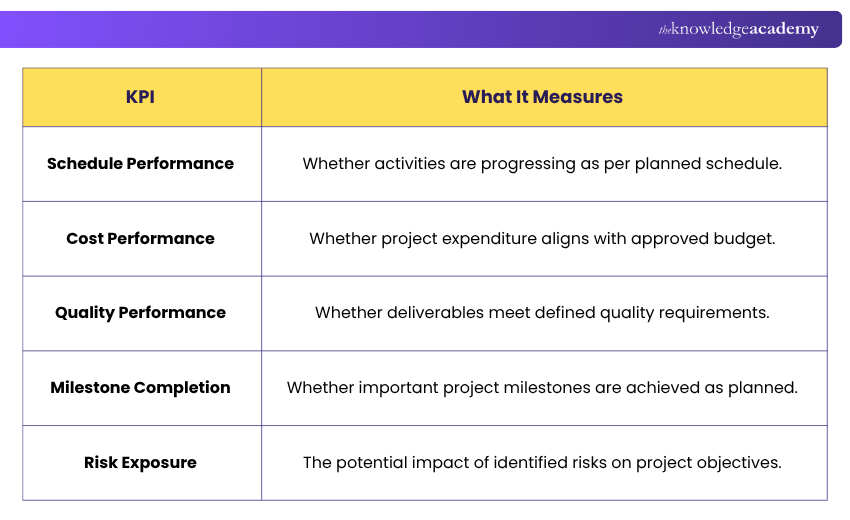
Project monitoring and controlling focus on tracking, reviewing and regulating project performance. It helps Project Managers determine whether work is progressing according to approved plans and whether corrective actions are necessary. The main activities include:
a) Tracking project progress and performance.
b) Identifying differences between planned and actual results.
c) Evaluating risks, issues and change requests.
d) Reviewing project expenditure and resource utilisation.
e) Implementing approved corrective or preventive actions.
f) Reporting project performance to stakeholders.
Understand how to apply agile techniques in project management with PMI-ACP® Certification Training – Join today!
5) Project Closing
Project closing marks the formal completion of a project or project phase. It involves confirming that the necessary closure activities have been completed and documenting the project's outcomes. Closing is important whether a project achieves its intended objectives or ends prematurely. Common closing activities include:
a) Obtaining formal acceptance of completed deliverables where applicable.
b) Confirming that contractual and administrative responsibilities are complete.
c) Transferring deliverables to the customer or operational team.
d) Releasing project resources according to organisational procedures.
e) Finalising project reports and documentation.
f) Recording lessons learned and archiving important project information.
Real-world Example: Launching a Company Website
Applying the five project management lifecycle phases
1. Initiating: Define the website's purpose, identify stakeholders and obtain project authorisation.2. Planning: Establish the scope, budget, schedule, responsibilities and requirements.3. Executing: Design, develop, test and prepare the website for launch.4. Monitoring and Controlling: Track progress, review quality and manage approved changes throughout delivery.5. Closing: Obtain formal acceptance, hand over the website and document lessons learned.
Why are Project Management Phases Important?
Project management Phases help organisations structure work, manage resources and maintain control throughout project delivery. When supported by appropriate management processes, they provide several benefits.
1) Clear Roles and Responsibilities
Dividing projects into manageable stages helps team members understand their responsibilities and expected contributions. It also improves accountability and reduces confusion about who should perform specific activities.
2) Better Resource Allocation
A structured approach helps Project Managers identify and distribute resources according to project requirements. This supports efficient use of budgets, personnel, equipment and other essential resources.
3) Improved Project Monitoring
Establishing milestones, performance measures and regular reviews makes it easier to track progress. Project Managers can detect potential problems and take prompt corrective action before they significantly affect project outcomes.
4) Effective Risk Management
Structured project management encourages teams to identify, assess and respond to risks throughout delivery. This reduces uncertainty and helps organisations prepare for unexpected challenges.
5) Greater Stakeholder Alignment
Clear project objectives, communication plans and review points help stakeholders understand project progress. This supports informed decisions and ensures that expectations are managed throughout the project.
6) Continuous Improvement
Formal project closure and lessons learned activities provide valuable insights into project performance. Organisations can employ this information to improve their approach to future projects.
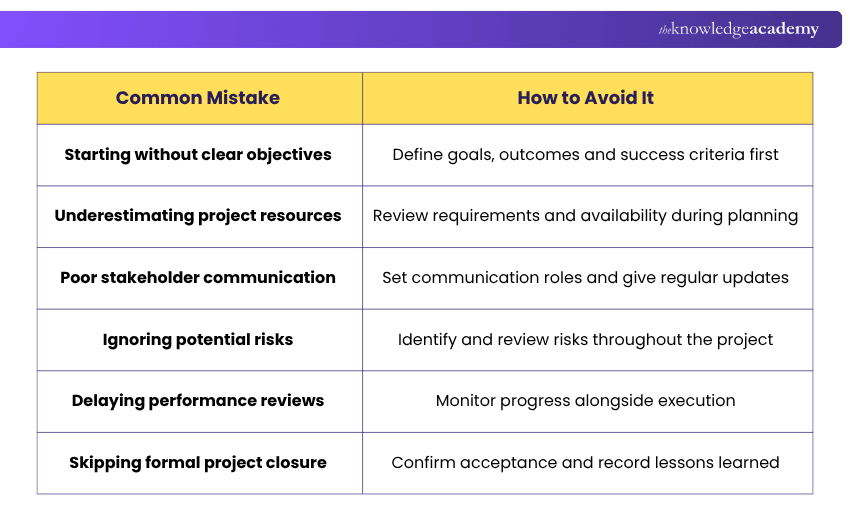
Here are some mistakes to avoid pertaining to project management phases:
Build the knowledge to turn Artificial Intelligence (AI) into meaningful organisational value. Sign up for the PMI Certified Professional in Managing AI Course now!

The Knowledge Academy develops accessible learning content across Project Management, IT, Cybersecurity, Data Science, Business Analysis, HR, Accounting and Finance, Leadership and Health and Safety. Its resources combine subject research with clear explanations to help professionals build practical knowledge across a wide range of disciplines.
View Detail

 If you wish to make any changes to your course, please


