




We may not have the course you’re looking for. If you enquire or give us a call on 44 1344 203 999 and speak to our training experts, we may still be able to help with your training requirements.
7 Practices of PRINCE2®: The Ultimate Guide
ByDavid EvansLast updated on: 14 October 2026
Are you eager to grasp the essential elements of PRINCE2 project management and get a solid grip on its basics? This blog explores the seven key practices of PRINCE2 (called themes in earlier editions), the backbone that keeps a project efficient and orderly from start to finish.

In a Nutshell
1. The seven practices of PRINCE2 are Business Case, Organising, Plans, Quality, Risk, Issues and Progress.2. Each practice covers an area that must be managed throughout the project, so none of them is a one-off task.3. Together they work with the principles and processes, so a project needs all seven to stay in control.4. Version 7 gives greater emphasis to people, communication and sustainability.5. PRINCE2 can be tailored to different project sizes, complexities and environments.
A successful project needs more than a good plan. It requires clear direction, informed decisions, and the ability to adapt when circumstances change. PRINCE2 brings these elements together, helping teams turn ambitious ideas into achievable outcomes.
It does this through a set of seven practices (called themes in earlier editions of PRINCE2), each covering an area that needs continuous attention in any project, from justifying the work to tracking its progress. PRojects IN Controlled Environments (PRINCE2) is a project management method used around the world, and these practices are its working core. Let’s look at each one.
The 7 Practices of PRINCE2®
The 7 practices of PRINCE2 (referred to as themes in PRINCE2 previous versions) keep project work organised and on track. Here are the 7 practices in detail:
1) Business Case
A business case is essential for establishing whether a project is worth undertaking. In PRINCE2, the business case practice evaluates a project's desirability, viability and achievability, ensuring that the proposed investment aligns with business objectives.
The business case is developed during the project's early stages and maintained throughout its lifecycle. It provides information about expected benefits, costs, timescales, risks and potential disadvantages to support decisions about whether the project should continue.
At each stage boundary, the business case is reviewed to confirm that the project remains justified. Expected benefits are monitored and reassessed, although some may only be realised after project closure

2) Organising
The organising practice in PRINCE2 defines the project's management structure, establishing clear roles, responsibilities and accountability. It ensures that business, user, and supplier interests are appropriately represented throughout the project.
PRINCE2 Version 7 also emphasises stakeholder relationships, effective communication, and collaboration. The following roles contribute to effective project governance and delivery:
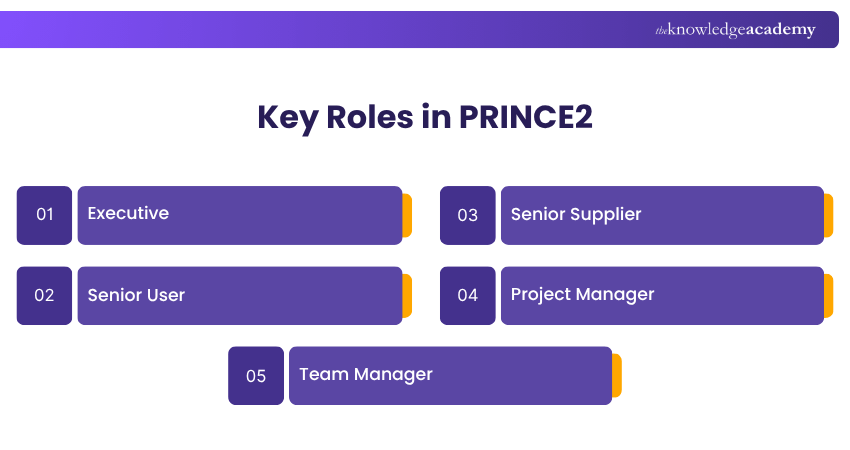
a) Executive: The Executive chairs the Project Board and is ultimately accountable for the project's success. They ensure that the project remains commercially justified, delivers value for money and aligns with business objectives.
b) Senior User: The Senior User represents those who will use the project's products. They ensure that user requirements are clearly defined, delivered products meet business needs and expected benefits can be realised.
c) Senior Supplier: The Senior Supplier represents those responsible for providing the resources and expertise needed to develop the project's products. They ensure that the proposed solutions are technically feasible and that supplier resources are available.
d) Project Manager: The Project Manager is responsible for the day-to-day management of the project within the authority delegated by the Project Board. Their responsibilities include planning, coordinating activities, managing risks and issues, monitoring progress and reporting performance.
e) Team Manager: The Team Manager is responsible for delivering assigned work packages according to agreed requirements, timescales and quality standards. This role can be performed by the Project Manager when a separate Team Manager is unnecessary.
Pro Tip: Create a Decision Log
Record important decisions, their rationale, and the people responsible. This creates a useful reference when reviewing past choices or resolving disagreements.
3) Quality
In PRINCE2, quality means that a project’s products are fit for purpose and meet the requirements agreed for them. The quality practice sets out how this will be achieved, with expectations that differ depending on the project’s products and requirements, and which are established and reviewed throughout the project.
The PRINCE2 quality practice uses management products such as the quality management approach, quality register, product descriptions and product register to support quality planning and control.
The quality management approach establishes how quality will be managed, while product descriptions define relevant specifications and quality criteria. The quality register records planned and completed quality activities, and the product register provides visibility into the products to be delivered and their status.
4) Plans
The plans practice in PRINCE2 provides a structured approach to determining what products must be delivered, how they will be developed and when they should be completed. It supports decisions about resources, costs, timescales, and dependencies while establishing a basis for monitoring progress.
PRINCE2 uses product-based planning to identify required deliverables and organise the activities needed to produce them. Plans are developed at different management levels according to the project's requirements, size and complexity. Here are the four types of plans:
a) Project Plan: The project plan is the reference document that sets out how the project’s time, cost and quality goals will be achieved. It also specifies the resources, activities, and timescales needed to deliver them.
b) Stage Plan: As the name suggests, a stage plan is prepared for each management stage. It contains the detail needed for day-to-day control, including the activities and the product descriptions for the products to be delivered in that stage.
c) Team Plan: Team plans are optional, depending on the project’s size and complexity. The Team Manager creates a team plan to manage the delivery of one or more work packages.
d) Exception Plan: An exception plan is prepared when a project or stage is forecast to go beyond its agreed limits. Once the Project Board approves it, it replaces the affected plan and shows how the project will recover.
Advance your project management expertise with the PRINCE2® Foundation & Practitioner Training Course - Join today.
5) Risk
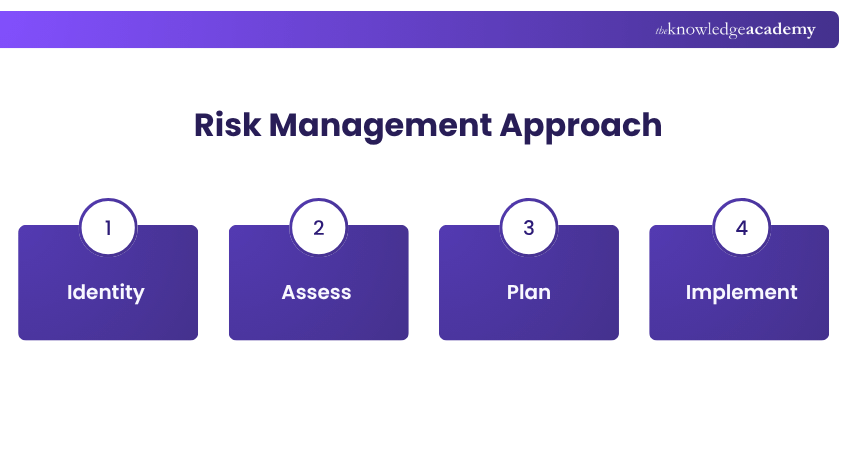
The risk practice in PRINCE2 provides a structured approach to identifying, assessing and managing uncertainties that could affect project objectives. Risks can be negative, known as threats, or positive, known as opportunities. Risk management continues throughout the project's life cycle.
The risk management approach establishes procedures and responsibilities for identifying, assessing, responding to, and monitoring risks. The risk register records identified risks, their probability, potential impact, ownership, planned responses and current status
6) Issues
The issues practice in PRINCE2 focuses on identifying, recording, assessing and managing matters that could affect a project's objectives. These include problems, concerns, requests for change, off-specifications, and business opportunities that arise throughout the project's lifecycle.
Effective issue management involves evaluating the potential impact of each issue, determining appropriate responses, and escalating decisions when necessary. While some issues require formal changes to project baselines, others can be resolved through communication, corrective action, or existing management procedures.
Trainer's Insight: Watch for Silent Disagreements
During project reviews, invite input from stakeholders who have not expressed concerns. Unspoken disagreements can reveal overlooked expectations or conflicting priorities.
7) Progress
The progress practice in PRINCE2 compares the project’s actual progress with its planned goals. Achievements are measured against the planned objectives for time, cost, resources, quality and benefits. The project is controlled in management stages, each with agreed limits for how far it can vary from plan. If a stage or the project is forecast to go beyond those limits, the Project Manager raises an exception and escalates it to the Project Board for a decision. Progress reporting is either time-driven or event-driven.
PRINCE2 uses six types of reports to keep everyone informed of progress:
a) Checkpoint Report: The Team Manager reports to the Project Manager on the progress of a work package.
b) Highlight Report: The Project Manager reports to the Project Board at agreed intervals during a stage.
c) End Stage Report: The Project Manager reports to the Project Board on stage performance at the end of a management stage.
d) End Project Report: The Project Manager reports on the performance of the whole project at closure.
e) Exception Report: Prepared when a stage or the project is forecast to exceed its agreed limits, to give the Project Board the information it needs to decide.
f) Lessons Report: Captures lessons learned so they can be used on future projects.
Improve your understanding of PRINCE2® with the PRINCE2® Foundation Training - sign up for it now.

David Evans creates accessible resources that help professionals understand different approaches to planning and delivering projects. His content addresses changing requirements, collaborative working and the practical demands of contemporary project environments.
View Detail

 If you wish to make any changes to your course, please


