


We may not have the course you’re looking for. If you enquire or give us a call on 01344203999 and speak to our training experts, we may still be able to help with your training requirements.
PMP® Advantages and Disadvantages
ByThe Knowledge AcademyLast updated on: 16 October 2026
PMP® Certification validates project management expertise and can support career advancement, earning potential and professional recognition. This blog will help you learn about the various PMP advantages and disadvantages, which will help you decide if you want to pursue a career as a Project Manager.
Quick Preview
1. Career Growth: Discover how PMP® Certification can support professional recognition and career advancement.2. Salary Potential: Understand how the credential can influence earning opportunities across industries.3. Certification Challenges: Explore the costs, preparation demands and ongoing renewal requirements.4. Career Suitability: Identify whether PMP aligns with your experience, responsibilities and professional goals.5. Balanced Decision: Weigh the advantages and disadvantages before investing in certification.
Three letters. One big career decision.
PMP® might look like just another qualification on your CV. But behind those three letters lie months of preparation, professional experience and an investment of time and money.
So, is the recognition worth the responsibility?
That's where understanding the PMP advantages and disadvantages becomes important. From career opportunities and professional credibility to examination challenges and renewal commitments, let's explore both sides of the certification before deciding whether it deserves a place in your career journey.
What is Project Management Professional (PMP) Certification?
Project Management Professional (PMP)® Certification is a globally recognised credential offered by the Project Management Institute (PMI). It validates a professional's knowledge, experience and ability to lead projects using predictive, agile and hybrid approaches across various industries.
Earning a PMP® Certification involves meeting specific educational and professional experience requirements. This certification is recognised by employers across industries and can support higher earning potential and career opportunities for qualified professionals.

Advantages of PMP®
This certification has several advantages, from enhanced salary packages to a broader spectrum of job opportunities. Let's discuss these benefits and understand their importance in the project management field:
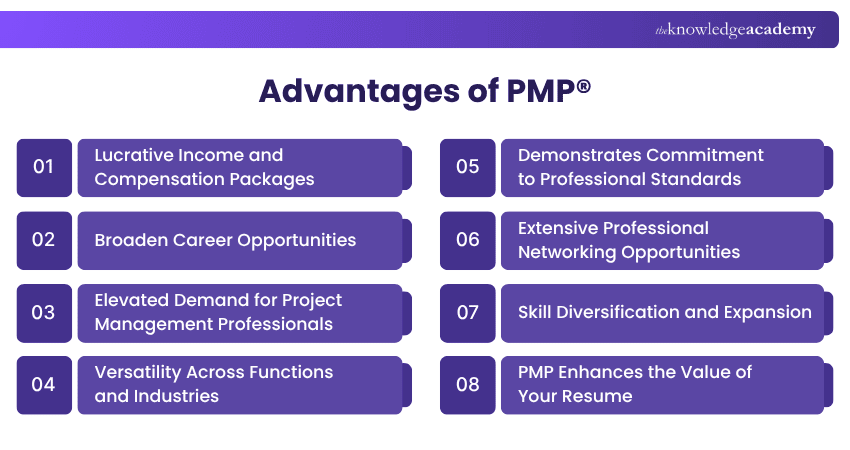
1) Lucrative Income and Compensation Packages
One of the most compelling advantages of earning a PMP® Certification is the potential for higher income and better compensation packages. According to PMI's 2025 Salary Survey, PMP-certified respondents reported median salaries 17% higher than non-certified professionals across 21 countries. However, actual earnings depend on factors such as experience, location, industry and job responsibilities.
2) Broaden Career Opportunities
The PMP® Certification is recognised across industries and countries, helping certified professionals demonstrate their project management expertise to potential employers. This recognition can support career opportunities in different sectors and locations.
With a PMP credential, professionals can aspire to roles in top-tier companies and engage in various projects. They may also find it easier to explore opportunities in new sectors, as many project management skills are transferable across industries.
3) Elevated Demand for Project Management Professionals
Demand for skilled project management professionals continues to grow as organisations undertake increasingly complex projects. According to PMI's Global Project Management Talent Gap (2025) report, the worldwide shortage of project professionals could reach 29.8 million by 2035.
The PMP® Certification can help experienced professionals demonstrate their project management capabilities and strengthen their competitiveness when pursuing relevant roles. Its recognition across industries also supports opportunities in established and emerging sectors.
4) Versatility Across Functions and Industries
The PMP® Certification validates a comprehensive set of project management skills applicable across various functions and industries. Whether in IT, construction, healthcare, finance, or any other sector, PMP-certified professionals are equipped to manage projects effectively. This versatility can support career flexibility and help professionals explore opportunities across different industries and project management roles.
5) Demonstrates Commitment to Professional Standards
Earning the PMP® Certification demonstrates a professional's commitment to meeting internationally recognised project management standards. It involves fulfilling PMI's eligibility requirements, passing the certification examination and maintaining the credential through continuous professional development.
This commitment reflects professional accountability and dedication to keeping project management knowledge current, reinforcing the importance of recognised standards in project delivery.
6) Extensive Professional Networking Opportunities
PMP-certified professionals can expand their professional networks by engaging with project management communities. PMI also offers networking opportunities through membership, events, webinars and local chapters. These networking opportunities allow many professionals to connect with like-minded professionals, exchange knowledge, and stay up-to-date of the latest trends and best practices in project management.
7) Skill Diversification and Expansion
Preparing for the PMP® examination helps professionals strengthen their understanding of project management practices, leadership, stakeholder engagement and strategic decision-making. The updated 2026 examination also reflects emerging priorities such as artificial intelligence, sustainability and business value delivery.
Additionally, maintaining the PMP® certification requires earning 60 Professional Development Units (PDUs) every three years, encouraging continuous learning and keeping professional knowledge aligned with evolving project management practices.
8) PMP Enhances the Value of Your Resume
A PMP® Certification can strengthen your CV by demonstrating your project management qualifications and professional expertise.
Including the certification alongside relevant project achievements, responsibilities and measurable results helps present a more complete professional profile.
Pro Tip
Review project management job descriptions in your preferred industry before registering for PMP. Identify how frequently employers require or prefer the credential to understand its relevance to your target roles.
Disadvantages of PMP®
While the PMP® certification is widely recognised as a professional qualification that can support a Project Manager's career, it's also essential to consider the potential disadvantages of obtaining and maintaining this credential. Let’s have a look:
1) Involves High Costs
One of the most notable disadvantages of the PMP® Certification is the financial investment required. The certification costs can be substantial, including exam fees, preparation materials, and potentially registering in preparatory courses.
These expenses can add up to a considerable amount, posing a barrier for some individuals. Furthermore, maintaining the certification involves a renewal fee every three years. Professionals may also incur costs for training or learning activities used to earn Professional Development Units (PDUs), although free options are available.
2) Exam Preparation Demands Time
Preparing for the PMP examination can be time-consuming and requires a substantial commitment. Candidates may spend several months studying course materials and other resources to prepare for the examination. Balancing this preparation with professional and personal responsibilities can be challenging, necessitating sacrifices and careful time management.
3) Requires Ongoing Certification Maintenance
The PMP® Certification requires professionals to earn 60 Professional Development Units (PDUs) during each three-year certification cycle and complete the renewal process. These include at least 35 Education PDUs, with a maximum of 25 PDUs from Giving Back activities. Professionals must also earn at least eight Education PDUs in each PMI Talent Triangle skill area.
Although PDUs can be earned through free or paid activities, maintaining the certification requires consistent effort, planning and adherence to PMI's renewal requirements. Professionals must also pay the applicable renewal fee to keep their certification active.
4) Challenging Examination and Application-Based Questions
The PMP® examination assesses more than theoretical knowledge. Candidates must interpret project scenarios, evaluate competing priorities and select appropriate responses using project management principles across different delivery approaches.
This application-focused assessment can be challenging for professionals who are more familiar with memorising concepts than applying them to complex project situations.
5) Requires Relevant Project Management Experience
The eligibility criteria for the PMP® Certification require relevant professional experience leading and managing projects, which means it is geared towards individuals with a background in project management. This requirement can disadvantage those early in their careers or transitioning from other fields, as they may not yet qualify to take the exam.
6) PMP® May Not be Universally Valued by All Companies
Although the PMP® certification is globally recognised and respected in many industries, it may not be universally valued by all companies. Some organisations may prefer other certifications or prioritise practical experience over formal credentials. This variance in recognition can be a drawback for individuals who work in or are targeting industries or companies where the PMP® Certification is less valued.
Pro Tip
Review project management job descriptions in your preferred industry before registering for PMP. Identify how frequently employers require or prefer the credential to understand its relevance to your target roles.
Learn the essentials of managing projects by joining the Introduction To Project Management Course today.

The Knowledge Academy develops accessible learning content across Project Management, IT, Cybersecurity, Data Science, Business Analysis, HR, Accounting and Finance, Leadership and Health and Safety. Its resources combine subject research with clear explanations to help professionals build practical knowledge across a wide range of disciplines.
View Detail

 If you wish to make any changes to your course, please


