




We may not have the course you’re looking for. If you enquire or give us a call on 01344203999 and speak to our training experts, we may still be able to help with your training requirements.
What is Lean Six Sigma Yellow Belt: A Complete Guide
ByAkhil KLast updated on: 10 October 2026
A Lean Six Sigma Yellow Belt demonstrates foundational knowledge of Lean Six Sigma principles and assists in process improvement projects in an organisation. The knowledge and skills developed at this level can support waste reduction, quality improvement and continuous improvement initiatives.
The Main Idea
1. Lean Six Sigma Yellow Belt provides foundational knowledge of process improvement principles and tools.2. Yellow Belts support improvement projects rather than typically leading them.3. DMAIC provides a structured approach to identifying and improving process problems.4. Yellow Belt skills can support problem-solving, teamwork and continuous improvement.5. It provides a foundation for progressing to more advanced Lean Six Sigma belt levels.
Most organisations aim to reduce waste, improve efficiency and enhance quality. But who helps drive these improvements? This is where a Lean Six Sigma Yellow Belt plays an important role by supporting process improvement projects and helping organisations achieve operational excellence.
Whether you are new to quality management or looking to enhance your problem-solving skills, understanding the Lean Six Sigma Yellow Belt is the first step. This blog explains the role of a Lean Six Sigma Yellow Belt, the benefits of certification and factors that can influence salaries in Lean Six Sigma-related roles. Let's get started!
What is Lean Six Sigma Yellow Belt?
Lean Six Sigma Yellow Belt is a foundational certification level that introduces core Lean Six Sigma principles and basic process improvement tools. It is designed for individuals who want to enhance business processes by identifying problems, reducing waste and improving quality. The certification provides learners with the knowledge to support improvement projects within an organisation.
It is an excellent starting point for anyone looking to improve processes in industries such as manufacturing, healthcare, education, IT and logistics. Learners gain an understanding of key Lean Six Sigma tools and the DMAIC methodology, a structured approach used to improve processes and solve business problems. DMAIC stands for:
1) Define the problem
2) Measure the current process performance
3) Analyse the data to identify the root cause of the problem
4) Improve the process
5) Control the process to sustain the improvements

Who Should Get Lean Six Sigma Yellow Belt Certified?
This certification is suitable for individuals involved in day-to-day operations, quality improvement, or process improvement projects. The following professionals can benefit from this certification:
1) Team Members Working on Improvement Projects
If you're part of a team that's trying to improve a process or solve a problem, Yellow Belt skills can help you understand the issue, use relevant improvement tools, and contribute useful ideas.
2) Supervisors or Junior Managers
If you manage a team or are starting totake on leadership roles, this certification can be helpful. It supports you in understanding how to support improvement efforts and guide your team toward better performance.
3) Students or Recent Graduates
If you're entering the job market, Yellow Belt Certification can strengthen your CV by demonstrating your understanding of process improvement and problem-solving. These skills are valued across many industries.
4) Professionals Changing Careers
If you're changing careers, this certification demonstrates your understanding of process improvement and quality management. It can strengthen your profile and support your transition into roles where continuous improvement skills are valued.
5) Anyone Interested in Lean Six Sigma
If you're interested in learning Lean Six Sigma principles and process improvement techniques, Yellow Belt Certification provides a strong foundation before progressing to Green Belt and Black Belt Certifications.
Key Responsibilities of a Lean Six Sigma Yellow Belt
Lean Six Sigma Yellow Belts work with improvement teams to identify problems and help make processes better. They support projects by improving quality, reducing waste and helping teams achieve better results. As foundational practitioners, their key responsibilities include:
1) Support Green Belts and Black Belts in Lean Six Sigma improvement projects.
2) Collect, organise and perform basic analysis of process data to support decision-making.
3) Identify process problems, inefficiencies, and opportunities for improvement.
4) Support the implementation of solutions to minimise waste and enhance quality.
5) Participate in root cause analysis using basic Lean Six Sigma tools.
Help monitor process performance and communicate relevant improvement outcomes to the project team.
Apply basic Lean Six Sigma tools and follow established improvement procedures.
Work with cross-functional teams to support improvement projects.
Share ideas to improve customer satisfaction and business processes.
Quick Check
Which activity best matches the role of a Lean Six Sigma Yellow Belt?A. Leading complex organisation-wide improvement projectsB. Supporting improvement projects and basic data analysisC. Approving all process changes independentlyD. Managing the entire Lean Six Sigma programmeCorrect Answer: B
Take the next step in your Lean Six Sigma journey with Lean Six Sigma Green Belt Training - Sign up now!
Benefits of a Lean Six Sigma Yellow Belt
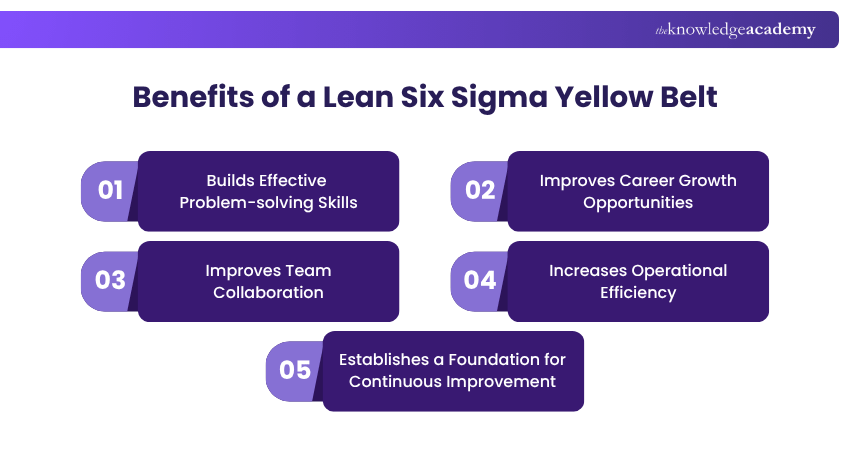
Lean Six Sigma Yellow Belt gives professionals the basic knowledge and skills to improve business processes. It helps build problem-solving skills, supports career growth and prepares them to contribute across different industries. Here are its key benefits:
1) Builds Effective Problem-solving Skills
The certification introduces structured problem-solving methods such as DMAIC, helping professionals support root cause analysis, understand process issues, and contribute to data-informed improvements.
Pro Tip
Use simple tools such as the 5 Whys or a cause-and-effect diagram to explore possible root causes before suggesting improvements.
2) Improves Career Growth Opportunities
This certification can strengthen your CV by demonstrating foundational process improvement knowledge and may support progression into roles where Lean Six Sigma skills are relevant.
3) Improves Team Collaboration
Yellow Belts work closely with Green Belts, Black Belts and cross-functional teams on improvement projects. Their understanding of Lean Six Sigma principles supports effective communication and teamwork.
4) Increases Operational Efficiency
Yellow Belt professionals help identify process inefficiencies, reduce waste and minimise errors. These contributions can support better resource use, improved customer value, and more efficient processes.
5) Establishes a Foundation for Continuous Improvement
Yellow Belt Certification introduces the core principles of Lean Six Sigma and continuous improvement. It equips professionals with the knowledge to support improvement projects and prepares them to progress to Green Belt and Black Belt Certifications.
Lean Six Sigma Yellow Belt vs Lean Six Sigma Green Belt
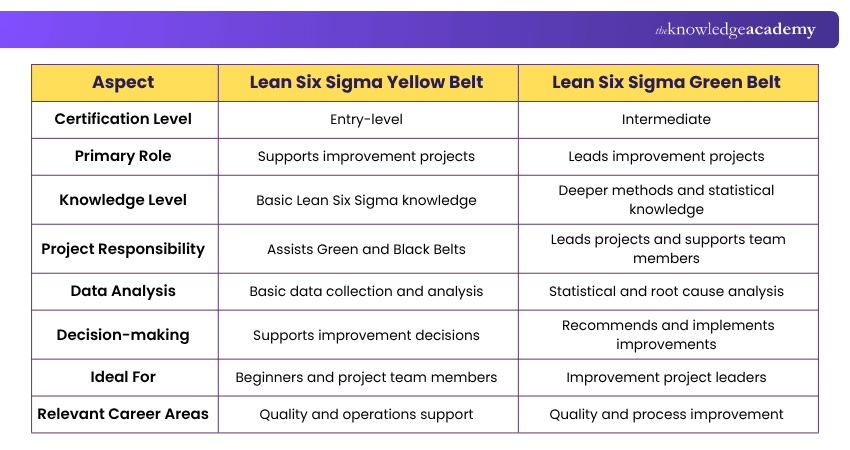
Lean Six Sigma Yellow Belt and Green Belt both focus on process improvement, but they differ in knowledge depth and project responsibility. Yellow Belts generally support improvement projects, while Green Belts have deeper analytical knowledge and can lead process-level improvement projects.
Average Salary of Lean Six Sigma Yellow Belt Professionals
A Lean Six Sigma Yellow Belt does not correspond to a single job role or salary level. Earnings can vary depending on job title, industry, experience, employer and location. Yellow Belt knowledge can complement roles in areas such as operations, quality and process improvement, so salary figures are best considered according to the specific role rather than the certification alone.
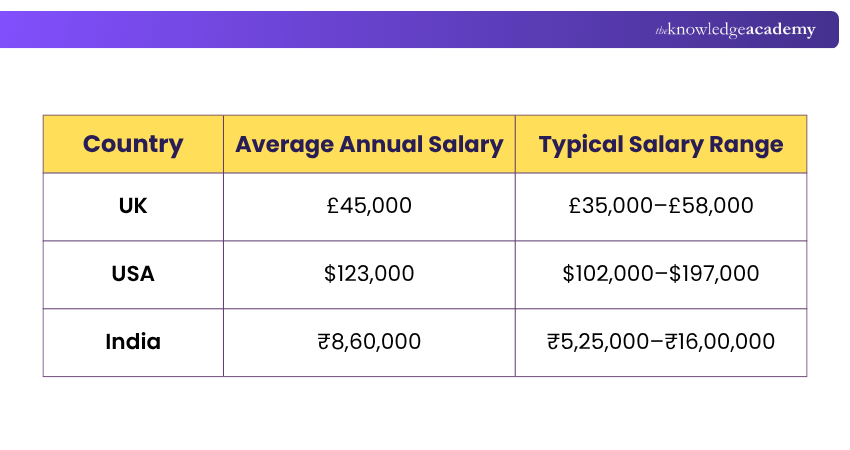
Source: Glassdoor
Keep This in Mind
A Lean Six Sigma Yellow Belt builds foundational process improvement knowledge and supports wider improvement teams. It is best viewed as a starting point for developing practical Lean Six Sigma skills and progressing to higher belt levels.
Lead complex process improvement projects by advancing analytical and leadership skills with the Lean Six Sigma Black Belt Course - Register now!

Akhil K is a Copywriter and Video Editor with experience in content creation, visual storytelling, advertising and brand communication. His background in journalism, research and audience-focused communication strengthens his ability to create clear and engaging Business Skills content.
View Detail

 If you wish to make any changes to your course, please


