




We may not have the course you’re looking for. If you enquire or give us a call on 01344203999 and speak to our training experts, we may still be able to help with your training requirements.
What is Lean Six Sigma Green Belt: A Complete Guide
BySaurav SharmaLast updated on: 05 October 2026
Professionals with a Lean Six Sigma Green Belt lead process improvement projects, focusing on reducing waste, improving quality, and increasing efficiency. Green Belts are professionally trained in the core principles of Lean and Six Sigma methodologies. They work under Black Belts, using data-driven tools like DMAIC to solve problems.

At a Glance
1. Lean Six Sigma Green Belts use data-driven methods to improve processes, reduce waste, and minimise defects.2. DMAIC helps define problems, analyse causes, implement improvements, and sustain results.3. Green Belts use tools like process mapping, 5 Whys, FMEA, and control charts.4. Green Belt projects apply across manufacturing, healthcare, finance, IT, and other industries.5. Analytical, problem-solving, communication, and leadership skills are essential for Green Belts.
Do you enjoy solving problems and finding better ways of working? If so, Lean Six Sigma Green Belt could be the next step in your professional journey. This globally recognised certification equips you with the skills to improve processes, reduce waste, and deliver scalable results across a wide range of industries.
From manufacturing and healthcare to IT, finance, and beyond, Lean Six Sigma Green Belt skills are in demand across nearly every industry. This blog explains what Lean Six Sigma Green Belt is, its core principles, its benefits, essential skills, career opportunities, and more. Let's get started!
What is a Green Belt in Lean Six Sigma?
A Green Belt in Lean Six Sigma refers to a professional who is trained in the foundational tools, techniques, and principles of Lean and Six Sigma methodologies. These individuals play a crucial role in process improvement projects, helping organisations eliminate waste, reduce defects, and improve overall efficiency and quality.
Green Belts lead small to medium-sized improvement projects or support larger initiatives led by Black Belts. They use structured methods to analyse processes, identify root causes, and implement effective solutions that deliver measurable results. Their work helps organisations increase productivity, lower operational costs, and sustain long-term improvements.

What to Learn in Lean Six Sigma Green Belt?
Lean Six Sigma Green Belt combines Lean principles (eliminate waste) with Six Sigma strategies (reducing variation and defects), giving you the essential tools, techniques, and methods to lead successful process improvement projects. This blend helps organisations boost efficiency and deliver higher-quality outcomes. Here are the key things you will learn:
1) Foundations of Lean and Six Sigma
a) History and principles of Lean & Six Sigma.
b) Understanding value vs. waste.
c) Types of waste and process efficiency.
2) DMAIC Methodology
DMAIC is a structured, data-driven methodology that helps organisations improve processes and solve problems systematically. It guides teams through each stage of improvement, from identifying the problem to implementing and sustaining effective solutions.
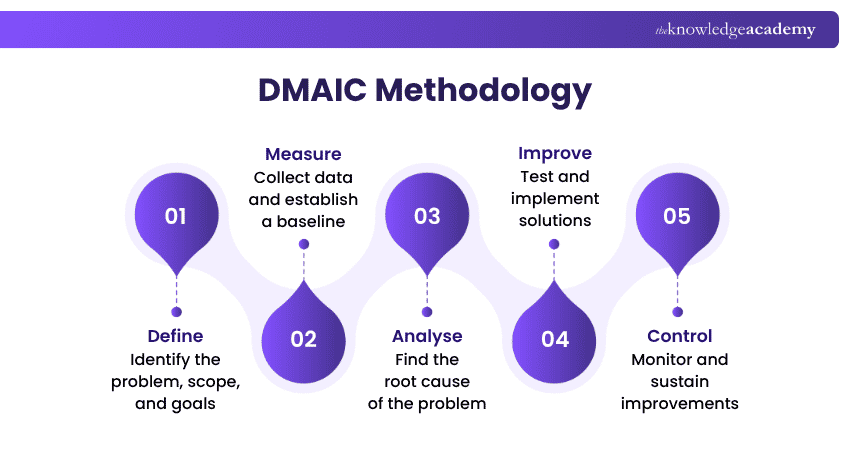
a) Define: This is about identifying the problem, scope, and customer requirements.
b) Measure: This step is about collecting data and establishing baseline performance.
c) Analyse: This involves identifying root causes using tools such as cause-and-effect diagrams and Pareto Charts.
d) Improve: This step helps develop and test solutions for process improvement.
e) Control: This is about sustaining improvements using control charts and standardised processes.
Trainer’s Insight
DMAIC works best as a connected problem-solving process rather than five separate steps. The data collected during the measure phase helps identify root causes during analyse, while those findings guide the solutions tested during Improve. The control phase then helps ensure that successful improvements are maintained over time.
3) Key Tools & Techniques
a) Process mapping (SIPOC, flowcharts).
b) Data collection and basic statistics.
c) Root cause analysis (5 Whys, Fishbone diagram).
d) Failure Mode and Effects Analysis (FMEA).
e) Hypothesis testing and basic regression.
f) Control charts and process capability.
g) Interpreting data to identify trends and root causes.
4) Practical Learning Experience
a) Hands-on projects and case studies.
b) Simulated real-world scenarios.
c) Understanding roles within Lean Six Sigma teams.
Core Principles of Lean Six Sigma Green Belt
Lean Six Sigma Green Belt follows a set of core principles that help professionals improve processes, reduce waste, and achieve consistent results. Let’s look at them below:
a) Focus on Customer Value: Every improvement should create greater value for customers. Green Belt professionals align processes with customer needs to improve quality, reliability, and satisfaction.
b) Identify and Eliminate Waste: Lean Six Sigma removes non-value-added activities such as delays, excess inventory, and unnecessary steps to improve efficiency and reduce costs.
c) Reduce Variation and Defects: Green Belt professionals use data and statistical tools to reduce process variation, minimise defects, and deliver consistent results.
d) Continuous Improvement: Lean Six Sigma promotes ongoing process reviews and small improvements to maintain efficiency, quality, and long-term performance.
e) Data-driven Decision Making: Decisions are based on data rather than assumptions. This helps identify root causes accurately and supports effective improvements.
f) Empower Employees: Lean Six Sigma encourages employees at all levels to contribute ideas, collaborate on improvements, and support a culture of continuous improvement.
Learn to contribute to smarter business processes by joining the Lean Six Sigma Yellow Belt Training now!
Benefits of Lean Six Sigma Green Belt
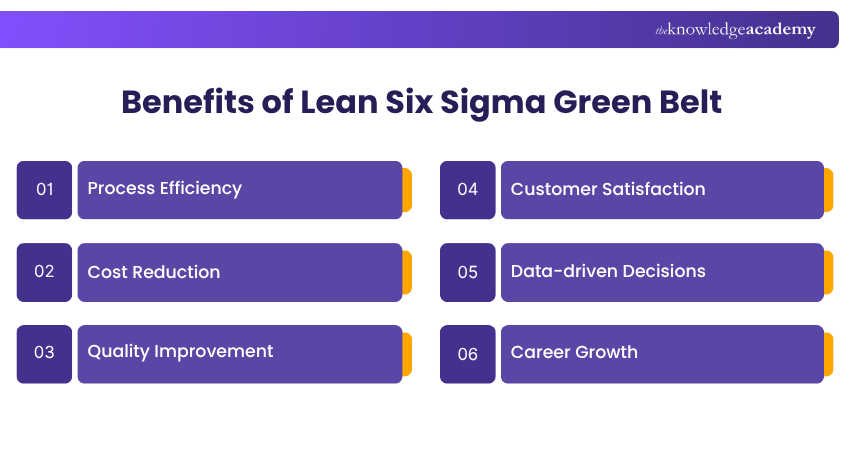
Lean Six Sigma Green Belt offers significant value to both individuals and organisations by focusing on process improvement, waste reduction, and quality enhancement. Here are the key benefits:
1) Process Efficiency
a) Green Belt projects streamline workflows by removing bottlenecks and unnecessary steps.
b) It reduces turnaround time and downtime.
c) It creates a more agile and productive work environment.
2) Cost Reduction
a) Lean Six Sigma Green Belt projects cut defects, rework and resource waste.
b) It saves costs through the use of better materials and optimised labour.
c) It minimises warranty claims and improves equipment efficiency.
3) Quality Improvement
a) Green Belt projects use tools such as Root Cause Analysis and control charts.
b) It reduces variability and ensures process consistency.
c) It leads to reliable products and fewer customer complaints.
4) Customer Satisfaction
a) Green Belt projects deliver faster, more accurate and consistent service.
b) It improves customer trust and loyalty.
c) It strengthens brand reputation in competitive markets.
5) Data-driven Decisions
a) Green Belt projects empower professionals to collect and analyse data more effectively.
b) This encourages decisions based on evidence, not assumptions.
c) The application of structured methods like DMAIC leads to better outcomes.
6) Career Growth
a) The Lean Six Sigma Green Belt showcases strong problem-solving and leadership skills.
b) This leads to promotions, pay hikes or bigger roles.
c) This opens doors to advanced certifications, such as Black Belt.
7) Competitive Edge
a) The Green Belt improves efficiency, innovation and customer focus.
b) It helps companies stay Agile and market ready.
c) It drives long-term performance and an edge over competitors.
What is an Example of a Lean Six Sigma Green Belt Project?
Lean Six Sigma Green Belt projects focus on improving efficiency, reducing waste, and solving quality issues using data. Generally, these projects are small to medium in scope and help organisations achieve measurable improvements across different functions. Let’s learn more about them through the examples below:
Pro Tip
A strong Green Belt project starts with a clearly defined and measurable problem. Keep the scope manageable, establish the current performance as a baseline, and determine what a successful outcome should look like before deciding on solutions.
1) Manufacturing & Supply Chain
Manufacturing and supply chain projects focus on reducing waste, improving efficiency, and increasing productivity. Examples include:
a) Scrap Reduction: Reduce defective materials to lower waste and production costs.
b) Order Lead Time: Shorten the time needed to process customer or purchase orders.
c) Production Output: Improve production capacity by removing process bottlenecks.
2) Service & Finance
In service and finance, Green Belt projects aim to improve customer experience, speed up processes, and minimise operational errors. Examples include:
a) Loan Processing: Speed up loan review and approval times.
b) Customer Support: Improve response times to increase customer satisfaction.
c) Order Accuracy: Reduce data entry errors to ensure accurate order fulfilment.
3) Healthcare & IT
Green Belt projects in healthcare and IT focus on delivering faster, more reliable services while improving efficiency and quality. Examples include:
a) Emergency Room Triage: Reduce patient waiting time before the first medical assessment.
b) Software Deployment: Streamline software releases for faster and more reliable updates.
c) Employee Onboarding: Reduce training time so new employees become productive quickly.
Transform workplace challenges into lasting improvements with the Lean Six Sigma Certification Training - Sign up now!
Essential Skills for Lean Six Sigma Green Belt Professionals
A Lean Six Sigma Green Belt Professional needs a combination of technical knowledge, analytical thinking, and leadership skills to deliver successful process improvement projects. These essential skills help professionals identify problems, implement solutions, and sustain long-term improvements. Some of the skills include:
a) Problem-solving with DMAIC: Green Belts should understand the DMAIC framework to define problems, analyse root causes, implement improvements, and maintain long-term results.
b) Analytical and Statistical Tools: Green Belts should be comfortable using tools such as Pareto charts, histograms, and control charts to interpret process data. This helps turn raw numbers into patterns the team can act on.
c) Root Cause Analysis: Green Belts use techniques like the 5 Whys and fishbone diagram to identify the real cause of problems.
d) Process Mapping and Waste Identification: Understanding process mapping and value stream mapping helps identify inefficiencies and improve workflow efficiency.
e) Quality and Performance Measurement: Green Belts should understand key metrics, Critical to Quality (CTQ), and the Cost of Poor Quality (COPQ) to measure performance and improve process quality.
f) Standardisation and Process Control: Creating Standard Operating Procedures (SOPs), implementing 5S, and developing control plans help sustain improvements and maintain consistent performance.
g) Leadership and Communication: Green Belts often lead small to medium-sized improvement projects, requiring effective communication, stakeholder management, teamwork, and leadership skills.
What are Career Opportunities with Lean Six Sigma Green Belt?
Earning a Lean Six Sigma Green Belt opens doors to an expansive range of career opportunities across industries like manufacturing, healthcare, finance, IT, logistics, and more. Here are some popular career opportunities:
a) Process Improvement Specialist: Analyses workflows, reduces waste, and optimises operations using Lean Six Sigma tools.
b) Quality Analyst: Ensures quality standards by identifying and removing process defects.
c) Operations Manager: Improves efficiency, cuts costs, and boosts productivity across teams.
d) Project Manager: Leads improvement projects using DMAIC to deliver timely and effective results.
e) Business Analyst: Identifies process gaps through data and supports strategic decision-making.
f) Continuous Improvement Manager: Drives Lean Six Sigma initiatives across departments to promote continuous improvement.
g) Manufacturing Engineer: Improves shop floor efficiency, reduces downtime, and enhances product quality.
h) Supply Chain Analyst: Optimises logistics and inventory to reduce waste, delays, and costs.
Lean Six Sigma Green Belt is not just about learning tools and terminology. Its real value comes from using data, structured problem-solving, and continuous improvement techniques to address measurable process problems and sustain better results.
Learn advanced process improvement tools with Lean Six Sigma Black Belt Training - Join today!

Saurav Sharma is a Marketing Head with 9+ years of experience in performance marketing, SEO, paid advertising and growth strategy. His data-informed approach, project oversight and strategic leadership provide practical expertise across Business Skills, Project Management, and Leadership and Management.
View Detail

 If you wish to make any changes to your course, please


