




We may not have the course you’re looking for. If you enquire or give us a call on 01344203999 and speak to our training experts, we may still be able to help with your training requirements.
Top 15 jQuery Alternatives to Consider in 2026
ByRichard HarrisLast updated on: 03 October 2026
Web Developers have a wealth of jQuery alternatives, which include React, Vue.js, and modern JavaScript, among others. They offer different approaches to modern web development. These alternatives cater to diverse requirements like smaller file sizes, quicker execution, or extensive UI controls tailor-made to many web development scenarios.

What's Coming Up
1. From Simple to Advanced: See how the options range from lightweight tools to comprehensive frameworks2. Modern and Legacy Choices: Recognise which technologies are suited to current development and which remain useful for existing projects3. Beyond Direct Replacements: Understand why some options replace specific jQuery tasks while others offer entirely different development approaches4. Selection Factors: Consider maintenance, project complexity, functionality and team requirements before choosing5. Practical Direction: Use the comparisons and guidance to narrow down options based on what your application actually needs
As web development evolves, the search for efficient and modern tools becomes essential. jQuery, once the cornerstone of interactive web development, now finds itself amidst a plethora of jQuery alternatives, each offering unique functionalities and advantages.
Moreover, these alternatives range from lightweight libraries that mirror jQuery's simplicity to powerful frameworks that extend beyond basic DOM manipulation and event handling. Discover a new era of front-end scripting as we explore jQuery alternatives, each promising a fresh approach to creating dynamic and responsive user interfaces.
List of Best jQuery Alternatives
jQuery alternatives are rich and diverse, offering different approaches depending on a project's requirements. React and Vue support component-based UI development, while lightweight options like Alpine.js and Preact can suit projects where a smaller footprint is important.
Svelte and Lit provide other approaches to building modern interfaces, while modern JavaScript and native browser APIs allow developers to perform many tasks without relying on jQuery. Below are the alternatives described in detail:
1) JavaScript
JavaScript is a versatile, high-level programming language; it is used for web development. Initially designed to add interactivity to web browsers, it has evolved into a powerful tool for client- and server-side applications, thanks to platforms like Node.js.
Modern JavaScript and native browser APIs can also perform many tasks for which developers previously relied on jQuery, including DOM manipulation, event handling and network requests.
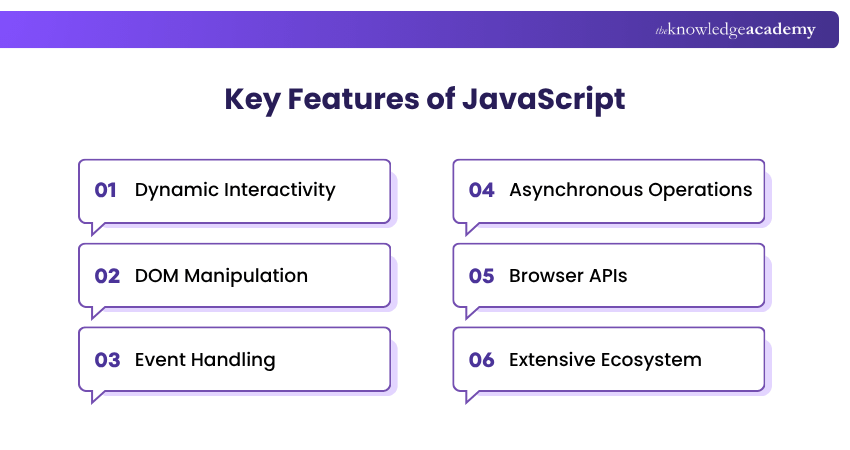
Moreover, JavaScript is an integral part of the web development trifecta, alongside HTML and CSS, enabling dynamic content and interactive web experiences. Its event-driven, non-blocking model makes it particularly suited for handling asynchronous operations and building real-time applications. With a vast ecosystem of libraries and frameworks, JavaScript continues to be a dominant force in modern web development, catering to a wide range of programming needs.

2) UmbrellaJS
UmbrellaJS is a lightweight, modern JavaScript library designed for simplicity and efficiency in manipulating the DOM and handling events. It's an excellent option for developers seeking an alternative to heavier libraries like jQuery.
Moreover, with a focus on being lean and fast, UmbrellaJS provides essential functionalities such as selecting, traversing, and manipulating DOM elements and handling events. For network requests, it can be used alongside modern browser APIs such as Fetch.
Furthermore, its syntax is straightforward and intuitive, making it accessible for beginners while still powerful for experienced developers. The library emphasises a minimalist approach, ensuring that only necessary features are included, thereby reducing load times and improving performance for web applications.
3) ZeptoJS
ZeptoJS is a minimalist JavaScript library primarily designed as a lightweight alternative to jQuery. It offers a similar API, making it an easy transition for those familiar with jQuery. However, it is now better suited to maintaining existing projects or specific lightweight use cases than as a default choice for new applications.
The library excels in its small footprint, fast execution, and ease of use for common tasks like DOM manipulation, event handling, and Ajax requests. While it may not have as extensive a feature set as jQuery, ZeptoJS can still be useful for maintaining existing projects or specific lightweight applications where its jQuery-like API is already suitable.
4) Ext JS
Ext JS is a comprehensive JavaScript framework designed for building data-intensive, cross-platform web applications. It stands out for its rich set of integrated features, including a vast array of UI components, a data package that can handle complex data sets, and a robust Model-View-Controller (MVC) architecture.
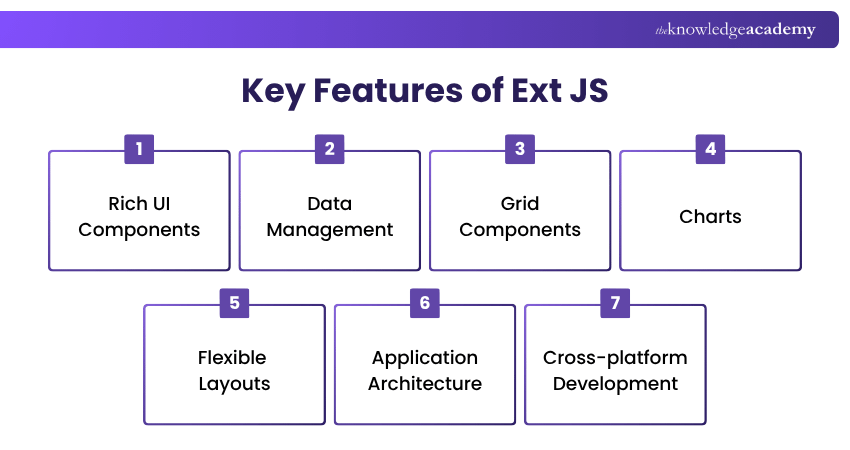
Ext JS is particularly favoured in enterprise-level development due to its ability to create complex, highly interactive user interfaces with a desktop-like experience. The framework includes advanced charting, grid, and layout capabilities, making it a model for applications requiring detailed data presentation and manipulation.
Its emphasis on enterprise-grade tools and functionality makes Ext JS a strong choice for large-scale, sophisticated web applications. Rather than acting as a direct drop-in replacement for jQuery, Ext JS is suited to projects that require a comprehensive framework and extensive UI components.
5) Cash
Cash is a small, jQuery-inspired JavaScript library that offers a streamlined and efficient approach for DOM manipulation and event handling. Cash provides a familiar, jQuery-like API designed for modern browsers, making it accessible for developers transitioning from jQuery or looking for a lightweight alternative.
It shines in its minimalistic design, offering only the most essential functionalities, significantly reducing its size and load time. This makes Cash particularly well-suited for performance-focused projects where every kilobyte matters. By focusing on the core features necessary for most web development tasks, Cash delivers a fast, easy-to-use tool for everyday JavaScript operations.
Trainer's Insight
Not every jQuery alternative serves the same purpose. Cash and UmbrellaJS are closer to jQuery's traditional DOM-focused role, while React, Vue, Angular and Svelte represent broader approaches to building application interfaces.
6) Preact
Preact is a lightweight JavaScript library for building UI using a component-based approach. It provides many concepts familiar to React Developers while maintaining a smaller footprint, making it suitable for performance-conscious web applications.
Preact supports components, state management and modern UI development while integrating with the broader JavaScript ecosystem. It can be particularly useful when developers need component-based functionality without adopting a larger front-end library.
Gain the knowledge to run operations and display the results based on user input with our JavaScript and jQuery Training – Join now!
7) MooTools
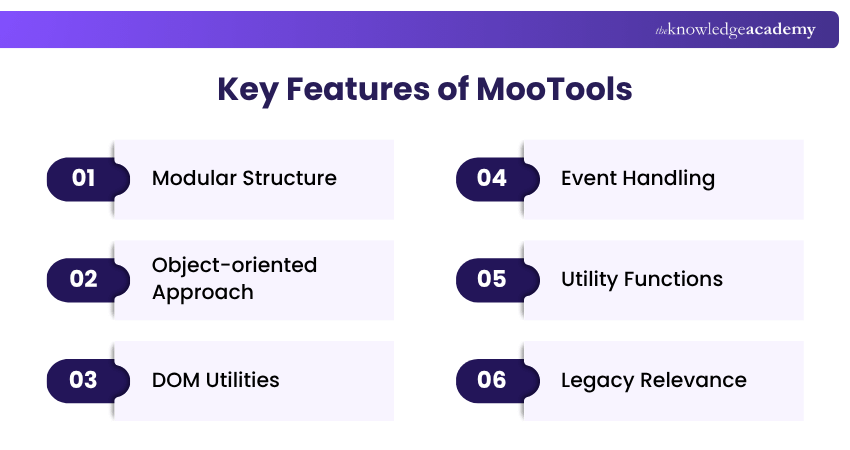
My Object-Oriented Tools (MooTools) is a lightweight, modular JavaScript framework. It provides an elegant, coherent API for building robust web applications. Although it played an important role in earlier JavaScript development, it is now more relevant to legacy projects than as a mainstream choice for new applications.
Keep in Mind
A library can still work without being the best choice for a new project. When evaluating older alternatives, consider active maintenance, browser compatibility, ecosystem support and the long-term requirements of your application.
8) Bootstrap
Bootstrap is a widely used front-end framework for web development. It gives a collection of HTML, CSS, and JavaScript components for creating responsive and mobile-first websites. Bootstrap is known for its grid system, pre-designed UI elements, and interactive components, making it user-friendly for developers to quickly craft visually appealing and consistent interfaces.
While Bootstrap is not a direct replacement for jQuery's DOM manipulation APIs, its JavaScript components can cover some interactive UI requirements without requiring jQuery.
9) Angular
Angular is a web framework designed for building scalable web applications. It uses a component-based architecture and provides features for common development requirements, including routing, forms and dependency injection.
Rather than acting as a direct replacement for jQuery's DOM manipulation features, Angular provides a comprehensive approach to developing complex web applications with structured and reusable components.
10) Svelte
Svelte is a modern JavaScript framework for creating interactive user interfaces. Unlike frameworks that perform much of their work in the browser at runtime, Svelte uses a compiler to transform components into efficient JavaScript.
It provides features for building interactive interfaces while reducing the need for developers to manually manipulate the DOM. This makes Svelte a modern option for projects that require more structured UI development than jQuery typically provides.
Quick Check
Do you need a lightweight utility for a few interactions, or are you building a component-based application? Answering this first can help narrow your options before comparing individual libraries and frameworks.
11) D3.js
D3.js (Data-Driven Documents) is a powerful JavaScript library that produces dynamic, interactive data visualisations in web browsers. It excels in bringing data to life using HTML, SVG, and CSS. D3's unique approach allows you to bind arbitrary data to the Document Object Model (DOM) and apply data-driven transformations to the document.
This enables complex visual representations of data with a high level of control over the final visual output. D3 is known for its flexibility and capability to generate sophisticated and intricate graphical representations, from simple charts to complex interactive graphics, making it a favourite among data scientists and Web Developers alike.
D3.js is not a general-purpose replacement for jQuery, but it is a strong alternative when the primary requirement is data-driven DOM manipulation and visualisation.
12) Alpine.js
Alpine.js is a lightweight JavaScript framework designed for adding interactive behaviour directly within HTML markup. It provides a simple approach to common front-end tasks such as managing component state, handling events and dynamically displaying or updating elements.
Its lightweight approach makes it particularly useful for developers who need straightforward interactivity without adopting a larger front-end framework. Alpine.js can be added through a script tag or installed as a module, making it a practical alternative for projects that might otherwise rely on jQuery for simple user interface interactions.
Example
Suppose a website uses jQuery mainly for click events, toggling elements and simple network requests. Replacing the entire front end with a large framework may be unnecessary. Modern JavaScript or a lightweight option could meet those requirements with less migration effort.
13) React
React is a flexible JavaScript library for creating interactive user interfaces. Originally developed at Facebook, React is now governed through the independent React Foundation, hosted by the Linux Foundation. It allows developers to create large applications where content can update dynamically without a full page reload.
Its key feature is the ability to create reusable UI components that can be managed independently. React's virtual DOM system optimises updates and rendering, improving performance and user experience.
More importantly, its unidirectional data flow and integration with a broad ecosystem of state management and routing tools make it a robust choice for complex applications, and its widespread community offers extensive resources and support.
14) Vue.js
Vue.js is a JavaScript framework designed for developing interactive user interfaces and web applications. It is known for its simplicity, flexibility, and intuitive API, making it approachable for beginners while powerful for experienced developers.
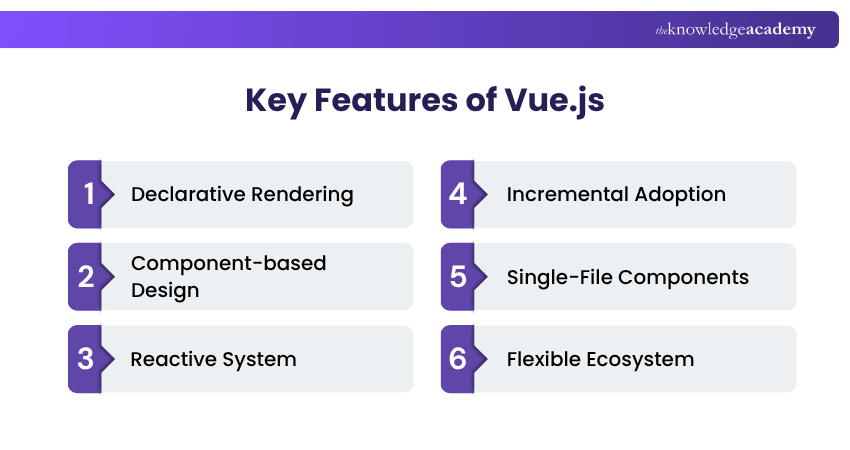
Additionally, Vue emphasises a declarative and component-based programming model, facilitating the rapid development of interactive UIs. Its flexible and incrementally adoptable design allows it to enhance existing pages or support more complex web applications.
More importantly, Vue also offers an ecosystem of supporting libraries and tools, such as Vue router for client-side routing and Pinia for state management. Vuex, the previous official state management library, is now in maintenance mode. This extensibility and detailed documentation have contributed to Vue's popularity in the web development community.
15) Lit
Lit is a lightweight JavaScript library for building fast and reusable web components. It provides a declarative approach to creating interactive components while building on standard browser technologies such as custom elements and shadow DOM.
Its lightweight design enables developers to build reusable UI components without relying on a larger application framework. Lit can also be integrated into existing web applications, making it useful for gradually modernising front-end interfaces.
Learn cutting-edge technologies for versatile web solutions with our App & Web Development Training – Join now!

Richard Harris creates technically detailed yet accessible content on full-stack development, software architecture and modern development frameworks. His knowledge of frontend and backend technologies helps developers understand how scalable, efficient and high-performing applications are designed and built.
View Detail

 If you wish to make any changes to your course, please


