


We may not have the course you’re looking for. If you enquire or give us a call on 01344203999 and speak to our training experts, we may still be able to help with your training requirements.
Top 20+ Java Projects for Developers in 2026
ByThe Knowledge AcademyLast updated on: 16 October 2026
This blog will give you ideas for some popular Java projects which can be used for personal project development, letting you showcase your skills.
What better way to master Java than by building something of your own? From creating a simple number guessing game to developing an online banking system, every project offers an opportunity to turn programming knowledge into practical skills.
Whether you're a beginner exploring Java fundamentals or an experienced developer ready for complex challenges, there's a project for every skill level. In this blog, we'll explore 23 Java project ideas across beginner, intermediate and advanced levels to help you decide what to build next.
Beginner-level Java Projects
Beginner-level Java projects focus on foundational programming concepts such as variables, conditions, loops, methods, strings and simple user interfaces. These projects are suitable for learners who are becoming familiar with Java syntax and basic problem-solving.

1) Number Guessing Game
Any games with numbers are an instant hit, and the Number Guessing game is one of them. The game aims to guess a computer-generated number within the provided range. A correct guess wins the game, while an incorrect guess allows the player to try again until the maximum number of attempts is reached.
It is one of the simplest Java projects for students that can be customised to your wishes. You can always provide a time limit for the users to guess within, add more rounds or even double the points for specific rounds.
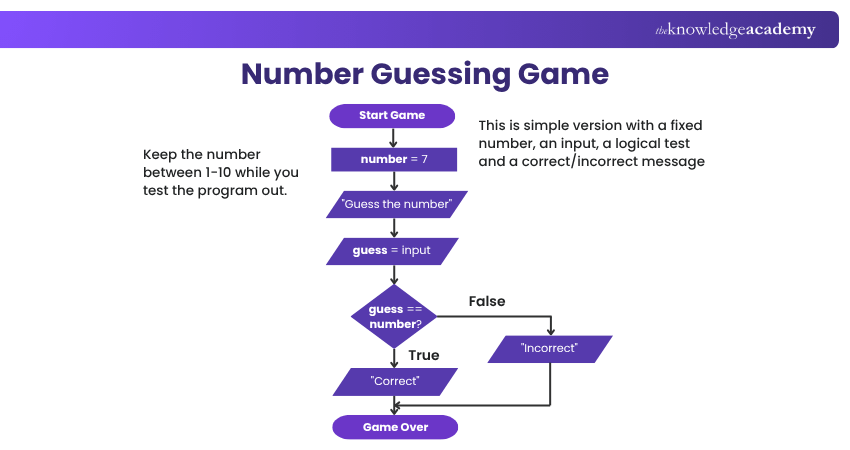
Here's an example:
import java.util.Random;import java.util.Scanner;public class NumberGuessingGame {public static void main(String[] args) {Random random = new Random();Scanner scanner = new Scanner(System.in);int number = random.nextInt(100) + 1;int attempts = 0;int maxAttempts = 7;boolean guessed = false;System.out.println("Guess a number between 1 and 100!");while (attempts < maxAttempts) {System.out.print("Enter your guess: ");if (!scanner.hasNextInt()) {System.out.println("Enter a valid whole number.");scanner.next();continue;}int guess = scanner.nextInt();if (guess < 1 || guess > 100) {System.out.println("Choose a number from 1 to 100.");continue;}attempts++;if (guess == number) {System.out.println("Correct! Attempts: " + attempts);guessed = true;break;} else if (guess < number) {System.out.println("Too low!");} else {System.out.println("Too high!");}}if (!guessed) {System.out.println("Game over! The number was " + number);}scanner.close();}
Output:
Guess a number between 1 and 100!Enter your guess: 40Too low!Enter your guess: 70Too high!Enter your guess: 55Correct! Attempts: 3
Java Concepts Used: Variables, loops, conditional statements, methods and random number generation.
Suggested Technologies: Core Java, Scanner and Random.
Pro Tip
Begin with a basic guessing game that accepts user input and checks the result. Once it works, add features such as a scoring system, difficulty levels or timed rounds. Each improvement allows you to practise another Java concept.
2) Creating Calculators
Calculators are essential devices that are used personally and professionally every day. Developing a calculator is one of the most interesting projects for newcomers to Java. The objective of the calculator is to perform calculative tasks, mostly mathematical operations. Java Swing is a perfect fit for this development. The calculator must include buttons that allow you to enter your desired values, the instructions to operate, and provide instantaneous outputs.
Java Concepts Used: Arithmetic operators, conditional statements, methods and exception handling.
Suggested Technologies: Core Java and optionally Java Swing or JavaFX.
3) Currency Converter
As the name suggests, currency converters are used to convert money from one currency to another. It is one of the most commonly pursued projects using Java, owing to its simplicity of design and development. Programming a currency converter is a great project to invest your time and effort in.
A basic currency converter allows users to select two currencies, enter an amount and calculate the converted value using a predefined exchange rate. An advanced version can integrate an exchange-rate API to retrieve updated currency values.
Java Concepts Used: Variables, arithmetic operations, methods, conditional statements and optional API integration.
Suggested Technologies: Core Java, BigDecimal for precise decimal calculations and optionally Java's HTTP Client.
4) Budget Tracker
A basic budget tracker helps you track your daily expenses, thereby helping you gain more control of your finances. Developing a budget tracker is a useful Java project for practising classes, collections and basic calculations. A simple version can record income and expenses, while more advanced versions can include file storage, databases or web interfaces.
The application can allow users to record income, track expenses and view spending summaries. More advanced versions may include login functionality and separate administrator roles where needed. Budget trackers are useful tools for freshers in college or daily workers. You can always develop the application and add features which you desire.
Java Concepts Used: Classes, objects, collections, methods and file handling.
Suggested Technologies: Core Java, ArrayList, BigDecimal and optionally file storage or SQLite.
5) Password Generator
With the recent rise in cyber-attacks, it is imperative to possess a strong and unguessable password to protect your data. You must have noticed instructions to add uppercase letters, numbers, or special characters while generating passwords. Now you can develop generators that create strong passwords using Java. You can customise the application according to your preferences.
Java Concepts Used: Strings, loops, arrays, methods and random generation.
Suggested Technologies: Core Java, StringBuilder and SecureRandom.
Pro Tip
Use Java's SecureRandom instead of Random when generating passwords. It provides cryptographically secure random values, making it more suitable for security-sensitive applications. Also, allow users to choose password length and character types.
Intermediate-level Java Projects
Intermediate Java projects introduce more complex concepts such as object-oriented design, database operations, graphical interfaces and application architecture. These projects are suitable for learners who understand core Java concepts and want to build larger applications.
6) Library Management System
Library management systems are mainly used in universities or any educational institution. Besides its physical management, a virtual system helps librarians handle tasks efficiently. These systems use Java, MySQL community server, and other technologies for their development.
In a typical library system, administrators or librarians manage the catalogue, while ordinary users search for books and manage their borrowing activities. It is one of the easiest projects to design, through which you can gain experience working with Java.
Java Concepts Used: OOP, collections, CRUD operations, exception handling and database connectivity.
Suggested Technologies: Java, JDBC, SQLite or MySQL and optionally Java Swing or Spring Boot.
7) Attendance Management System
Attendance management systems have become a necessity at universities and offices. This Java project allows you to add, delete or edit information regarding users, students and faculty. The technologies involved in its development include Java Servlet, JavaScript, HyperText Markup Language (HTML), etc.
An Attendance Management System can use the Model-View-Controller (MVC) architecture to organise application components, while Maven can help manage dependencies and automate builds. MySQL can be used to store attendance records, while Apache Tomcat is one deployment option for Servlet-based applications.
Java Concepts Used: Classes, objects, CRUD operations, collections and database management.
Suggested Technologies: Java, JDBC, MySQL and optionally Spring Boot or Java Servlets.
8) Supermarket Billing System
Supermarket employees are in charge of handling all items for sale alongside the hundreds of transactions that occur. Physically managing such heavy tasks can be challenging in the long run. This issue can be resolved using a supermarket billing system, one of the basic Java project ideas for beginners.
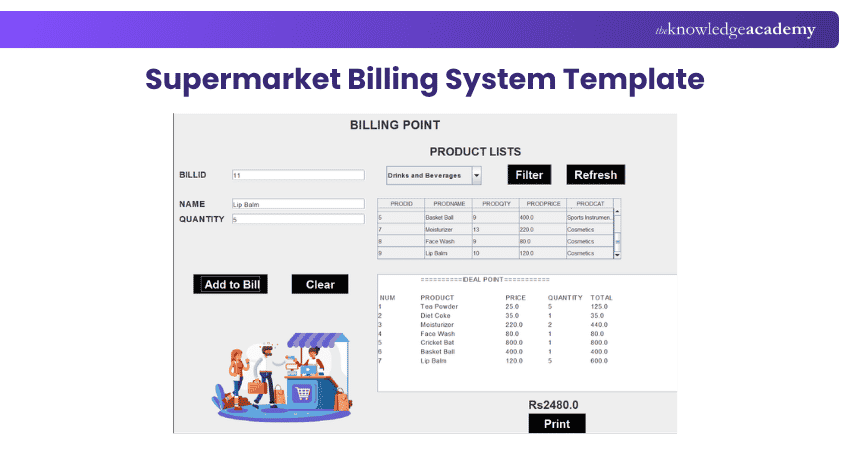
The system helps track product availability and longevity and even user history. It supports a MySQL database that records details regarding the buyer, the items purchased, and more. You can also view the generated bills of the day with the edits made on them (if any).
Java Concepts Used: OOP, arithmetic operations, collections, input validation and CRUD operations.
Suggested Technologies: Core Java, BigDecimal, JDBC, SQLite or MySQL and optionally Java Swing.
For financial calculations, BigDecimal is preferable to floating-point types when exact decimal arithmetic is required.
9) Electricity Billing System
Computerising the electricity billing system involves a lot of careful calculations to produce bills the correct way. Automating electricity billing helps calculate charges based on energy consumption and applicable tariffs. The system can also account for fixed charges, taxes or additional fees where relevant.
It can reduce manual calculations, organise billing records and support the accurate generation of electricity bills. The concept of an electricity billing system is one of the Java project ideas that are highly suitable for beginners.
Java Concepts Used: Arithmetic operations, conditional statements, methods, classes and exception handling.
Suggested Technologies: Core Java, BigDecimal and optionally JDBC or a database.
10) Online Resume Builder
If you have ever applied for a job, you might know that your first impression is your resume. A potential interview call depends on whether you can make an impression on the manager with your resume. This is why resume-building is essential.
Crafting the perfect resume is a time-consuming process. Online resume builders help you quickly design resumes from the range of templates available. This basic Java project includes features like engaging templates and options to download in PDF or DOC format. Just enter details of your education, job experience, etc., and build organised and attractive resumes.
Java Concepts Used: OOP, data validation, file handling and web application development.
Suggested Technologies: Java, Spring Boot, HTML, CSS and a suitable PDF-generation library.
Acquire the skills for cutting-edge web development. Sign up for the Web Development Using Java Training course now!
11) Online Survey System
Online survey systems allow you to conduct surveys on different topics. Here, the aim is to develop an online platform using Java that can be used to collect information from various individuals regarding a particular topic. The responses are then tallied and represented in the users' desired manner.
The application can optionally send email notifications to respondents. You can add functionality that restricts the number of respondents or limits access to authenticated users. Depending on the survey requirements, the application can support anonymous responses and appropriate data privacy controls.
Java Concepts Used: Classes, collections, CRUD operations, database connectivity and web development.
Suggested Technologies: Java, Spring Boot or Java Servlets, HTML, CSS and MySQL.
12) Online Examination System
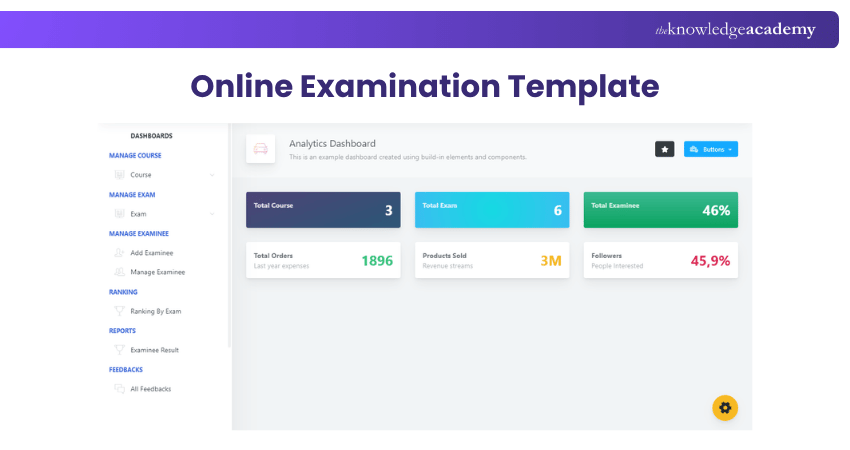
The onset of COVID-19 resulted in the world shifting to a virtual workspace. Educational institutions also had to change from physical to online classes and examinations. The examination process involves signing up, setting up profiles, submitting your answers, and logging out. Apache Tomcat can be used to deploy Servlet-based applications, while Spring Boot applications can also run using an embedded server.
Java Concepts Used: OOP, collections, conditional statements, file handling and database operations.
Suggested Technologies: Java, Spring Boot or Java Servlets, MySQL and HTML/CSS.
13) Chat Application
Chat applications allow us to sign up, text, and connect. Social media applications like Instagram, Facebook, etc., are examples of chat applications. Developing this application can offer a good experience using MySQL database, a commonly used database. Java provides the Swing toolkit, which offers graphical components that can be used to create the application.
Java Concepts Used: Socket programming, multithreading, event handling and OOP.
Suggested Technologies: Java Sockets, Java Swing or JavaFX and optionally WebSocket technology for web-based messaging.
14) Smart City Project
In today's world, the tiniest bit of information is extracted from the internet. A basic location like a supermarket can be looked up quickly. Smart City helps you access a city's details like famous restaurants, malls, theatres, parks, hotels, transportation facilities, etc. It is the perfect application to use when visiting a city for the first time.
This web-based application guides you to new places, giving you details about the city, the location you're about to visit, and even the transportation modes and fares to get there. Smart City projects can be built on an Oracle database with the help of Ajax, Java, and more.
Java Concepts Used: OOP, collections, APIs, database operations and user interface development.
Suggested Technologies: Java, Spring Boot, SQLite or MySQL and optionally a mapping API.
15) Snake Game
Almost every 2000s kid has played the snake game at least once. Let's refresh your memory if you have forgotten about it. The snake game was a game that allowed you to control the movement of a snake to feed it. The items it fed on appeared in random parts of the screen, and you had to help the snake reach them.
The snake grows bigger as it eats, and the game stops if you hit a boundary or the snake's body. This classic game can be developed using Core Java with Java Swing or JavaFX for its graphical interface. A database is optional and can be used to store player scores or game records. Here is an example of a simple Java code used in the game to assign a random food location:
import java.util.Random;public class SnakeGame{private int foodX, foodY;public void generateFood(){Random random = new Random();foodX = random.nextInt(10);foodY = random.nextInt(10);}public static void main(String[] args){SnakeGame game = new SnakeGame();game.generateFood();System.out.println("Food location: (" + game.foodX + ", " + game.foodY + ")");}}
This code uses the 'Random' class to generate random coordinates for the food. The 'nextInt()' method of the 'Random' class generates a random integer between 0 (inclusive) and 10 (exclusive) for both the 'foodX' and 'foodY' variables. The 'generateFood()' method sets these variables to the randomly generated values.
Output:
Food location: (3, 7)
Java Concepts Used: Classes, objects, methods, variables and random number generation.
Suggested Technologies: Core Java, Java Swing or JavaFX.
16) Chess Game
One of the basic Java project ideas included the chess game. Its creation involves incorporating the rules of the game in the Java code. This includes setting up the pieces, the Chessboard, the different moves involved, and the game's basic flow, among other factors. A basic chess game is suitable for intermediate learners, helping them practise object-oriented programming, game logic and move validation.
Java Concepts Used: OOP, inheritance, polymorphism, arrays, collections and game logic.
Suggested Technologies: Core Java, Java Swing or JavaFX.
Trainer Insight
Many intermediate Java applications revolve around four operations: Create, Read, Update and Delete (CRUD). Learning these operations through a small Library Management or Attendance Management System provides a useful foundation for developing larger database-backed applications.
Advanced Java Projects
Advanced Java projects involve more complex concepts such as application security, networking, concurrency, external services and system integration. These projects are suitable for learners who have experience with core Java, object-oriented design and database-backed applications.
17) E-healthcare Management System
Moving on from games, the next important Java code implementation is in management systems. In the bustling environment of the Healthcare industry, managing employee and patient data can be challenging.
An e-healthcare management system can simplify these tasks by organising patient records, appointments and healthcare resources. It can also incorporate secure authentication and database management to support accurate and efficient information handling.
This web-based project helps manage data regarding patient history, keep track of equipment and medicine usage, develop a direct line of contact between the doctor and the patient, and so on. A simplified version can introduce essential features, while an advanced implementation may include role-based access, database integration and secure handling of patient information.
Java Concepts Used: OOP, database connectivity, authentication, input validation and application architecture.
Suggested Technologies: Java, Spring Boot, JDBC or JPA and PostgreSQL or MySQL.
18) Airline Reservation System
Airline reservation systems are online platforms that help users book their flights in advance. This is one of those projects that can help you improve in programming. Since it is a web application hosting dynamic interactions on the platform, it must be ready for multiple users to access it simultaneously.
The system handles registration, booking of tickets, possible cancellations, and maintaining constant communication with customers. Core Java and JavaScript are some technologies that go into creating it.
Java Concepts Used: OOP, database transactions, concurrency, validation and API development.
Suggested Technologies: Java, Spring Boot, JDBC or JPA and PostgreSQL or MySQL.
Pro Tip
When building a reservation system, test what happens when two users attempt to book the last available seat simultaneously. Using database transactions and appropriate concurrency controls can help prevent duplicate bookings and maintain accurate reservation records.
19) Supply Chain Management System
A supply chain management system is one of those projects that helps perform activities that start from procuring raw materials to delivering finished products to consumers. One of the industries that make use of this service is the manufacturing industry. Tasks that would usually take a lot of time to complete can be finished in a shorter period using a supply chain management system.
The application can be developed using Java and Spring Boot, with databases and APIs supporting inventory, suppliers and order management. Deployment options depend on the application's architecture.
Java Concepts Used: OOP, database operations, transaction management, business logic and API integration.
Suggested Technologies: Java, Spring Boot, PostgreSQL or MySQL and REST APIs.
20) Online Banking
Computerising bank processes helps users access their services from their homes. Online banking enables users to check account balances, transfer funds, review transactions and access various banking services remotely. However, physical cash withdrawals and deposits may still require an ATM or banking facility.
Online banking helps reduce the time spent on tedious tasks. Developing an online banking simulation is an advanced Java project that helps you practise authentication, database transactions, exception handling and concurrency control.
Java Concepts Used: Encapsulation, OOP, database transactions, concurrency, authentication and exception handling.
Suggested Technologies: Java, Spring Boot, BigDecimal, JDBC or JPA and PostgreSQL.
21) Facial Recognition
The security domain in various industries has grown considerably in the past decade. Facial recognition can support identity verification and access control by comparing captured facial information with registered user records. The application must easily detect faces, store the IDs, provide easy login and log-out access, and more. Java-based facial recognition applications can use image-processing libraries such as OpenCV, alongside suitable facial recognition models or services.
Java Concepts Used: OOP, file handling, image processing, external libraries and API integration.
Suggested Technologies: Java, OpenCV Java bindings and an appropriate facial recognition model or service.
22) Speech Recognition
If you are aware of what Alexa is, then you are aware of speech recognition as well. Speech recognition software in Java processes human speech and converts it into text. You can develop a speech recognition application using Java with a compatible speech recognition library or external service.
The application can capture audio, process speech input and convert recognised words into text. Additional features may include voice commands and language selection.
Java Concepts Used: File handling, API integration, exception handling, asynchronous operations and string processing.
Suggested Technologies: Java, Java's HTTP Client, audio-processing libraries and a compatible speech recognition service.
The Java Speech API is not included as a standard speech recognition engine in the JDK. Developers generally need a compatible third-party implementation or external service.
Checklist: From Project Idea to Working Application
□ Choose a project that matches your Java skills.□ Define the main problem the application will solve.□ List the essential features before coding.□ Break the application into smaller classes and methods.□ Develop and test the core functionality.□ Handle invalid inputs and common errors.□ Document how to install and run the application.□ Review the code and identify improvements.
23) Virtual Private Network (VPN)
Developing a Virtual Private Network (VPN) using Java is an advanced project that involves networking, encryption and secure communication. A VPN creates a secure connection over an existing network, helping protect transmitted data.
The project can introduce concepts such as user authentication, encrypted communication, tunnelling and network traffic management. Developers can study established VPN protocols and implementations to understand how secure network connections work.
Java Concepts Used: Socket programming, networking protocols, cryptographic APIs, concurrency and exception handling.
Suggested Technologies: Java Networking APIs, Java Cryptography Architecture and established VPN protocol implementations for reference
Your Next Steps
1. Start Small: Build simple Java projects, such as calculators or number guessing games, to practise core concepts.2. Explore Intermediate Projects: Develop applications involving databases, user interfaces and object-oriented design.3. Take on Advanced Challenges: Work on projects involving networking, security, concurrency and system integration.4. Test and Improve: Debug your applications, handle errors and gradually introduce additional features.5. Build Your Portfolio: Document your completed projects and showcase your practical Java development skills.
Do you wish to learn about Java from scratch? Sign up for the Java Programming Course and take the first step in becoming a Java pro!

The Knowledge Academy develops accessible learning content across Project Management, IT, Cybersecurity, Data Science, Business Analysis, HR, Accounting and Finance, Leadership and Health and Safety. Its resources combine subject research with clear explanations to help professionals build practical knowledge across a wide range of disciplines.
View Detail

 If you wish to make any changes to your course, please


