


We may not have the course you’re looking for. If you enquire or give us a call on 01344203999 and speak to our training experts, we may still be able to help with your training requirements.
Is PMP® Certification Worth It: Career Guide
ByVishnu SankarLast updated on: 14 October 2026
PMP® Certification can be a worthwhile investment for experienced project professionals seeking career development and professional recognition. It validates project leadership capabilities and is associated with higher median salaries in PMI research. However, its value depends on career goals, eligibility, preparation and industry requirements.
Overview
1. Career Suitability: Understand when PMP® Certification may be a suitable professional investment.2. Professional Value: Explore its benefits, limitations and relevance to different project management roles.3. Certification Requirements: Learn about PMI's education, experience and training requirements.4. Exam Coverage: Discover how the current PMP exam assesses People, Process and Business Environment.
You're scrolling through job opportunities. The role looks perfect. The responsibilities match your experience. The salary is attractive.
Then you reach the qualifications section.
“PMP Certification preferred.”
Now you're thinking: Should I pursue it? Will it actually help me stand out? And is the investment worthwhile?
These are reasonable questions, especially when certification involves preparation time, examination fees and ongoing professional development.
This guide explores the value of PMP® Certification beyond the letters on your CV, helping you decide whether it aligns with your next career move.
What Is PMP® Certification?
Project Management Professional (PMP)® is a globally recognised professional certification offered by the Project Management Institute (PMI). It validates a professional's knowledge, experience and ability to lead projects while managing people, processes and business priorities.
Unlike certifications focused on a single project management methodology, PMP covers predictive, agile and hybrid approaches. It is designed for professionals with qualifying project management experience who want to demonstrate their ability to manage projects in different working environments.
PMP® Certification can support professional credibility and career development, although it does not guarantee employment, promotion or project success.
Trainer Insight
Practical project experience shows what you've accomplished, while PMP® Certification provides a recognised way to demonstrate your project leadership knowledge and capabilities. When deciding whether to pursue PMP, consider how the certification complements your existing experience and supports your next career goal.
Is PMP® Certification Worth It?
Yes, PMP® Certification can be worth pursuing, particularly for experienced project professionals whose career goals align with the qualification. However, its value should be assessed against the time, financial commitment and professional opportunities involved.
It can also be relevant when applying for positions where employers request or prefer PMP® Certification.
According to PMI's Global Project Management Talent Gap Report (2025), the global shortage of qualified project professionals could reach approximately 29.8 million by 2035. This highlights a potential demand for project management expertise, although it does not guarantee employment for PMP holders.
Benefits of PMP® Certification
PMP® Certification offers several potential benefits for experienced project professionals.
a) Professional Recognition: Demonstrates that a professional has met PMI's education, experience and examination requirements.
b) Project Leadership Capabilities: Validates knowledge and experience related to leading teams, managing stakeholder relationships and responding to project challenges.
c) Knowledge Across Delivery Approaches: Covers predictive, agile and hybrid ways of working, helping professionals understand different project environments.
d) Career Development Opportunities: May support applications for project leadership and management roles where PMP is valued or preferred.
e) Potential Salary Advantage: PMI research reports higher median salaries among PMP-certified respondents compared with those without the certification.
f) Continued Professional Development: Encourages certification holders to maintain their knowledge and skills through ongoing learning activities.
These benefits can be valuable, but their professional impact depends on the individual's experience, industry and career objectives.
Who Should Pursue PMP® Certification?
PMP® Certification is particularly suitable for professionals who already have project management experience and want to demonstrate their capabilities through an internationally recognised credential.
It may be relevant for:
a) Project Managers: Professionals responsible for planning, coordinating and delivering projects.
b) Senior Project Managers: Experienced professionals managing complex projects, teams and stakeholder expectations.
c) Project Leads: Individuals responsible for project decisions, team coordination and delivery outcomes.
d) Technical Professionals: Engineers, IT professionals and specialists who have gained qualifying experience leading projects.
e) Professionals Pursuing Leadership Roles: Individuals seeking greater project management responsibilities in organisations that value PMP.
PMP is not generally an entry-level certification. Professionals who do not meet the experience requirements may consider the Certified Associate in Project Management (CAPM)® certification as a foundational alternative.
When Might PMP Not Be the Right Choice?
PMP may be less suitable if you are new to project management, lack the qualifying experience or are pursuing roles where the credential offers limited relevance.Similarly, professionals seeking expertise in a specific method may find that another qualification aligns more closely with their immediate needs.The key consideration is whether PMP supports your professional direction, not simply whether the certification is widely recognised.
PMP® Certification Requirements
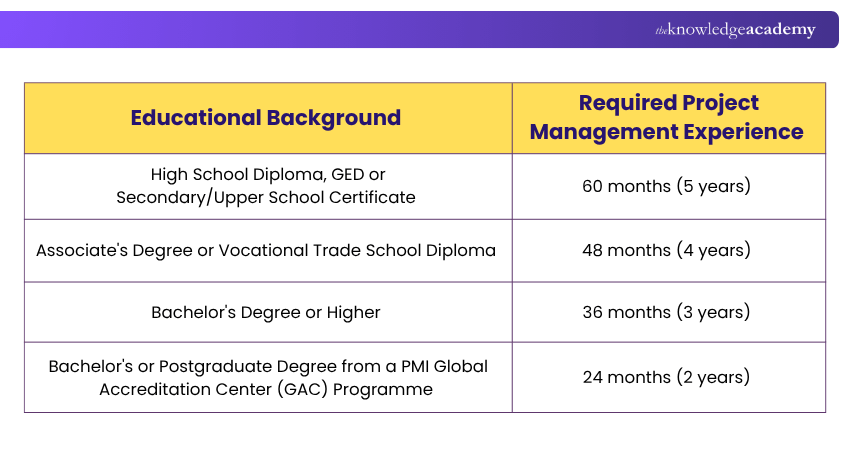
To apply for PMP® Certification, candidates must meet PMI's educational, professional experience and training requirements. PMI's eligibility framework provides four pathways based on educational qualifications.
Educational Qualifications and Experience Requirements
To apply for PMP® Certification, candidates must meet one of PMI's four education and professional experience pathways. The required experience depends on their highest qualifying educational background.
What Counts as Project Management Experience?
PMI requires candidates to demonstrate experience managing projects in a professional setting, taking responsibility for planning, decisions, delivery and outcomes.The experience must meet the following conditions:a) Experience Period: Qualifying experience must have been gained within the previous 10 years.b) Non-overlapping Experience: Time spent managing overlapping projects must not be counted more than once.c) Project Documentation: Candidates must list each qualifying project separately in their PMP application.
Project Management Training Requirements
In addition to the relevant education and professional experience, candidates must generally complete 35 hours of qualifying project management education or training.
Alternatively, an active Certified Associate in Project Management (CAPM)® Certification satisfies this training requirement.
Candidates can complete the required training through eligible self-paced courses or live instructor-led programmes that meet PMI's requirements.
Quick Update – Effective 1 December 2026
From 1 December 2026, PMI will accept qualifying live instructor-led PMP training only from PMI Authorised Training Partners, China Registered Education Providers and eligible accredited academic programmes. Self-paced training from other providers remains acceptable if it meets PMI's requirements. Training completed before this date remains eligible under the existing rules.
Gain the knowledge and confidence to excel in diverse project environments with the PMP® Certification Training – Register now!
How to Obtain PMP® Certification?
Obtaining PMP® Certification involves confirming eligibility, applying through PMI, preparing for the examination and successfully completing it.
Here are the key steps involved.
Step 1: Confirm Your Eligibility
Review PMI's educational, experience and training requirements. Ensure your professional project management experience meets the relevant pathway.
Step 2: Complete the Required Training
Complete the qualifying 35 hours of project management education or use an active CAPM® Certification to meet the training requirement.
Step 3: Submit Your PMP Application
Create or access your PMI account and submit the required information about your education, training and project management experience.
PMI may select applications for audit, so candidates should be prepared to provide supporting documentation where required.
Step 4: Prepare for the PMP Exam
Study PMI's current Examination Content Outline and use suitable preparation resources, practice questions and mock examinations.
The PMP examination assesses three domains:
|
Examination Domain |
Weighting |
|
People |
33% |
|
Process |
41% |
|
Business Environment |
26% |
The examination covers predictive, agile and hybrid project management approaches. It also reflects contemporary topics, including value delivery, sustainability and artificial intelligence.
Step 5: Schedule and Take the Exam
After your application is approved, pay the examination fee and schedule your PMP exam through PMI's authorised testing arrangements.
The current PMP examination format is:
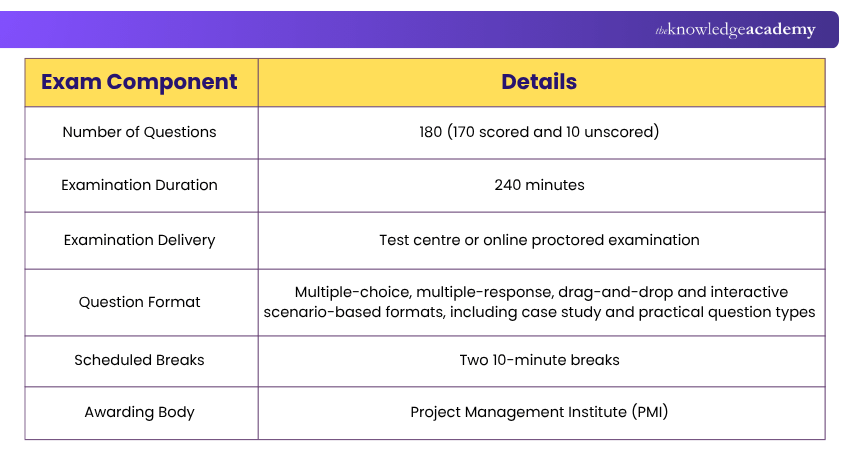
The examination is based on PMI's Examination Content Outline rather than solely on the PMBOK® Guide.
Pro Tip
Don't limit your preparation to memorising project management concepts. Practise scenario-based questions, interpreting charts and selecting responses to realistic project challenges. PMI's updated 2026 examination includes different question formats, so becoming familiar with them can help you prepare more effectively.
Step 6: Maintain Your PMP® Certification
After passing the examination, professionals must maintain their certification through PMI's Continuing Certification Requirements programme.
PMP holders must earn 60 Professional Development Units (PDUs) during each three-year certification cycle, including at least 35 Education PDUs. They must earn a minimum of eight PDUs in each PMI Talent Triangle skill area: Ways of Working, Power Skills and Business Acumen. A maximum of 25 Giving Back PDUs can count towards renewal.
Planning professional development activities throughout the cycle can make the renewal process more manageable.
How Much Do PMP-certified Professionals Earn?
PMP-certified professionals may have access to competitive salary opportunities across project management and related roles. However, earnings vary depending on experience, job responsibilities, industry and location.
The following table presents average annual base salaries for selected project management and related roles in the UK, based on PayScale data. These are general job-role salaries and do not represent earnings exclusively for PMP-certified professionals.
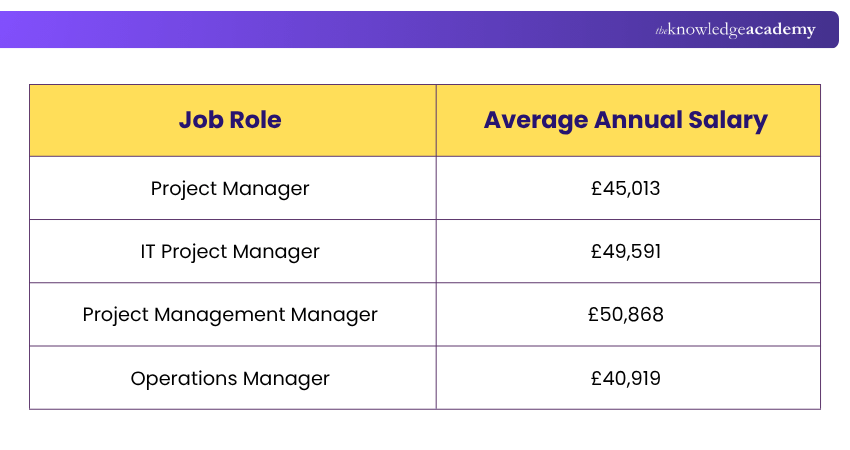
Source: PayScale
According to PMI's Earning Power: Project Management Salary Survey, 14th Edition (2025), PMP-certified respondents reported 17% higher median salaries than non-certified professionals across 21 surveyed countries.
While PMP® Certification can strengthen professional credibility and support career development, it does not guarantee a salary increase. Actual earnings depend on professional experience, skills, employer requirements and market conditions.
Enhances Project Management skills and knowledge with PMP® Training – Join now!

Vishnu Sankar is a Senior Content Writer with 5+ years of experience across content development, software development, web development and system administration. His technical background and professional training support his expertise in IT and Tech, while his extensive research and writing experience covers Project Management and Health and Safety.
View Detail

 If you wish to make any changes to your course, please


