




We may not have the course you’re looking for. If you enquire or give us a call on +41 315281584 and speak to our training experts, we may still be able to help with your training requirements.
What is Integrity in the Workplace? Definition and Examples
ByMichael JonesLast updated on: 22 September 2026
Integrity in the Workplace means being honest, ethical, and consistent in actions, building trust, accountability, and respect among colleagues. Strong moral principles guide workplace integrity. It inspires teamwork, and maintains accountability, catalysing innovation for professional growth and a company's success.

Skills and expertise may open the first doors of employment, but Integrity in the Workplace is what sustains long-term success. Employees who demonstrate integrity build trust, strengthen collaboration, and create an efficient, reliable work environment. From meeting deadlines to taking responsibility, integrity reflects your true professionalism.
In this blog, we will explore the importance of Integrity in the Workplace and share real-life examples to help you embody essential values for a rewarding career. Integrity is not just a principle; it is the foundation of lasting growth. Keep reading to learn more!
What is Integrity in the Workplace?
Integrity in the Workplace means being honest, fair, and consistent in everything you do. It is about following strong moral values and making the right choices, even when no one is watching. Integrity builds trust and respect among colleagues and shows professionalism in every action.
Integrity is more than just following rules. It reflects how you act, speak, and make decisions daily. For example, if you promise to finish a report by Friday, keeping that promise shows integrity. Even small actions like being punctual or giving credit to others matter. These behaviours create a reliable and respectful work environment.

Why is Integrity Important in the Workplace?
The foundation of Integrity in the Workplace is built on the integrity of employees. It enables fostering an environment that boosts collective moral value and drives long-term success. Below, we outline the reasons why integrity is essential. Keep reading for more insight!
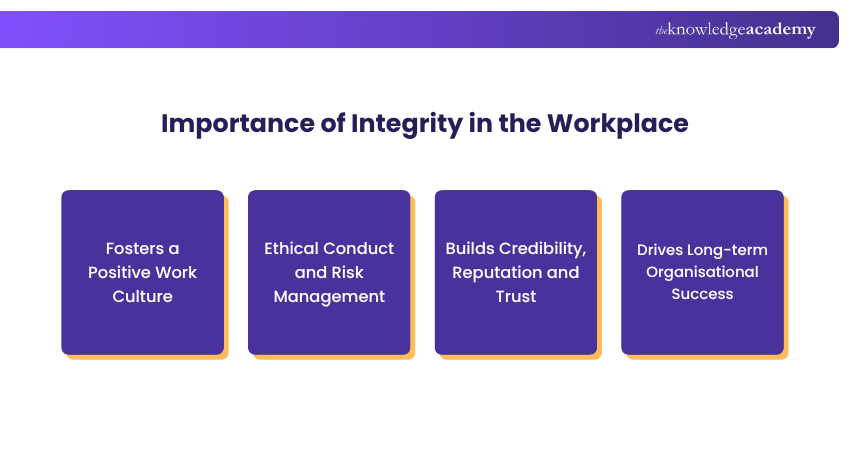
1) Fosters a Positive Work Culture
Integrity shapes workplaces built on the core values of trust, mutual respect and fairness. When employees are consistently demonstrating positive values, it helps to creates a safe space for open communication and fostering strong relationships. With a positive environment, your fulfilment and well-being are a byproduct.
2) Ethical Conduct and Risk Management
Integrity shields organisations against misconduct, fraud and corruption by inculcating ethical conduct in everyday operations. When a workplace consistently upholds moral principles, risks are identified in advance and mitigated early. This is why integrity is crucial for protecting reputation and ensuring compliance.
3) Builds Credibility, Reputation and Trust
When colleagues and leader's actions align with their words, trusts naturally follows. This is important at both the individual and organisational level. Over time, credibility is earned with partner organisations, customers and future employees. This brings a strong reputation, providing a competitive edge in the market.
4) Drives Long-term Organisational Success
Organisations that prioritise ethical standards and transparent moral values position themselves for long-term growth. When ethical standards are the norm, organisations build strong relationships with partner companies, customers, investors and so on, laying down the pathway towards sustaining long-term success.
Core Traits That Reflect Integrity
Integrity in the Workplace is demonstrated through consistent moral actions that align with ethical standards. Below is a list of core traits that reflect integrity in a professional environment:
1) Express Gratitude for Others
People who showcase integrity acknowledge the value of their colleagues and express appreciation for their contributions. A simple “thank you” or expressing support during a difficult phase helps build an encouraging and positive work environment. Such expressions of gratefulness demonstrate mutual respect and ethical values.
2) Practices Honest and Open Communication
Open and honest communication shows the integrity of people, especially when conversations become challenging. This allows you to settle conflicts, express feelings constructively and provide necessary feedback. Following this ethical standard ensures a shared understanding within teams.
3) Demonstrates Reliability and Trust
High-integrity people value commitment. Such values foster a sense of reliability and security in them. By consistently being able to meet deadlines, providing high quality work and being accountable for their mistakes, they create a foundation of trust and a harmonious working environment.
4) Offer Help with Balance
Lending a helping hand in times of need comes naturally for people with integrity. But, in this process, they find a good balance between helping others and prioritising self-care. By setting healthy boundaries and knowing their own limits. This allows them to maintain efficiency in both personal and professional lives.
5) Respect Yourself and Others
Preserving self-respect for yourself and respecting others showcases integrity in people. When you align your actions and words in tandem, professionalism and ethical standards flow naturally. Such justified respect towards colleagues and clients maintains a positive reputation, permeating integrity throughout the workplace.
6) Takes Responsibility for Actions
Owning up to your mistakes, whether positive or negative, shows accountability. This means acknowledging mistakes without blaming others and channelling setback as opportunities for growth. This approach makes constant learning and improvement a norm.
7) Shows Patience and Flexibility
Unexpected obstacles require resilience to face them. People with integrity maintain composure and demonstrate adaptability in the face of unexpected obstacles. They assess the situation diligently and come up with effective solutions. Such an embrace of change and a solution-minded approach turn setbacks into opportunities to grow.
Protect your team and promote well-being with our Health and Safety in the Workplace Training- sign up now!
Workplace Integrity Examples
To gain a deeper understanding of Integrity in the Workplace environment, we have listed examples to provide clarity. Let’s discuss in detail:
1) Taking Responsibility
An employee misses a project deadline but takes ownership instead of blaming others. They explain the reason for the delay, suggest solutions, and work on preventing it in the future. This honesty builds trust and accountability within the team.
2) Supporting Team Members
A colleague stays late to help a teammate complete an urgent task, even when their own work is finished. By offering support and guidance, they strengthen teamwork, improve morale, and show genuine respect for others.
3) Safeguarding Confidential Data
An HR professional carefully protects employee records, ensuring they are not shared without permission. By handling sensitive information responsibly, they maintain trust, follow company policies, and prevent potential risks to the organisation.
How to Promote a Culture of Workplace Integrity?
To build Integrity in the Workplace, it is essential to incorporate integrity into daily practices, behaviour, and leadership. Some of the integral ways to inculcate integrity into workplace environments are listed below:

1) Encourage Psychological Safety
Leaders can create a safe environment where employees feel comfortable sharing ideas and admitting mistakes without fear of blame. Encouraging open feedback, practising transparency, and responding with empathy helps nurture trust and a sense of security.
2) Promote Authenticity and Truthfulness
Workplaces thrive when actions align with values. Leaders can promote authenticity by offering constructive feedback, recognising honest communication, and holding workshops to strengthen workplace culture. Consistently practising truthfulness sets a standard that others naturally follow.
3) Embed Integrity in Systems
Integrity should extend beyond individuals to formal structures. Organisations can embed it into performance reviews, policy updates, and decision-making processes. By ensuring fairness and accountability at every level, this influence embeds integrity into the core of workplace culture.
4) Lead by Example
Leaders play a vital role in setting the tone for integrity. When they demonstrate honesty, fairness, and accountability in their actions, they inspire others to follow. Their behaviour sets a benchmark for the entire organisation.
Learn various ways to improve health and safety with our Health and Safety Training for Managers and Supervisors - Join now!
How Integrity Enhances Workplace Well-being?
Integrity in the Workplace enhances the overall well-being of the people. It strengthens relationships, provides job fulfilment, and creates a supportive environment that encourages professional growth. Keep reading to dive deeper into more details!
1) Lowers Stress and Anxiety
When integrity is the norm, people are treated fairly and with respect. Clear rules, honest communication, and consistent decisions reduce uncertainty and conflict, which are common causes of stress. Employees feel safe to speak up, admit mistakes, and ask for help. This psychological safety lowers anxiety and supports overall well-being.
2) Enhances Job Satisfaction
People working under fair and trusted leadership guidance gain a sense of confidence and fulfilment. This ensures employees are fully engaged with their work and are loyal to the company. Such practice will significantly increase job satisfaction.
3) Strengthens Teamwork and Relationships
Workplace integrity improves the way people coordinate with each other. The sense of safety and consistency in upholding ethical standards encourages collaboration. As a result, people willingly stick together and work towards shared objectives.
4) Promotes Positive Organisational Behaviour
Integrity fosters people to base their decisions on ethics and morals. It supports a culture where doing the right thing is the shared ideal. Such an atmosphere boosts motivation, promotes collaboration, and shapes behaviour supporting one’s professional and personal values.

Michael Jones develops practical resources that help professionals recognise workplace hazards and implement appropriate preventive measures. His content connects day-to-day safety responsibilities with the wider need for compliant and responsible working environments.
View Detail

 If you wish to make any changes to your course, please


