




We may not have the course you’re looking for. If you enquire or give us a call on 01344203999 and speak to our training experts, we may still be able to help with your training requirements.
Importance of Corporate Social Responsibility in Today’s World
ByMichael JonesLast updated on: 16 July 2026
The Importance of CSR lies in building trust, strengthening brand reputation, managing business risks, and delivering long-term positive social impact. It promotes ethical behaviour, stronger stakeholder relationships, and better regulatory compliance. Over time, CSR supports sustainable growth and positive outcomes for society.

People no longer judge businesses by profits alone. Customers choose brands that care, employees want meaningful work, and communities expect organisations to act responsibly. This shift makes the Importance of Corporate Social Responsibility impossible to ignore, as ethical actions now influence trust, loyalty, and long-term success.
In this blog, we explain what Corporate Social Responsibility is. We highlight the Importance of Corporate Social Responsibility, explore its key aspects and benefits, and discuss its future in today’s purpose-driven business world.
Table of Contents
1) What is Corporate Social Responsibility?
2) The Importance of Corporate Social Responsibility
3) Key Aspects of Corporate Social Responsibility
4) Benefits of Corporate Social Responsibility
5) Can CSR Improve Supply Chain Sustainability?
6) Future of Corporate Social Responsibility
7) Conclusion
What is Corporate Social Responsibility?
Corporate Social Responsibility is a guideline that motivates businesses to be responsible for society and their stakeholders. It promotes ethical and responsible business operations. There are four main Types of Corporate Social Responsibility that focus on various aspects of social and environmental concerns. The primary areas covered under Corporate Social Responsibility include:
1) Environmental Impact
2) Ethical Responsibility
3) Philanthropic Endeavors
4) Community Outreach
5) Stakeholder Engagement
Corporate Social Responsibility enhances a company’s public image. With increasing demands from customers and stakeholders for ethical business practices, CSR has become essential for companies. By following guidelines like ISO 26000, businesses extend beyond legal requirements, voluntarily adopting ethical, sustainable, and responsible practices.

The Importance of Corporate Social Responsibility
As consumers become more conscious of their buying habits, they favour businesses that reflect strong significance of Corporate Social Responsibility Elements, such as transparency and fair labour practices. By adopting Corporate Social Responsibility, businesses can build consumer trust and promote sustainability.
Incorporating CSR activities also helps with customer retention and attracting new ones. The Benefits of Corporate Social Responsibility continue beyond just enhancing a company's reputation; it encourages businesses to look beyond profit and actively contribute to the betterment of society. By doing so, companies can build stronger relationships with their customers and stakeholders and create a more positive influence on the communities they serve. Let’s explore the Importance of Corporate Social Responsibility:
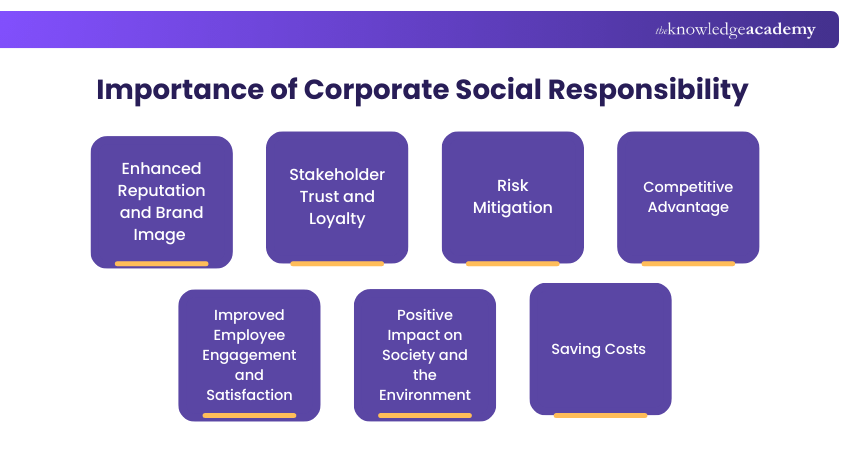
1) Enhanced Reputation and Brand Image
CSR helps organisations build a positive and responsible image among employees and the public. It encourages loyalty, commitment, and stronger emotional connections within the workforce.
At the same time, effective CSR initiatives strengthen brand trust and recognition. Consumers are more likely to connect with and remain loyal to brands that demonstrate strong Social Responsibility and ethical values.
2) Stakeholder Trust and Loyalty
Corporate Social Responsibility helps build trust and loyalty among key stakeholders, including customers, employees, suppliers, and the wider community. When organisations act responsibly and contribute positively to society, stakeholders feel confident in supporting the business.
This trust encourages long-term relationships, stronger engagement, and positive word of mouth. Over time, consistent CSR efforts reinforce credibility and loyalty, making stakeholders more willing to stand by the organisation and advocate for it.
3) Risk Mitigation
Corporate Social Responsibility helps organisations identify and manage potential risk linked to their operations. By addressing social, environmental, and ethical factors early, businesses can prevent issues that may harm their reputation or disrupt operations.
Proactive CSR practices also support regulatory compliance and responsible Decision-making. This reduces the likelihood of legal penalties, environmental damage, or community backlash, helping organisations operate more safely and sustainably over the long term.
4) Competitive Advantage
Corporate Social Responsibility can give organisations a strong advantage in the marketplace. As consumers have become more aware of social and environmental issues, they are more likely to choose brands that demonstrate responsible and sustainable practices.
CSR also helps attract and retain skilled professionals who value purpose-driven workplaces. By aligning business goals with ethical and social values, organisations can stand out from competitors while building loyal customers and a motivated workforce.
5) Improved Employee Engagement and Satisfaction
Corporate Social Responsibility helps employees feel proud of where they work by giving their roles a greater sense of purpose. When organisations act responsibly and contribute to society, employees are more motivated and emotionally connected to their work.
CSR also supports a positive and inclusive work environment, which improves job satisfaction. As a result, more Employees Engagement, committed, and likely to perform better, benefiting both the individual and the organisation.
6) Positive Impact on Society and the Environment
Corporate Social Responsibility enables businesses to create value beyond profit. By addressing social challenges and supporting community development, organisations contribute to social well-being and inclusive growth.
CSR also promotes sustainable practices that help protect natural resources and reduce environmental harm. Through responsible operations, businesses play an active role in preserving the environment while creating long-term benefits for society as a whole.
7) Saving Costs
Implementing simple CSR initiatives can lead to noticeable cost savings for businesses. By reviewing everyday operations and making responsible choices, organisations can reduce unnecessary expenses while improving efficiency.
For example, using cost-efficient technologies such as solar energy and promoting recycling and reuse of materials can lower energy and waste management costs. These practices not only save money but also support environmental sustainability.
Learn to manage information and communication with integrity carefully. Join our Social Responsibility Course now!
Key Aspects of Corporate Social Responsibility
Corporate Social Responsibility focuses on three main areas. These are the key aspects of Corporate Social Responsibility:
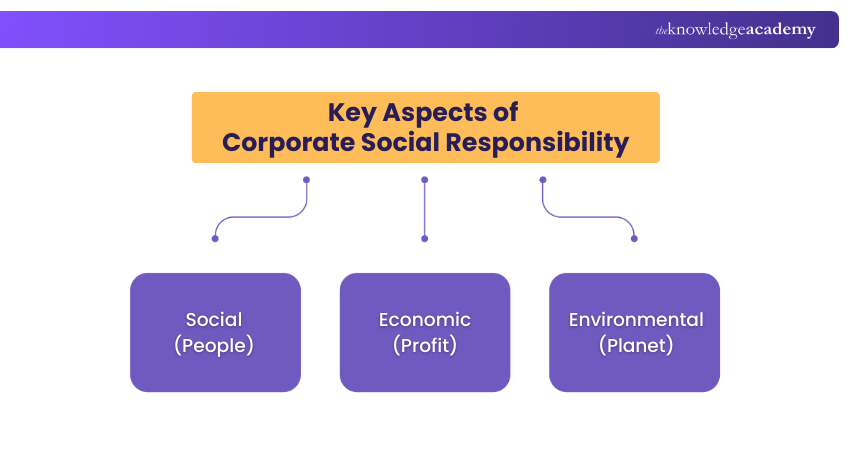
1) Social (People)
Fair working conditions, employee rights, diversity and inclusion, health and safety, community engagement, supplier relationships, learning and development, and charitable activities. These practices help create a supportive workplace and strengthen relationships with society.
2) Economic (Profit)
Ethical governance, transparent reporting, product and service quality, responsible marketing, data protection, and the prevention of bribery and corruption. This ensures sustainable growth while maintaining trust and accountability.
3) Environmental (Planet)
Recycling and reuse, waste control, pollution prevention, sustainable energy use, efficient travel, and improving the local environment. These actions reduce environmental impact and support long-term ecological sustainability.
Benefits of Corporate Social Responsibility
Corporate Social Responsibility helps organisations operate ethically while contributing positively to society and the environment. It strengthens brand reputation, builds trust with stakeholders, and supports long-term business sustainability.
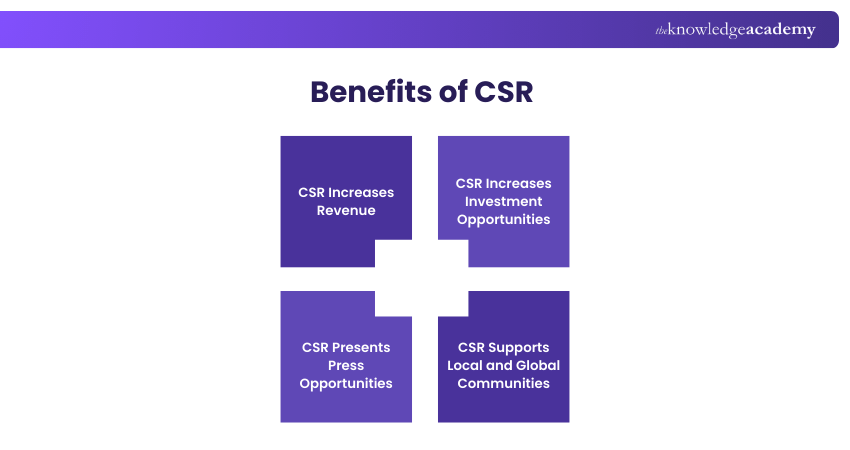
1) CSR Increases Revenue
CSR initiatives can attract socially conscious customers who prefer brands that align with their values. This increased trust often leads to stronger customer loyalty and higher sales over time.
2) CSR Increases Investment Opportunities
Investors are more likely to support businesses with responsible and transparent practices. Strong CSR commitments signal lower risk and long-term stability, making companies more attractive to ethical investors.
3) CSR Presents Press Opportunities
Well-planned CSR activities often generate positive media coverage and public recognition. This improves brand visibility and enhances the organisation’s public image without relying solely on traditional marketing.
4) CSR Supports Local and Global Communities
CSR programmes help address social, environmental, and economic challenges within communities. By giving back, businesses create shared value and contribute to sustainable development locally and globally.
Understand the recent trends in the Social Responsibility of organisations. Join our ISO 26000 Foundation Training now!
Can CSR Improve Supply Chain Sustainability?
CSR helps organisations apply ethical and sustainable practices across their supply chains. It ensures responsible sourcing, transparency, and long-term sustainability.
1) Promotes Ethical Sourcing: Encourages suppliers to follow fair labour practices and safe working conditions.
2) Improves Environmental Standards: Supports sustainable sourcing, waste reduction, and lower environmental impact.
3) Enhances Transparency: Uses clear supplier guidelines and monitoring to ensure compliance.
4) Reduces Supply Chain Risks: Minimises issues such as labour violations, delays, and regulatory non-compliance.
5) Strengthens Supplier Relationships: Builds long-term partnerships based on shared ethical and sustainability values.
Future of Corporate Social Responsibility
The future of Corporate Social Responsibility will focus on sustainability, transparency, and accountability. CSR strategies will be embedded into core business models, with stakeholders expecting clear and measurable social and environmental impact.
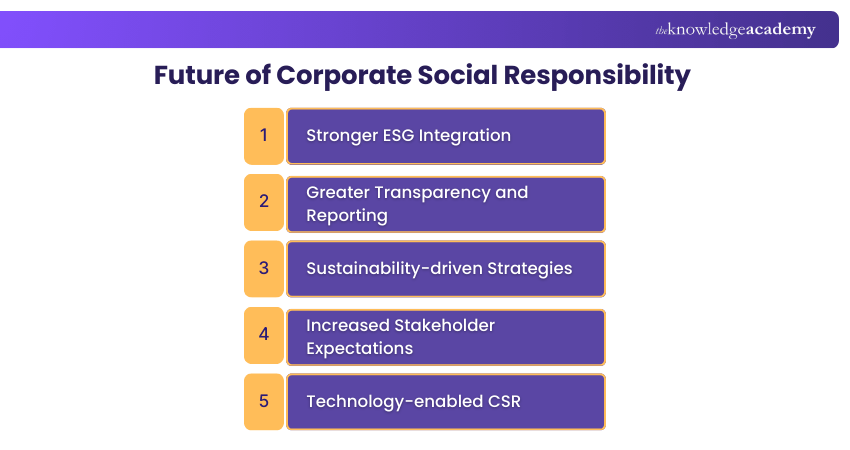
1) Stronger ESG Integration: CSR will align closely with environmental, social, and governance standards.
2) Greater Transparency and Reporting: Businesses will use data and technology to track and report CSR performance.
3) Sustainability-driven Strategies: Long-term environmental and social goals will shape business decisions.
4) Increased Stakeholder Expectations: Customers, employees, and investors will demand responsible practices.
5) Technology-enabled CSR: Digital tools will support monitoring, compliance, and impact measurement.
Conclusion
CSR is essential for sustainable business success. It builds trust, strengthens reputation, and supports long-term growth while creating social and environmental value. Understanding the Importance of Corporate Social Responsibility helps organisations align ethics with strategy, engage stakeholders, reduce risks, and stay competitive in an evolving global landscape.
Boost your business's commitment to ethical practices. Sign up for ISO 26000 Training and master the framework for socially responsible leadership!

Michael Jones is a seasoned health and safety expert with more than 15 years of experience in workplace safety, risk management, and compliance training. He has worked across construction, manufacturing, and corporate sectors, helping organisations meet legal requirements and create safer working environments. Michael’s training and writing are known for being practical, clear, and aligned with UK regulations.
View Detail


 If you wish to make any changes to your course, please


