




We may not have the course you’re looking for. If you enquire or give us a call on +44 1344 203 999 and speak to our training experts, we may still be able to help with your training requirements.
Importance of CCNA Certification for IT Career Growth
ByThe Knowledge AcademyLast updated on: 03 October 2026
Curious about the importance of CCNA? The Cisco Certified Network Associate (CCNA) certification validates essential networking skills, making it a key stepping stone for IT professionals. This blog discusses the importance of CCNA and how it opens doors to advanced networking opportunities.

What You Should Know
1. CCNA validates foundational knowledge across networking, security and related technologies.2. It helps build a more structured approach to network configuration and troubleshooting.3. CCNA learning extends beyond traditional routing and switching into areas such as security and automation.4. CCNA works best when combined with practical experience and continued skill development.
In a world where networking and technology have become integral to all businesses, the importance of CCNA cannot be stressed enough. Companies often hunt for skilled professionals with Cisco Certified Network Associate (CCNA) certification to help build a robust networking system, because of which is why there is a lot of demand for such professionals.
It also helps businesses employ suitable individuals for IT networking solutions. This blog will help you better understand the key importance of CCNA and how it can help you succeed in your IT and networking career. So, read on!
The Importance of CCNA in Your Networking and IT Career
The Cisco Certified Network Associate (CCNA) certification is important for building a strong career in networking and IT. It develops essential skills in network fundamentals, IP connectivity, IP services, security fundamentals, network access, and automation. It demonstrates your ability to work with networking concepts and technologies used in professional IT environments, helping demonstrate your foundational networking knowledge to employers.
Obtaining a CCNA certification brings numerous advantages to networking professionals. Here are some reasons why CCNA certification is important:
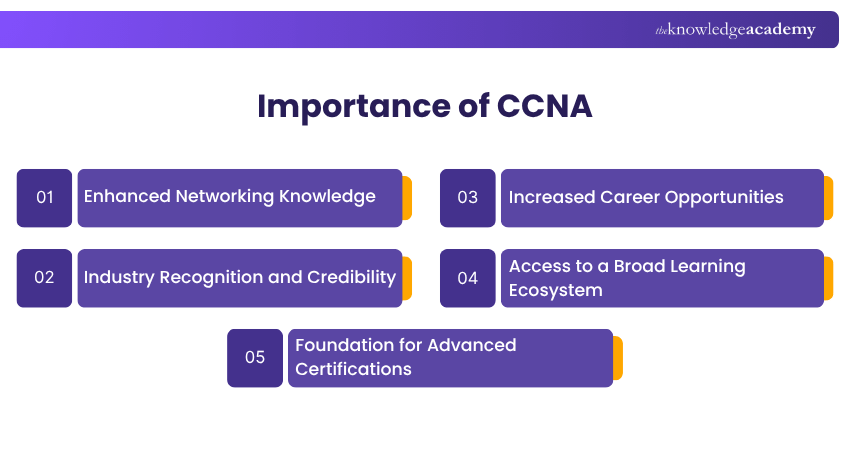
1) Enhanced Networking Knowledge
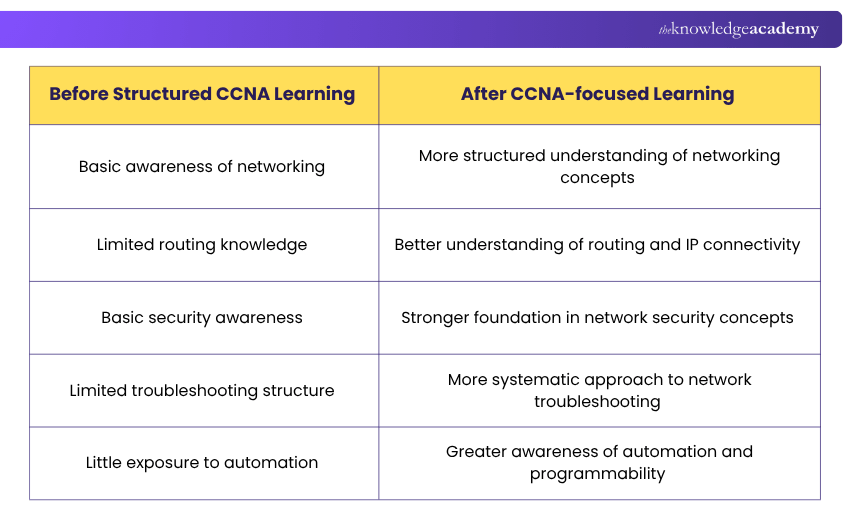
CCNA provides comprehensive training on networking concepts, protocols, and technologies, providing professionals with a structured understanding of network fundamentals, routing and switching concepts, network security and wireless networking.
It also helps professionals understand how these concepts are applied in real-world network environments, making it easier to troubleshoot connectivity issues, configure devices, and support day-to-day network operations.

2) Industry Recognition and Credibility
CCNA is a widely recognised networking certification that can strengthen your professional credibility in the IT industry. It shows employers that you have validated knowledge of core networking concepts and can work with technologies commonly used in business environments.
3) Increased Career Opportunities
CCNA can help expand career opportunities by validating core networking knowledge and skills sought in many IT roles. It can support applications for positions such as Network Support Engineer, Network Administrator, IT Support Specialist, and Junior Network Engineer.
The certification can be especially useful for professionals starting or progressing in networking, as it demonstrates a recognised level of technical understanding alongside practical experience.
4) Access to a Broad Learning Ecosystem
CCNA learners can benefit from a wide range of networking communities, study groups, forums, labs, and technical resources. These platforms make it easier to discuss concepts, share troubleshooting experiences, and learn from other networking professionals.
Access to community support and practical learning resources can also help professionals stay engaged with networking topics, strengthen their skills, and continue learning beyond the certification exam.
5) Foundation for Advanced Certifications
CCNA acts as a strong foundation for more advanced Cisco certifications, such as CCNP. It can also help professionals explore specialised areas such as network design, security, automation, and enterprise networking, opening up different career paths.
The learning journey in CCNA helps turn basic networking awareness into more structured technical knowledge, making it easier to progress towards advanced networking roles and certifications.
Acquire the skills to build a simple network and understand LAN and WAN connections with the Interconnecting Cisco Networking Devices Part 1 Training - Sign up now!
Here’s how structured CCNA learning can strengthen your networking knowledge and approach to common IT tasks:
Exam to Qualify for CCNA
To earn the CCNA certification, you need to pass the 200-301 CCNA exam. The exam lasts 120 minutes and tests the networking, security, automation and network operations knowledge required for the certification. The exam topics cover areas including:
a) Network fundamentals
b) Network access
c) IP connectivity
d) IP services
e) Security fundamentals
f) Automation and programmability
Trainer’s Insight
Treat CCNA as evidence of networking knowledge rather than a guaranteed route to employment.
Career Growth with CCNA
CCNA can support career development in networking and IT infrastructure by validating knowledge of networking fundamentals, IP connectivity, security, network access, and automation. There are many jobs that are available to people with this certification, including Network Administrator, Network Engineer, Network Support Technicians and Help Desk Technicians among others.
It also offers a strong foundation upon which one can build towards more complicated Cisco certifications, which will also enhance your ability to do better at work. CCNA acts as a first step towards the more focused fields, which can include such things as security, wireless networking, automation and collaboration technologies.
Some networking and infrastructure roles list CCNA or comparable networking knowledge as a desirable qualification. However, employers may also consider practical experience, troubleshooting ability and familiarity with specific networking technologies. Some of the popular entry-level jobs and their average salaries in the UK are provided below:
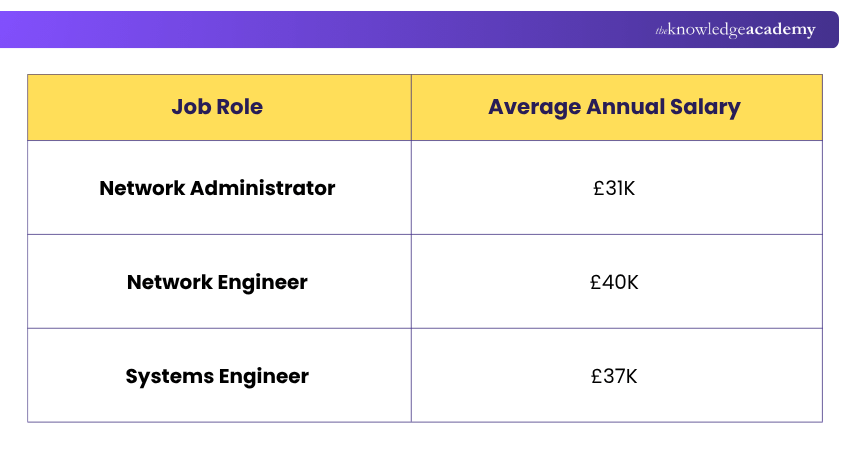
Source: Glassdoor
So, the importance of CCNA lies in the networking foundation it can help professionals build. It validates structured technical knowledge, supports networking and infrastructure career paths and provides a base for continued learning. When combined with practical experience and ongoing skill development, CCNA can form a valuable part of a broader IT career journey.
Learn how to construct a medium-sized switched network with the Interconnecting Cisco Networking Devices Part 2 Training - Sign up now!
CCNA Career Growth Checklist
After earning CCNA, use this checklist to keep your career development moving:□ Apply networking concepts through hands-on practice□ Build experience with configuration and troubleshooting□ Document practical networking projects and skills□ Identify the networking roles you want to pursue□ Review skill gaps for your target roles□ Keep your networking knowledge current□ Choose an area for deeper technical development

The Knowledge Academy develops accessible learning content across Project Management, IT, Cybersecurity, Data Science, Business Analysis, HR, Accounting and Finance, Leadership and Health and Safety. Its resources combine subject research with clear explanations to help professionals build practical knowledge across a wide range of disciplines.
View Detail

 If you wish to make any changes to your course, please


