


We may not have the course you’re looking for. If you enquire or give us a call on +44 1344 203 999 and speak to our training experts, we may still be able to help with your training requirements.
How to Earn PMP® PDUs While Working? Explained
ByThe Knowledge AcademyLast updated on: 23 October 2026
Learn how to earn Professional Development Units (PDUs) while working through practical activities, workplace learning, and industry engagement. Build continuous professional growth, maintain certification requirements, and enhance career progression without interrupting your daily responsibilities.
Quick Preview
1. PMP® holders must earn 60 PDUs during each three-year certification cycle.2. At least 35 PDUs must come from Education, while Giving Back is limited to a maximum of 25 PDUs.3. Webinars, reading, professional events and informal learning can provide flexible ways to earn Education PDUs.4. Eligible professional work, mentoring, presentations and content creation can contribute towards Giving Back PDUs.5. Recording activities correctly and tracking PDU requirements helps support successful certification renewal.
For many professionals, balancing certification renewal with project responsibilities can feel challenging. However, earning PMP® PDUs does not always require taking extended breaks from work or attending lengthy training programmes. From online learning and professional reading to mentoring colleagues and sharing knowledge, there are several opportunities to develop your skills while managing everyday responsibilities.
So, how can you make the most of these opportunities? Let's explore the different ways to earn PMP PDUs while working, along with practical strategies to plan your learning and maintain your certification.
How to Earn Education PDUs While Working?
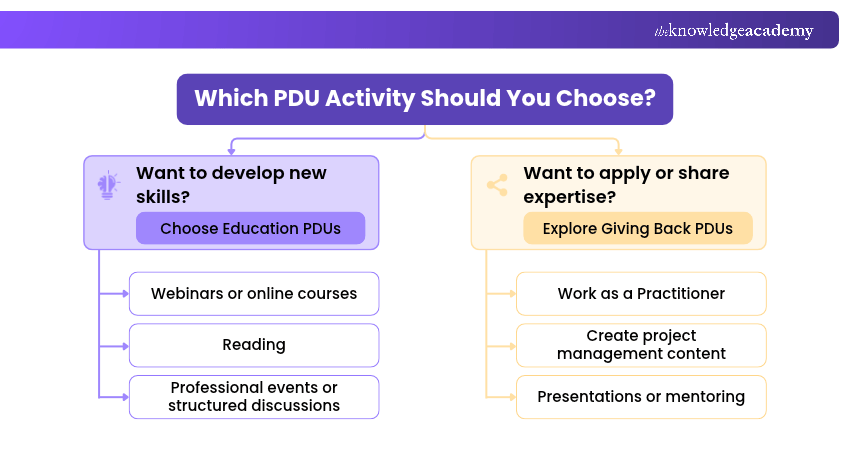
Education PDUs provide flexible learning opportunities that help PMP® certification holders maintain their credentials while balancing professional responsibilities. Activities such as online training, reading and structured professional discussions can support continuous learning. Here are some practical ways to earn Education PDUs:
1) Attend Webinars and Online Courses
Webinars and online courses provide opportunities to learn without attending lengthy classroom programmes. Many learning resources offer recorded sessions, allowing professionals to study at convenient times. A professional may attend an eligible webinar on stakeholder engagement after working hours or complete an online agile project management module.
How to Make It Work:
a) Choose training relevant to your professional development needs.
b) Use available time throughout the week for short, focused learning sessions.
c) Check the educational content and applicable PMI Talent Triangle® skill areas: ways of working, power skills and business acumen.
d) Record the eligible learning duration and maintain supporting evidence.
2) Participate in Professional Events
Professional conferences, workshops and PMI chapter events provide opportunities to learn about project management developments and exchange knowledge with other professionals. Some events offer virtual participation, making them more accessible to individuals with busy work schedules. Attending an educational session on project risk management may help a professional strengthen relevant skills and earn eligible Education PDUs.
How to Make It Work:
a) Explore relevant PMI chapter events, conferences and workshops.
b) Select sessions aligned with your learning objectives.
c) Consider virtual events when travelling is inconvenient.
d) Record only the educational portions of an event rather than assuming all sessions qualify for Education PDUs.
3) Read Project Management Resources
Structured professional reading can be an accessible way to earn Education PDUs while fitting learning into a busy work schedule. Relevant materials should contribute to project management knowledge and support one or more areas of the PMI Talent Triangle. A practitioner seeking to strengthen risk management knowledge may choose to study recognised project management guides or industry publications.
How to Make It Work:
a) Choose resources relevant to your PMP® certification and professional role.
b) Allocate dedicated time each week for structured professional reading.
c) Focus on materials that contribute to your project management knowledge.
d) Record the reading activity, relevant topic and time spent learning.
4) Engage in Informal Learning
Informal learning activities involve structured discussions and knowledge-sharing opportunities that help professionals gain insights through collaboration with peers, mentors, or project teams. Project teams may hold lessons-learned discussions to review successes, challenges, and improvement opportunities from completed initiatives.
How to Make It Work:
a) Participate in discussions with clear learning objectives.
b) Focus on relevant project management topics.
c) Participate in structured knowledge-sharing activities with colleagues or industry peers.
d) Document the activity and eligible learning time.
Here's a quick way to determine which PDU activity to choose:
How to Earn Giving Back PDUs at Work?
Giving Back PDUs recognise eligible contributions to the project management profession. This category can be particularly useful for working professionals who apply their skills, mentor colleagues or create educational resources. Here are four ways to explore these opportunities.
1) Work as a Practitioner
PMP-certified professionals may earn PDUs through qualifying work in a relevant project management role. PMI allows a maximum of eight PDUs per PMP® certification cycle under the 'work as a practitioner' category. Professionals who actively apply project management knowledge and skills in their day-to-day responsibilities may be eligible to claim practitioner PDUs.
How to Make It Work:
a) Confirm that your professional role is relevant to your certification.
b) Check PMI's eligibility and reporting requirements.
c) Record the required details about your professional work.
d) Claim no more than the permitted eight PDUs during the certification cycle.
Important: Working full-time does not mean earning eight PDUs every month or every year. The maximum is eight PDUs for the entire three-year PMP® certification cycle.
Build on your existing project management experience in no time with the PMP® Bridge Training – Sign up now!
2) Create Project Management Content
Creating educational content can help professionals share their knowledge while contributing to the project management community. Eligible activities may include writing articles, developing educational presentations and preparing relevant learning materials. A professional may choose to create educational content on topics such as stakeholder communication, project governance, or risk management.
How to Make It Work:
a) Choose a relevant project management topic.
b) Develop original content that shares professional knowledge.
c) Make the material available to an appropriate audience.
d) Record the qualifying time spent creating the content.
Content should provide genuine educational or professional value rather than simply repeat routine administrative information.
3) Deliver Professional Presentations
Project Managers often conduct meetings and presentations as part of their regular responsibilities. However, educational presentations that share relevant professional knowledge may qualify for Giving Back PDUs. Educational sessions covering areas such as risk assessment, project planning, or stakeholder engagement may qualify as Giving Back activities.
How to Make It Work:
a) Select a relevant educational topic.
b) Prepare material that communicates useful project management knowledge.
c) Deliver the session to colleagues or other professionals.
d) Record eligible preparation or delivery activities according to PMI's reporting guidance.
Routine project status updates should not automatically be treated as eligible educational presentations.
4) Mentor and Share Knowledge
Mentoring enables experienced professionals to support the development of colleagues and aspiring Project Managers. Eligible activities may involve helping others understand project management practices, develop professional capabilities or apply relevant knowledge. Experienced project professionals can support colleagues by sharing practical guidance on planning, communication, leadership, and risk management.
How to Make It Work:
a) Identify relevant mentoring opportunities.
b) Establish clear professional learning objectives.
c) Share practical knowledge and guidance.
d) Maintain records of qualifying mentoring activities.
Trainer Insight
A manageable PDU plan is often more effective than completing multiple learning activities shortly before the renewal deadline. Setting regular development goals can help balance skill areas, maintain accurate records and distribute learning throughout the PDU cycle.
Practical Example: A Three-year PMP® PDU Plan
The following example demonstrates how a working professional could combine different qualifying activities across a three-year certification cycle.
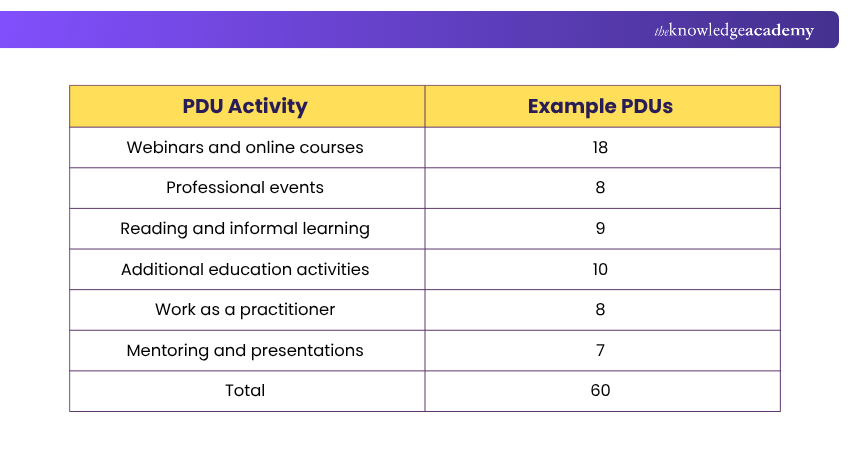
In this example, 45 PDUs come from Education activities, and 15 come from giving back activities. The Education activities must also satisfy the minimum PMP® Talent Triangle requirements across Ways of Working, Power Skills, and Business Acumen. Keep in mind that actual PDU eligibility depends on the activity and PMI requirements.
So, earning PMP PDUs while working becomes more manageable when professional development is planned around everyday responsibilities. By choosing suitable learning activities and exploring eligible workplace contributions, professionals can continue strengthening their skills without unnecessarily disrupting their schedules.
PDU Tracking Checklist
Use this checklist to help maintain accurate records.
□ Check your PMP® certification renewal date.□ Confirm your remaining Education and Giving Back requirements.□ Identify the correct PDU category for each activity.□ Record the activity name, date and eligible duration.□ Check the talent triangle classification where applicable.□ Retain relevant evidence, such as certificates or participation records.□ Report eligible activities through PMI CCRS.□ Review your progress regularly.

The Knowledge Academy develops accessible learning content across Project Management, IT, Cybersecurity, Data Science, Business Analysis, HR, Accounting and Finance, Leadership and Health and Safety. Its resources combine subject research with clear explanations to help professionals build practical knowledge across a wide range of disciplines.
View Detail

 If you wish to make any changes to your course, please


