






We may not have the course you’re looking for. If you enquire or give us a call on 01344203999 and speak to our training experts, we may still be able to help with your training requirements.
How to Clean Piano Keys Safely and Effectively
ByShristi RoyLast updated on: 18 September 2026
Cleaning Piano Keys is a delicate process to ensure you don't damage the keys or the piano's finish. Here's a step-by-step guide on How to Clean Piano Keys. This blog provides a complete guide on How to Clean Piano Keys, addressing various types and materials. Whether you have plastic, natural ivory, or ebony keys, you will learn how to keep them pristine.

Have you ever wondered how to clean piano keys to keep your beloved instrument looking and sounding its best for when you play piano? Fear not! Cleaning your Piano Keys is easier than you think. With the right techniques and a little know-how, you can ensure your Piano Keys stay free from dust, smudges, and dirt. It allows you to enjoy playing without any distractions.
What type of Piano Keys do you possess?
Before diving into cleaning procedures, it's essential to identify the material of your Piano Keys. Plastic and natural ivory keys require different cleaning techniques to ensure proper care and maintenance, depending on the types of Pianos you own.
Cleaning procedure for plastic Piano Keys
Now that you've identified the type of Piano Keys you have let's delve into the process of cleaning plastic Piano Keys. Learn How to Clean Piano Keys effectively and maintain their pristine condition.
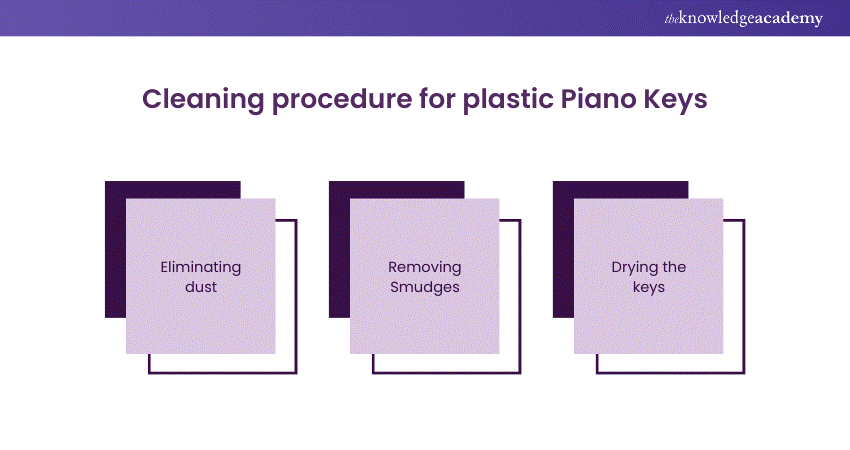
1) Eliminating dust
Removing any loose dust or debris is essential before cleaning plastic Piano Keys. Gently brush the keys with a soft, dry cloth or a soft-bristled brush for cleaning. It helps prevent scratching the keys during the cleaning process and ensures that dirt and dust won't be spread around.
2) Removing smudges
You will need a mild cleaning solution if there are stubborn streaks or stains on the plastic keys. Soak a microfiber cloth with a mixture of warm water and a small amount of gentle dish soap. Make sure the cloth isn't overly wet, as excess moisture can seep into the keys, potentially causing damage. Gently wipe the keys in a circular motion, focusing on the areas with stains. Avoid the usage of abrasive cleaners or harsh chemicals, as they have the potential to damage the finish of the keys.
3) Drying the keys
After cleaning, it's essential to dry the plastic keys thoroughly to prevent moisture damage. Use a dry or soft cloth to wipe away any remaining moisture from the keys. Make sure that the keys are fully dry before using the piano again to prevent potential damage. Leaving moisture on the keys can lead to warping, discolouration, or even mould growth over time, so it's crucial to take the time to dry them properly.
Cleaning procedure for natural ivory Piano Keys
As we have covered the process of cleaning plastic Piano Keys, let's now explore How to Clean Piano Keys crafted from natural ivory.
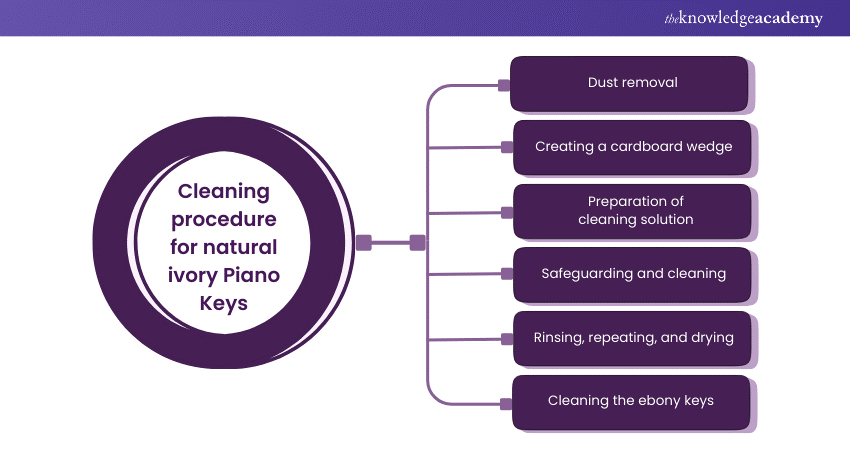
1) Dust removal
Natural ivory Piano Keys require delicate care to prevent damage. Start using a soft-bristled brush or a clean, dry cloth or cotton to remove any dust or debris from the keys gently. Be careful not to apply too much pressure, as ivory is a delicate material that can scratch easily.
2) Creating a cardboard wedge
To protect the space between the keys while cleaning, insert a thin cardboard wedge between each key. This precaution prevents the cleaning solution from seeping into gaps, potentially damaging the piano's internal components.
3) Preparation of cleaning solution
Mix a small quantity of mild detergent with warm water for a gentle cleaning solution. Avoid harsh chemicals or abrasive cleaners while cleaning. They may harm the delicate surface of the ivory keys.
Master advanced Piano techniques with our Piano Course- Register today!
4) Safeguarding and cleaning
Take a soft cloth or cotton swab, dampened with the cleaning solution, and wipe the ivory keys gently in circular motions. Take care not to apply too much pressure or saturate the keys with moisture, which can cause warping or discolouration.
5) Rinsing, repeating, and drying
After cleaning the ivory keys, utilise a clean, damp cloth to rinse off the soap residues. Repeat the cleaning process if necessary, removing all dirt and grime. Once clean, remove the cardboard wedges and allow the keys to air dry completely before using the piano again.
6) Cleaning the ebony keys
Ebony keys can be cleaned using the same procedure as plastic keys. It's crucial to use gentle cleaning solutions and avoid excessive moisture to protect the keys' finish from damage.
Learn how to play Keyboard with our Keyboard Instrument Course. Join today!
General guidelines for cleaning Piano Keys
Here are some general guidelines for cleaning Piano Keys:
1) Always use gentle, non-abrasive cleaning solutions to prevent damage to the keys.
2) Avoid using excessive moisture, as it can seep into the keys and cause warping or other damage.
3) Clean the keys regularly to prevent the buildup of dust, dirt, and oils from fingertips.
Preventing actions that might lead to damage
Here are some preventing actions that may lead to the Piano’s damage:
1) Never use harsh chemicals or abrasive cleaners. They can damage your keys' finish.
2) Keep food and beverages away from the piano to prevent spills and stains.
3) Store the piano in a clean, dry environment shielded from direct sunlight and excess humidity. This helps prevent damage to the keys and other components.
Give wings to your dream to become a Music Producer with our Music Production Course– join now!

Shristi Roy is a Content Writer with experience in journalism, article writing and web content development. Her experience researching and writing about Business Skills and Accounting and Finance enables her to communicate specialised information through clear, engaging narratives.
View Detail

 If you wish to make any changes to your course, please


