




We may not have the course you’re looking for. If you enquire or give us a call on 01344203999 and speak to our training experts, we may still be able to help with your training requirements.
How to Become a Project Manager Without Experience?
ByThe Knowledge AcademyLast updated on: 19 August 2026
Start your journey to becoming a Project Manager without prior experience. Discover the skills, education, certifications and practical steps that can help you move into your first project role.
Key Takeaways
1. Project Managers plan, coordinate and oversee projects from initiation through completion.2. Transferable experience in planning, communication, leadership and coordination can support a move into Project Management.3. Beginner-friendly certifications can strengthen your understanding when you do not yet have formal PM experience.4. Small projects, workplace initiatives and cross-functional responsibilities can help demonstrate practical experience.5. A focused CV should present transferable achievements as evidence of project-related capability.
You find a Project Manager job that looks perfect. You have the communication skills, you are organised and you know you could handle the responsibility.
Then you see it: “Previous Project Management experience required.”
But how do you gain experience when most roles already expect you to have it?
The good news is that becoming a Project Manager does not always begin with having the job title. Skills, certifications, smaller projects and experience from your current role can all help you build a pathway into the profession. So, how do you get started? Let’s find out.
Who is a Project Manager?
A Project Manager (PM) is responsible for coordinating a project so that its objectives are achieved within agreed requirements such as scope, time, cost and quality. They bring together people, resources and information while managing risks, issues, stakeholders and project progress.
The role can vary significantly depending on the organisation and industry. A Project Manager in construction could coordinate contractors and schedules, while a technology Project Manager could oversee software development, testing and implementation.
Trainer Insight:
You do not need to have managed a major project to start thinking like a Project Manager. Start by managing smaller responsibilities with the same discipline.

What Skills do You Need to Become a Project Manager?
Not every Project Management skill needs to be developed before you apply for your first role. The following capabilities will make the transition easier:
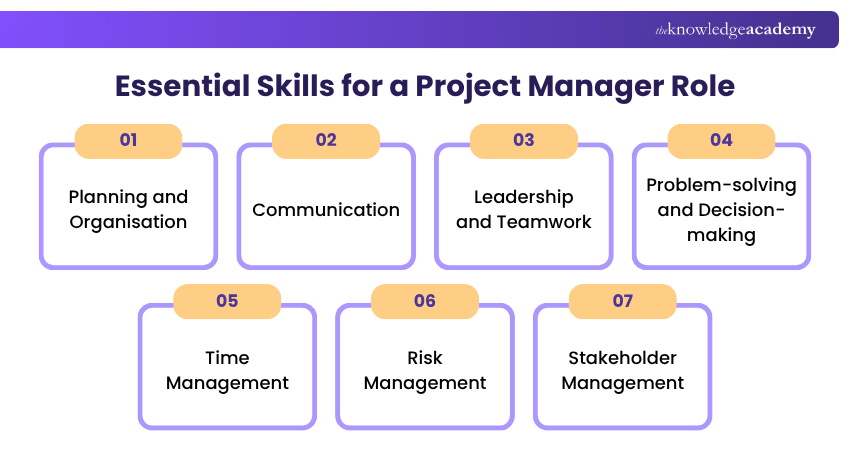
1) Planning and Organisation
Project Managers need to organise activities, establish priorities and keep work moving towards deadlines. Strong organisation helps them coordinate multiple tasks without losing sight of the project's objectives.
2) Communication
Project Managers communicate with team members, managers, clients, suppliers and other stakeholders. Clear communication helps people understand expectations, changes, responsibilities and project progress.
3) Leadership and Teamwork
Project Managers coordinate people who can have different responsibilities, priorities and perspectives. Leadership involves providing direction, encouraging collaboration and helping the team work towards a shared objective.
4) Problem-solving and Decision-making
Projects rarely progress exactly as planned. Project Managers need to assess problems, consider available options and make appropriate decisions rather than allowing issues to continue unchecked.
5) Time Management
Projects involve deadlines and competing priorities. Time management helps Project Managers organise work, identify dependencies and focus attention on activities that could affect delivery.
6) Risk Management
Project Managers need to identify potential problems before they become issues. Understanding basic risk management helps them assess uncertainty and plan appropriate responses.
7) Stakeholder Management
Different stakeholders can have different expectations of the same project. Project Managers need to understand those expectations, maintain communication and manage relationships throughout the project.
Are You Ready for Project Management?
Ask yourself:
1) Can I organise a task?2) Can I coordinate people?3) Can I communicate progress clearly?4) Can I solve problems when plans change?5) Can I work towards a deadline?
If you answered yes to several of these, you may already have transferable capabilities that can support your move into Project Management.
Education and Certification Requirements for Project Managers
There is no single educational route that every Project Manager must follow. Requirements vary by employer, industry and role. A degree can be useful for some positions, while practical experience, Project Management knowledge and professional certifications can strengthen your profile.
Education
A degree in areas such as Business, Management, Engineering, Information Technology (IT) or another relevant subject can provide useful knowledge, but a specific Project Management degree is not universally required.
More important for an entry-level candidate is being able to demonstrate an understanding of how projects are planned, organised, delivered and controlled.
Project Management Certifications
A certification can provide structured knowledge and demonstrate your commitment to entering the profession.
Entry-level certifications can introduce you to essential areas such as project planning, scheduling, risk, communication and delivery methods. Options such as the CAPM® can provide a starting point, while certifications in methodologies such as PRINCE2® or Agile may also be useful depending on the roles and industries you want to pursue.
Before choosing a certification, check the entry requirements, course content and relevance to the jobs you are targeting. The aim at this stage is not to collect multiple certifications, but to choose one that strengthens your knowledge and helps demonstrate your readiness for an entry-level project role.
Build a strong foundation in Project Management with CAPM® Certification Training – Register today!
How Can You Become a Project Manager Without Experience?
You can work towards your first Project Management role by combining knowledge, transferable experience and practical responsibility. The following steps provide a realistic starting point:
Step 1: Understand Project Management Fundamentals
Start by understanding the fundamentals of project scope, schedules, budgets, resources, risks, stakeholders and project delivery.
You do not need to know every Project Management methodology immediately. Focus first on understanding how a project moves from an idea or requirement towards a defined outcome.
Step 2: Identify Your Transferable Experience
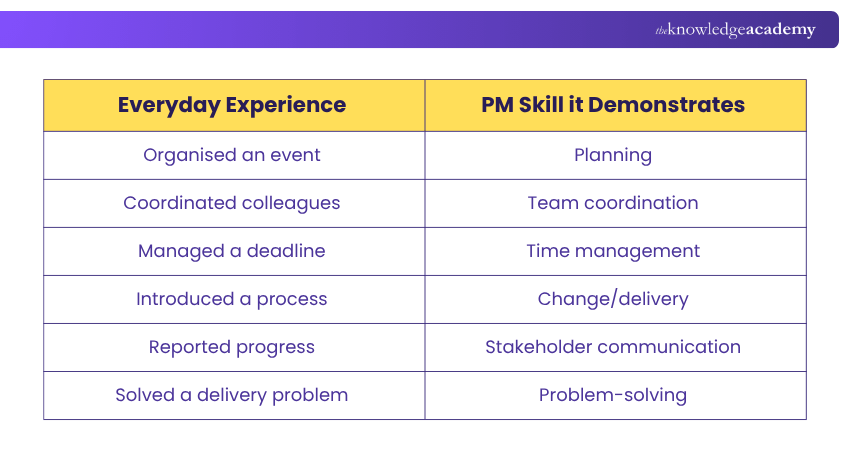
You might already have experience that demonstrates Project Management capabilities without realising it. For example:
1) Organised a company event
2) Coordinated a team activity
3) Managed a client deliverable
4) Helped introduce a new process
5) Coordinated a marketing campaign
6) Managed a deadline across several people
7) Organised a community or volunteer initiative
8) Tracked tasks and reported progress
The key is to focus on what you were responsible for and what you achieved, rather than whether your job title included “Project Manager”.
Step 3: Develop Essential Project Management Skills
Use your current role to deliberately practise project-related capabilities. Volunteer to coordinate a small initiative. Create a simple project schedule. Track risks and actions. Organise meetings and document decisions. Report progress to stakeholders.
These activities give you opportunities to demonstrate project-related responsibilities before you hold a formal PM title.
Step 4: Gain Practical Project Experience
Look for projects you can contribute to within your current workplace or outside it. You could:
a) Coordinate a small internal initiative
b) Support a process improvement project
c) Volunteer to organise an event
d) Assist an experienced Project Manager
e) Take responsibility for a defined workstream
f) Support a technology or system implementation
g) Coordinate a community project
The goal is not to manufacture experience. It is to take genuine responsibility for project-related work and document what you did.
Your First PM Interview Story
You do not need the title “Project Manager” to have a useful project story. Think of one situation where you planned, coordinated or delivered something, then build your answer around four points:
Situation: What was happening?Task: What were you responsible for?Action: What did you organise, manage or solve?Result: What was the outcome?
Example:“I coordinated a small office event involving five colleagues. I created the schedule, assigned responsibilities and tracked deadlines. When a supplier cancelled, I arranged an alternative and kept the event on schedule. The event was delivered successfully with all planned activities completed.”
Step 5: Consider a Project Management Certification
Once you understand the fundamentals, a suitable certification can reinforce your knowledge and demonstrate commitment to the career path.
Step 6: Apply for Entry-level Project Opportunities
Your first role does not have to be titled Project Manager. Look for opportunities such as:
a) Project Coordinator
b) Project Administrator
c) Project Assistant
d) PMO Assistant
e) PMO Analyst
f) Junior Project Manager
These roles can give you exposure to project planning, reporting, stakeholder communication, documentation and delivery.
Your First Project Challenge
Choose one activity you are already involved in and treat it as a small project.
Define the goal↓List the tasks↓Set deadlines↓Identify who is involved↓Track risks and issues↓Measure the outcome
Now ask: Could I explain this experience in an interview as evidence of Project Management capability?If yes, you have started turning everyday experience into a project-focused career story.
Create a Project Management CV Without PM Experience
When you do not have the Project Manager job title, your CV needs to demonstrate relevant responsibility and results rather than simply stating that you are interested in Project Management. Now let's do a small exercise first:
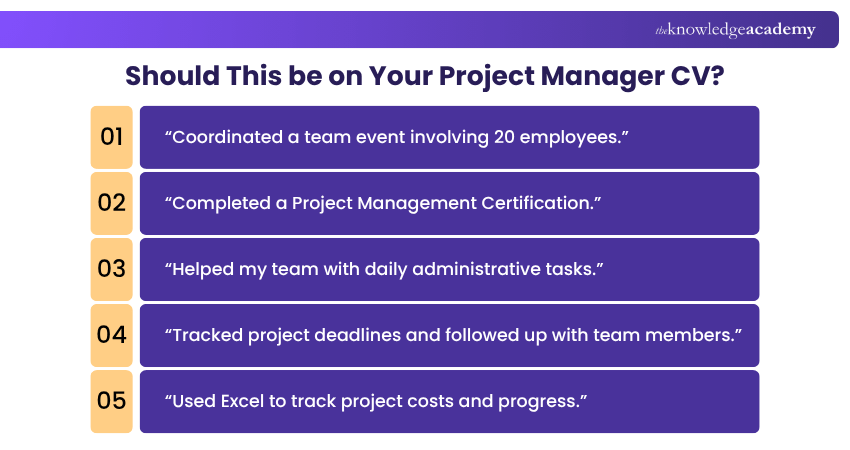
Think you know which one belongs? Read on to find out what makes an experience worth adding to a Project Management CV.
1) Highlight Transferable Experience
Instead of writing:
Helped organise a company event.
Write:
Coordinated a company event involving multiple stakeholders, tracked deadlines and managed activities through to completion.
The second version demonstrates coordination, stakeholder management, planning and delivery.
Would You Hire This Candidate?
Candidate A
1. Completed a beginner Project Management certification2. Understands basic PM terminology3. CV lists only course knowledge
Candidate B1. Completed one relevant certification2. Coordinated a workplace initiative3. Managed tasks, deadlines and communication
Who is more Project-ready?The stronger evidence? → B
Why? It does not simply claim potential. It gives the employer evidence of coordination, teamwork and delivery.
2) Focus on Achievements
In your CV, wherever possible, quantify your results.
For example:
Coordinated a five-person team to deliver a process improvement initiative two weeks ahead of the agreed deadline.
This provides evidence of responsibility and outcome.
3) Use Project-focused Language
Relevant terms can include:
Coordinated | Planned | Delivered | Monitored | Organised | Reported | Managed | Supported | Implemented | Resolved
Use these words only when they accurately describe what you did.
4) Include Relevant Certifications
If you have completed a relevant certification or training programme, include it clearly in your CV. You should also be careful not to list a certification you have not earned.
5) Show Your Tools and Methods
If you have practical experience using tools such as project scheduling, task management, collaboration, or reporting software, include relevant examples.
The emphasis should be on how you used the tool, not simply listing software names.
CV Check: Does Your Experience Show These Four Things?
What did you manage?Who did you coordinate?What problem did you solve?What was the result?
Gain recognised Project Management knowledge with our CGPM (Certified Global Project Manager) Course - Sign up today!
Common Mistakes to Avoid When Starting a Project Management Career
Starting a Project Management career without formal experience can be challenging, but several common mistakes can make the transition harder. Try to avoid these common mistakes in your career:
1) Applying Only for Project Manager Roles
If you have no formal experience, limiting your search to Project Manager vacancies can significantly narrow your opportunities. Consider entry-level and support roles that provide exposure to project delivery.
2) Treating Certification as a Replacement for Experience
A certification can demonstrate knowledge, but it does not automatically prove that you can manage a real project. Combine formal learning with practical responsibilities wherever possible.
3) Listing Responsibilities Without Results
Saying that you “managed tasks” tells an employer little about your effectiveness. Explain what you managed, the challenge involved, and what changed as a result.
4) Applying Without Understanding the Role
Project Management varies across industries. Before applying, understand what the organisation's Project Managers actually manage and tailor your application to those requirements.
5) Ignoring Transferable Experience
Experience from administration, operations, marketing, IT, finance, events, customer service or other areas can contain relevant project-related responsibilities. The mistake is overlooking that experience simply because the job title was different.
6) Trying to Learn Everything at Once
Project Management covers many areas, from planning and risk to stakeholder engagement and delivery approaches. Start with the fundamentals and develop your knowledge progressively.
Conclusion
How to become a Project Manager without experience starts with developing relevant skills, gaining practical project exposure, and pursuing suitable entry-level opportunities. With the right experience, certification, and focused career approach, you can move towards your first Project Management role.
Strengthen your project delivery knowledge and advance your career with Project Management Courses - Join now!

The Knowledge Academy develops accessible learning content across Project Management, IT, Cybersecurity, Data Science, Business Analysis, HR, Accounting and Finance, Leadership and Health and Safety. Its resources combine subject research with clear explanations to help professionals build practical knowledge across a wide range of disciplines.
View Detail

 If you wish to make any changes to your course, please


