


 Top Rated Course

We may not have the course you’re looking for. If you enquire or give us a call on 01344203999 and speak to our training experts, we may still be able to help with your training requirements.
How to Become a Lawyer: Steps, Skills, and Career Path
Amelia Williams 16 July 2026Lawyer’s career requires a bachelor’s degree, legal training, professional exams, and gaining practical experience, with pathways varying by country. Beyond formal study, strong research, communication, and ethical judgement are essential for success. Continuous learning and specialisation then help Lawyers grow and adapt over time.

Training Outcomes Within Your Budget!
We ensure quality, budget-alignment, and timely delivery by our expert instructors.
Table of Contents
Have you ever imagined yourself standing up for others, solving complex problems or building a respected professional career in law? If so, understanding How to Become a Lawyer is the first step on that journey. Many aspiring Lawyers feel excited yet unsure about where to begin, what qualifications are needed or how long the process takes. Knowing the path early makes the goal feel far more achievable.
In this blog, we simplify How to Become a Lawyer by guiding you through each stage of the journey. We explain who a Lawyer is, the qualifications required, the difference between a solicitor and a barrister, and the career options available.
Table of Contents
1) Who is a Lawyer?
2) What Qualifications Do I Need to Be a Lawyer?
3) Difference Between a Solicitor and a Barrister
4) How Long Does It Take to Become a Lawyer?
5) Career Options After Becoming a Lawyer
6) How Do I Get Legal Work Experience?
7) What Will Prevent Me From Becoming a Lawyer?
8) Conclusion
Who is a Lawyer?
A Lawyer is a trained professional who helps people and organisations understand the law. They give legal advice, prepare important documents, and represent clients in legal matters. Job titles like solicitor, barrister or attorney may differ by country, but their main purpose is the same: to protect rights and follow the law.
Lawyers use the law to solve real problems. They study rules, check facts, talk with clients, and try to settle issues fairly. While some Lawyers speak in court, most of their time is spent researching, writing documents, and preparing cases.
Main duties of a Lawyer include:
1) Legal Advice: Explaining legal rights, and duties to individuals and organisations
2) Document Preparation: Drafting contracts, wills, trusts, and other legal documents
3) Client Representation: Acting on behalf of clients in court, hearings, or legal proceedings
4) Investigation: Researching laws and gathering evidence to support cases
5) Negotiation: Resolving disputes and reaching settlements outside court

What Qualifications Do I Need to Be a Lawyer?
In the UK, Lawyers qualify as either solicitors or barristers. Most start with a Law Degree (LLB), while non-law graduates can take a conversion courses. From this point, the steps differ based on the legal route you choose, as outlined below.
1) A-level Subjects and Entry Requirements for Law
There are no required A-level subjects for law, but universities value subjects that develop research, analysis, and communication skills, such as English, History, law, Mathematics, and social sciences. Many institutions do not accept General Studies or Critical Thinking.
Law is competitive, so strong A-level grades are expected. Some universities also require GCSEs in English, Mathematics, and a foreign language. Applicants may need to take the LNAT, which tests reasoning and critical thinking rather than legal knowledge.
2) Qualifying as a Solicitor
To qualify as a solicitor, candidates usually complete a law degree or a degree in another subject, followed by the Solicitors Qualifying Examination (SQE). Non-law graduates may take a conversion or SQE preparation course to build legal foundations.
Candidates must also complete two years of qualifying work experience and meet regulatory requirements. Solicitor apprenticeships provide an alternative route combining work and study.
3) Qualifying as a Barrister
Becoming a barrister in England and Wales involves three key stages. These include completing an academic stage, usually a law degree, followed by vocational training through a Bar course, and then work-based learning known as pupillage.
Once all stages are completed, aspiring barristers can apply for tenancy in chambers or work as employed barristers in organisations such as law firms or public bodies.
4) Alternative Legal Routes: CILEx Lawyers and Paralegals
Another pathway into law is through the CILEx Professional Qualification (CPQ), which allows individuals to qualify as CILEx Lawyers while working. This route progresses through Foundation, Advanced, and Professional stages, with exemptions available for those who already hold legal qualifications.
Paralegals can qualify through professional bodies such as CILEx or the National Association of Licensed Paralegals (NALP), or via apprenticeships. Many law graduates also work as paralegals to gain practical experience before qualifying as solicitors or barristers.
Strengthen your organisation’s integrity with our expert led Anti Bribery Training. Learn to detect, prevent and respond to bribery risks effectively.
Difference Between a Solicitor and a Barrister
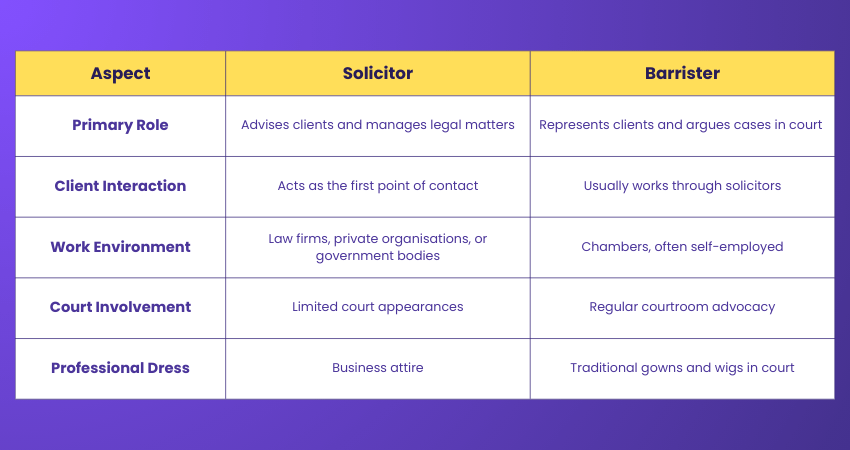
Solicitors and barristers often work closely together, but their roles within the UK legal system are quite different. Understanding these differences can help you decide which legal career suits you best.
1) Solicitor
Solicitors and barristers work closely together but have distinct roles. A solicitor is usually the first point of contact, advising individuals or organisations and managing cases mainly outside court. They work in law firms, private organisations, government bodies, or the court service.
2) Barrister
A barrister specialises in courtroom advocacy and legal opinions. Most are self-employed and work in chambers, using the case prepared by solicitors to represent clients in court. Barristers wear gowns and wigs in court, while solicitors typically wear business attire.
How Long Does It Take to Become a Lawyer?
It is difficult to give an exact timeline for becoming a Lawyer, as this depends on the route chosen, prior experience, and progress through training. On average, it takes around five to six years of full-time study and legal work to qualify as a solicitor or be called to the Bar. Even after qualification, ongoing learning and Professional Development are essential to keep up with changes in the law.
If you are just starting your legal journey, feeling unsure or overwhelmed is completely normal. Take things one step at a time, knowing that clarity and confidence develop with experience. With guidance from mentors, support from colleagues, and hands-on practice, your understanding will grow. By taking the first step now, you are already moving in the right direction.
Career Options After Becoming a Lawyer
Qualified Lawyers, whether solicitors or barristers, have a broad range of career opportunities across legal practice, public service, academia, and corporate sectors. Many also pursue non-traditional roles where legal skills are highly valued.
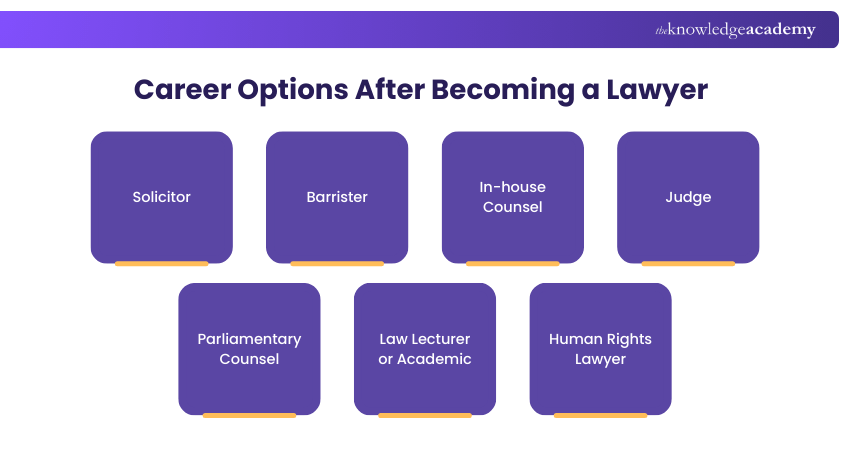
a) Solicitor: Advises clients, prepares legal documents, and may represent them in lower courts.
b) Barrister: Specialises in courtroom advocacy, representing clients in higher courts.
c) In-house Counsel: Provides legal guidance within corporations, banks, or charities.
d) Judge: Appointed after significant legal experience to preside over civil or criminal cases.
e) Parliamentary Counsel: Drafts legislation and advises on legal frameworks within government.
f) Law Lecturer or Academic: Teaches law and conducts research at universities or law schools.
g) Human Rights Lawyer: Works with NGOs, the UN, or pro bono initiatives to defend civil liberties.
Learn essential legal concepts for effectively navigating business agreements and disputes in our Commercial Law Training - Sign up now!
How Do I Get Legal Work Experience?
Gaining legal work experience is essential for a career in law, as it helps build practical skills and shows commitment to the profession. There are several effective ways to gain this experience.
1) Law Firm Internships: Short-term placements for students and graduates that build practical skills such as legal research, drafting, and client interaction. Applying early and tailoring your CV improves your chances.
2) Vacation Schemes: Structured placements during university breaks that offer hands-on experience and often lead to training contracts or pupillage opportunities.
3) Volunteering at Legal Clinics or NGOs: Work on real cases under supervision at universities, charities, or advice centres while developing practical legal skills.
4) Court Visits and Mini-pupillages: Essential for aspiring barristers, these experiences allow you to observe hearings, shadow barristers, and understand courtroom practice.
5) Paralegal or Legal Assistant Roles: Paid positions that provide strong hands-on experience by supporting solicitors with research, case preparation, and administration.
6) Law-related Student Societies: Mooting, debating, and law societies help develop advocacy, research, and teamwork skills while strengthening your CV.
7) Online Legal Experience Programmes: Virtual placements that offer flexible, accessible ways to build foundational legal knowledge and practical skills.
8) Networking with Legal Professionals: Attending events and connecting with solicitors or barristers helps create opportunities for advice, mentoring, and work shadowing.
What Will Prevent Me From Becoming a Lawyer?
Several factors can prevent or delay you from becoming a Lawyer in the UK. These include:
1) Criminal Convictions: Serious or dishonest offences (e.g., fraud or violence) may disqualify you from being admitted, as you must meet the profession's character and suitability requirements.
2) Academic Failure: Not meeting the required grades for your law degree, PGDL, or professional exams (SQE or Bar course) can halt your progress.
3) Plagiarism or Misconduct: Academic dishonesty or disciplinary issues at university can raise red flags during your application for admission.
4) Inadequate Work Experience: For solicitors, failure to complete the required two years of qualifying legal work experience (QWE) may prevent qualification.
5) Poor Communication or Ethics: Lawyers must uphold high standards. A lack of integrity, professionalism, or communication skills can limit your success.
Conclusion
Understanding How to Become a Lawyer and the requirements involved is essential before choosing a legal career. Becoming a Lawyer requires dedication, education, and practical experience, but the journey can be rewarding. By following the right study path, gaining legal work experience, and meeting professional requirements, you can plan your career clearly and move forward with confidence.
Learn to navigate complex workplace regulations in our Employment Law Training - register now!
Frequently Asked Questions
What GCSEs Do I Need to Be a Lawyer?

To become a Lawyer, you will typically need at least five GCSEs at grades 4/C or above, including English Language and Maths. These are often minimum requirements for A-levels and law degrees, forming the foundation for your legal education journey.
What Type of Lawyer Gets Paid the Most?
Corporate Lawyers specialising in mergers and acquisitions (M&A) typically earn the most as they handle large-scale corporate transactions, such as company takeovers, mergers, and buyouts.

Amelia Williams


Senior Human Resources Consultant and Learning Specialist
Amelia Williams is a highly respected HR professional with over 12 years of experience in human capital management, talent development and workplace policy. She has worked across sectors including education, healthcare and corporate services, focusing on aligning people strategies with organisational goals. Amelia’s writing blends current HR trends with practical solutions for modern workplace challenges.


 If you wish to make any changes to your course, please


