




We may not have the course you’re looking for. If you enquire or give us a call on +44 1344 203 999 and speak to our training experts, we may still be able to help with your training requirements.
Key Disadvantages of VPN That You Should Know About
ByNilotpal SarmahLast updated on: 03 October 2026
Recognising the drawbacks of employing a VPN and having a clear understanding of its capabilities and limitations are pivotal for ensuring your online safety. This blog outlines some of the most significant disadvantages of a VPN. Read more to learn more!
Using a VPN enables you to mask your IP address for safeguarding your online activities, gaining access to regionally restricted content on streaming platforms, and potentially reducing costs on online purchases by selecting a more advantageous location. You might view these services as a universal solution for all your online privacy and security requirements.
Nevertheless, like most things, there's a flip side to it. Understanding the drawbacks and acknowledging the constraints of VPNs can assist you in making well-informed choices concerning your browsing experience, online security, and privacy. This blog explores some disadvantages of VPNs that it is essential for you to be mindful of.
What is a VPN?
Virtual Private Network (VPN) is a technology for forming an encrypted connection between your device and a VPN server. The internet traffic can be routed through this connection, and websites generally see the VPN server's IP address instead of your device's public IP address.
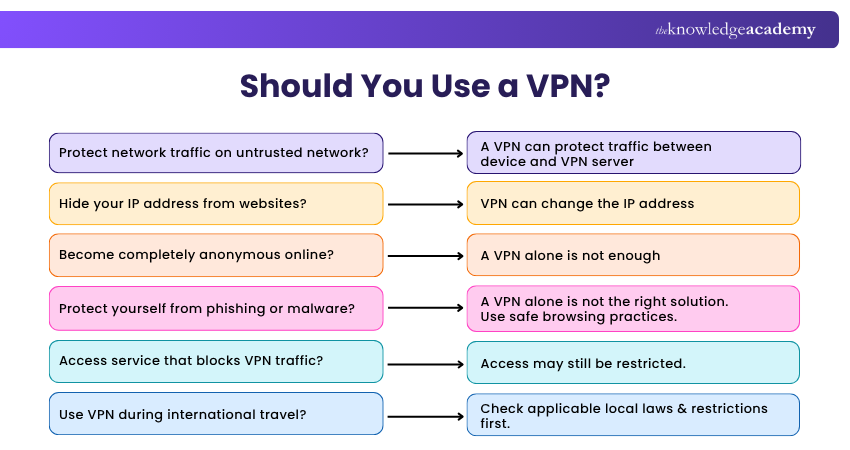
VPNs are commonly used to improve privacy on networks, protect data in transit and change the apparent location associated with an internet connection. However, a VPN does not provide complete anonymity or protection against every online threat, making it important to understand its limitations before using one.
Disadvantages of VPN
Now let's explore the main disadvantages of VPN in detail:
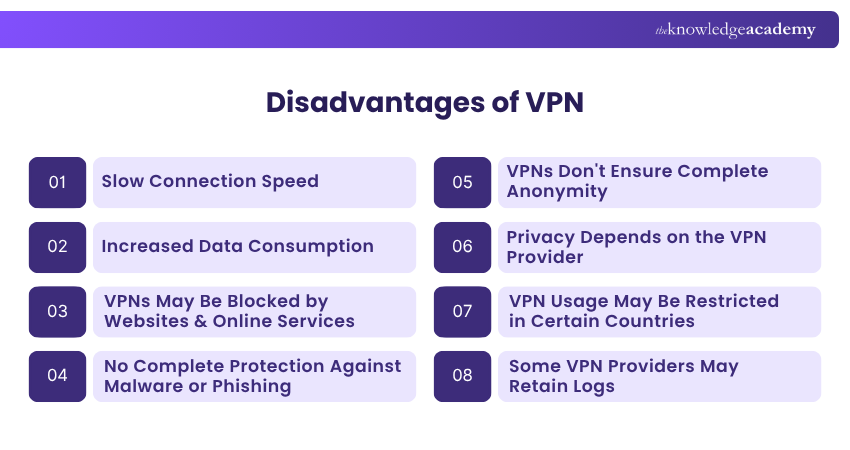
Although VPNs offer useful privacy and security capabilities, they also have limitations. Here are the main disadvantages of VPN to consider:
1) Slow Connection Speed
One of the most common drawbacks of using a VPN is reduced connection speed. VPN traffic is encrypted and gets routed through a VPN server, which can introduce additional processing and network distance.
The extent of the slowdown can vary based on factors such as the VPN protocol, distance to the server, server workload and the user's original internet connection.
Pro Tip
If your VPN feels unnecessarily slow, try a suitable server closer to your physical location and compare the performance.
2) Increased Data Consumption
VPNs can increase data consumption because encryption and tunnelling add overhead to network traffic. This can be particularly important for users with limited mobile data allowances or capped internet plans. As a result, users may reach their data limits sooner than they would without a VPN. The exact amount of additional data usage varies according to the VPN technology and traffic involved.
3) VPNs May Be Blocked by Websites & Online Services
Some websites and online services detect and restrict traffic coming from VPN servers. Streaming platforms, gaming services, financial services and other websites may apply such restrictions for licensing, fraud prevention or security reasons. This means enabling a VPN can occasionally prevent users from accessing a service they would otherwise be able to use. In some cases, users may need to disconnect from the VPN to regain access.
4) No Complete Protection Against Malware or Phishing
A VPN primarily protects network traffic between your device and the VPN server. It does not automatically prevent you from downloading malware, opening a malicious attachment or entering credentials into a phishing website.
Therefore, VPN use should be combined with other appropriate cybersecurity measures and careful browsing habits.
5) VPNs Don't Ensure Complete Anonymity
VPNs are sometimes associated with complete online anonymity, but their capabilities are more limited. A VPN can mask your IP address from the websites you visit, but other information can still be used to recognise or track users. For example, account logins, cookies and browser fingerprinting may still provide identifying information. The VPN provider's own policies and technical practices can also affect privacy.
6) Privacy Depends on the VPN Provider
Using a VPN changes where trust is placed. Instead of your internet connection operating without that VPN intermediary, your traffic is routed through infrastructure operated by the VPN provider.
The provider's logging practices, privacy policy, security practices and jurisdiction can therefore affect the privacy you receive. Some providers may retain connection information or other data relating to VPN usage, so users should examine what information is recorded, why it is collected and how long it is retained.
Pro Tip
Before choosing a VPN, review its privacy policy, logging practices, security features and reputation rather than relying only on marketing claims.
7) VPN Usage May Be Restricted in Certain Countries
VPN rules vary between jurisdictions. While VPNs are widely used in many places, some countries restrict their availability or use. People travelling internationally should therefore check current local laws and regulations rather than assuming that the rules in their home country also apply at their destination.
8) Some VPN Providers May Retain Logs
VPN providers differ in what information they collect and retain. Depending on the service, logs could include connection information or other data relating to VPN usage. Users concerned about privacy should examine what information a provider records, why it collects that information and how long it retains it. A "no-logs" claim should therefore be considered alongside the provider's complete privacy policy and practices.
9) Reliable VPN Services Can Cost Money
Free VPN options exist, but services with broader server networks, additional features or other capabilities may require a paid subscription. For users who only occasionally need a VPN, another recurring subscription may be difficult to justify. Cost should therefore be considered alongside privacy, security, performance and functionality.
Great IT support is about creating seamless experiences. Learn this art with the IT Support and Solution Training - Sign up now!
10) Free VPNs May Present Privacy Risks
Some free VPN services use advertising, limited features or other business models to fund their operations. Depending on the provider, data collection or sharing practices may also create privacy concerns. However, being free does not automatically make a VPN unsafe. Users should examine how a service is funded and what its privacy policy says about collecting, retaining or sharing information.
Trainer's Insight
A free VPN is not automatically unsafe. The important question is how the service operates, how it makes money and what happens to the information it collects.
11) VPN Connections Can Occasionally Fail
Like other network services, VPN connections can sometimes disconnect or fail. When this happens, network behaviour depends on the VPN application and its configuration. Features designed to restrict internet connectivity when the VPN tunnel drops may help reduce unintended exposure, where such functionality is available and correctly configured.
Important
VPN laws and restrictions can change. Check the rules applicable to your location before using a VPN.
12) Choosing a Trustworthy VPN Provider Can Be Difficult
VPN services can differ significantly in privacy policies, logging practices, server infrastructure, features and pricing. This can make it difficult for users to determine which provider best matches their requirements. Rather than choosing solely on price or promotional claims, users should consider their specific privacy, security, performance and usability requirements.
Keep This in Mind
1. VPN encryption and traffic routing can reduce connection speed and increase data usage.2. A VPN can improve privacy, but it does not provide complete anonymity or protection from every online threat.3. Some websites and online services may restrict or block traffic from VPN servers.4. A VPN's privacy protection depends on how the provider handles user data.5. VPN regulations vary between countries, so users should check applicable rules before using one.

Nilotpal Sarmah is a Senior Content Writer with 11+ years of overall experience spanning engineering, operations and content development. His technical knowledge and extensive writing experience enable him to simplify specialised topics across IT and Tech, Business Skills, Project Management, Health and Safety, and ISO and Compliance.
View Detail

 If you wish to make any changes to your course, please


