


 Top Rated Course

We may not have the course you’re looking for. If you enquire or give us a call on + 1-866 272 8822 and speak to our training experts, we may still be able to help with your training requirements.
What Is a Cash Flow Forecast: Meaning and Guide
Olivia Taylor 15 July 2026A Cash Flow Forecast estimates cash inflows and outflows over a set period, usually monthly for 12 months, to predict future cash positions. It helps businesses plan expenses and avoid cash shortfalls during operations. It also supports informed strategic decision-making and ensures long-term financial stability and sustained growth.

Training Outcomes Within Your Budget!
We ensure quality, budget-alignment, and timely delivery by our expert instructors.
Table of Contents

Managing money effectively is at the heart of every successful business. Without a clear view of incoming and outgoing funds, even profitable organisations can face financial challenges. This is where a Cash Flow Forecast becomes an essential tool for maintaining control and stability.
By anticipating future cash movements, businesses can make smarter financial decisions and stay prepared for uncertainties. In the following sections, we’ll explore how this process works and how you can use it to strengthen your financial planning.
Table of Contents
1) What is a Cash Flow Forecast?
2) What is the Purpose of a Cash Flow Forecast?
3) Key Components of Cash Flow Forecasting
4) Different Types of Cash Flow Forecasts
5) Cash Flow Forecasting Methods
6) What is the Cash Flow Forecast Formula?
7) Steps to Forecast Cash Flow
8) Cash Flow Forecast Example
9) Cash Flow Forecast Template
10) Benefits of Cash Flow Forecasting
11) Drawbacks of Cash Flow Forecast
12) Tools for Cash Flow Forecasting
13) How Can You Improve Your Cash Flow Forecast?
14) What is a 3-way Cashflow Forecast?
15) Conclusion
What is a Cash Flow Forecast?
A Cash Flow Forecast is a simple financial document, usually a spreadsheet, that estimates the money expected to flow into and out of your business over a set period, typically 12 months. It includes projected income and expenses to give a clear snapshot of future cash positions.
Forward-looking financial planning can seem daunting amid daily business demands, but forecasting helps you think beyond the short term. By anticipating future cash flows, you gain insight into your business’s trajectory, guiding both tactical actions and strategic decisions.

What is the Purpose of a Cash Flow Forecast?
A key purpose of a Cash Flow Forecast is to predict future cash movements so businesses can optimise their cash position and prepare for potential cash flow issues before they occur. It helps estimate whether cash will be positive or negative at a given point, aiding planning.
With this insight, companies can reduce the cash buffer needed for unexpected costs, make better use of surplus funds, and plan for any deficits. Accurate forecasting also strengthens credibility with stakeholders and improves financial decision-making.
Key Components of Cash Flow Forecasting
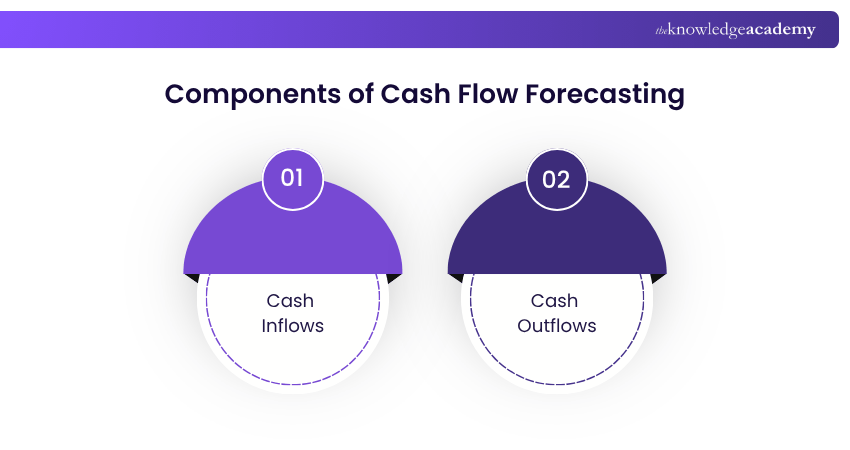
To create an accurate Cash Flow Forecast, it’s essential to focus on its key components. Below listed are some of these components to help you provide a clear picture of financial inflows and outflows:
1) Cash Inflows
Cash inflows include all money coming into the business, broken down by source or classification. This helps track total receipts and monitor liquidity effectively.
2) Cash Outflows
Cash outflows are the money your business spends on expenses such as rent, salaries, utilities, supplies, equipment, and debt payments that reduce your available cash balance.
Different Types of Cash Flow Forecasts
When creating a cash flow forecast, you decide how far ahead to plan based on business needs and available data. Longer forecasts are less detailed, while shorter ones provide more precise daily insights.
1) Short Term: This forecasts cover a few weeks, showing daily cash inflows and outflows. They help small businesses plan payments and manage day-to-day cash needs efficiently.
2) Medium Term: This forecasts, like 13-week or monthly projections, provide a quarterly liquidity view. They adjust for accrual accounting differences and ensure enough cash is available for upcoming obligations.
3) Long Term: This forecasts, such as 12-month projections, guide budgeting and growth planning. While less reliable for daily decisions, they offer a big-picture view of capital needs.
4) Mixed Period: This forecasts combine timeframes, e.g., daily for two weeks and weekly for four weeks. This approach provides detailed short-term insights while maintaining an overview of longer periods.
5) Rolling vs Fixed: Forecasts can be rolling, updating continuously with new submissions, or fixed-term, counting down to quarter or year-end. Both methods help organisations plan cash flow effectively.
Learn smart risk strategies for financial stability with our Treasury Management Training – Join now!
Cash Flow Forecasting Methods
There are two primary Cash Flow Forecasting methods: direct and indirect.
1) Direct Method: This tracks actual cash inflows and outflows over a short-term period, offering a clear snapshot of working capital and supporting daily liquidity management. This approach is ideal for businesses needing precise, immediate forecasts.
2) Indirect Method: This focuses on long-term forecasting by analysing income statements and balance sheets, making it valuable for strategic planning and securing external funding. Many organisations use both methods together to maximise forecasting accuracy and meet both short-term needs and long-term business goals.
What is the Cash Flow Forecast Formula?
The Cash Flow forecast formula estimates your ending cash balance by adding expected cash inflows to the opening balance and subtracting projected outflows for the forecasting period.
Cash Flow Forecast Formula:
Beginning Cash Balance + Projected Cash Inflows - Projected Cash Outflows = Ending Cash Balance
Steps to Forecast Cash Flow
Accurate Cash Flow Forecasting requires a structured approach. Follow these essential steps to create a reliable forecast:
1) Define Your Forecasting Goals
Set clear objectives for your forecast, such as managing cash reserves or planning for growth. Clear goals will focus your forecasting efforts and align them with your business needs.
2) Select Your Forecasting Timeframe
Determine the appropriate timeframe for your monthly, quarterly, or annual forecast. The timeframe should match your business’s needs and planning horizon for precise cash flow projections.
3) Decide on a Forecasting Approach
Choose a forecasting approach, such as direct or indirect methods. Your choice will influence how you project cash flows and interpret financial data.
4) Gather Essential Data for Your Cash Flow Forecast
Assemble relevant financial data, including historical cash flows, sales projections, and expense estimates. Accurate data is critical for developing a reliable and actionable Cash Flow Forecast.
Learn fundamental Bookkeeping principles to manage financial records with our Bookkeeping Course – Join now!
Cash Flow Forecast Example
A Cash Flow Forecast example outlines a business’s expected cash position over a set period, starting with an opening balance. It includes projected inflows such as sales and outflows like wages, materials, and expenses. The net cash flow is calculated and added to determine the closing balance.
For instance, a business may start with £2,200, generate £11,200 from sales, and spend £9,700 on expenses. This results in a net cash flow of £1,500 and a closing balance of £3,700. Such an example illustrates how forecasting helps businesses track expected cash movement and understand whether they will have enough funds available.
Cash Flow Forecast Template
A Cash Flow Forecast template supports forward liquidity planning by helping businesses project incoming and outgoing cash over a defined period. The structure and duration of the template can be adjusted to match business needs and decision-making requirements.
A well-designed template reflects strong financial discipline, as it enables finance teams, Treasurers, CFOs, and senior leaders to monitor cash availability, assess risks, and plan confidently.
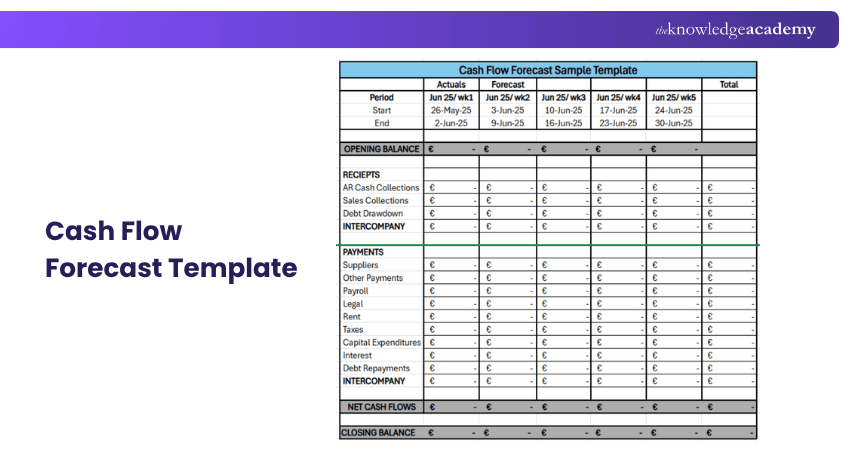
If you are starting with cash flow forecasting, this straightforward template provides a simple way to plan ahead. It supports weekly cash flow projections and includes sections for receipts, payments, expenses, net cash flow, and closing balances.
Benefits of Cash Flow Forecasting
Cash Flow Forecasting offers numerous benefits to an organisation’s liquid assets management.
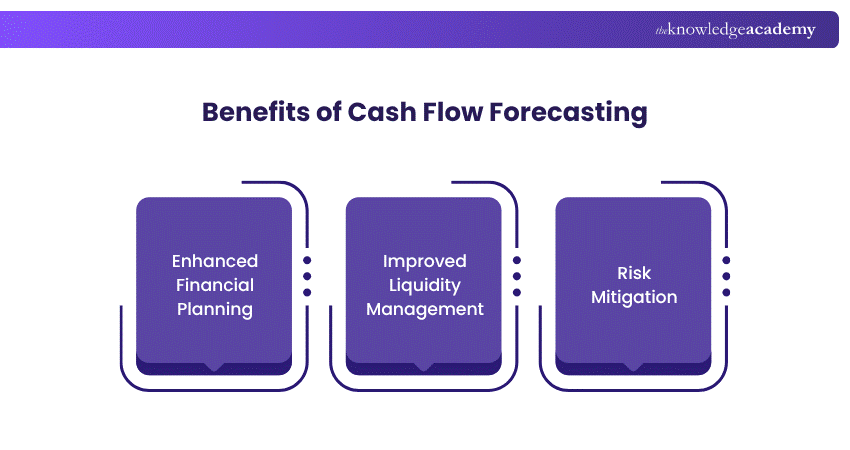
a) Enhanced Financial Planning: Cash Flow Forecasting helps businesses anticipate future cash needs, allowing for better financial planning. By predicting inflows and outflows, companies can make informed decisions on budgeting, investments, and cost management. Incorporating a well-structured Cash Flow Budget further enhances financial stability by ensuring better control over cash movements.
b) Improved Liquidity Management: Regular Cash Flow Forecasting enables businesses to ensure they have sufficient liquidity to meet obligations. It helps prevent cash shortages, allowing for timely payments to suppliers, employees, and other stakeholders.
c) Risk Mitigation: By identifying potential cash flow gaps or surpluses in advance, businesses can take proactive steps to mitigate financial risks. This could involve securing short-term financing, adjusting expenses, or renegotiating payment terms to maintain financial stability.
Drawbacks of Cash Flow Forecast
A key drawback of cash flow forecasting is that it is only an estimate and cannot guarantee accuracy. Since it relies on predicted income and expenses, unexpected changes in the business environment can make forecasts unreliable.
Additionally, forecasts become less accurate the further they extend into the future, similar to how long-term predictions are harder to make. This means businesses must regularly update forecasts, as they cannot fully account for unforeseen events or sudden financial changes.
Tools for Cash Flow Forecasting
The tools for Cash Flow Forecasting help streamline and improve the accuracy of your cash flow forecasting by offering flexibility, automation, and real-time financial insights.
a) Spreadsheets and Accounting Software: Spreadsheets like Excel are popular for cash forecasting. They allow you to input financial data and use formulas for calculations. Spreadsheets are flexible and easy to customise to your needs.
Integrating APIs for Real-time Data: APIs can connect your forecasting tools with other systems. These integrations allow real-time data to flow between your cash forecasting software and other financial management tools, helping you generate accurate and up-to-date insights.
Become an expert in Project Accounting – Start your Project Accounting Course now!
How can you Improve Your Cash Flow Forecast?
Enhancing the accuracy and reliability of your Cash Flow Forecast is essential for strong financial planning and business agility. Here are proven strategies to boost your forecasting process and achieve better financial control:
a) Centralise and Automate Data Collection: Integrate data from all business units, bank accounts, and financial systems using automation to reduce errors and save time.
b) Switch to Rolling Forecasts: Use rolling forecasts instead of static, periodic models. This lets you update forecasts with real-time data, keeping them accurate and adaptable to change.
c) Segment Cash Flows: Break down your cash flows into categories (operating, investing, and financing activities) to pinpoint where money is coming from and going to.
Scenario Analysis and Variance Reporting: Run multiple “what-if” scenarios (best case, worst case, expected) to prepare for fluctuations in sales, costs, or market conditions.
What is a 3-way Cashflow Forecast?
A three-way forecast combines the profit and loss statement, balance sheet, and cash flow forecast into one integrated financial model. It provides accurate insights into future cash position, financial health, and business viability, making it valuable for planning, investors, and lenders.
Conclusion
Effective financial planning depends on understanding and managing your business’s cash movement. A well-prepared Cash Flow Forecast helps anticipate challenges, optimise resources, and support informed decision-making. By using the right tools and techniques, businesses can maintain stability and drive sustainable growth.
Improve your Financial Management skills – Join our Cash Cycle Management Course today!
Frequently Asked Questions
What to Consider When Forecasting Cash Flow?

When forecasting cash flow, prioritise historical data, industry trends, and economic factors. Factor variables such as seasonal variations, payment terms, and potential risks. Lastly, use accurate data and realistic assumptions to enhance reliability.
Who is Responsible for Cash Flow Forecasting?
The financial manager or accountant primarily manages Cash Flow Forecasting. They analyse financial data and project future cash flows to guide strategic decisions and maintain liquidity. Successful forecasting often involves collaboration across departments to ensure accuracy and comprehensive insights.

Olivia Taylor


Chartered Accountant and Financial Training Specialist
Olivia Taylor is a qualified chartered accountant with over a decade of experience in financial management, auditing and corporate reporting. Having worked with leading firms in both the public and private sectors, Olivia brings clarity to complex financial topics. Her writing focuses on helping professionals build confidence in key areas of accounting, compliance and financial planning.
View Detail

 If you wish to make any changes to your course, please


