




We may not have the course you’re looking for. If you enquire or give us a call on 01344203999 and speak to our training experts, we may still be able to help with your training requirements.
Cash Budget: A Complete Guide with Examples
ByNaveena VenkatesanLast updated on: 19 September 2026
A cash budget helps businesses anticipate cash needs, manage liquidity, identify potential shortfalls or surpluses and make informed financial decisions.

What You Should Know
1. A cash budget forecasts expected cash inflows and outflows over a specified period.2. It helps businesses anticipate potential cash shortages and identify periods of surplus cash.3. Opening cash, projected inflows, projected outflows, net cash flow and closing cash are its key elements.4. Cash budgets can cover different periods depending on an organisation's liquidity and planning requirements.5. Regular reviews can help businesses adjust their forecasts as actual cash movements and circumstances change.
Imagine running a business without knowing if you'll have enough cash to pay the bills next month; Sounds risky, right? In this scenario, a cash budget is the companion you need. A cash budget is your financial roadmap, guiding and driving your business through the unpredictable path of Cash Flow Management. More than mere numbers, it’s your foolproof strategy to ensure that every pound works its magic even amidst the storm of economic uncertainties.
This blog explores the art of crafting the perfect cash budget that will help you battle financial challenges and seize new business opportunities with ease! So read on and hone the skills to make your financial health more resilient!
What is Cash Budget?
A cash budget is a widely used financial tool that estimates a business’s cash inflows and outflows over a specified period, such as a month or quarter. It helps predict how much cash will be available at any given time, ensuring the business can cover obligations like salaries, bills, and loan payments.
By planning, a cash budget allows businesses to avoid shortfalls, identify surplus funds, and make informed financial decisions. It is especially useful for managing seasonal fluctuations, preparing for investments, and maintaining financial stability through better cash flow control and strategic resource allocation.

Importance of Cash Budgets
Cash budgets serve several purposes for finance teams. For most organisations, cash is a vital component of daily operations. Even those business models that are not cash-intensive can benefit greatly from cash budgeting practices. Here’s why cash budgets are so important:
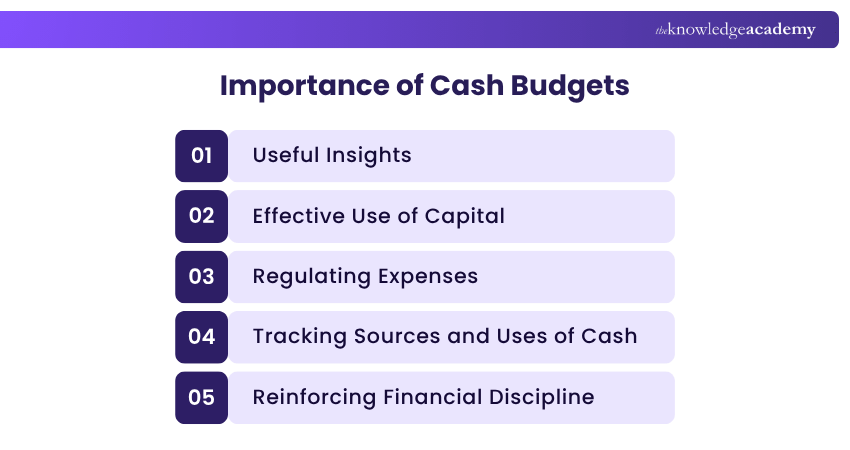
1) Provides Useful Insights: Cash budgets offer valuable insight into potential cash deficits before they occur. This allows business leaders to plan ahead, adjust costs, and ensure that cash balances remain sufficient to meet operational needs.
2) Supports Effective Use of Capital: By identifying periods of excess cash, cash projections help financial planners make better use of working capital. This may include investing surplus funds, paying down debt, or allocating resources toward strategic growth.
3) Helps Regulate Expenses: Cash budgets can highlight periods when expenses are unusually high. This enables financial analysts to explore ways to reduce costs or spread them more evenly across periods, improving overall Expense Management.
4) Tracks Sources and Uses of Cash: Since cash budgets are based on income receipts and expenditures, they provide a clear view of where cash is coming from and where it is going. These insights can reveal inefficiencies and prompt action. For example, if revenue is strong but collections are weak, the business can address issues in the receivables cycle.
5) Reinforces Financial Discipline: Creating and following a cash budget supports stronger financial planning. By spotlighting potential cash shortfalls and encouraging proactive decision-making, it helps businesses operate more responsibly and avoid unplanned financial strain.
Command the cash, control the future. Sign up for our Treasury Management Training and boost financial strength!
How Does a Cash Budget Work?
Companies leverage sales and production forecasts to create a cash budget and assumptions about necessary spending and accounts receivable collections. A cash budget is essential for assessing whether a company will have enough cash to carry on its operations. If a company lacks liquidity, it must raise capital by issuing stock or taking on more debt.
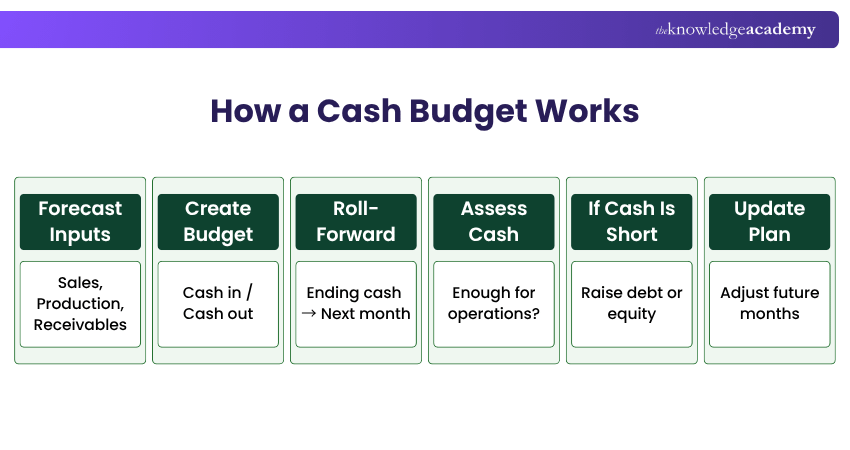
A cash roll-forward computes the cash inflows and outflows for a month and uses the ending balance as the starting balance for the following month. This process enables the company to forecast cash needs throughout the year and adjust the cash balances for all future months by changing the roll-forward. Keeping this updated is vital to avoid a budget deficit, ensuring financial stability and informed decision-making.
Trainer Insight
Pay close attention to timing. A business may expect substantial receipts overall, but it can still experience a temporary cash shortage if payments become due before those receipts arrive.
Key Elements of a Cash Budget
A cash budget consists of several connected components that show how the organisation's cash position is expected to change during a particular period.
1) Opening Cash Balance
The opening cash balance is the cash available at the beginning of the budget period. It provides the starting point for calculating the expected closing cash position.
2) Projected Cash Inflows
These are amounts expected to enter the business during the period. They can include:
a) Cash sales
b) Collections from accounts receivable
c) Loan proceeds
Accurately estimating inflows helps the organisation understand how much cash may become available.
3) Projected Cash Outflows
Cash outflows are payments expected to leave the business. Examples include:
a) Accounts payable
b) Payroll
c) Rent
d) Loan repayments
Tracking these payments helps businesses determine whether available cash is expected to cover their obligations.
4) Net Cash Flow
Net Cash Flow signifies the difference between cash inflows and cash outflows during the period.
Net Cash Flow = Cash Inflows – Cash Outflows
A positive amount indicates that inflows exceed outflows for the period, while a negative amount means outflows exceed inflows.
5) Closing Cash Balance
The Closing Cash Balance represents the amount expected to remain at the end of the budget period. A simple calculation is:
Closing Cash Balance = Opening Cash Balance + Cash Inflows – Cash Outflows
How to Create a Cash Budget?
Now that you've learned about the critical role of cash budgets in financial health, let's move on to the practical steps for creating one. Before starting a cash budget, you should remember that it’s different from an overall financial budget in that it's strictly concerned with cash receipts and outflows. Here are the essential steps to create a cash budget:
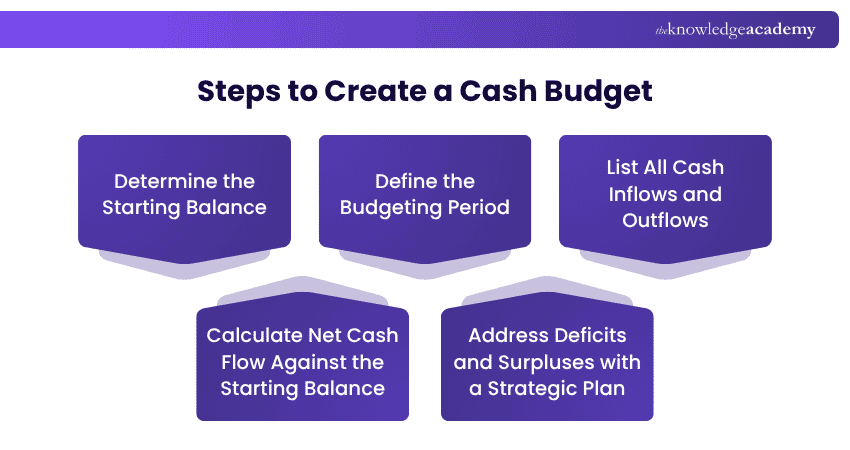
1) Determine the Starting Balance
First, determine the starting balance that’ll be used to roll out the projected cash balance. In case the cash budget is for one quarter, the starting balance must equal the previous quarter's ending balance. This works for any given period. Always tie the starting cash balance to a source, such as a bank statement.
2) Define the Budgeting Period
Cash budgets can be built on a weekly, monthly, quarterly, and annual basis. If the organisation is cash-intensive, the budget can even be made daily. It would help if you chose an appropriate timeframe to manage daily cash balances while providing enough future insight to pinpoint any potential issues.
3) List All Cash Inflows and Outflows
You must identify every source and cash usage over time and group them in an itemised list. Cash inflows are positive, while cash outflows are negative. Positive cash inflows can include loans, revenue from sales, and investments. Conversely, cash outflows include expenses such as utilities, payroll, rent, and inventory purchases.
Master the art of managing money wisely with the Cash Flow Management Course – Sign up now!
4) Calculate Net Cash Flow Against the Starting Balance
Add all sources of cash to the starting cash balance for the period and then reduce it by the expense amount to determine your net cash position.
5) Address Deficits and Surpluses with a Strategic Plan
After rolling over your starting balance for the period, you will see the cash surpluses or deficits. Analyse the factors contributing to these balances. If the budget shows a deficit, explore options to reduce expenses or boost cash receipts. Consider how the extra cash can support the organisation’s financial KPIs if there's a surplus.
Quick Check: Is Your Cash Budget Useful?
Ask yourself: Is the opening cash balance accurate? Have all significant cash receipts and payments been included? Are payment and collection timings realistic? Have potential cash shortages been identified? Are assumptions regularly reviewed? Are actual results compared with forecasts? Is the budget updated when circumstances change?If several answers are 'No', review the relevant parts of the cash budget before relying on it for financial planning.
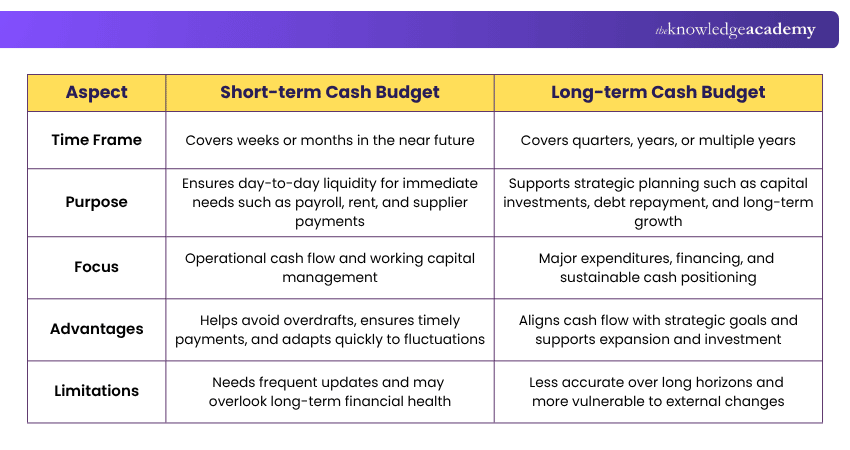
Short-term vs Long-term Cash Budgets
Cash budgets can be prepared over different time horizons. The appropriate period depends on what the organisation wants to understand and manage. Here are the key distinctions between short-term and long-term cash budgets:
Example of Cash Budget
Here’s a cash budget example for a small business:
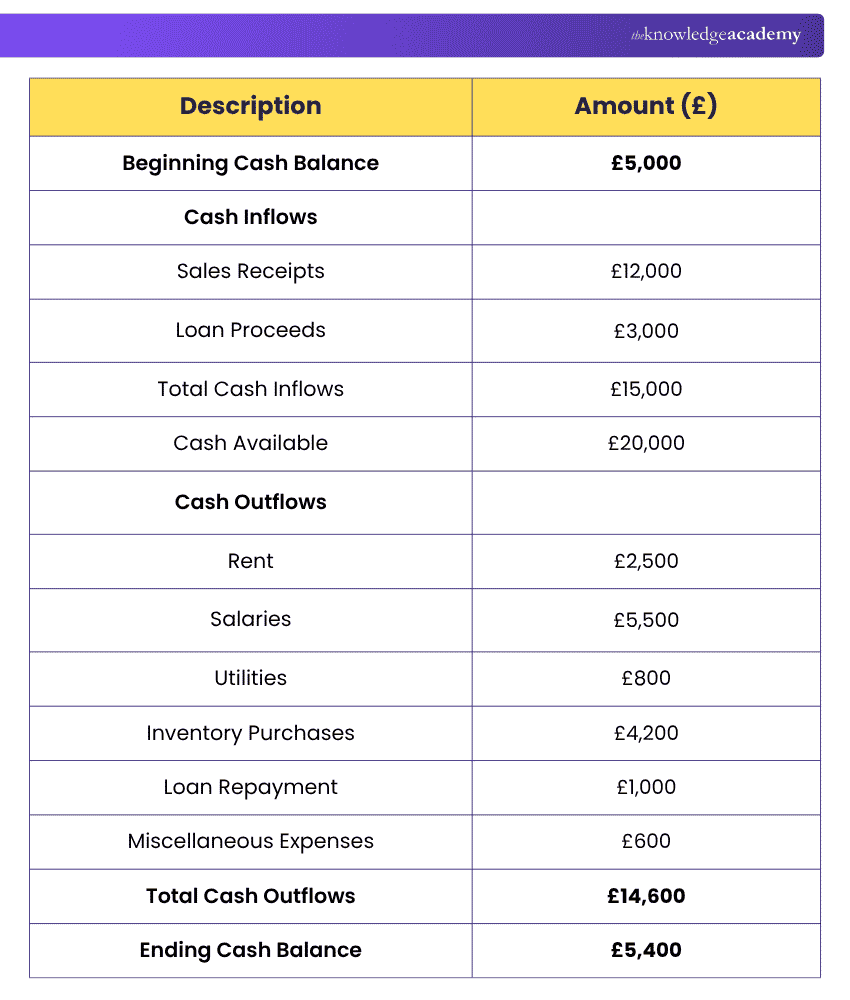
In this example, ABC Enterprises begins with £5,000 in cash. After accounting for all inflows and outflows, they end the month with £5,400, which indicates a slight increase in cash reserves.
Learn about effective Asset Management in our comprehensive Fixed Assets Accounting and Management Course - Sign up now!
Challenges in Cash Budgeting
Navigating the path of cash budgeting can expose businesses to various challenges. Overcoming these challenges requires implementing best practices to ensure the cash budget remains resilient amidst organisational complexities. Let’s explore some of these challenges.
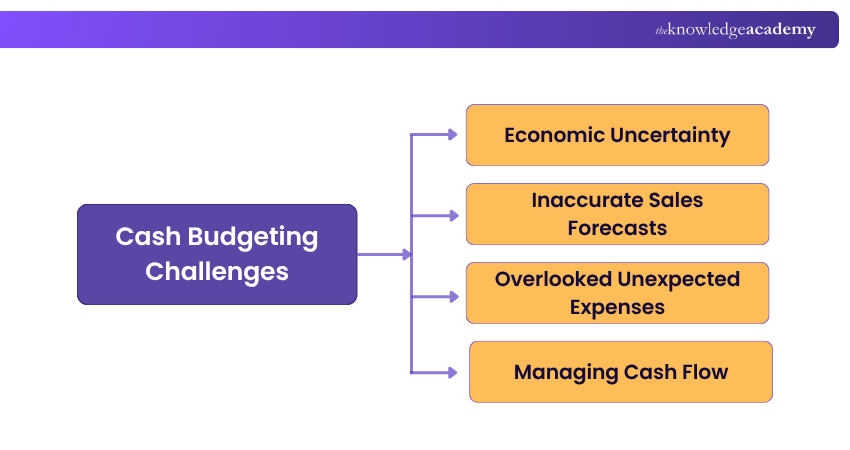
1) Economic Uncertainty
Cash budgeting can become complex due to unpredictable economic factors. A business’s profitability is significantly impacted by factors such as:
a) Inflation
b) Fluctuating interest rates
c) Currency value changes
Constant vigilance and strategic planning will enable the cash budget to adapt to any economic uncertainty.
2) Inaccurate Sales Forecasts
The accuracy of sales forecasts is one of the biggest cash budget problems. Overestimating Sales can result in overcommitting resources, while underestimating can lead to missed opportunities. To ensure perfect alignment of cash budget with the revenue streams, you need to balance these projections with:
a) Consumer behaviour
b) Market demand
c) Industry trends
Trainer Insight
Do not rely entirely on one forecast. Consider how the cash position could change if customer receipts arrive later than expected, projected inflows fall or unexpected payments arise.
3) Overlooked Unexpected Expenses
Cash budgets often fumble due to unforeseen expenses. While regular operating costs are accounted for, financial resources can be strained due to unexpected events such as:
a) Legal issues
b) Equipment breakdowns
c) Sudden regulatory changes
Failing to anticipate these unforeseen expenses can create significant gaps in the cash flow, which will disrupt the budgeting plan.
4) Managing Cash Flow
Cash flow gaps occur when cash outflows exceed inflows, which pose a significant challenge in cash budgeting. These gaps can lead to:
a) Strained supplier relationships
b) Missed payments
c) abysmal day-to-day operations
Managing these gaps necessitates proactive measures like:
a) Negotiating extended payment terms
b) Securing short-term financing
c) Maintaining a cash reserve for emergencies
Addressing these gaps ensures the business stays financially resilient despite periodic imbalances.
Common Cash Budgeting Mistakes
Watch out for these common mistakes:
Overestimating expected cash receipts Forgetting irregular or unexpected payments Confusing sales with actual cash collections Using outdated assumptions Ignoring the timing of receipts and payments Failing to update forecasts when circumstances change Looking only at the final balance while overlooking temporary cash shortages

Naveena Venkatesan is a Content Editor with 2+ years of experience in content writing, editing and linguistic quality assurance. Her research, fact-checking and editorial experience enable her to develop accurate, accessible resources across Business Skills, Human Resources, and Accounting and Finance.
View Detail

 If you wish to make any changes to your course, please


