


We may not have the course you’re looking for. If you enquire or give us a call on 01344203999 and speak to our training experts, we may still be able to help with your training requirements.
Top 7 Barriers to Good Customer Service: A Comprehensive Overview
ByShristi RoyLast updated on: 12 October 2026
This blog explores seven common barriers to good customer service, including inadequate training, technology gaps, poor culture and communication breakdowns, and how each one affects the customer experience.
What’s Coming Up
1. Customer service problems often start behind the scenes, in training, tools and culture.2. Inadequate training and outdated technology slow response times and weaken service quality.3. Poor culture and communication breakdowns lead to inconsistent service and disengaged employees.4. Weak feedback mechanisms and inflexible policies leave customer needs unheard and unmet.5. High employee turnover disrupts service continuity and increases training costs.
Customer service can be described as the face of any business. For many businesses, customer service is an important point of interaction between customers and the organisation. However, there are some barriers to good customer service that still exist. These barriers make it harder for businesses to give customers the service they expect.
These barriers rarely appear on their own. A gap in training, an outdated tool or a rigid policy can quietly weaken the service customers receive, and over time that is often why they stop coming back. Because the damage builds gradually, businesses often notice it only after customers have already left.
What are the Barriers to Good Customer Service?
In this section, we will expand on the top seven barriers to good customer service:
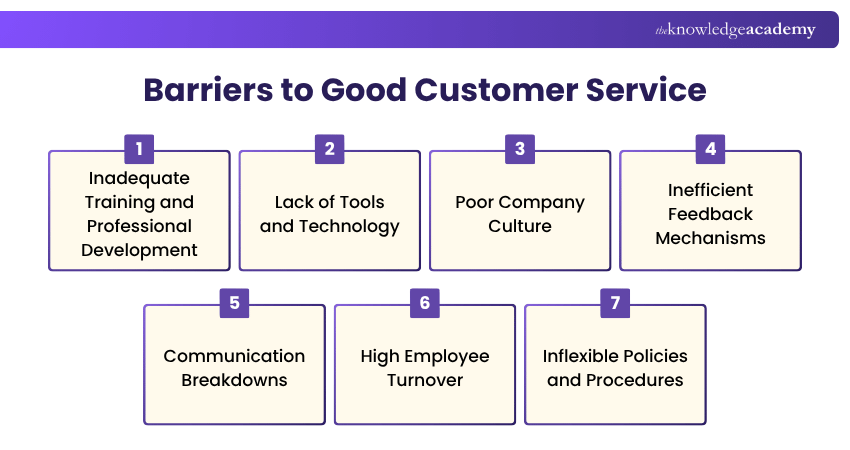
1) Inadequate Training and Professional Development
Inadequate training refers to a lack of skills and knowledge imparted to employees, which can hinder their performance and effectiveness in catering to customer needs. These points will help you understand the effects of inadequate training in detail:
1) Effects on Service Quality: Employees without comprehensive training may lack detailed knowledge about products, services, or company policies, leading to misinforming customers or providing incorrect solutions. Lack of proper training can diminish an employee's confidence when addressing customer concerns, leading to hesitation and uncertainty.
2) Delayed Problem Resolution: Untrained staff might take longer to understand and address issues, leading to increased resolution times and unhappy customers. They may also depend excessively on managerial intervention for solutions, creating bottlenecks in service delivery.
3) Lack of Adaptability: The lack of continuous professional development can make it difficult for employees to adapt to new products, technologies, or company processes. Employees may struggle with handling more complex customer issues or navigating new systems.
4) Economic Implications: Poor service resulting from inadequate training can contribute to customer dissatisfaction and may lead some customers to choose competitors. The continual rectification of mistakes stemming from inadequate training can lead to additional costs.

2) Lack of Tools and Technology
A lack of tools and technology refers to businesses not leveraging or having access to the necessary digital and tech solutions to enhance their customer service. This can also encompass using outdated systems that no longer meet current demands. Let’s discuss the effects of a lack of tools and technology:
1) Impact on Response Time: Without modern communication tools, response times can lag, causing customer frustration. Automated systems such as chatbots can handle certain routine queries and provide immediate responses, while more complex issues may still require human support.
2) Data Management Issues: Modern Customer Relationship Management (CRM) systems store and analyse customer interactions, helping businesses understand their clients better. Without these, crucial customer insights may be lost. Difficulty in tracking customer histories and preferences can also lead to a lack of personalisation in service.
3) Operational Inefficiencies: Outdated systems can result in slower processes, from logging customer complaints to retrieving necessary information. Employees may also need to juggle multiple disconnected systems, decreasing efficiency and increasing the chance of errors.
4) Reduced Accessibility: The absence of cloud-based solutions can limit remote access to data, impacting employees' ability to assist customers from different locations or outside standard working hours.
5) Limited Multi-channel Support: Modern customers expect businesses to be reachable through various platforms, from emails and phone calls to social media messages. Without the right technology, businesses might struggle to provide consistent support across multiple channels.
6) Security Concerns: Outdated systems may lack current security updates or protections, potentially increasing exposure to security vulnerabilities and risks involving sensitive customer data.
7) Challenges in Scaling: As businesses grow, the demand for more advanced and diverse tools increases. Without the necessary technological infrastructure, scaling becomes a challenge.
8) Recommendation: Businesses should periodically review and invest in technology that aligns with their customer service goals. This includes exploring innovations like Artificial Intelligence (AI)-driven customer service tools or advanced CRM platforms. Once the necessary tools are implemented, the staff should be adequately trained to maximise the benefits of these technologies.
Pro Tip
Adding more customer service technology does not automatically create a better customer experience. Focus on whether the technology removes friction. Employees should be able to access relevant customer information easily, move between necessary systems efficiently, and use automation where it genuinely simplifies repetitive tasks.
3) Poor Company Culture
Company culture represents the values, beliefs, and behaviour that determine how employees interact and handle business transactions. A poor company culture often denotes an environment where negative behaviour is tolerated and positive values aren’t reinforced, which can directly affect customer service. The following are the effects of poor company culture:
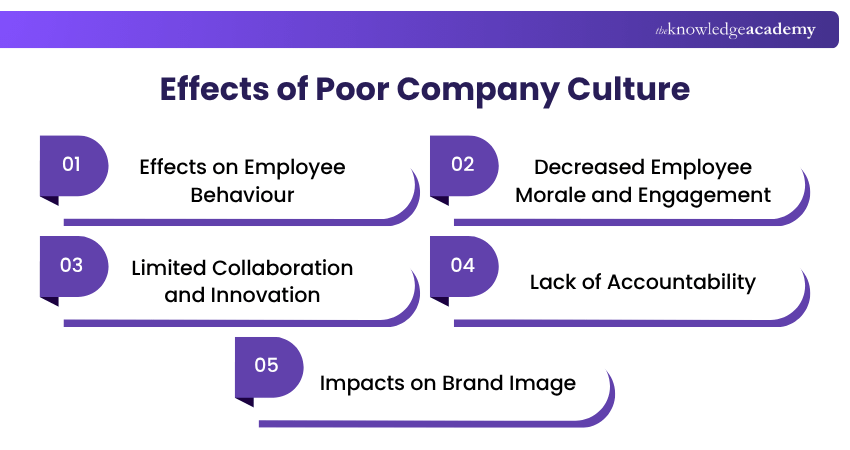
1) Effects on Employee Behaviour: In environments lacking mutual respect and collaboration, employees might not feel valued or motivated, leading to sub-par interactions with customers. The absence of a clear mission or values can result in inconsistent service delivery, as employees lack a unified direction.
2) Decreased Employee Morale and Engagement: A negative culture can result in disengaged employees who lack the enthusiasm to go the extra mile for customers. High levels of stress and job dissatisfaction, stemming from a toxic environment, can translate to indifferent interactions with clients.
3) Limited Collaboration and Innovation: A poor culture often stifles creativity and teamwork. Without open collaboration, innovative solutions to customer issues may be missed. Siloed departments can result in miscommunication and missed opportunities for cross-functional problem-solving.
4) Lack of Accountability: In environments where accountability isn't emphasised, mistakes may be overlooked or repeatedly committed, damaging the customer experience.
5) Impacts on Brand Image: Internal company culture can influence employee behaviour and customer-facing service. When internal problems result in poor customer experiences, employee criticism, or public disputes, they may also negatively affect the organisation's reputation.
Empower your vision with strategic planning and thinking with the Strategic Planning and Thinking Course - Join now!
4) Inefficient Feedback Mechanisms
Feedback mechanisms are processes and tools used by businesses to gather, analyse, and act upon feedback from customers. When these mechanisms are inefficient, it can lead to missed opportunities, unresolved issues, and diminished customer trust. These points will expand on the effects of inefficient feedback mechanisms:
1) Lack of Insight Into Customer Needs: Without efficient mechanisms, companies might fail to capture the true sentiment and needs of their customers, leading to misaligned products or services. Essential suggestions for improvement may go unnoticed, causing stagnation.
2) Extended Issue Resolution Time: If customers' complaints and concerns are not promptly captured and addressed, it can lead to prolonged dissatisfaction. A delay in feedback processing might also mean recurring problems aren’t fixed promptly, causing repeated grievances.
3) Decreased Customer Loyalty: Customers value being heard. If they believe their feedback isn’t considered, they may feel unvalued and look elsewhere. A business not adapting based on customer feedback might come across as rigid and uncaring.
4) Damage to Reputation: Disgruntled customers can now easily share their negative experiences through various platforms. Without efficient feedback loops, businesses may not be aware of or respond to these publicly aired grievances in a timely manner, causing potential damage to their reputation.
5) Resource Misallocation: If feedback is not accurately captured and analysed, businesses might invest in changes that aren't top priorities for customers, misallocating resources.
5) Communication Breakdowns
Communication breakdowns refer to the failures or gaps in transmitting information accurately and in a timely manner between teams, management, or between the company and its customers, leading to misunderstanding, delays, and inefficiency. We will now expand on the effects of communication breakdowns:
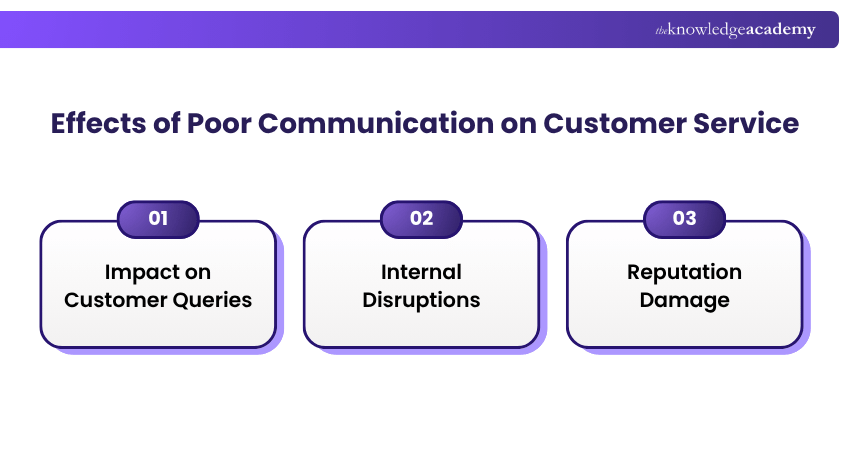
1) Impact on Customer Queries: Customers might receive inconsistent or conflicting information from different representatives or channels. Delays in response times due to unclear communication can result in customer frustration and trust erosion.
2) Internal Disruptions: Miscommunication among teams can result in missed deadlines, duplicated efforts, or tasks falling through the cracks. Insufficient clarity around roles and responsibilities can lead to accountability issues and operational inefficiencies.
3) Reputation Damage: When communication breakdowns affect customer interactions, it can lead to public complaints or negative reviews, damaging the company's reputation.
Trainer’s Insight
Customers should not receive completely different answers depending on which employee or service channel they use. Strong internal communication helps employees work with consistent and up-to-date information, reducing the likelihood of conflicting responses.
Learn essential strategies for managing time and resources with the Organisational Skills Training - Join now!
6) High Employee Turnover
Employee turnover can be defined as the rate at which employees leave a company and are replaced by new hires. A high turnover rate implies frequent changes in personnel, which can have wide-ranging implications for businesses, especially in customer-facing roles. The following are the effects of a high employee turnover:
1) Inconsistent Service: Constantly changing staff can lead to inconsistencies in service delivery, as new hires might not always be as familiar with products, services, or company policies. Customers may also experience less continuity in businesses where they regularly interact with specific service employees or account representatives.
2) Increased Training Costs: High turnover necessitates constant recruitment and training of new employees, incurring high costs. New hires generally have a learning curve, during which service quality might dip temporarily.
3) Loss of Important Institutional Knowledge: When experienced employees leave the organisation, they take with them some valuable knowledge, insights, and relationships built over time. Their replacements may take considerable time to reach the same level of proficiency and understanding.
4) Operational Disruptions: Continuously integrating new members into teams can lead to disruptions in operations, affecting efficiency and productivity.
5) Reputation Impact: Companies known for high turnover might struggle to attract top talent, as they could be perceived as having poor working conditions or culture. In customer-facing environments, frequent staff changes may also affect customers' perceptions of service continuity and reliability.
Strengthen your business connections with the Building Business Relationships Training!
7) Inflexible Policies and Procedures
Inflexible policies and procedures refer to rigid company rules and guidelines that do not allow for adaptability or discretion, even in unique situations. These can hinder the ability to meet individual customer needs and adapt to changing environments. These points will expand on the effects of inflexible policies and procedures:
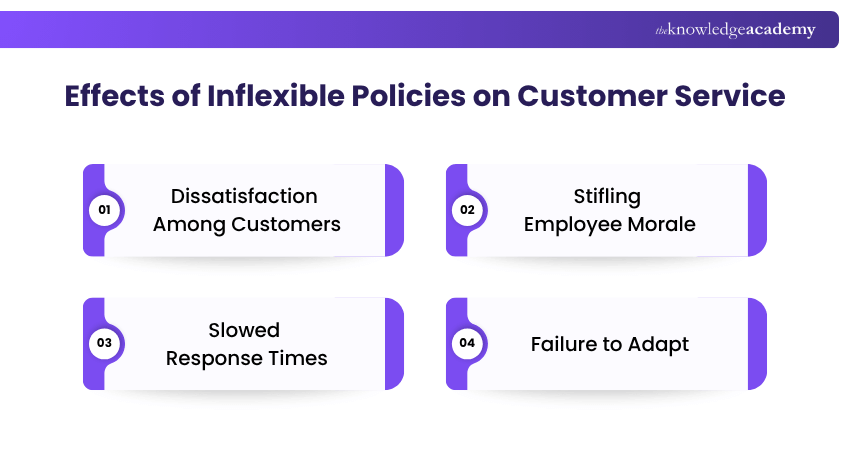
1) Dissatisfaction Among Customers: Customers, at times, may have genuine concerns that require tailored solutions. Rigidity can lead to dissatisfaction when businesses can’t cater to these specific needs. A one-size-fits-all approach may not always meet the diverse needs of all customers, leading to lost business opportunities.
2) Stifling Employee Morale: Employees often feel restricted when unable to use their judgment to make decisions. Overly strict procedures can lead to frustration, as they might feel powerless to help even when they see fit. Creativity and problem-solving skills might be suppressed, hindering the personal growth of employees.
3) Slowed Response Times: Rigid protocols can slow down decision-making processes, especially if employees constantly need approvals for actions outside the set guidelines. Delays can lead to missed opportunities and escalating customer frustrations.
4) Failure to Adapt: Markets, customer preferences, and environments evolve. Companies with inflexible policies can find it challenging to adapt, potentially reducing their competitiveness over time. Inflexibility can prevent companies from capitalising on new trends or adjusting to shifting demographics.

Shristi Roy is a Content Writer with experience in journalism, article writing and web content development. Her experience researching and writing about Business Skills and Accounting and Finance enables her to communicate specialised information through clear, engaging narratives.
View Detail

 If you wish to make any changes to your course, please


