




We may not have the course you’re looking for. If you enquire or give us a call on 01344203999 and speak to our training experts, we may still be able to help with your training requirements.
Absence Management: Understanding Employee Absence at Work
ByThe Knowledge AcademyLast updated on: 18 September 2026
Absence Management helps organisations reduce employee absenteeism by tracking, monitoring, and implementing effective workplace policies to boost productivity. It ensures fair policies, supports employee wellbeing, and reduces costs linked to absenteeism. It creates a culture where both performance and employee needs are respected.

Let's be honest. No workplace is immune to employee absence. People get sick, have personal emergencies, or simply need a break. That is completely normal. But, when absences become frequent or unplanned, they can cause major disruptions, leaving teams stretched thin and productivity taking a hit. That is when the Absence Management procedure comes in!
It is not just about tracking days off. It is about identifying patterns, understanding root causes, and putting the right procedures in place to reduce disruption while still supporting employees. In this blog, we’ll dive into what Absence Management is, explore its causes, and share practical tips to keep your workplace productive and supportive. Let’s get started!
What is Absence Management?
Absence Management is about handling employee absence in a way that minimises disruption while supporting them. It serves as a balance between ensuring that people take off when they need and making sure work doesn't grind to a halt in their absence.
It covers both planned absences, such as holidays or parental leave, and unplanned ones, like sickness or emergencies. Effective Absence Management involves implementing fair policies, identifying patterns, and addressing underlying issues that may lead to frequent absenteeism.

Types of Workplace Absence
Let’s check some of the most common types of workplace absence:
1) Planned
Planned absences are scheduled in advance, such as annual leave, holidays, parental leave, or medical appointments. They usually cause minimal disruption, allowing managers to prepare for cover and adjust workloads accordingly.
2) Unplanned
Unplanned absences occur suddenly, often due to illness, emergencies, or unexpected personal issues, and can impact productivity if it is frequent. While some situations are unavoidable, repeated unplanned absences can affect team performance and business operations.
3) AWOL
Absent Without Leave (AWOL) refers to employees missing work without notice, explanation, or approval. It is often seen as misconduct and usually requires formal action. It is also considered a serious issue, as it disrupts operations and undermines trust.
Causes of Absences at Work
Employee absences are an unavoidable part of working life. However, understanding the underlying causes helps organisations manage them better, reduce disruption, and support employee wellbeing. Here are some of those causes of workplace absenteeism:
5 Common Causes of Absence
1) Illness and Injury: Short-term sickness or workplace injuries remain the most frequent cause of absence across all industries.
2) Family and Personal Responsibilities: Employees might need time to care for children, elderly relatives, or to attend urgent personal matters.
3) Work-related Stress: Heavy workloads, tight deadlines, and workplace conflicts can trigger stress, leading to both short- and long-term absence.
4) Bereavement or Compassionate Leave: The emotional impact of losing a loved one often requires time away from work to grieve and manage personal arrangements.
5) Medical Appointments and Treatment: Routine health check-ups, specialist visits, or ongoing treatments may also lead to absence.

4 Uncommon Causes of Absence
1) Severe Weather Conditions: Extreme weather, such as snow or flooding, can prevent employees from travelling safely to work.
2) Transport Disruption: Strikes, cancellations, or unexpected delays in public transport may prevent employees from reaching the workplace.
3) Legal and Civic Duties: Jury duty, court appearances, or other civic responsibilities can require employees to take time off.
4) Unexpected Personal Circumstances: Issues such as childcare arrangements falling through or sudden domestic problems can also lead to absence.
Invest in smarter talent strategies – Join our Talent Management Course today!
Importance of Absence Management
Absence Management plays a vital role in both short-term operations and long-term workforce planning. In the short term, it helps organisations clearly understand who is absent, the reasons behind it, and expected return dates. This visibility enables timely cover arrangements, reduces disruption, maintains productivity, and controls immediate costs.
Over the long term, effective absence management supports deeper analysis of absence patterns and trends. By reviewing data consistently, organisations can identify underlying workforce issues and take proactive steps to improve employee wellbeing, engagement, and overall experience.
Early intervention is another key benefit. Structured absence processes make it easier to refer employees to support services such as Employee Assistance Programmes and Occupational Health. Addressing issues early helps prevent problems from escalating, supports staff recovery, and contributes to a healthier workplace culture that attracts and retains talent.
Absence Management also helps organisations control costs linked to absenteeism, including lost productivity, overtime payments, and temporary staffing. Additionally, it ensures compliance with legal and regulatory requirements, reducing legal risks and protecting organisational integrity.
Key benefits include:
a) Clear visibility of employee absences and return timelines
b) Improved workforce planning and operational continuity
c) Early identification of absence trends and root causes
d) Better employee wellbeing and engagement through proactive support
e) Reduced costs related to absenteeism and temporary cover
f) Compliance with employment laws and absence-related regulations
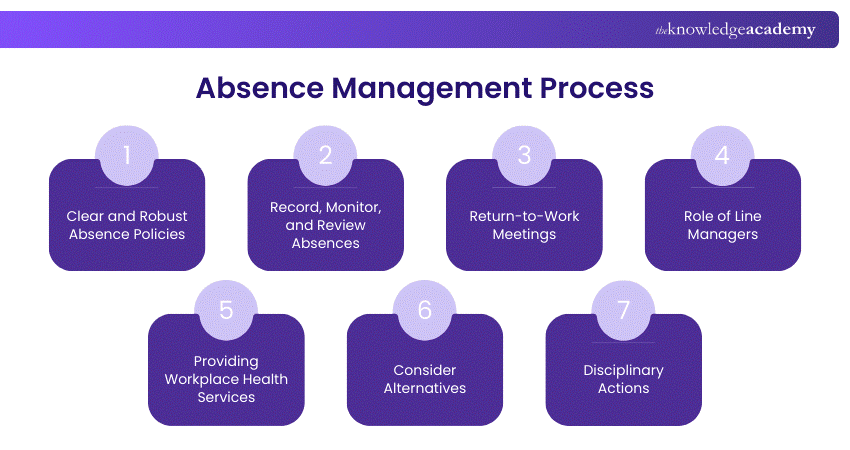
1) Clear and Robust Absence Policies
Set clear rules for reporting absences, including who to contact, how to report, and acceptable notice periods. Simple, well-communicated policies encourage employees to report absences correctly and consistently.
2) Record, Monitor, and Review Absences
Track absences systematically to understand their impact on individuals and teams. Accurate records help assess policy effectiveness, identify patterns, and support informed decision-making using HR systems and reporting tools.
3) Return-to-Work Meetings
Hold return-to-work meetings after extended absences to discuss concerns and provide support. These conversations help address underlying issues and explore adjustments that enable a smooth and sustainable return.
4) Role of Line Managers
Line managers play a key role by monitoring attendance and maintaining open communication. With proper training, they can manage absences fairly while fostering trust and early intervention.
5) Providing Workplace Health Services
Use Occupational Health services and Employee Assistance Programmes to support employees with long-term health issues. These services help employees return to work safely while ensuring reasonable adjustments are considered.
6) Consider Alternatives
Offer flexible working options such as adjusted hours, remote work, or temporary role changes where possible. These alternatives help retain skills while supporting employees during challenging periods.
7) Disciplinary Actions
If absence policies are repeatedly breached, disciplinary action may be necessary. All actions must follow fair procedures and comply with employment and equality legislation to avoid legal risks.
Tips for Developing an Absence Management Policy
An appropriate absence policy doesn't just reduce disruptions; it also makes employees feel supported and valued. Here's how to create one that works:
1) Clarify the Need for a Policy: Explain the importance of effective Absence Management, focusing on fairness, productivity, and employee wellbeing.
2) Set Clear Expectations for Employees: Outline how to report absences, whom to contact, and when to apply. It helps the process to be transparent and consistent.
3) Address All Possible Reasons for Absence: Include both planned and unplanned absences, covering everything from sickness and holidays to emergencies or legal duties.
4) Promote Consistent Employee Attendance: Encourage good attendance through positive workplace culture, looking after employees’ wellbeing, and applying rules fairly.
Transform workplace dynamics by registering for our Successful People Management and Team Leadership Course today!
How to Prevent Absenteeism?
Preventing absenteeism doesn’t always need complicated steps. Here are the two effective steps for that:
Prioritise Well-being and Engagement
Taking care of your employees early can prevent stress, burnout, and unnecessary sick days. Many employees don’t openly say stress or mental health is the reason they’re off, so absence data should be reviewed carefully. Talking to employees, asking for feedback, and offering the right support helps solve problems before they get worse.
Embrace Flexible Working Where Possible
Flexible work options such as remote work, hybrid schedules, or adjusted hours can reduce stress and lower burnout. This flexibility can cut cases of burnout, reduce stress and also improve productivity and morale.
How to use Absence Tracking Data?
Collecting data is one thing; using it effectively is another. Here's how tracking absence data can help businesses:
a) Spot Patterns: If an employee regularly takes leave on Fridays, it could indicate burnout, or just a preference for long weekends. Either way, it is worth a conversation.
b) Support Employees: If someone has frequent sick days, they might require accommodation like flexible hours or a wellness programme.
c) Plan Better Workloads: Knowing peak absence periods (e.g., school holidays) can help with resource planning.
Addressing the Causes of Absence
Identifying and tackling the root causes of absence helps reduce sickness levels and supports employee wellbeing across the organisation.
a) Provide manager training to recognise and support work-related stress
b) Introduce flexible working options to help balance personal responsibilities
c) Use mediation to resolve workplace conflicts and relationship breakdowns
Forecast staffing needs with Workforce Resource Planning Training – Join now!

The Knowledge Academy develops accessible learning content across Project Management, IT, Cybersecurity, Data Science, Business Analysis, HR, Accounting and Finance, Leadership and Health and Safety. Its resources combine subject research with clear explanations to help professionals build practical knowledge across a wide range of disciplines.
View Detail

 If you wish to make any changes to your course, please


