


 Top Rated Course

We may not have the course you’re looking for. If you enquire or give us a call on 01344203999 and speak to our training experts, we may still be able to help with your training requirements.
Benefits of DevOps: How it Improves Software Delivery
Lily Turner 29 August 2026DevOps brings development and operations together to improve software delivery through collaboration, automation, continuous feedback, and shared responsibility. Its benefits include faster releases, greater reliability, improved efficiency, and stronger security practices.
Training Outcomes Within Your Budget!
We ensure quality, budget-alignment, and timely delivery by our expert instructors.
Table of Contents
Related Courses

Key Takeaways
1. DevOps helps development and operations teams work towards shared delivery goals2. Automation can reduce repetitive manual work and support faster software releases3. Continuous testing and monitoring help teams identify problems earlier4. DevOps practices can improve software reliability, security, and operational efficiency5. Successful DevOps depends on culture and collaboration as much as tools and automation
A developer finishes a feature.
"Works on my machine."
Operations deploys it.
"Not on ours."
Now imagine both teams working with shared processes, automated pipelines, continuous feedback, and visibility throughout delivery. Problems are discovered earlier, releases become easier to coordinate, and responsibility no longer stops when code changes hands.
That shift is at the heart of DevOps.
In this blog, we explore the major Benefits of DevOps, how they improve software delivery, and why organisations use DevOps practices to connect development with operations.
What is DevOps?
DevOps combines software development (Dev) and IT operations (Ops) through practices, tools, and a collaborative culture designed to improve how software is built, tested, released, and operated.
Instead of development creating software and simply passing it to operations, DevOps encourages teams to share responsibility throughout the software lifecycle.
Automation, Continuous Integration and Continuous Delivery (CI/CD), monitoring, Infrastructure as Code (IaC), and continuous feedback are commonly associated with DevOps.

Why Should Organisations Use DevOps?
Traditional software delivery can create barriers when development, testing, security, and operations work separately. Slow handovers, manual processes, and limited visibility can make releases harder to coordinate.
DevOps aims to reduce these barriers by creating shared workflows, greater automation, faster feedback, and collective responsibility.
It can be particularly useful when organisations need to release software frequently while maintaining reliability and responding quickly to changing requirements.
The DevOps Shift
Before: Build → Hand Over → Wait → FixWith DevOps: Collaborate → Automate → Deliver → Learn → ImproveDevOps changes more than the delivery pipeline. It changes how teams work around it.
Top 10 Benefits of DevOps
DevOps can transform more than how quickly software is released. By connecting people, processes, and technology, it can improve the entire journey from writing code to running it reliably in production.
The key Benefits of DevOps include faster delivery, stronger collaboration, greater automation, earlier problem detection, improved reliability, and continuous improvement.
Here are the top 10 Benefits of DevOps and how each one contributes to better software delivery:
1) Faster Software Delivery
Automation across building, testing, and deployment can reduce manual handovers and shorten release cycles.
Smaller and more frequent changes can also make it easier for teams to deliver new functionality without waiting for large release windows.
2) Better Team Collaboration
DevOps encourages development, operations, security, and other teams to work towards shared outcomes rather than isolated departmental goals.
Shared tools, processes, and visibility can improve communication and reduce the traditional divide between teams.
3) Greater Automation
Repetitive activities such as builds, tests, deployments, and infrastructure configuration can be automated.
This reduces manual effort and gives teams more time to focus on activities requiring judgement, investigation, and improvement.
4) Earlier Problem Detection
Continuous testing, monitoring, and feedback can expose defects and operational issues earlier in the delivery lifecycle.
Finding problems sooner can make them easier to investigate and reduce the risk of discovering major issues only after release.
5) More Consistent Environments
Infrastructure as Code, configuration management, and automated deployment practices can help teams create environments more consistently.
This reduces differences between development, testing, and production environments that can otherwise cause unexpected behaviour.
The "Works on My Machine" Problem
Developer Environment: ✓ WorksTest Environment: ?Production Environment: ✕Consistent Environments:Define → Reproduce → Deploy
DevOps helps turn environment configuration from "What did we change?" into "What does the configuration say?"
6) Improved Software Reliability
Automated testing, smaller changes, monitoring, and repeatable deployment processes can reduce some of the risks associated with software releases.
Teams can also use operational feedback to identify failures and continuously improve application reliability.
7) Faster Recovery from Problems
DevOps is not about eliminating every failure. It also focuses on helping teams detect, respond to, and recover from failures efficiently.
Monitoring, automated deployment processes, version control, and rollback strategies can make recovery more systematic when something goes wrong.
Build a strong foundation in DevOps principles and practices with our DevOps Foundation Certification Course – Join now!
8) Stronger Security Integration
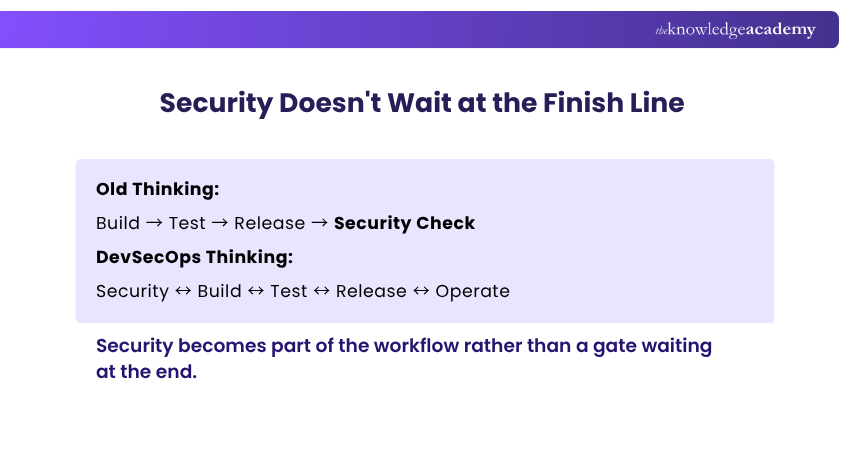
Security checks can be incorporated throughout development and delivery rather than being treated only as a final-stage activity.
Automated security testing, policy checks, dependency scanning, and controlled configurations can help teams identify risks earlier.
9) Greater Operational Efficiency
Automating repetitive processes and standardising workflows can reduce manual effort across development and operations.
Teams can spend less time repeating routine tasks and more time improving applications, resolving complex issues, and supporting business priorities.
10) Continuous Improvement
DevOps creates feedback loops between software development and real-world operation.
Performance data, incidents, customer feedback, and delivery metrics can help teams understand what happened and improve future releases.
The Real DevOps AdvantageA faster pipeline alone is not the goal.Release Faster + Learn Faster + Recover Faster + Improve FasterThe advantage comes from making the entire delivery system better over time.
Benefits of DevOps for Development and Operations Teams
DevOps brings development and operations closer together, but each team experiences the benefits differently. Development gains faster feedback and smoother delivery, while operations gain greater consistency, visibility, and control.
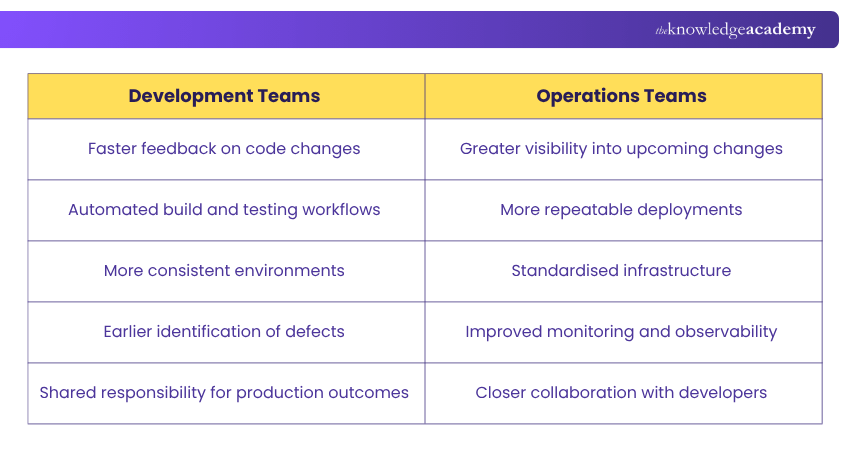
The biggest change is not that Dev becomes Ops or Ops becomes Dev. It is that both teams gain better visibility into the same delivery lifecycle.
How Can Organisations Get More Value from DevOps?
Installing DevOps tools does not automatically create a DevOps culture. Organisations need to consider the people, processes, and technology involved.
1) Start with Collaboration: Create shared goals and responsibilities across teams rather than simply introducing new tools.
2) Automate Repetitive Work: Prioritise processes where automation can reduce manual effort and improve consistency.
3) Build Feedback into Delivery: Use testing, monitoring, and operational data to identify problems and opportunities for improvement.
4) Measure Meaningful Outcomes: Track measures connected to delivery performance, reliability, and business goals rather than measuring activity alone.
5) Improve Gradually: DevOps adoption does not need to transform every process immediately. Start with clear problems, improve them, and expand successful practices.
The Handover That DisappearsDevOps replaces:"My part is done."with:"How is our software performing?"That small change in language reflects a much bigger change in responsibility.
How DevOps Benefits the Software Development Lifecycle?
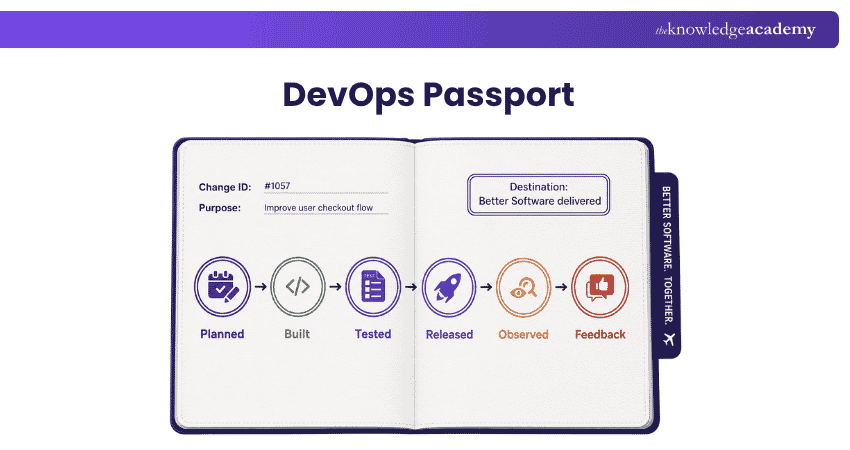
DevOps practices can support multiple stages of software delivery rather than improving only deployment.
1) Planning: Teams share requirements, priorities, and operational considerations.
2) Development: Version control and collaborative workflows help manage code changes.
3) Testing: Automated tests can provide faster feedback on software quality.
4) Release: CI/CD pipelines make builds and deployments more repeatable.
5) Operations: Monitoring provides visibility into application behaviour and performance.
6) Feedback: Production insights can inform the next development cycle.
Conclusion
The Benefits of DevOps go beyond faster software releases. It helps teams collaborate better, automate repetitive work, identify issues earlier, and deliver software with greater consistency and reliability.
DevOps is not about moving faster at any cost. It is about building, delivering, learning, and improving together.
Strengthen your Agile and DevOps expertise with our Certified Agile DevOps Professional (CADOP) Course – Register today!
Frequently Asked Questions
Does DevOps Require Coding?

Not every DevOps role requires the same level of coding, but scripting and automation skills are commonly useful. The technical knowledge required depends on the role, tools, infrastructure, and responsibilities involved.
Can Small Organisations Benefit from DevOps?
Yes. DevOps is not limited to large enterprises. Smaller teams can benefit from practices such as automated testing, CI/CD, version control, monitoring, and shared responsibility without adopting a large or complex DevOps environment.
Is DevOps the Same as Agile?
No. Agile primarily focuses on iterative software development and responding to change, while DevOps extends collaboration and automation across software delivery and operations. The two approaches can complement each other.

Lily Turner


Senior AI/ML Engineer and Data Science Author
Lily Turner is a data science professional with over 10 years of experience in artificial intelligence, machine learning, and big data analytics. Her work bridges academic research and industry innovation, with a focus on solving real-world problems using data-driven approaches. Lily’s content empowers aspiring data scientists to build practical, scalable models using the latest tools and techniques.
View Detail

 If you wish to make any changes to your course, please


