


 Top Rated Course

We may not have the course you’re looking for. If you enquire or give us a call on +44 1344 203999 and speak to our training experts, we may still be able to help with your training requirements.
What is Customer Journey Mapping? Types, Benefits and Steps
Pearl Williams 24 April 2026Customer Journey Mapping visualises client dealings to improve experiences, optimise touchpoints, and enhance retention through data-driven insights. It identifies pain points, highlights opportunities, and aligns business strategies with customer expectations to ensure seamless and impactful brand interactions across all channels.

Training Outcomes Within Your Budget!
We ensure quality, budget-alignment, and timely delivery by our expert instructors.
Table of Contents
What does your customer really experience when they interact with your brand? Customer Journey Mapping helps you find the answer. It visually tracks every step a customer takes, from first awareness to post-purchase actions. By identifying gaps, frustrations, and moments of delight, businesses can fine-tune their processes to better meet customer needs. The result is improved satisfaction, stronger loyalty, and more effective strategies that truly put the customer at the centre of every decision.
Table of Contents
1) What is a Customer Journey Map?
2) Why is Customer Journey Mapping Important?
3) Types of Customer Journey Maps
4) Five Key Steps to Customer Journey Mapping
5) Mapping the Customer Journey
6) Designing a Customer Journey Map
7) Benefits of Customer Journey Mapping
8) Customer Journey Mapping Examples
9) Conclusion
What is a Customer Journey Map?
A Customer Journey Map is a strategic visualisation that captures the complete experience a customer has with a brand. It outlines each stage of the journey, from initial discovery through consideration, purchase, and post-purchase engagement. By mapping these stages, businesses gain valuable insights into customer behaviours, motivations, and expectations.
This tool helps identify pain points, gaps, and moments of opportunity across all touchpoints. It enables teams to align their efforts, improve service delivery, and personalise interactions. With a well-designed journey map, organisations can enhance customer satisfaction, boost retention, and create a more cohesive experience that supports long-term business growth.

Why is Customer Journey Mapping Important?
Here are five key reasons why Customer Journey Mapping is essential for any customer-focused business:
a) Identifies Pain Points: Spots where customers struggle or drop off, so you can fix issues that hurt satisfaction or conversions.
b) Improves Customer Satisfaction: Helps you create smoother, more personalised experiences that meet real customer needs.
c) Aligns Internal Teams: Gets everyone on the same page by showing how customers move through the journey.
d) Optimises Touchpoints: Highlights weak or missed touchpoints that you can improve for stronger customer engagement.
e) Supports Data-Driven Decisions: Gives you clear insights to shape smarter strategies across marketing, sales, and support.
Types of Customer Journey Maps
Below are the four main types of Customer Journey Maps, each designed to serve a specific purpose in understanding and improving customer experiences:
1) Current State
The Current State shows the interaction of the customers with your brand. It highlights real-time behaviours, thoughts and pain-points across the existing touchpoints.
2) Day in the Life
This is another style of Customer Journey Maps which focuses on customer’s daily life experiences, and it covers insights related to needs, habits and lifestyle.
3) Future State
The Future State visualises the ideal customer experience for your delivery. It helps teams to plan improvements and align with your long-term experience.
4) Service Blueprint
Service Blueprint connects frontstage which faces the customer and the backstage which involves the employees to provide better service delivery.
Five Key Steps to Customer Journey Mapping
To create a meaningful and actionable Customer Journey Map, follow these five essential steps that guide you from defining the scope to applying insights for continuous improvement:
1) Scope
a) Define the objective of the journey map
b) Choose the customer persona or segment to focus on
c) Select the specific journey stage (e.g. purchase, onboarding)
d) Determine which touchpoints and channels to include
e) Align stakeholders on the purpose and expected outcomes
2) Map
a) List all customer actions from start to finish
b) Identify relevant touchpoints across platforms
c) Note customer thoughts, emotions, and goals at each step
d) Include internal processes supporting the journey
e) Visualise the journey in a clear, linear format
3) Measure Experience
a) Gather feedback from customers at key stages
b) Use metrics like satisfaction scores or drop-off rates
c) Highlight emotional highs and lows in the journey
d) Identify where expectations are met or missed
e) Spot moments that create frustration or delight
4) Identify Solutions
a) Pinpoint root causes of pain points
b) Brainstorm quick fixes and long-term improvements
c) Prioritise solutions based on impact and feasibility
d) Consult cross-functional teams for input
e) Map changes to specific journey stages
5) Apply Insights
a) Share findings across relevant departments
b) Adjust processes, content, or tools as needed
c) Test changes through pilot initiatives or A/B testing
d) Monitor impact using updated metrics
e) Iterate regularly to keep the journey map relevant
Turn clicks into customers, get Pay Per Click (PPC) Training from the experts – Join now!
Mapping the Customer Journey
Understanding the customer journey means tracking how people engage, decide, and respond at every step. These elements help uncover what truly shapes their experience:
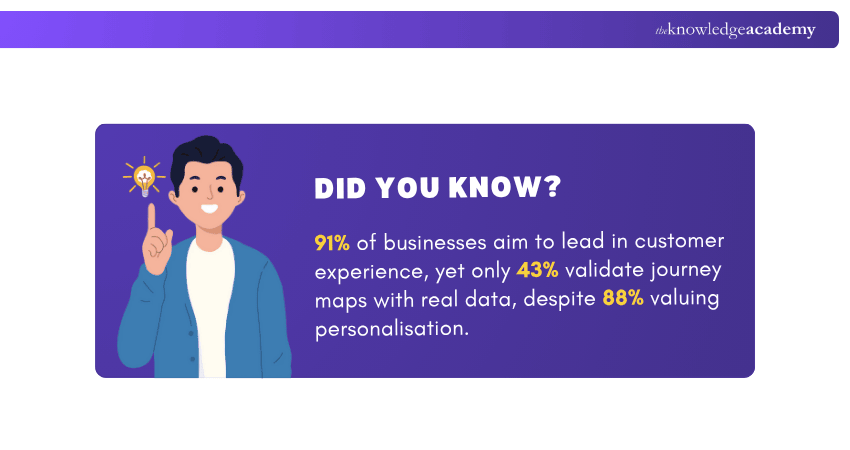
1) Customer Response
Monitor Customer Reactions and emotions throughout the journey. It reveals the key pain points, success moments and areas to be improved.
2) Key Touchpoints
It identifies the interactions of customers with your brand, such as websites, emails, e-commerce and customer service.
3) Decision-making Moments
Identifies critical points where customers make better choices in researching, comparing or committing to a purchase.
4) Applying Insights to Real-world Experiences
It translates your progress in action and allows to use these insights to improve processes, personalise communication and boost satisfaction.
Designing a Customer Journey Map
To design an effective customer journey map, start with the right foundation, a clear persona, meaningful metrics, and a structured layout based on real customer interactions:
1) Building a Customer Persona
You can't build an effective Customer Journey Map without knowing who it's for! That’s why creating a detailed customer persona is essential. It should be based on real data and reflect your target audience’s goals, behaviours, challenges, and preferences. A well-defined persona helps ground your map in reality and ensures it captures genuine customer experiences.
2) Determining Key Metrics
You need to measure the customer journey to manage it effectively. Set clear metrics at each stage to evaluate performance and track progress. Use data like conversion rates, bounce rates, satisfaction scores, or retention levels. Focus on metrics that reflect real customer behaviour. Avoid surface-level numbers and prioritise those that lead to meaningful improvements.
3) Structuring with Touchpoints and Journey Stages
Break your journey map into clear stages like awareness, consideration, purchase, and post-purchase. Add specific touchpoints for each stage, such as a website visit, a support call, or an email. Include what the customer does, thinks, and feels during each interaction. This structure makes the journey easy to analyse and help teams.
Want to go from visitor to value? Harness the power of Google Analytics Course to pull in real results.
Benefits of Customer Journey Mapping
Here are five key benefits that show how Customer Journey Mapping improves targeting, service, retention, and internal collaboration across your organisation:
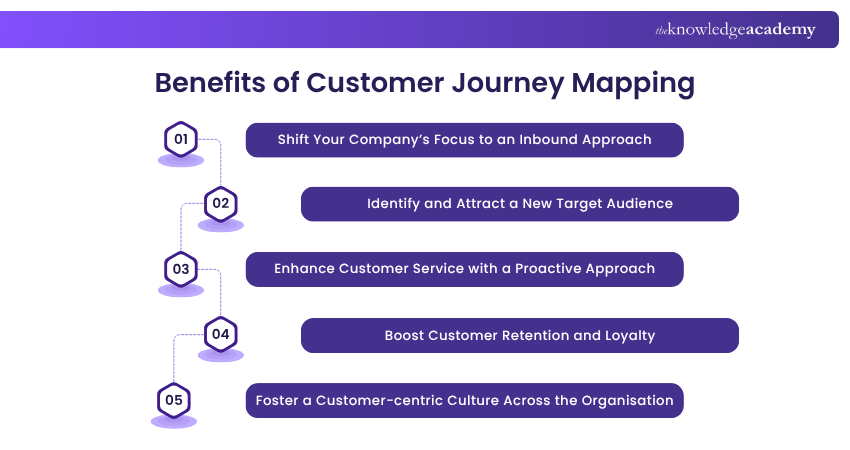
1) Shift Your Company’s Focus to an Inbound Approach
1) Understand what customers truly need at each stag
2) Deliver helpful content rather than sales-driven messaging
3) Build trust by offering value at the right time
2) Identify and Attract a New Target Audience
1) Discover untapped segments through journey analysis
2) Adjust messaging to appeal to new customer groups
3) Expand reach without overhauling your entire strategy
3) Enhance Customer Service with a Proactive Approach
1) Spot common issues before they escalate
2) Improve onboarding and support processes
3) Use insights to deliver faster, more helpful service
4) Boost Customer Retention and Loyalty
1) Identify where and why customers drop off
2) Strengthen touchpoints that encourage repeat business
3) Create positive post-purchase experiences to build trust
5) Foster a Customer-centric Culture Across the Organisation
1) Align teams around shared customer insights
2) Break down silos through cross-functional collaboration
3) Encourage every department to improve customer experience
Customer Journey Mapping Examples
Explore these real-world examples to see how Customer Journey Mapping is applied across different industries, from ecommerce and B2B to retail and future-state planning:
1) HubSpot’s Customer Journey Map Templates
HubSpot offers easy-to-use templates that guide users through mapping goals, emotions, and touchpoints. They're ideal for beginners looking to get started quickly with a structured approach.
2) B2B Customer Journey Map Example
B2B maps typically cover longer sales cycles with multiple decision-makers. They help track key interactions from first contact to post-sale engagement and ongoing support.
3) Ecommerce Customer Journey Map Example
Ecommerce journey maps focus on areas like product search, checkout, and delivery. They help identify drop-off points and opportunities for personalisation and smoother transactions.
4) Future B2C Customer Journey Map Example
This type of map envisions an ideal customer experience to work toward. It supports planning for new features, better service, or more seamless digital touchpoints.
5) Retail Customer Journey Map Example
Retail journey maps combine online and in-store experiences. They help brands understand handoffs, remove friction, and deliver a consistent Branding and customer experience across channels.
Conclusion
Customer Journey Mapping is a powerful tool for understanding and improving the customer experience. By visualising touchpoints, emotions, and decision-making moments, businesses can uncover valuable insights, refine strategies, and drive long-term loyalty. Whether you're enhancing service, aligning teams, or planning future growth, journey mapping helps you stay customer-focused and competitive in a fast-evolving landscape.
Turn ambition into action—Join our Digital Marketing Course made for rising professionals!
Frequently Asked Questions
What Are The 5 A's Used for Building a Customer Journey Map?

The 5 A’s:
a) Awareness
b) Appeal
c) Ask
d) Act
e) Advocacy
They help marketers understand how consumers discover, consider, engage with and promote a brand, supporting a structured mapping process.
What is a CX Strategy?
A Customer Experience (CX) strategy is a business-wide plan to improve every customer interaction. It focuses on aligning people, processes, and technology to deliver consistent, valuable, and memorable experiences across all touchpoints.
What are the Other Resources and Offers Provided by The Knowledge Academy?
The Knowledge Academy takes global learning to new heights, offering over 3,000+ online courses across 490+ locations in 190+ countries. This expansive reach ensures accessibility and convenience for learners worldwide.
Alongside our diverse Online Course Catalogue, encompassing 17 major categories, we go the extra mile by providing a plethora of free educational Online Resources like Blogs, eBooks, Interview Questions and Videos. Tailoring learning experiences further, professionals can unlock greater value through a wide range of special discounts, seasonal deals, and Exclusive Offers.
What is The Knowledge Pass, and How Does it Work?
The Knowledge Academy’s Knowledge Pass, a prepaid voucher, adds another layer of flexibility, allowing course bookings over a 12-month period. Join us on a journey where education knows no bounds.
What are the Related Courses and Blogs Provided by The Knowledge Academy?
The Knowledge Academy offers various Digital Marketing Courses, including Digital Marketing Course, SEO Course, and Search Engine Marketing (SEM) Training. These courses cater to different skill levels, providing comprehensive insights into Customer Engagement.
Our Digital Marketing Blogs cover a range of topics related to Customer Journey Mapping, offering valuable resources, best practices, and industry insights. Whether you are a beginner or looking to advance your Digital Marketing skills, The Knowledge Academy's diverse courses and informative blogs have got you covered.
Upcoming Digital Marketing Resources Batches & Dates
Date
 Customer Insight Training
Customer Insight Training
Fri 3rd Jul 2026
Customer Insight Training
Fri 6th Nov 2026

 If you wish to make any changes to your course, please


