




Brisbane is the capital city of the Australian state – Queensland and is situated around 450 miles north from Sydney and around 590 miles north-east of Canberra. It has one of the highest populations in Australia of 2.3 million just in the metropolitan area, with the urban conurbation reaching a population of more than 3.4 million people. Queensland is situated in the north-east of the country. As of 2010 Brisbane was named one of the top ten most beautiful cities in the world largely because of its modern architecture, luxurious green spaces and the enormous Brisbane River. Brisbane is known internationally for holding the final Goodwill Games in 2001 as well as hosting the 2014 G20 Brisbane summit and the 2003 Rugby World Cup. Brisbane has experienced consistent economic growth and is regarded as one of the major business hubs of Australia. Biotechnology and research facilities are important to the growth of the economy and the government have invested in several universities in Brisbane. Tourism makes up an important part of the Brisbane economy and is the third most popular destination to visit after Sydney and Melbourne. Brisbane is known for having the world’s first koala sanctuary which opened in 1927. Brisbane has many universities and colleges including the University of Queensland which is a public research university and the oldest university in the state of Queensland. It is also a Sandstone university and is consistently within the top 1% worldwide. Other universities include Griffith University and the Queensland University of Technology. There are also a number of universities that provide a range of vocational courses such as the Brisbane North Institute of TAFE. Brisbane is also known for a variety of independent tertiary providers such as the Australian College of Natural Medicine. There are a range of privately run Roman Catholic, Lutheran, and other Christian schools.
R Programming Course in Brisbane
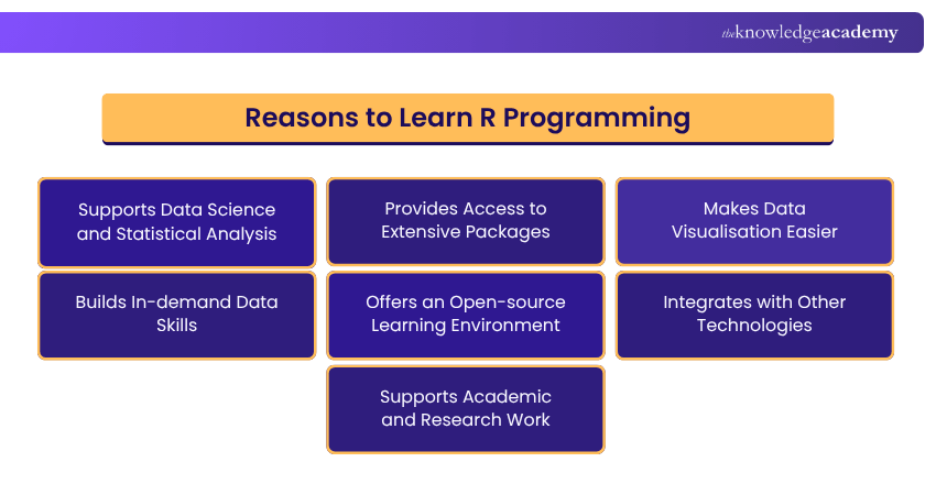
Build strong data analysis foundations with the R Programming Course in Brisbane. Learn R syntax, data types, variables, control flow, functions, and core data structures. Gain hands-on skills in data handling, statistical analysis, regression techniques, and data visualisation to analyse and present insights effectively.
- Learn advanced data analysis and statistical techniques using R
- Understand how to visualise data effectively with R's powerful libraries
- Gain practical skills for data manipulation with this R Programming Course


 If you miss out, enquire to get yourself on the waiting list for the next day!













 If you wish to make any changes to your course, please


