


 Top Rated Course

We may not have the course you’re looking for. If you enquire or give us a call on +32 35001305 and speak to our training experts, we may still be able to help with your training requirements.
What is an Agile Practitioner and its Benefits
David Evans 04 May 2026Become a Certified Agile Practitioner with Expert Guidance. Accelerate Your Career and Master Agile Methodologies, and Join Our Comprehensive Training Program Today for Success in Agile Project Management.

Training Outcomes Within Your Budget!
We ensure quality, budget-alignment, and timely delivery by our expert instructors.
Table of Contents

Projects are an organisation's heart and soul, and using the right Project Management approach is critical for its success. Many companies struggle to adapt to new changes. An Agile Certified Practitioner (ACP) can help your organisation transition quickly to Agile methodologies. An Agile Certified Practitioner's primary purpose is to ensure that their organisation completely transitions to and adopts Agile methodologies.
According to PMI, the companies that are Agile and adjust quickly to changes are 75 per cent more efficient than those that don't. So, transitioning to Agile methodologies can improve your organisation's performance. In this blog, you will learn who Agile Practitioners are, their roles and responsibilities and how to become a PMI Agile Certified Practitioner. Read the blog to understand what is an Agile Certified Practitioner.
Table of Contents
1) Who is an Agile Certified Practitioner?
2) How to Become an Agile Certified Practitioner?
3) What is PMI-ACP Certification?
4) Benefits of PMI-ACP Certification
5) Conclusion
Who is an Agile Certified Practitioner?
Agile Certified Practitioners are people who have a high level of proficiency in Agile methodologies. Like their name, they are Agile in adopting new techniques and processes. They can quickly adapt to new changes. They typically use the techniques and principles specified in the Agile manifesto. Plus, they possess profound knowledge of the following frameworks:
a) Extreme Programming
b) Lean
c) Kanban
d) Test-Driven Development
e) Scrum
An Agile Certification helps accumulate diverse skill sets that an Agile Certified Practitioner can implement on various demanding projects. The primary goal of Agile is not to follow one approach for the entire project but to choose one that best suits the needs. So that's where learning multiple approaches comes in handy.
Roles and Responsibilities of Agile Practitioner
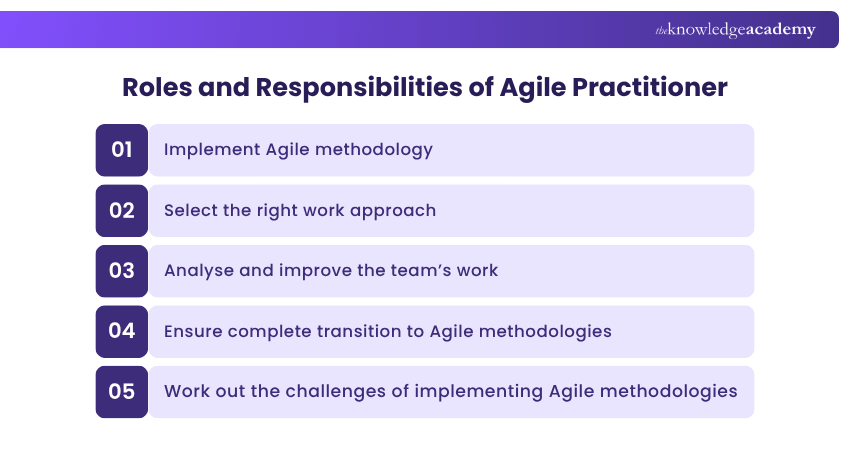
In this section, you will learn about ACPs' roles and responsibilities. Agile Practitioners support their teams in adopting the most suitable Types of Agile Methodology and assist in implementing Agile practices across the organisation. They play a vital role in determining which Agile processes are best suited for their organisation. Moreover, they also assess their team's current work approach and identify areas for improvement.
An Agile Practitioner's primary purpose is to ensure that their organisation completely transitions to and adopts Agile Methodologies. They also examine the challenges of implementing the framework and its benefits.
An Agile Practitioner stays calm and composed even under challenging circumstances and always looks for ways to improve their work. Most importantly, they are not egotistical and welcome fair and constructive criticism, so they can efficiently work with any team. Hence, they are perfectly capable of handling unexpected and challenging situations.
Learn to manage Agile projects with structure, speed, and stakeholder collaboration with the AgilePM® Foundation & Practitioner (AgilePM® V3) Training – Join now!
How to Become an Agile Certified Practitioner?
An Agile Practitioner should understand all the subjects of Agile Project Management and constantly monitor the latest trends. Moreover, they should be open to new techniques and willing to learn new things.
If you want an Agile Certification, you can take an online course. Many training courses are available, and you just need to choose one that PMI accredits. Once you have done that, you must prepare and pass the PMI ACP examination. Before applying for the exam, you need to ensure you possess all the relevant qualifications.
Prerequisites to Become an Agile Practitioner
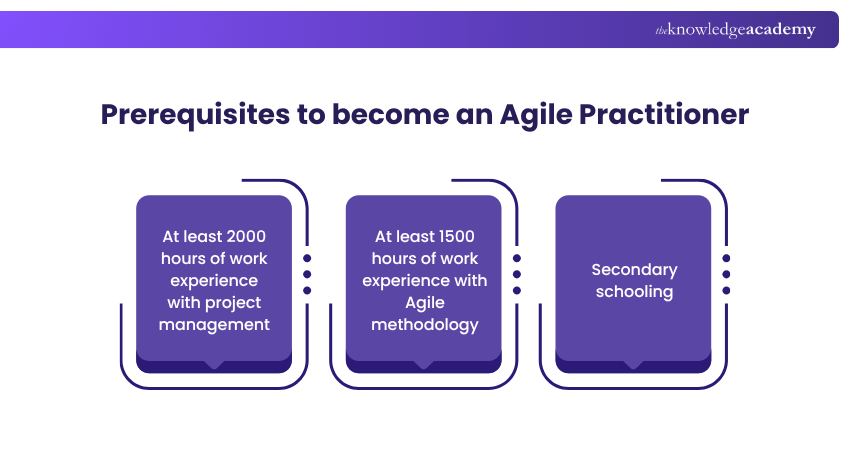
In this section, you will learn the basic requirements to become an Agile Practitioner. So, if you want to become a Certified Practitioner, ensure you have at least 2000 hours of work experience with project teams in the last five years. In the last three years, you must also have Agile project experience of at least 1500 hours of work with Agile methodologies or Agile project teams. In terms of educational qualifications, you must have completed secondary School or other equivalent qualifications.
Elevate your Agile interview game! Discover challenging Agile Interview Questions designed to showcase your skills and expertise.
What is PMI-ACP Certification?
The Project Management Institute (PMI) offers the PMI-ACP (Agile Certified Practitioner) Certification, which holds global recognition and acceptance. This certification encompasses various Agile principles, tools, and methodologies, including Kanban, Scrum, Lean, Extreme Programming (XP), and Test-Driven Development (TDD). As part of the PMI ACP Certification Requirements, candidates must meet specific criteria to earn this certification. The PMI-Agile Certified Practitioner Certification equips Agile Practitioners with a diverse skill set, enabling them to apply their expertise across different projects.
Agile methodology focuses on delivering the product in smaller, incremental sprints rather than making customers wait until the entire project is complete. Customer satisfaction is paramount in Agile, with initial prototypes shared to gather early feedback. This iterative process allows corrections and ensures that the final product meets customer expectations. By involving customers early on, they gain visibility into the product's appearance and receive prioritised deliverables, such as the Minimum Viable Product, leading to increased satisfaction.
Gain practical tools to manage time, cost, and risk effectively in Agile projects with the Agile Project Management Foundation (AgilePM® V3) Training – Join now!
Benefits of PMI-ACP Certification
Acquiring a PMI-Agile Certified Practitioner Certification comes with various advantages. One notable benefit is the high demand for Agile professionals, reflecting the prevalent use of Agile Software Development methods in organisations. This certification positions candidates as effective and trained Agile Practitioners, allowing them to stand out in a competitive job market.
Moreover, the PMI-ACP Certification is globally recognised, enabling Certified individuals to apply their skills across different industries and organisations worldwide. Beyond enhancing career prospects, the certification validates one's knowledge and professionalism in Agile practices, tools, techniques, and methodologies, contributing to overall professional growth. Additionally, a PMI-ACP certificate is associated with better salary prospects, with Certified professionals often earning higher salaries than their non-certified counterparts.
PMI Agile Certified Practitioner Salary and Jobs
Professionals with Agile Certified Practitioner Certification can choose from various job roles, such as PMP Scrum Master, Project Manager, Agile Trainer, Technical Business Analyst, Deputy Project Manager, Business Analyst, Agile Project Manager, and Digital Channel Planner. It's important to note that salary structures may vary across different countries.
Exploring Salary Structures by Job Roles
Let's examine the salary expectations of various job roles in multiple countries.
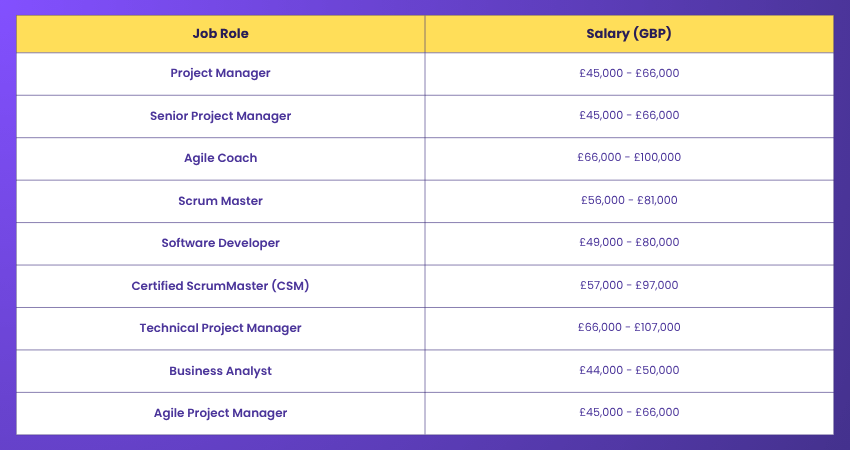
Source: Glassdoor
Show you’re the perfect candidate by preparing for the top Software developer interview questions. Start practicing today!
Conclusion
We hope you understand What an Agile Certified Practitioner is and how to become one by reading this blog. You would have also learned the skills and tools necessary to become a successful ACP. Moreover, you would also have learned some practical tips on how to build your business and get clients.
Lead Agile projects with confidence and proven delivery techniques with the Agile Project Management Practitioner (AgilePM® V3) Training – Register today!
Frequently Asked Questions
What are the Four Values of Agile?

The four pillars of Agile, defined by the Agile Manifesto, guide flexible and value-driven work. They emphasise individuals and interactions over processes, working solutions over documentation, customer collaboration over contracts, and responding to change over rigid plans.
What is the Difference Between Agile Practitioner and Scrum Master?
An Agile Practitioner is a broad role covering multiple Agile methods like Kanban, XP, and Scrum, applying them across projects. In contrast, a Scrum Master is a specialised role focused only on the Scrum framework, guiding teams, removing blockers, and ensuring smooth sprint execution.
What are the Other Resources and Offers Provided by The Knowledge Academy?
The Knowledge Academy takes global learning to new heights, offering over 3,000+ online courses across 490+ locations in 190+ countries. This expansive reach ensures accessibility and convenience for learners worldwide.
Alongside our diverse Online Course Catalogue, encompassing 17 major categories, we go the extra mile by providing a plethora of free educational Online Resources like Blogs, eBooks, Interview Questions and Videos. Tailoring learning experiences further, professionals can unlock greater value through a wide range of special discounts, seasonal deals, and Exclusive Offers.
What is The Knowledge Pass, and How Does it Work?
The Knowledge Academy’s Knowledge Pass, a prepaid voucher, adds another layer of flexibility, allowing course bookings over a 12-month period. Join us on a journey where education knows no bounds.
What are Related Courses and Blogs Provided by The Knowledge Academy?
The Knowledge Academy offers various Agile Courses, including the Certified SAFe® for Teams Training, SAFe® DevOps Training, and SAFe® for Architects Training. These courses cater to different skill levels, providing comprehensive insights into Engineering Change Management.
Our Project Management Blogs cover a range of topics related to Agile Practitioner, offering valuable resources, best practices, and industry insights. Whether you are a beginner or looking to advance your Project Management skills, The Knowledge Academy's diverse courses and informative blogs have got you covered.

David Evans


Certified Project Trainer and Agile Delivery Expert
David Evans brings over a decade of hands-on experience in project delivery, Agile transformation, and team leadership. With a background in technology and business consulting, David has led cross-functional teams through Agile and Waterfall projects in both public and private sectors. He combines technical knowledge with practical insights to help readers navigate the challenges of modern project environments.

Upcoming Project Management Resources Batches & Dates
Date
 PMI-ACP® Certification Training
PMI-ACP® Certification Training
Mon 20th Jul 2026
PMI-ACP® Certification Training
Mon 14th Sep 2026
PMI-ACP® Certification Training
Mon 16th Nov 2026

 If you wish to make any changes to your course, please


