


We may not have the course you’re looking for. If you enquire or give us a call on +61 272026926 and speak to our training experts, we may still be able to help with your training requirements.
Importance of Project Planning: An Overview
ByVishnu SankarLast updated on: 13 October 2026
Discover the importance of project planning and how it helps teams manage time, resources, budgets and risks effectively. This blog explores essential components and practical tools and techniques in creating an effective project plan. Read on to learn more!

Quick Overview
1. Project planning helps teams minimise uncertainty, manage resources and stay aligned with project goals.2. A project plan brings together essential elements such as scope, objectives, schedules, budgets and risk management.3. Effective planning supports stakeholder coordination, quality management and project performance.4. Tools such as Gantt charts, project management software and reporting dashboards help organise and monitor project activities.5. Creating an effective project plan involves defining objectives, breaking down work, allocating resources and establishing monitoring measures.
One missed deadline. Three delayed tasks. Five frustrated team members. And suddenly, an entire project is falling behind schedule.
That's the domino effect of poor planning.
Projects involve interconnected activities, where one small delay can affect everything that follows. A well-defined project plan helps teams understand these dependencies, prepare for risks and keep work moving in the right direction. This blog explores the importance of project planning and how it supports successful project delivery. So, read on!
Importance of Project Planning
Project planning is the foundation of effective project management, and its importance cannot be overstated in today's dynamic and competitive business landscape. By understanding and following the project planning steps, you can create an essential blueprint that lays the foundation for a project’s success. Let's check why project planning matters:
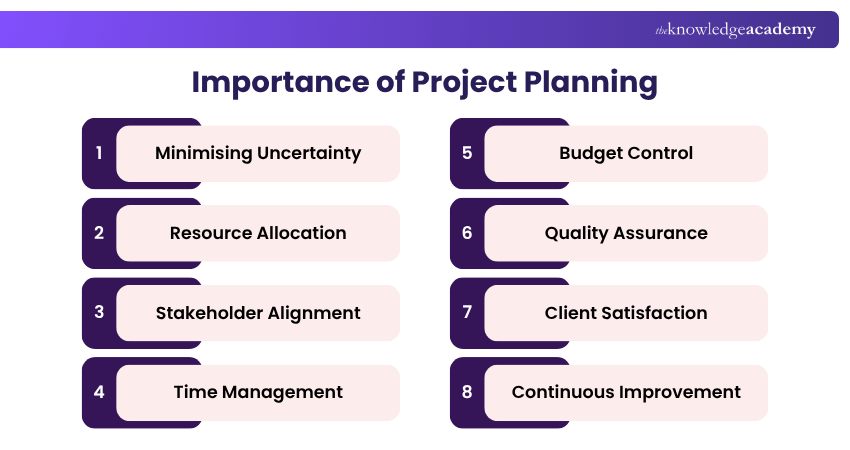
1) Minimising Uncertainty
Project planning allows teams to identify potential risks, uncertainties, and challenges early in the process. By conducting a risk assessment, Project Managers can develop mitigation strategies and contingency plans, reducing the likelihood of unexpected setbacks during project execution.

2) Resource Allocation
A well-structured project plan helps allocate resources efficiently. It helps teams allocate personnel, budgets and materials according to project priorities and requirements. Effective resource allocation prevents overburdening team members and minimises wastage, ultimately leading to cost savings.
3) Stakeholder Alignment
Clear project planning documents, including scope statements, objectives, and timelines, align stakeholders' expectations. This alignment fosters collaboration, reduces misunderstandings, and minimises conflicts among project participants. When everyone understands the project's direction, it's easier to work together toward a common goal.
4) Time Management
Project planning establishes realistic timelines and deadlines for each project phase and task. This helps teams prioritise their activities, set milestones, and monitor progress. Effective time management helps projects stay on track and reduces the risk of delays that could affect delivery dates.
5) Budget Control
A well-defined project plan includes cost estimates and an approved budget, providing a financial roadmap for allocating funds to project activities. By closely monitoring budget expenditures throughout the project's life cycle, organisations can control costs and prevent budget overruns.
6) Quality Assurance
Project planning involves defining quality requirements, standards and measures for evaluating project deliverables. By establishing these expectations early, teams can reduce the risk of quality issues, minimise rework and support better project outcomes.
7) Client Satisfaction
Effective project planning can contribute to successful project outcomes by helping teams manage scope, schedules, resources, risks and stakeholder expectations. When project outcomes meet client requirements and expectations, organisations may also strengthen client relationships and increase opportunities for repeat business.
8) Continuous Improvement
Post-project evaluations often reveal areas where improvements can be made. A structured project plan includes mechanisms for monitoring and evaluating project performance. These insights can inform future projects, enabling organisations to refine their processes and obtain better results.
Key Components of Project Planning
Project planning is a systematic approach that involves different key components, each playing an important role in ensuring the success of a project. These components collectively form the blueprint for project execution, guiding the project team from initiation to completion.
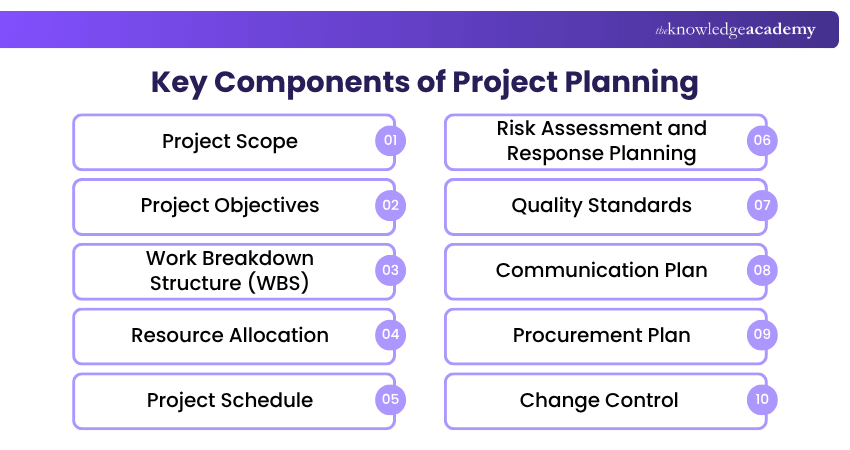
1) Project Scope
Defining the project scope is a key part of project planning. It involves clarifying what the project will accomplish, its boundaries, and what it will not include. MoSCoW Analysis can help prioritise requirements based on their importance, supporting clearer scope decisions and reducing the risk of uncontrolled scope changes.
2) Project Objectives
Project planning sets clear, Specific, Measurable, Achievable, Relevant, and Time-bound (SMART) objectives. These objectives serve as the project's goals and help align efforts toward a common purpose.
3) Work Breakdown Structure (WBS)
The WBS is a deliverable-oriented hierarchical decomposition of the project's total scope into smaller, manageable components. It helps organise and define the work required to achieve the project's objectives and deliverables.
4) Resource Allocation
Project planning involves identifying and allocating the necessary resources, including human resources, budgets, materials, and equipment. Efficient resource allocation ensures that the project has the required support to achieve its goals.
5) Project Schedule
Creating a timeline or project schedule is critical. This component outlines the sequence of tasks, their dependencies, and deadlines. Project Managers often use tools like Gantt charts to visualise and manage schedules effectively.
6) Risk Assessment and Response Planning
Identifying potential risks and uncertainties is essential. Project planning includes assessing potential risks, their likelihood and impact. Appropriate risk responses are then planned to address threats and opportunities, with contingency measures developed where necessary.
7) Quality Standards
Establishing and documenting quality standards helps teams evaluate whether project deliverables meet the required level of quality. Quality planning outlines the criteria and metrics for measuring quality throughout the project.
8) Communication Plan
Effective communication is vital for project success. A communication plan defines how project information will be disseminated, who the stakeholders are, and what channels and frequency will be used for communication.
9) Procurement Plan
In projects involving external suppliers or vendors, a procurement plan is developed. It outlines the procurement strategy, selection criteria for vendors, and the procurement process.
10) Change Control
Project planning includes provisions for controlling changes to the project. It defines how proposed changes to project scope, objectives, requirements, schedules or other baselines will be documented, assessed, approved or rejected, and implemented where appropriate.
11) Cost Estimate and Budget
Project planning includes the estimation of project costs and the creation of a detailed budget. This budget serves as a financial roadmap for the project, guiding financial decisions throughout the project lifecycle.
12) Stakeholder Analysis
Identifying and analysing stakeholders is crucial for managing expectations and addressing their concerns. A stakeholder analysis helps in tailoring communication and engagement strategies for different stakeholder groups.
Identify and implement actions for stakeholders by signing up for our Creating Effective Stakeholder Engagement Training now!
13) Legal and Regulatory Considerations
Depending on the project's nature and location, there may be legal and regulatory requirements that need to be considered during planning. Compliance with these requirements is essential to avoid legal issues.
14) Monitoring and Evaluation
Project planning should define how performance will be monitored against agreed objectives, milestones, schedules, budgets and other relevant measures. This helps teams identify deviations and take corrective action when required.
Quick Check: Is Your Project Plan Ready?
Before moving forward, check whether you can answer:
□ Are the objectives and scope clearly defined?□ Are deliverables and responsibilities understood?□ Are timelines and dependencies realistic?□ Have resources and costs been estimated?□ Have key risks and responses been identified?□ Is there a process for monitoring progress and managing changes?
Tools and Techniques for Effective Project Planning
Effective project planning is crucial for business success, and having the right tools can enhance the process. Here are key tools and techniques that can support effective project planning:
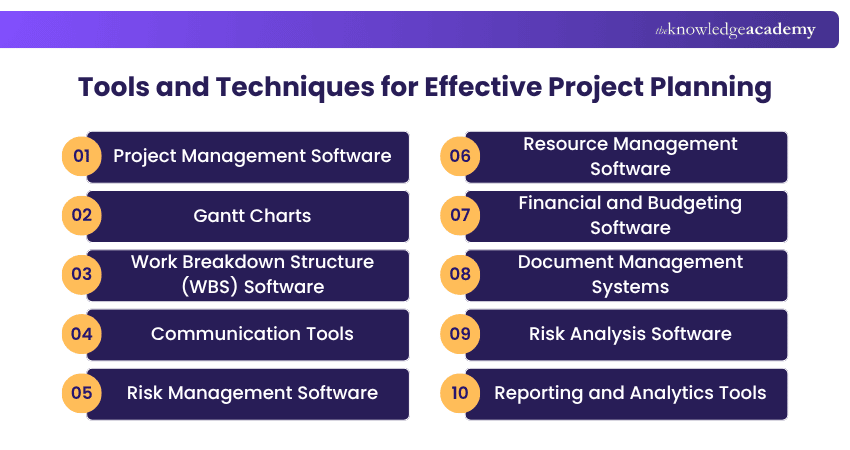
a) Project Management Software: This is the cornerstone of project planning. Tools like Microsoft Project, Asana, Trello, or Jira help teams create project schedules, track progress, manage tasks, and collaborate efficiently. They provide a centralised platform for team communication and task management.
b) Gantt Charts: Gantt charts are visual tools that display project tasks and their timelines in a bar chart format. They help Project Managers and teams visualise task dependencies and the overall project management timeline, aiding in efficient scheduling and resource allocation.
c) Work Breakdown Structure (WBS) Software: WBS software helps create and organise a hierarchical breakdown of the project's total scope into deliverables and manageable components.
d) Communication Tools: Collaboration and communication tools like Slack, Microsoft Teams, or Basecamp facilitate real-time communication among project team members. They enable document sharing, instant messaging, and video conferencing, enhancing team collaboration regardless of location.
e) Risk Management Software: Tools such as risk register software help in identifying, assessing, and managing project risks. They assist in developing mitigation strategies and contingency plans to minimise the impact of potential issues.
f) Resource Management Software: These tools assist in allocating and managing project resources efficiently. They provide insights into resource availability, workload, and allocation, preventing overallocation and ensuring optimal resource utilisation.
g) Financial and Budgeting Software: Financial tools help in creating project budgets, tracking expenses, and managing financial resources. They allow for accurate cost estimation and control throughout the project.
h) Document Management Systems: Systems like SharePoint or Google Workspace facilitate document storage, version control, and collaborative editing, ensuring that project documentation is organised and accessible to all team members.
i) Risk Analysis Software: For complex projects, specialised risk analysis software can help in modelling and simulating various scenarios to assess potential risks and their impact on the project.
j) Reporting and Analytics Tools: Reporting tools like Tableau or Power BI enable Project Managers to create and share performance dashboards and reports. These tools provide insights into project progress, KPIs, and areas requiring attention.
k) Time Tracking Software: Time tracking tools help in monitoring the time spent on project tasks and activities. This data is valuable for assessing productivity, estimating future projects, and managing billable hours for client projects.
l) Integration Platforms: Integration tools like Zapier or Make (formerly Integromat) can connect various software applications, automating data transfer and reducing manual data entry between different project management tools.
Trainer’s Pro Tip
Choose tools based on project needs, team size and complexity. A simple project may need only basic scheduling and collaboration tools, while complex projects may require dedicated resource, risk and reporting capabilities.
Steps You Can Take to Create an Effective Project Plan
Creating an effective project plan is vital for achieving project success. Here are five key steps to guide you through the process:
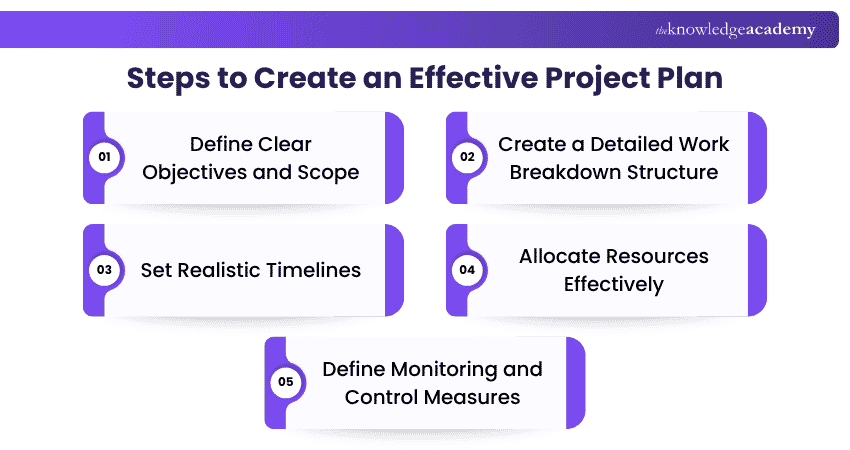
a) Define Clear Objectives and Scope: Clearly define the project's objectives, scope and deliverables, including what the project will and will not cover.
b) Create a Detailed Work Breakdown Structure: Develop a deliverable-oriented hierarchical breakdown of the project's total scope into smaller, manageable components using a Work Breakdown Structure (WBS).
c) Set Realistic Timelines: Establish a project schedule with clear timelines for each task and milestone. Use tools like Gantt charts to visualise dependencies and critical paths. Ensure that your timelines are achievable and consider potential constraints.
d) Allocate Resources Effectively: Identify the resources required for each task, including personnel, budgets, materials, and equipment. Efficient resource allocation prevents overburdening teams and helps maintain cost control.
e) Define Monitoring and Control Measures: Establish how project progress will be measured against the plan, including relevant milestones, schedules, budgets and performance measures. Define how deviations, risks and changes will be identified and addressed throughout the project.
Keep This in Mind
A project plan should guide decisions, not simply document them. Keep it realistic, review it as conditions change and use it to align scope, resources, risks, timelines and stakeholders throughout the project.
Understand different approaches used for the duration estimation of the project with the Project Planning and Control™ (PPC) Foundation and Practitioner Training – Join now!

Vishnu Sankar is a Senior Content Writer with 5+ years of experience across content development, software development, web development and system administration. His technical background and professional training support his expertise in IT and Tech, while his extensive research and writing experience covers Project Management and Health and Safety.
View Detail

 If you wish to make any changes to your course, please


