


 Top Rated Course

We may not have the course you’re looking for. If you enquire or give us a call on +61 272026926 and speak to our training experts, we may still be able to help with your training requirements.
GDPR Compliance: GDPR Meaning & Regulations
John Davies 11 December 2025GDPR Compliance refers to adhering to the General Data Protection Regulation, a European Union law that protects the personal data of individuals within the EU. It requires organisations to manage data lawfully, safeguard privacy, enhance transparency, and respect individual rights across all processing activities.

Training Outcomes Within Your Budget!
We ensure quality, budget-alignment, and timely delivery by our expert instructors.
Table of Contents

Every organisation that deals with personal data must comprehend the meaning of GDPR and its rules. Following GDPR Compliance leads to the safeguarding of customer data, the lowering of risks, and the earning of trust that lasts. In this blog, you will learn about the main ideas, conditions, and the effective adoption of standards through the application of practical measures.
Table of Contents
1) What is the General Data Protection Regulation (GDPR)?
2) What Does GDPR Compliance Mean?
3) Benefits of GDPR Compliance
4) Who Does the GDPR Apply to?
5) GDPR Compliance Checklist
6) Important Things to Know About GDPR Compliance
7) What is the Full Meaning of GDPR?
8) What is GDPR in AML?
9) Conclusion
What is the General Data Protection Regulation (GDPR)?
The General Data Protection Regulation (GDPR), a regulation of the European Union, is a legal requirement that dictates the manner in which the personal data of residents of the European Union is collected, processed, and stored by organisations. The regulation makes sure that the law is followed and that the process is open to scrutiny.
In addition, the regulation enhances the rights of individuals by providing them with more power regarding their personal data. Companies are required to justify their use of personal data, and people are given the right to access, rectify, or erase their data.

What Does GDPR Compliance Mean?
Ensuring GDPR Compliance goes beyond meeting legal requirements; it helps organisations build trust, improve processes, and manage data more effectively. Below are the key aspects of being GDPR compliant:
a) Protect personal data throughout its entire lifecycle.
b) Apply privacy by design and default principles.
c) Use a lawful basis for all data processing.
d) Respect every individual’s key data access rights.
e) Secure data with strong technical and organisational measures.
f) Document processing activities for full accountability.
g) Ensure third-party partners follow GDPR requirements.
Learn to navigate DPA 2018 regulations confidently with our Data Protection Act Training (DPA 2018) – Register now
Benefits of GDPR Compliance
Achieving GDPR Compliance goes beyond regulatory adherence; it brings numerous Benefits to Businesses. By implementing robust Data Protection measures and respecting individuals' privacy rights, organisations can experience the following advantages:
1) Strengthens Customer Trust: The GDPR demonstrates to customers that their personal information is being handled with care and that it is being kept safe. Such a practice cultivates trust and also makes a company more likely to receive patronage for a long time.
2) Enhances Business Reputation: Adhering to the regulations places your company in the category of ethical and open businesses. This might result in a nice overhaul of the brand's image in all markets and industries.
3) Reduces Risk of Fines and Penalties: Companies that fulfil the GDPR obligations do not have to worry about being fined or going through costly legal battles. This safeguards their financial resources and the longevity of their operational capacity.
4) Improves Data Quality and Management: The GDPR regulation pushes companies to constantly monitor their data, to sort it out and make it neat. This process leads to more expressive data and, hence, better decisions.
5) Streamlines Internal Processes: The use of common data-handling rules curbs wastage of time and uncertainty. This allows the whole team to operate at a faster pace and turn out consistent results.
6) Strengthens Security Practices: The GDPR advocates for a combination of powerful technical and organisational safeguards. Such practices mitigate the chances of data breaches and unauthorised access.
7) Provides a Competitive Advantage: Data protection-compliant companies are easily spotted among the market competition. The very fact of being compliant implies that the company is taking accountability and thus, would-be customers' assurance is heightened.
Who Does the GDPR Apply to?
GDPR is a regulation that concerns all organisations in the EU or EEA that handle personal data of EU citizens. This typically involves companies, governmental organisations, and any third party dealing with personal information.
In the same vein, it is mandatory for non-EU or EEA firms to comply with the regulations if they provide products or services to EU residents or track their activities. Data gathering or monitoring activities of a company based in the EU or not, but that are centred on users from the EU, mean that the GDPR rules must be followed.
The regulation does not affect a single person who applies personal data solely for non-professional or family purposes. It is meant to cover the processing that is connected with professional or commercial activities only.Discover in-demand roles in data protection and boost earnings.
Join our Certified EU General Data Protection Regulation (EU GDPR) Foundation Course now!
GDPR Compliance Checklist
Organisations are required to follow certain steps to achieve GDPR Compliance. By following these steps and integrating GDPR Requirements into their business processes, organisations can establish a solid Data Protection and privacy foundation. The steps include:
1) Assess Your Data
The first step in achieving GDPR Compliance is carrying out a comprehensive data audit. Determine what personal data is collected, why it is processed, and how long it is stored. Map data flows using automated tools, identify sensitive categories, and address potential compliance gaps with appropriate safeguards.
2) Map Data Flows
Organisations under GDPR must establish and record a valid lawful basis for processing personal data, such as consent, contracts, legal obligations, vital interests, public tasks, or legitimate interests. Alongside this, mapping how personal data flows, including its collection, storage, and third-party sharing, helps identify risks, strengthen safeguards, and demonstrate compliance.
3) Website Security
The GDPR requires organisations to secure personal data through technical and organisational measures. These include encryption, access controls, data backups, and staff training. Mapping risks, limiting access to authorised users, testing backups, and educating employees on handling, confidentiality, and incident reporting all ensure stronger protection and compliance.
4) Review and Update Policies
GDPR Compliance ensures organisations protect personal data while strengthening trust. It requires understanding principles like lawfulness, purpose limitation, minimisation, and accountability. Businesses must map data, identify lawful bases, secure information with encryption and controls, establish clear consent mechanisms, and train staff, reducing risks, avoiding fines, and enhancing credibility.
5) Obtain Consent
Under GDPR, obtaining explicit and informed consent from individuals is a prerequisite for legal Data Processing. Review your consent about the GDPR and make sure that they meet these standards. Introduce a clear consent form that clarifies the purposes of Data Processing and enables people to grant, deny or reset their consent at any time.
6) Add a Banner for Cookies
In order to get GDPR based cookie consent from your customers, you should take the help of a cookie banner. This should be especially done when the website uses cookies, which are not essential. Cookie banners let the visitors know what information and how they use it that a website collects.
7) Verify the Forms on Your Website
If your website contains any kind of forms such as subscriptions, contact us pages, inquiries, etc., you must make sure that the following points are fulfilled:
a) To Include a Privacy Statement: A privacy statement explains to users why you collect their data and what you intend to do with it. The customers, too, should be informed that they can withdraw their consent at any time.
b) Opt-in Option: It may be an unmarked checkbox or an immobilised switch to collect user data through user consent.
c) Add a Checkbox: The main goal of the message is to let users know that they can get back to the site if they choose to.
8) Analyse Data Processors or Outside Services
One critical thing to do is know if the company's services that directly use the datasets comply with the GDPR. Being aware of the privacy policies of any company/employer that you are directly or indirectly using is necessary.
For instance, if they are handling the work for your company, then you have to ensure that they will harmonise with the policy for privacy. This would imply that they would have to follow the regulations of GDPR too.
9) Analyse the Global Data Transfer
If your company website relies on sending Personal User Data from the EU to non-EU countries, you must ask yourself the following questions:
a) Have you gone through the required GDPR Risk Assessment before the user data transfer?
b) Does the receiving country comply with the Data Protection requirements to ensure the protection of the transferred data?
c) Have all your agreements with the final beneficiary company/services been fulfilled?
10) Conduct a Data Protection Impact Assessment (DPIA)
A Data Protection Impact Assessment (DPIA) is a proactive step required under GDPR whenever processing activities are likely to create high risks for individuals’ rights and freedoms. It ensures organisations identify, assess, and mitigate risks before processing begins.
When a DPIA is required,
a) Systematic profiling that influences decisions with significant legal or personal impact
b) Large-scale handling of sensitive categories, such as health, biometric data
c) Usage of emerging technologies and services
d) Combining data sets from multiple sources to reveal sensitive patterns
e) Tracking individuals’ online or offline behaviour on a large scale
Equip yourself with the knowledge to navigate the complexities of Data Protection – Join our Data Privacy Awareness Course now!
11) Implement Security Measures
Implementing GDPR security measures strengthens data protection and reduces breach risks. Tools like encryption, access controls, and regular backups safeguard sensitive information, while staff training ensures compliance. These practices not only prevent costly fines but also build customer trust, improve operational efficiency, and enhance organisational credibility in competitive markets.
12) Data Subject Rights
The GDPR recognises several people's rights regarding their personal data. Train your employees and customers on these rights and set up measures and policies to respond to data subject requests in a timely and smooth manner. These rights include:
a) Right to Access: Make sure that the data is processed as requested and send the copies.
b) Right to Rectification: Correct incomplete or inaccurate records immediately.
c) Right to Erasure: Delete data when no longer needed and when the consent has been withdrawn.
d) Right to Restrict Processing: Some persons may prevent data processing in certain situations.
e) Right to Data Portability: Get data in a structured form and dispatch it to another controller.
f) Right to Object: Object to data processing, except in case of compelling reasons.
g) Rights for Automated Decision-making: Enlighten people with your speech, provide explanations and allow for challenges.
h) Right to be Forgotten/ Right to Erasure: Data subjects have the right to request the deletion of their personal data. However, this right is not absolute and may, in the case of a Subject Access Request, be subject to exemptions under specific laws.
13) Data Breach Response
GDPR requires organisations to respond swiftly to data breaches. This includes detecting incidents, containing risks, notifying authorities within 72 hours, and informing affected individuals when necessary. Effective breach response plans with monitoring tools, staff training, and clear communication reduce damage, protect privacy, ensure compliance, and strengthen organisational trust.
14) Data Protection Officer (DPO)
Organisations under GDPR must appoint specific experts based on their activities. A Data Protection Officer is required for large-scale monitoring or sensitive data processing. Non-EU businesses handling EU citizens’ data must also designate an EU-based representative to liaise with data protection authorities and ensure compliance.
15) Ongoing Adherence
Compliance with GDPR is an ongoing process, not a one-time task. Regularly review your data processing activities, policies, and procedures to ensure they meet GDPR requirements. Stay informed about changes in Data Protection laws and adjust your practices accordingly.
Since its inception in 2018, GDPR has been praised for its robust privacy protections. However, many enterprises initially struggled to understand its complexities. Being aware of key aspects of GDPR Compliance can help address privacy concerns, enhance data security, and manage potential violations effectively.
Understand the processing of personal data for other reasonable purposes. Join our Personal Data Protection Bill Training now!
Important Things to Know About GDPR Compliance
This requires clear consent for data collection, transparent privacy policies, and strong security measures. Organisations must allow users to access, correct, or delete their data and ensure data is only used for its intended purpose. Data accuracy, accountability, and breach notification are also key.
GDPR Affects Every Country
The GDPR impacts organisations worldwide, not just those based in the EU. If your business handles the personal data of EU or EEA residents, you must comply with GDPR rules, regardless of where you’re located.
Designate a Representative Physically Located in the European Union
Non-EU businesses processing EU citizens’ data must appoint a representative within the EU. This ensures there’s a local point of contact for GDPR-related queries and communications with regulators.
Ignorance of GDPR Compliance Can Result in Hefty Penalties
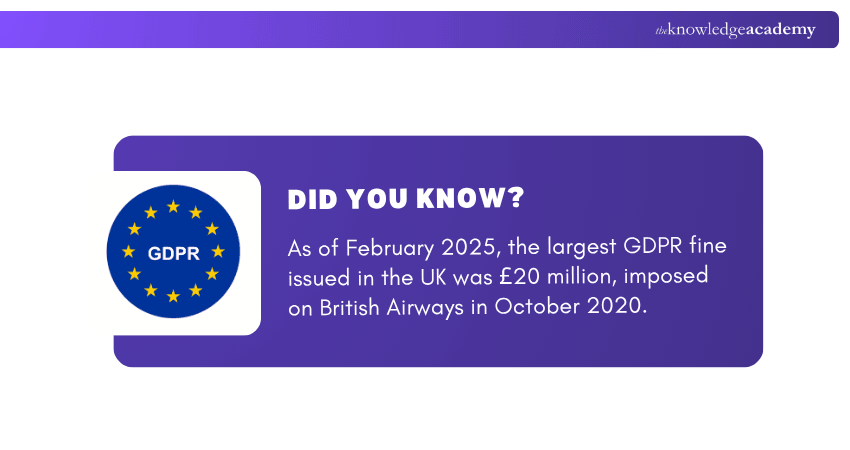
Failure to comply with GDPR can lead to significant fines of up to £17.2 million or 4% of global annual turnover, whichever is higher. Even minor breaches can result in reputational damage and legal issues.
Human Rights are Prioritised Over User Experience
Under GDPR, protecting individual privacy is more important than providing seamless user experiences. Businesses must prioritise consent, transparency, and data rights over convenience-driven practices.
What is the Full Meaning of GDPR?
GDPR stands for General Data Protection Regulation. It is a legal framework established by the European Union to protect the personal data and privacy of individuals within the EU and the European Economic Area (EEA). The regulation came into effect on 25 May 2018, replacing the Data Protection Directive 95/46/EC.
The GDPR sets out strict rules on how personal data must be collected, processed, stored, and shared. Its goal is to give individuals greater control over their personal information while ensuring organisations manage data transparently and responsibly. It also introduces significant penalties for non-compliance, reinforcing the importance of data protection in a digital world.
What is GDPR in AML?
In the context of Anti-Money Laundering (AML), GDPR ensures that personal data collected for AML purposes is handled lawfully, fairly, and securely. While organisations must carry out risk assessments and customer due diligence to prevent financial crimes, they must also respect individuals' data privacy rights under GDPR.
Conclusion
GDPR Compliance is a must for all companies that want to protect their data and build trust with customers. It gives the companies the opportunity to act in a responsible manner and, at the same time, to decrease the risks associated with improper use of data. Organisations that maintain privacy in their practice will not only remain in the market but also create more value in the long run as digital demands keep increasing.
Reduce data breaches with our GDPR Awareness Training – Sign up now!
Frequently Asked Questions
What is Considered Personal Data Under the EU GDPR?

Personal data under the EU GDPR includes any information that can directly or indirectly identify an individual, including names, addresses, email addresses, IP addresses, and even online identifiers like cookies. It also covers sensitive data like health records, biometric data, and financial information.
What Triggers GDPR Compliance?
GDPR Compliance is triggered when an organisation processes the personal data of individuals within the EU, regardless of the organisation's location. This includes collecting, storing, or using data for any purpose. Even non-EU companies must comply if they handle EU residents' data.
What are the Other Resources and Offers Provided by The Knowledge Academy?
The Knowledge Academy takes global learning to new heights, offering over 3,000 online courses across 490+ locations in 190+ countries. This expansive reach ensures accessibility and convenience for learners worldwide.
Alongside our diverse Online Course Catalogue, encompassing 19 major categories, we go the extra mile by providing a plethora of free educational Online Resources like Blogs, eBooks, Interview Questions and Videos. Tailoring learning experiences further, professionals can unlock greater value through a wide range of special discounts, seasonal deals, and Exclusive Offers.
What is The Knowledge Pass, and How Does it Work?
The Knowledge Academy’s Knowledge Pass, a prepaid voucher, adds another layer of flexibility, allowing course bookings over a 12-month period. Join us on a journey where education knows no bounds.
What are the Related Courses and Blogs Provided by The Knowledge Academy?
The Knowledge Academy offers various GDPR Courses, including the Certified Data Protection Officer (CDPO) Courses, GDPR Awareness Training, and CDPSE Training Course. These courses cater to different skill levels, providing comprehensive insights into Quality Planning.
Our ISO & Compliance Blogs cover a range of topics related to GDPR Compliance, offering valuable resources, best practices, and industry insights. Whether you are a beginner or looking to advance your ISO & Compliance skills, The Knowledge Academy's diverse courses and informative blogs have got you covered.

John Davies


Cyber Security Governance & Assurance Specialist
John Davies is a cybersecurity expert specialising in governance, risk management, and compliance. With over 15 years in the field, he has led enterprise-wide security programmes across finance, healthcare and public sector organisations. His content provides practical guidance on building secure environments, managing risk and aligning with regulatory frameworks.

Upcoming IT Security & Data Protection Resources Batches & Dates
Date
 Certified Data Protection Officer (CDPO)
Certified Data Protection Officer (CDPO)
Fri 24th Jul 2026
Certified Data Protection Officer (CDPO)
Fri 27th Nov 2026

 If you wish to make any changes to your course, please


