


 Top Rated Course

We may not have the course you’re looking for. If you enquire or give us a call on +61 272026926 and speak to our training experts, we may still be able to help with your training requirements.
Top 17 Facility Manager Skills Every Professional Should Have
The Knowledge Academy 19 March 2026Facility Managers blend technical and people skills to optimise buildings, excelling in Problem-Solving Abilities, Technology Proficiency, and Team Management. They ensure facilities run safely and efficiently while maintaining high standards. As a result, their expertise improves workplace productivity and overall asset performance.

Training Outcomes Within Your Budget!
We ensure quality, budget-alignment, and timely delivery by our expert instructors.
Table of Contents
Think about a workplace where everything runs smoothly. The lights work, the air conditioning is comfortable, safety measures are in place, and every space functions as expected. Keeping such environments efficient and well-organised requires a strong set of Facility Management Skills that support daily operations.
These skills help professionals manage budgets, coordinate teams, resolve issues, and maintain safe workplaces. As workplaces become more complex and technology-driven, they are increasingly important. This blog explores the key Facility Manager Skills needed to succeed. Let’s explore them.
Table of Contents
1) Who is a Facility Manager?
2) Key Skills for Facility Managers
3) Tips to Enhance Your Facility Managers Skills
4) Common Challenges Faced by Facility Managers
5) Conclusion
Who is a Facility Manager?
Facility Managers are the unsung heroes. They ensure that organisations run smoothly. They look after a variety of tasks that keep an organisation’s physical environment functional and efficient. Facility Manager’s Skills encompass a broad range of abilities. This includes technical knowledge and leadership qualities. All of these are geared towards maintaining and enhancing the physical assets of a business.
Facility Management is not only about fixing errors. It is about strategic planning, maintenance, and ensuring that the workplace supports the organisation’s overall goals. As a Facility Manager, the Functions of Facilities Management involve some key skills needed for the role. Let's go through these requirements in the following section.

Key Skills for Facility Managers
1) Leadership Qualities
Leadership is an essential skill for Facility Managers who oversee teams such as maintenance staff and custodians. Effective leadership involves motivating the team, providing clear direction, and creating a positive work environment. Facility Managers should lead by example, demonstrating professionalism, commitment, and a strong work ethic.
Good leaders can understand the strengths and weaknesses of their team members and give opportunities for growth and development. This ensures that the team is good at handling the demands of Facility Management and can work cohesively to achieve common goals.
2) Technology Proficiency
In today’s digital age, technology plays a crucial role in Facility Management. From building management systems to energy monitoring tools and Facility Management Software, Facility Managers must be proficient with various technologies. This includes understanding how to leverage these tools to optimise building performance and minimise operational costs.
Being tech-savvy also means staying updated with the latest advancements in Facility Management software and hardware. This allows Facility Managers to implement new technologies that can improve productivity and improve the overall functionality of the facilities they manage.
3) Problem-solving Abilities
Facility Managers are often the go-to person when something goes wrong. Whether it’s a malfunctioning air conditioning unit or a security breach, they need to think on their feet and come up with effective solutions. Problem-solving abilities are essential in this role, as they ensure that disruptions are minimised and operations continue smoothly.
Effective Problem-solving involves not just addressing the immediate issue but also identifying the root cause to prevent recurrence. Facility Managers must be analytical, resourceful, and decisive to excel in this aspect of their job.
4) Organisational Skills
Being organised is of the highest importance for Facility Managers. They are responsible for coordinating numerous activities and ensuring that everything runs smoothly. This involves managing schedules, overseeing maintenance tasks, and keeping detailed records. Effective organisational skills help in prioritising tasks and ensuring that nothing falls through the cracks.
A Facility Manager’s day can be unpredictable. It can be due to various issues popping up unexpectedly. Being organised allows them to quickly adapt and address these problems without losing sight of their primary responsibilities.
5) Financial Acumen
Financial Acumen meant the ability to understand and manage financial aspects related to facility operations. Facility Managers use financial knowledge to manage budgets, forecast expenses, and identify opportunities to reduce costs without affecting service quality.
With strong financial acumen, managers can make informed decisions that balance operational needs with financial responsibility. This helps ensure efficient resource use and supports the long-term economic sustainability of the facilities they manage.
6) Stress Management
The role of a Facility Manager can be extremely stressful. Managing multiple operations and people might take a toll on patience and mood in general. Effective Stress Management is important to maintain productivity and well-being.
Facility Managers need to recognise the signs of stress, develop coping strategies, and seek support when needed. Stress Management techniques can include Time Management, relaxation exercises, and maintaining a healthy work-life balance.
7) Interpersonal & Communication Skills
Interpersonal and Communication Skills are the ability to interact effectively with people and share information clearly. Facility Managers must communicate with employees, vendors, contractors, and senior management to coordinate daily operations and resolve issues.
Strong communication and interpersonal skills build positive relationships, reduce misunderstandings, and support smooth team collaboration. This helps Facility Managers address issues quickly and maintain a productive work environment.
8) Flexibility and Adaptability
Flexibility and Adaptability are the ability to respond effectively to changing workplace needs and operational challenges. Facility Managers often handle shifts in occupancy, space requirements, and organisational priorities.
Being adaptable also helps managers adopt technologies such as building automation systems and energy management tools, improving efficiency and ensuring facilities meet evolving organisational needs.
Learn essential skills and strategies with our Product Management Course - Join now!
9) Team Management
Effective team management is essential for Facility Managers. They need to coordinate and oversee the work of their team to ensure that all tasks are completed efficiently and to a high standard. This involves assigning responsibilities, providing guidance, and monitoring performance.
Good team management also involves fostering a positive team culture. Facility Managers should encourage open communication, recognise and reward good performance, and address any issues promptly. A well-managed team is more likely to be encouraged, productive, and committed to achieving the organisation’s goals.
10) Decision-making
Decision-making refers to the ability to make confident and informed choices in different Facility Management situations. Facility Managers must often assess issues quickly and take rational actions to ensure smooth operations and avoid delays.
Strong decision-making skills also help managers delegate tasks effectively and assign meaningful responsibilities to team members. This ensures that work is completed efficiently while maintaining accountability and operational stability.
11) Networking Ability
Building and maintaining a network of contacts is valuable for Facility Managers. This includes relationships with suppliers, contractors, industry peers, and internal stakeholders. Networking can provide Facility Managers with access to resources, expertise, and support that can help them perform their job more effectively.
Networking also offers opportunities for professional development. Facility Managers can learn from the experiences of others, stay informed about industry trends, and gain insights into Best Practices of Facilities Management. This continuous learning helps them stay ahead in their field and enhances their ability to manage facilities effectively.
12) Analytical Skills
Analytical skills are vital for Facility Managers, who need to assess various data and make informed decisions. This includes analysing maintenance records, energy usage, occupancy levels, and financial reports. Facility Managers use this data to identify trends, evaluate performance, and implement improvements, while also gaining insights into industry standards, including Energy Manager Salary expectations.
Strong analytical skills also help Facility Managers in problem-solving and decision-making. They can accurately assess situations, weigh the pros and cons of several options, and choose the most effective course of action. This ensures that their decisions are data-driven and aligned with the organisation’s goals.
13) Focus on Sustainability
Sustainability is an important focus for Facility Managers. They encourage practices such as energy efficiency, waste reduction, and environmentally responsible operations within their teams.
Promoting sustainability helps improve environmental safety, reduce costs, and support organisational sustainability goals while maintaining efficient, responsible, and long-term facility operations.
14) Patience
Patience is a virtue, especially in Facility Management. Dealing with different stakeholders, managing multiple tasks, and addressing various issues requires a calm and composed approach. Patience allows Facility Managers to handle stressful situations without becoming overwhelmed and ensures that they can make thoughtful and informed decisions.
Facility Managers often work with people from different backgrounds and with varying expectations. Being patient helps in building positive relationships and effectively communicating with all stakeholders, fostering a collaborative and productive work environment.
15) Visionary Thinking
Facility Managers need to be visionary thinkers. This involves looking beyond the day-to-day tasks and considering the long-term goals and needs of the organisation. Visionary thinking allows Facility Managers to anticipate future challenges and opportunities, plan strategically, and implement initiatives that support the organisation’s growth and success.
Visionary Facility Managers are proactive and forward-thinking. They are always on the lookout for ways to improve facility operations, enhance the user experience, and contribute to the organisation’s overall objectives. This strategic approach sets them apart and ensures that their facilities are well-prepared for the future.
16) Technical Expertise
Technical expertise is a fundamental skill for Facility Managers. They need to understand the technical aspects of building systems, including HVAC, electrical, plumbing, and security systems. This knowledge allows them to oversee maintenance and repairs effectively, troubleshoot issues, and ensure that all systems operate efficiently.
Facility Managers should stay updated with the latest advancements in building technology and be proficient in using Facility Management software. This technical expertise is crucial for maintaining the functionality and safety of the facilities they manage.
17) Recruitment Skills
Recruiting the right talent is of extreme importance. This is needed for effective Facility Management. Facility Managers need to identify the skills and qualities that are needed for different roles and select candidates who fit these criteria. This involves conducting interviews, assessing candidates’ qualifications, and making hiring decisions.
Good recruitment skills ensure that the Facility Management team is composed of capable and motivated individuals. This not only improves the team’s performance but also contributes to a positive and productive work environment. Facility Managers who excel in recruitment can build a strong team that supports the organisation’s operational needs.
Understand the Supply Chain structure with its planning and distribution process with our Supply Chain Management Course – Register today!
Tips to Enhance Your Facility Managers Skills
Here are some tips to enhance Facility Manager Skills:
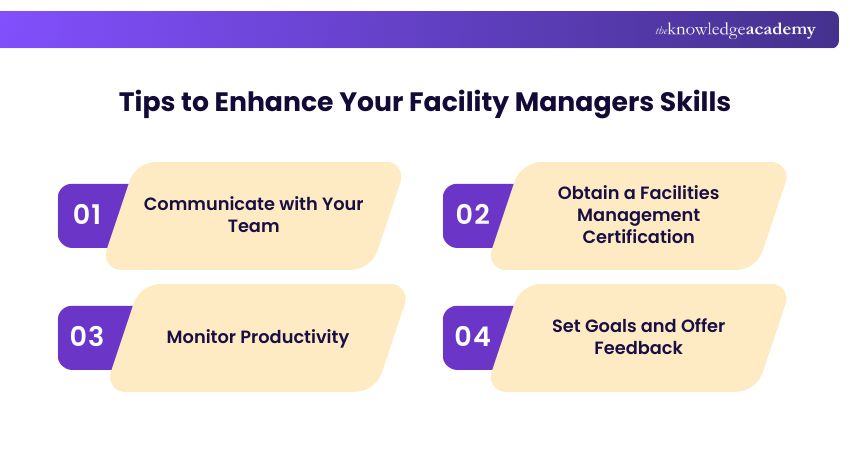
1) Communicate with Your Team
We often hear that effective communication is key to success. Communicating regularly with your team makes sure that everyone is on the same page and are aware of their own responsibilities. It also allows you to provide feedback, address any concerns, and build a collaborative work environment.
Encouraging transparent communication helps in building trust and rapport with your team. This, in turn, enhances team cohesion and ensures that everyone is working towards common goals.
2) Obtain a Facilities Management Certification
Certifications are not just accolades to hang on the wall. They are testaments to your dedication to mastering the art of Facilities Management. They serve as a formal nod to your expertise, setting you apart in the field.
These certifications are keys that open doors to new career paths. They’re not just pieces of paper; but practically a ticket to a journey of professional growth, newer and exciting opportunities.
Gain expertise in cost-effective maintenance with our Facilities Management Course - join now!
3) Monitor Productivity
Regularly monitoring productivity helps in identifying areas for improvement and ensuring that your team is performing at its best. This involves setting performance metrics, tracking progress, and providing feedback. Monitoring productivity also allows you to recognise and reward good performance, which can boost morale and motivation.
Effective productivity monitoring requires a balanced approach. It’s important to set realistic goals, provide the necessary resources and support, and address any obstacles that may hinder productivity.
4) Set Goals and Offer Feedback
Setting clear and achievable targets is crucial for effective Facility Management. Goals provide direction and focus, helping your team understand what is expected of them. Regularly reviewing and updating these goals ensures that they remain important and aligned with the organisation’s objectives.
Providing constructive feedback is equally important. Feedback helps team members recognise their strengths and identify areas where they can improve. It also provides an opportunity for recognising and celebrating achievements. Constructive feedback encourages a culture of continuous improvement and ensures that your team is always striving to do better.
Develop real skills, boost confidence, and learn with an industry focus with our Industry Training – Join now!
Common Challenges Faced by Facility Managers
Facility Managers must maintain efficient, safe, and well-managed facilities while handling various operational and organisational challenges. Some of the common challenges include:
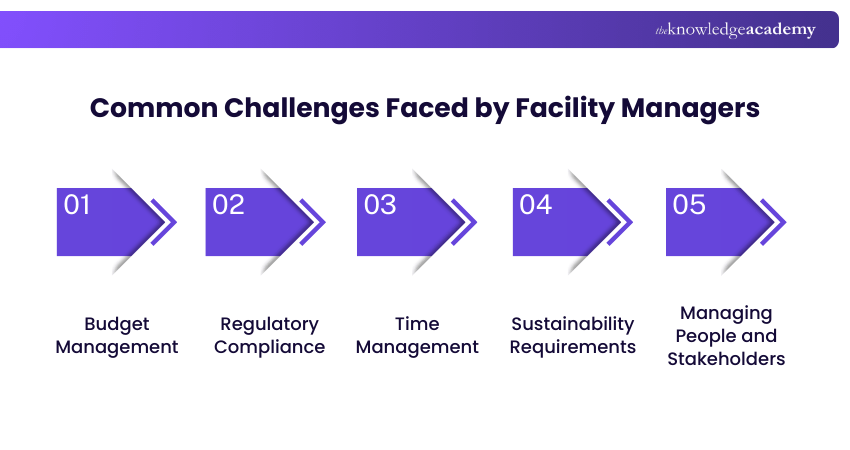
1) Budget Management:
Balancing operational costs while maintaining quality facilities can be difficult. Managers must control expenses, negotiate with suppliers, and find cost-effective solutions.
2) Regulatory Compliance:
Facility Managers must ensure buildings follow health, safety, and environmental regulations to avoid legal risks, penalties, and reputational damage.
3) Time Management:
Coordinating multiple tasks, teams, and projects can be demanding. Effective scheduling and communication help prevent delays and keep operations running smoothly.
4) Sustainability Requirements:
Organisations expect facilities to adopt sustainable practices such as energy efficiency, waste reduction, and responsible resource management.
5) Managing People and Stakeholders:
Facility Managers work with employees, contractors, and suppliers. Strong communication is essential to coordinate work, manage expectations, and minimise disruptions.
Conclusion
Developing strong Facility Manager Skills is essential for maintaining safe, efficient, and productive workplaces. These skills enable professionals to manage operations, coordinate teams, control costs, and ensure compliance, helping organisations improve efficiency, support sustainability, and maintain well-functioning facilities.
Gain the skills to manage group dynamics and boost team engagement effectively with our Facilitation Skills Training – Join today!
Frequently Asked Questions
Are Facility Manager Skills Different for Small and Large Organisations?

Yes, the skills of a Facility Manager vary by organisation size. In small organisations, managers often take a hands-on role and handle multiple tasks. In larger organisations, the role is more strategic, focusing on leadership, vendor coordination, and managing specialised teams.
How do Facility Manager Skills Support Compliance and Audits?
Skills of a Facility Manager support compliance and audits by ensuring safety standards, maintaining documentation, and conducting regular inspections. They help organisations follow legal and environmental regulations while using training and technology to reduce risks and maintain compliance.
What are the Other Resources and Offers Provided by The Knowledge Academy?
The Knowledge Academy takes global learning to new heights, offering over 3,000+ online courses across 490+ locations in 190+ countries. This expansive reach ensures accessibility and convenience for learners worldwide.
Alongside our diverse Online Course Catalogue, encompassing 19 major categories, we go the extra mile by providing a plethora of free educational Online Resources like Blogs, eBooks, Interview Questions and Videos. Tailoring learning experiences further, professionals can unlock greater value through a wide range of special discounts, seasonal deals, and Exclusive Offers.
What is The Knowledge Pass, and How Does it Work?
The Knowledge Academy’s Knowledge Pass, a prepaid voucher, adds another layer of flexibility, allowing course bookings over a 12-month period. Join us on a journey where education knows no bounds.
What are the Related Courses and Blogs Provided by The Knowledge Academy?
The Knowledge Academy offers various Industry Training, including Facilities Management Training, Facilitation Skills Training, and Reliability Engineering Training. These courses cater to different skill levels, providing comprehensive insights into Facilities Management.
Our Business Skills Blogs cover a range of topics related to the Skills of a Facility Manager, offering valuable resources, best practices, and industry insights. Whether you are a beginner or looking to advance your Business skills, The Knowledge Academy's diverse courses and informative blogs have got you covered.

The Knowledge Academy


Global Training Provider
The Knowledge Academy is a world-leading provider of professional training courses, offering globally recognised qualifications across a wide range of subjects. With expert trainers, up-to-date course material, and flexible learning options, we aim to empower professionals and organisations to achieve their goals through continuous learning.

Upcoming Business Skills Resources Batches & Dates
Date
 Facilities Management Training
Facilities Management Training
Fri 24th Jul 2026
Facilities Management Training
Fri 20th Nov 2026

 If you wish to make any changes to your course, please


