


 Top Rated Course

We may not have the course you’re looking for. If you enquire or give us a call on +1 6474932992 and speak to our training experts, we may still be able to help with your training requirements.
What is Sales? A Comprehensive Guide
Charlotte Wilson 15 July 2026Sales encompass the strategies and actions used to promote products or services to close deals that meet customer needs and business growth. Sales involve understanding buyer expectations, offering the right solutions, and building trust throughout the process. Effective Sales drives business growth and long-term customer relationships.

Training Outcomes Within Your Budget!
We ensure quality, budget-alignment, and timely delivery by our expert instructors.
Table of Contents

At first glance, sales may appear to be a straightforward exchange between a buyer and a seller. In reality, it is a multifaceted process that involves understanding customer needs, building relationships, and guiding prospects through a complex decision-making journey.
Whether you are considering a career in sales or aiming to strengthen your business knowledge, understanding what sales is truly essential. In this blog, we delve into What is Sales and how they continue to influence modern-day organisations.
Table of Contents
1) Understanding What is Sales?
2) How does a Sale Work?
3) Common Types of Sales
4) Understanding the Sales Process
5) Common Sales Terms
6) Types of Sales Methodologies
7) Sales Techniques and Strategies
8) Conclusion
Understanding What is Sales?
Sales are the lifeblood of any business, driving business growth and sustainability. In simple terms, Sales is the process of selling or buying goods/services for monetary value or asset. It can occur via direct interactions, online platforms, or through intermediaries such as retailers. Effective Sales strategies involve understanding customer needs, building trust, and persuading potential buyers to make a purchase.

How does a Sale Work?
The definition of Sales is simple, a transaction where products or services are exchanged for payment. But how does it work? A Sale happens when a person or business selling goods/services hands over the ownership and rights of the said goods/services to the buyer. In return, the buyer pays a certain amount of money or other agreed-upon assets. In order to make a Sale official, both the seller and the buyer need to agree on all the details.
These details indicate a proper sales strategies like, the price of the goods being sold, how much of it is being sold, how it will be delivered, and when it will be delivered. Moreover, the product or service being offered must be accessible for the exchange. The seller must also possess the legal right to hand over the item or service to the buyer.
Common Types of Sales
After understanding What is Sales, it's time to understand its various types. Sales can be categorised into different types based on their approach and execution. Let's explore the various types of Sales:
1) Direct Sales
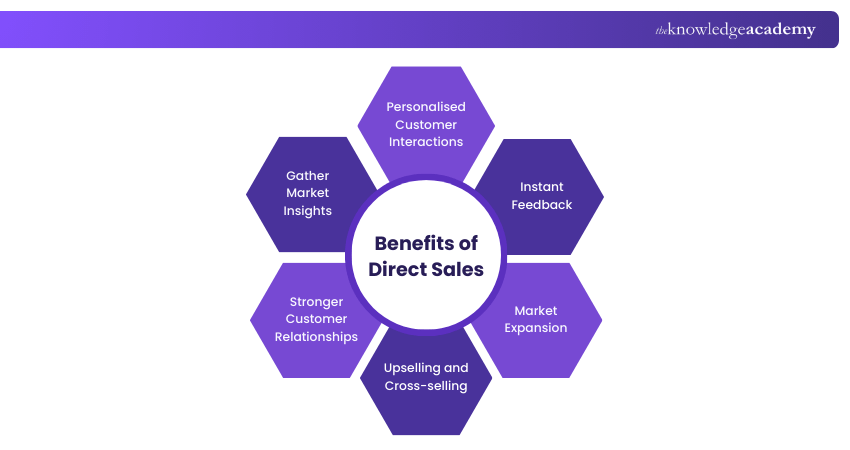
Direct Sales means putting the product or service directly in the customer's hands without any middlemen, giving the firm total power over the whole thing. It consists of face-to-face meetings, retail Sales in the store, and online purchases where customers see and buy directly.
2) Indirect Sales
The indirect Sales method involves the use of middlemen, like wholesalers, resellers, or affiliates, to sell the products of a company. This approach allows the company to conquer new markets by taking advantage of the partner's networks and established customers.
3) Inside Sales
Inside Sales involves selling products or services remotely through phone calls, emails, and online platforms. This approach is widely used by Sales Professionals in software, telemarketing, and B2B environments. Sales activities often include lead outreach, virtual product demonstrations, and real-time customer support through video conferencing or live chat.
4) Outside Sales
Outside Sales, or field Sales, consist of personal meetings with customers in order to sell goods or services. It is a very good way of establishing bonds and trust through actual meetings. Sales personnel visit the sites of clients, hold discussions, demonstrate, and participate in the events to promote their products.
5) B2B Sales
B2B Sales refer to a transaction where one company sells its goods or services to another business. Usually, this takes a longer time and is more complicated because of the high costs and multiple stakeholders. Buyers increasingly expect Sales professionals to act as trusted advisors, making credibility essential.
6) B2C Sales
B2C Sales refer to the selling of goods or services by businesses directly to consumers, through any Sales channel like stores, websites, and so on, normally with a shorter Sales cycle. This method is less complicated and depends mostly on either advertising or word-of-mouth to lure buyers.
7) Channel Sales
This strategy is selling products through the channels or intermediaries, besides selling directly to the customer, with the difference that a commission may be earned. To be successful, the businesses hire partners who are in line with their strategy, either attending the trade show or filling out an online form to find resellers interested.
8) E-commerce Sales
E-commerce consists of online selling of products or services and can be either business-to-business (B2B) or business-to-consumer (B2C). The main characteristic of B2C e-commerce is fast and personalised transactions, while B2B Sales may involve a longer process with detailed interactions, such as product demonstrations.
9) Account-based Sales
Account-based Sales are directed at a particular customer or industry, using customised methods to establish lasting bonds. It is frequently related to expensive items with extended Sales processes. Success needs a combination of proficiency in the product and understanding the client's needs to be seen as a reliable consultant.
10) Consultative Sales
Instead of transactional selling, consultative sales puts more focus on relationship-building and value, in addition to understanding the needs of a customer to give a tailored solution.
11) Agency Sales
Agency sale is based on the services or products of a company being sold by a representative or agent, and in most cases, a commission is made on every sale.
Embrace the future of Sales and conquer the online marketplace with our cutting-edge Online Sales Training - Join today!
Understanding the Sales Process
To better define sales, it's essential to understand the Sales process. Although it can vary across industries or organisations, the general Sales process consists of several key stages. Let's explore them:
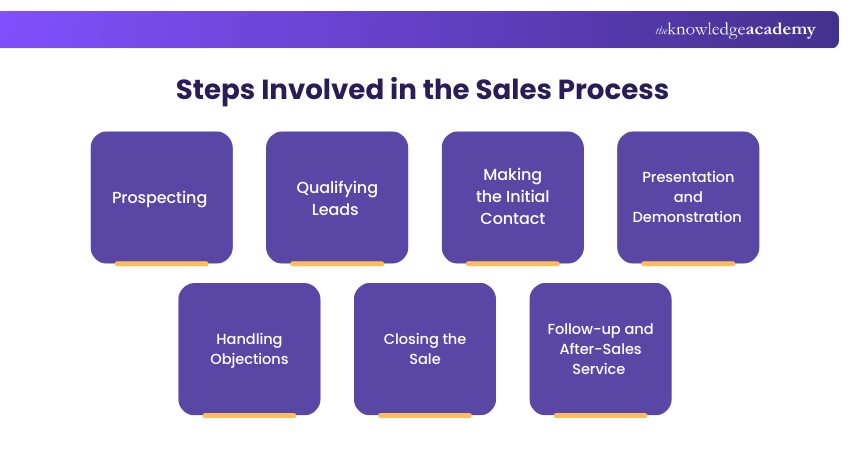
1) Prospecting
Prospecting is the first and the most crucial step in the Sales process, where you identify potential customers or leads who may be interested in your product or service. Prospecting in Sales involves proactive efforts to find and engage with prospects. Here's what you need to do:
a) Identification: Identifying potential customers or leads who may have an interest in your product or service.
b) Market Research: Conducting Market Research and utilising various channels like networking, referrals, and cold outreach to find prospects.
2) Qualifying Leads
Qualifying leads is an essential stage in the Sales process where you evaluate the potential leads to determine if they meet the criteria of an ideal customer. By qualifying leads, you ensure that you focus your efforts on customers with the highest likelihood of converting. Here's what it entails:
a) Evaluation: Assessing potential leads based on criteria such as budget, needs, authority, and timeline.
b) Prioritisation: Prioritising and focusing efforts on leads that have the highest potential for conversion.
3) Making the Initial Contact
Making initial contact with a prospective customer is critical in establishing communication and building rapport. It sets the foundation for further interactions and lays the groundwork for the Sales conversation. Here's what you need to consider:
a) Communication Establishment: Reaching out to qualified leads to establish communication and build rapport.
b) Contact Methods: Using different methods like phone calls, emails, or in-person meetings to initiate the Sales conversation.
4) Presentation and Demonstration
Presenting and demonstrating your product or service is an opportunity to showcase its features, benefits, and value proposition to the potential customer. It allows you to tailor your pitch to fulfill the specific needs and pain points of the prospect. Here's what you should focus on:
a) Showcasing: Presenting your product or service, highlighting its features, benefits, and value proposition.
b) Customisation: Tailoring the presentation to address the prospect's specific needs and pain points.
5) Handling Objections
Handling objections is a crucial skill in the Sales process, as prospective customers often raise concerns or doubts that must be addressed effectively. By addressing objections, you can build trust and confidence in your offering. Here's what you should keep in mind:
a) Addressing Concerns: Listening actively to understand and address any concerns or objections that a prospect raises.
b) Clear Responses: Providing clear and compelling responses to alleviate doubts and build trust.
6) Closing the Sale
Closing the Sale is the ultimate goal of the Sales process. It involves asking for the commitment or decision from the prospect to move forward with the purchase. Effective closing techniques and Negotiation Skills are essential in this stage. Here's what you should focus on:
7) Follow-up and After-sales Service
Following up with the customer after the Sale is crucial for ensuring satisfaction and building long-term relationships. Providing ongoing support and resolving any post-purchase issues contribute to customer loyalty and potential referrals. Here's what you should consider:
a) Post-sale Interaction: Following up with the customer after the sale to ensure satisfaction and resolve any issues.
b) Ongoing Support: Providing ongoing support, building long-term relationships, and potentially generating referrals.
By understanding and implementing these steps in the Sales process, you can effectively navigate the Sales journey and achieve success.
Discover effective Sales skills to close Sales with our Closing Sales Training- Sign up today!
Common Sales Terms
To become a part of the in a Sales Team, there are some common Sales terms that a sales representatives have to be aware of. Here’s a list of common Sales Terms:
1) Prospect: A prospect is a person within a company whom Salespeople aim to interact with to promote and sell their products.
2) Lead: A person or company who has expressed interest in a product or service. Leads can be generated via Different Types of Marketing and sales efforts.
3) Salesperson: A Salesperson is an individual who promotes and sells products to potential customers or clients. They are referred to as the face of the company to the customers.
4) Deal: A deal refers to the formal arrangement or agreement that outlines the terms and conditions of a sale between a seller and a buyer.
5) Sales Pipeline: This is a systematic representation of the various stages that leads go through as they progress from initial contact to becoming paying customers.
6) Sales Plan: A Sales plan is generally a strategic document that outlines the objectives, goals and strategies a Salesperson uses to achieve their Sales targets and drive revenue growth within a specific timeframe.
7) Cold Calling: The practice of contacting potential customers or clients who have not expressed prior interest in your product or service. This is typically done via phone or email.
8) Sales Pitch: A Sales Pitch is a persuasive presentation or speech given to a prospect or lead to explain the benefits and features of a product or service with the goal of making a sale.
9) Follow-up: Follow-up is nothing but continued communication with a customer after the initial contact to promote the relationship and encourage future Sales.
10) Sales Funnel: A Sales Funnel is a visual representation of the Sales process, showing the stages a lead goes through before becoming a customer.
Explore the art of persuasive selling with our Handling Sales Objection Training – Sign up now!
Types of Sales Methodologies
Even though the sales definition is clear, before selling your product, look into the solid framework that will help you succeed. Here are some of the methodologies that you can apply to different types of Sales:
1) Solution Selling
Solution selling is basically all about the customer, or rather, their needs and pain areas. The Sales Reps work together with customers to determine their problems and to find personalised solutions. Typically, the proposals will emphasise the reasons for their solution being superior to the competitors and, at the same time, completely resolving the customer's problems.
2) Value Selling
Value selling focuses on eliminating a customer's issues while at the same time providing measurable economic and resource benefits. It makes more apparent outcomes like cost savings, time efficiency, competitive advantage, and risk reduction. This method of selling places the solution as a strategic investment rather than just a purchase.
3) B.A.N.T.: Budget, Authority, Need and Timeline
This method aids Salesperson in analysing potential clients prior to making their Sales presentations. It basically verifies if a client has the funding, the right to say yes, and is in an urgent situation for a solution. B.A.N.T. also allows the Sales teams to modify their ways of working according to the customer's needs and thus improve the chances of getting a deal through.
4) N.E.A.T.: Need, Economic impact, Access to Authority and Timeline
The N.E.A.T. method guarantees that the Sales process centres around the customer's requirements and the monetary impact on the company of not taking any steps. Moreover, it directs the Sales teams to think about the accessibility of the decision-maker and the timeframe of the decision.
5) S.N.A.P.: Simple, iNvaluable, Align, Priorities
This methodology stresses the importance of simplicity in Sales for the overwhelmed modern consumers. Sales Reps concentrate on the buyer’s wants and, moreover, provide easy and relevant solutions. Listening attentively reveals the main problems, and the Sales talk can be built around the things that are significant to the customer.
6) M.E.D.D.I.C.: Metrics, Economic Buyer, Decision Criteria, Decision Process, Identify Pain, Champion
This method represents the six critical elements of a B2B Sales process: Metrics, Economic Buyer, Decision Criteria, Decision Process, Identify Pain, and Champion. This methodology allows for the analysis of win/loss outcomes and aids in the understanding of the ways of the success evaluation by the prospects and spotting the main decision-makers.
7) S.P.I.N.: Situation, Problem, Implication, Need-Payoff
This approach emphasises attentive listening to prospects and collaboratively exploring solutions to their business challenges. By engaging this way, customers naturally recognise the value of a company’s product or service. The method relies on building strong relationships, asking insightful questions, and adopting an educator’s role rather than relying on aggressive selling.
Transform every client meeting into a Sales opportunity with our Sales Client Meeting Skills Training- Join today!
Sales Techniques and Strategies
In order to succeed in Sales, It's essential to have effective techniques and strategies in place. These tactics can help you engage prospects, build relationships, and ultimately close deals, which are often covered in Sales Interview Questions. Let's explore some key sales techniques and strategies:
1) Active Listening
Listening to prospects without interrupting and clarifying the needs of the prospect is important to clearly know what the prospect needs. This will enable you to offer personalised solutions which will hit.
2) Building Rapport
Earn trust and bonding by establishing a meeting point and being interested in the issues or ambitions of the prospect. Easy opportunities will be more fulfilling to participate in.
3) Consultative Sales
Gear towards learning the needs of the prospect by asking questions and providing insight or industry knowledge. Develop as a reliable consultant, not a salesperson.
4) Overcoming objections
Perceive and sympathise with concerns, and thereafter come up with alternative solutions or convincing reasons to be able to deal with objections in an effective way that can easily gain trust.
5) Social selling
Use social media to reach prospects and build credibility, as well as post good stuff. Be professionally active and attend topical online groups.
6) Follow-up and Relationship Building
Always respond swiftly to queries and keep in constant contact with clients in order to build relationships, provide assistance, and look into upselling or referrals.By implementing these sales techniques and strategies, you can enhance your effectiveness in engaging prospects, building relationships, and ultimately achieving sales success. Understanding How to Create a Sales Funnel is key to guiding prospects through each stage, ensuring higher conversion rates. Remember, continuous improvement and adapting to each unique sales situation are crucial to mastering the art of selling.
Conclusion
The concept What is Sales is not limited to just securing Sales, it is about creating significant connections, recognising the customer's wants, and providing value with trust. Salesperson can perform at a high level consistently by honing the crucial traits that attributes not only result in an increase in personal achievements but also fortify the Sales procedure as a whole, making it possible to achieve growth that lasts and customer loyalty that lasts.
Boost your client connections and close more deals with our Relationship Sales Training- Join today!
Frequently Asked Questions
How can I improve my Sales Performance and Achieve Better Results?

Elevate your Sales results by embracing continuous learning. Stay updated on industry trends, understand customer needs, and refine your approach. Leverage data analytics to create informed decisions and foster strong client relationships. Consistency and adaptability are crucial to sustained success.
What are the Qualities of Successful Salespeople?
Successful salespeople are resilient, adaptable, and persistent. They build trust, understand customer needs, provide valuable solutions, believe in their product, and continuously learn to stay effective in a dynamic sales environment.

Charlotte Wilson


Soft Skills and Business Training Manager
Charlotte Wilson is an expert in soft skills development, with over 14 years of experience helping individuals and teams improve communication, productivity and emotional intelligence in the workplace. Her training content is focused on enhancing interpersonal effectiveness and fostering positive, collaborative environments across all levels of an organisation.
View Detail

 If you wish to make any changes to your course, please


