


 Top Rated Course


We may not have the course you’re looking for. If you enquire or give us a call on +61 272026926 and speak to our training experts, we may still be able to help with your training requirements.
How to Make a Scrapbook: Creative Ideas and Steps
Charlotte Wilson 24 April 2026To Make a Scrapbook, gather photos, an album, and supplies, plan your layout with a theme or colour scheme, add creative touches, and assemble your memory book.It is a fun and creative way to preserve your memories. It is done through incorporating photos, colours and personal designs, adding creative liberty and artistic touch to it.

Training Outcomes Within Your Budget!
We ensure quality, budget-alignment, and timely delivery by our expert instructors.
Table of Contents
Got a drawer full of photos, ticket stubs, or random little keepsakes you just can’t throw away? It’s time to give them a home - and no, we’re not talking about a boring old album. We’re talking about scrapbooking! If you’ve ever wondered How to Make a scrapbook that’s fun, creative, and totally personal, you’re in the right place.
Whether you're a total beginner or just need a little inspiration to get started, this blog will walk you through it all. From picking a theme to adding those final sparkly touches, we’ll show you How to Make a Scrapbook that’s bursting with personality. Ready to turn your memories into something magical? Let’s get stuck in!
Table of Contents
1) What is a Scrapbook?
2) What does the Scrapbooking Process Involve?
3) How to Make a Scrapbook?
4) Is Scrapbooking an Expensive Hobby?
5) What are Common Scrapbooking Mistakes?
6) Conclusion
What is a Scrapbook?
A Scrapbook is a creative album where memories are preserved using photos, notes, and decorative elements like stickers, washi tape, and embellishments. It tells a story through personalised designs, layouts, and captions, making it a meaningful way to document special moments, milestones, or everyday experiences in a visually appealing format.

What does the Scrapbooking Process Involve?
The process of creating a Scrapbook involves several essential steps that help bring your memories to life. Below, we have outlined the key stages to guide you through the journey.
1) Gather Your Materials
Begin by collecting everything you need. It may be a blank photo album, printed photos or decorated items. You do not require a huge number of items to begin creating your Scrapbook. Even a few key items are sufficient to get it started.
2) Plan Your Scrapbook
The next step is planning your layout and story. This is essential before pasting your photos and decorating your Scrapbook. Ask questions, such as “Who is this Scrapbook for?” This gives clarity on how you want to approach your design and customise it accordingly.
3) Create and Assemble the Pages
This is where the creative part begins. Start placing your photos on the pages, add captions and include decorative elements that enhance your theme. You can also use interactive features such as hidden notes, pockets or flip-photos to make the Scrapbook more engaging and personal.
4) Finish and Enjoy the Result
Once your pages are outlined and decorated, take a moment to review the overall balance, add final touches and ensure everything is secured properly. After that, your Scrapbook is complete. You can now enjoy it at your own pace or share it with loved ones.
How to Make a Scrapbook?
Creating a Scrapbook is a fun and personal way to preserve memories, express creativity, and tell your story through photos, designs, and handwritten notes. Whether you're making one to celebrate any special moment or simply want to document everyday moments, this will help you craft a Scrapbook that is meaningful and visually stunning.
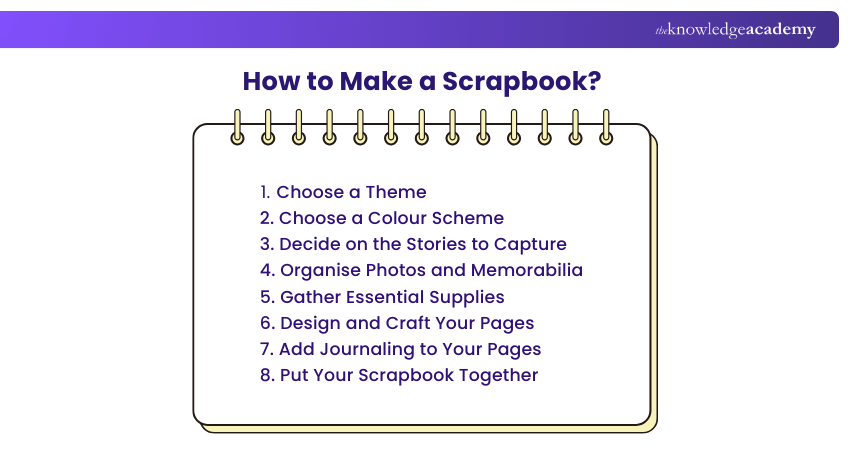
1) Choose a Theme
Before you start cutting and pasting, take a moment to decide on a theme for your Scrapbook. A theme gives your Scrapbook a cohesive feel and helps guide your choices and taste when it comes to colours, layouts, and decorations.
Popular Scrapbooking Themes:
a) Travel Adventures: Document your trips with photos, maps, and tickets to the most Incredible Cities in the World.
b) Family History: Create a book filled with stories, old photos, and genealogy.
c) Baby’s First Year: Capture every milestone of your little one.
d) Weddings and Anniversaries: A romantic way to cherish special moments.
e) Friendship and Memories: A tribute to the people who make life special.
Selecting a theme will make it easier to select photos, decorations, and embellishments that complement your Scrapbook’s story.
2) Choose a Colour Scheme
Choosing a colour scheme is important to set a mood for your scrapbook. Select the type of paper you want to use, such as white, cream or black. It must connect with your theme and the mood you want to express. The colours must reflect the spirit of the memories.
Colour Selection Essentials:
a) Choose paper colours and textures to support mood and theme.
b) Let your photos guide your colour palette.
c) Stick to two or four colours to maintain balance.
d) Use contrast carefully.
e) Repeat colours across pages to maintain unity.
Set the tone for your scrapbook with colours that best represent your memories.
3) Decide on the Stories to Capture
Scrapbooks are more than photo albums; they tell a story. So, it is important to jot down key memories or people. Creating a simple outline will help you to organise your stories and arrange them chronologically.
Essential pointers for deciding:
a) Identify the main message or theme.
b) List the meaningful events or people to be included.
c) Decide which timeline to follow.
d) Keep the outline simple.
e) Ensure each page connects to the overall story.
Remember to choose memories that truly define your Scrapbook.
4) Organise Photos and Memorabilia
Once you know what stories you want to tell, it's time to gather your materials. Photos are at the heart of Scrapbooking, but don’t stop there! Think about what other memorabilia you can include to bring your memories to life.
What to Include:
a) Photographs: Select high-quality images that best represent your memories.
b) Ticket Stubs & Receipts: Keep souvenirs from concerts, flights, or dinners.
c) Postcards & Letters: Personal notes can add sentimental value.
d) Pressed Flowers & Leaves: A beautiful touch for nature-themed Scrapbooks.
e) Fabric Swatches or Ribbons: Great for wedding or fashion Scrapbooks.
Lay everything out and sort it into categories based on the pages you plan to create. This makes the assembling process simpler. Capture the world through lens and elevate your photography skills with our Photography Course - Join today!
5) Gather Essential Supplies
Now that you have your theme, stories, and materials sorted, it's time to gather the crafting essentials. The beauty of Scrapbooking is that there are no hard rules—you can use whatever materials you love! But here are some must-haves to get you started:
Scrapbooking Essentials:
a) Scrapbook Album: Choose between a pre-bound book or a binder with removable pages.
b) Cardstock & Patterned Paper: Provides a solid background for your pages.
c) Adhesives: Use glue sticks, double-sided tape, or photo corners.
d) Scissors & Craft Knives: Precision cutting is key!
e) Pens & Markers: For adding notes, captions, and doodles.
f) Stickers & Embellishments: Adds personality and flair.
g) Stamps & Washi Tape: Perfect for adding artistic touches.
Once you have your supplies, arrange them in a way that makes crafting easy and enjoyable.
6) Design and Craft Your Pages
Now comes the fun part - bringing your Scrapbook to life! Designing each page requires a mix of creativity and storytelling.
Step-by-step Page Design:
a) Pick a Background: Choose a cardstock or patterned paper that fits your theme.
b) Arrange Photos & Memorabilia: Play around with layouts before sticking anything down.
c) Add Layers & Borders: Layering photos and using frames can make pages pop.
d) Include Captions & Quotes: Write short descriptions to enhance the storytelling aspect.
e) Use Stickers & Embellishments: Add elements like buttons, sequins, or fabric for texture.
f) Create a Title Page: Make the opening page extra special with a bold title and decorative accents.
Don't be afraid to mix and match different styles. Some pages might be minimalist, while others can be more elaborate - it’s all about capturing the mood of your memories.
Discover your passions and deepen your skills with our range of Hobbies and Interests Courses. Explore now!
7) Put Your Scrapbook Together
Once all your pages are designed, it’s time to assemble the final Scrapbook. Depending on the type of Scrapbook you’re making, you may need to bind it together using rings, glue, or a pre-made album.
Tips for a Polished Finish:
a) Keep Pages Balanced: Avoid overcrowding one page while leaving another too empty.
b) Protect Your Pages: Use plastic sleeves to prevent wear and tear over time.
c) Consider Adding a Table of Contents: This is useful for larger Scrapbooks.
d) Leave Room for Future Additions: If your story isn’t finished, leave space to continue it later.
Once your Scrapbook is complete, take a moment to flip through and relive the memories you’ve so beautifully preserved. It’s not just an album—it’s a tangible piece of your life’s story.
8) Add Journaling to Your Pages
Journaling brings memories to life by adding meaning to them. A simple note with the date and location is perfectly fine if you are unsure about what to write. You can also include poems, reflective thoughts, inspiring quotations or favourite novel lines.
Journaling Tips:
a) Keep it simple and detailed
b) Add emotions and unseen details to bring more depth
c) Use quotes, poems or book passages
d) Write freely and honestly
e) Match your journaling style with the theme
Always remember to let your words add depth. This will enable you to capture the depth of your emotions.
Is Scrapbooking an Expensive Hobby?
Scrapbooking can be as expensive or affordable as you want it to be. Basic supplies, such as glue, paper and photos, are inexpensive, while special tools and embellishments cost extra. You can save money by repurposing materials or using digital scrapbooking. By adding creativity and Creative Thinking, you can create a beautiful page of memories.
What are Common Scrapbooking Mistakes?
Here is a list of common mistakes people make when creating Scrapbooks. Being aware of these helps you create a more organised and meaningful final result.
1) Using the Wrong Type of Material
It is crucial to assess the glue since adhesives can damage photos. Once glued, it cannot be removed without harm. This is why it is better to utilise photo corners and adhesive sleeves to preserve the original image.
2) Using Unsafe Supplies
If you do choose a glue, make sure it is safe for the photo. Also, avoid albums made with low-quality, non-acid-free paper, as they can cause yellowing. It is preferable to choose archival-safe materials for long-term photo storage.
3) Forgetting Stories Behind Photos
The most beautiful can lose its meaning without the context. This is why you should include simple details, such as date, place, people or a short note. These small additions keep your scrapbook meaningful.
4) Overusing Decorations
Decorations do make your Scrapbook lively and colourful, but only when used in limited quantities. Using more than required can distract from the primary focus, such as focus and stories. Utilise decorations to enhance the layout without overstuffing it.
5) Adding Every Photo You Own
It is natural to end up with hundreds of similar pictures. If you add all of them, it makes your Scrapbook cluttered. Only choose the most meaningful photos to create an impactful and engaging design.
Conclusion
Scrapbooking is a creative and meaningful way to preserve memories. By selecting a theme, organising your photos, and designing pages, you create something personal and lasting. If you are a beginner or experienced crafter, there is no fixed rule on How to Make a Scrapbook. Just follow that brings you happiness and start telling your story one page at a time.
Unleash the experience of film making and editing with our Filmmaking Course - Sign up now!
Frequently Asked Questions
What Stuff Do You Need to Make a Scrapbook?

To make a Scrapbook, you'll need a Scrapbook album, cardstock, patterned paper, adhesives (glue, tape), scissors, pens, markers, stickers, embellishments, washi tape, and memorabilia like photos, tickets, or notes. Optional tools like stamps, punches, and stencils can add extra creativity to your pages.
What are the Three Main Elements of a Scrapbook?
The three main elements of a Scrapbook are photos, which capture memories; journaling, which adds personal stories and context; and embellishments, such as stickers, washi tape, and decorative elements that enhance the design and theme of each page while keeping it visually appealing.
What are the Other Resources and Offers Provided by The Knowledge Academy?
The Knowledge Academy takes global learning to new heights, offering over 3,000+ online courses across 490+ locations in 190+ countries. This expansive reach ensures accessibility and convenience for learners worldwide.
Alongside our diverse Online Course Catalogue, encompassing 19 major categories, we go the extra mile by providing a plethora of free educational Online Resources like Blogs, eBooks, Interview Questions and Videos. Tailoring learning experiences further, professionals can unlock greater value through a wide range of special discounts, seasonal deals, and Exclusive Offers.
What is The Knowledge Pass, and How Does it Work?
The Knowledge Academy’s Knowledge Pass, a prepaid voucher, adds another layer of flexibility, allowing course bookings over a 12-month period. Join us on a journey where education knows no bounds.
What are the Related Courses and Blogs Provided by The Knowledge Academy?
The Knowledge Academy offers various Hobbies & Interests Courses, including the Filmmaking and Practitioner Course, Music Production Course and the Photography Course. These courses cater to different skill levels, providing comprehensive int World Book Day.
Our Business Skill Blogs cover a range of topics related to Hobbies & Interests, offering valuable resources, best practices, and industry insights. Whether you are a beginner or looking to advance your Photography skills, The Knowledge Academy's diverse courses and informative blogs have got you covered.

Charlotte Wilson


Soft Skills and Business Training Manager
Charlotte Wilson is an expert in soft skills development, with over 14 years of experience helping individuals and teams improve communication, productivity and emotional intelligence in the workplace. Her training content is focused on enhancing interpersonal effectiveness and fostering positive, collaborative environments across all levels of an organisation.
View Detail

 If you wish to make any changes to your course, please


