


 Top Rated Course

We may not have the course you’re looking for. If you enquire or give us a call on +44 1344 203999 and speak to our training experts, we may still be able to help with your training requirements.
What is a Performance Management Cycle? An Introduction
James Smith 05 January 2026A Performance Management Cycle is a process of setting goals, monitoring progress, providing feedback, and reviewing performance to drive growth. It supports clear expectations and regular conversations between managers and employees. This approach helps improve engagement, accountability, and continuous development across teams.

Training Outcomes Within Your Budget!
We ensure quality, budget-alignment, and timely delivery by our expert instructors.
Table of Contents
Good performance does not occur by accident. Well-structured organisations require frequent feedback as well as meaningful objectives to enable development. Let's dive deep into the Performance Management Cycle and the way in which it provides a consistent model of enhancing results and development.
Table of Contents
1) What is a Performance Management Cycle?
2) Why is the Performance Management Cycle Required in Business?
3) Stages of the Performance Management Cycle
4) How to set up a Performance Management Cycle?
5) Example: How the Performance Management Cycle is Used
6) How Should the Performance Management Cycle be Used?
7) What are the Three Ps of Performance Management?
8) What are the Three Pillars of the Performance Management Cycle?
9) Conclusion
What is a Performance Management Cycle?
A Performance Management Cycle is a structured approach to guiding employees in improving their productivity and work quality. It integrates continuous support, feedback, and performance evaluations to drive employee development in alignment with organisational goals. It includes four simple steps:
1) Setting Clear Goals: Define specific and achievable objectives that align with organisational priorities, giving employees clarity, direction, and motivation to perform effectively.
2) Tracking Progress: Monitor employee performance regularly to ensure alignment with goals, identify challenges early, and provide support or adjustments when needed.
3) Reviewing Results: Evaluate performance outcomes against set goals to assess achievements, highlight areas for improvement, and guide future development efforts.
4) Recognising Good Work: Acknowledge and reward strong performance to boost morale, reinforce positive behaviour, and encourage continuous engagement and motivation.
This steps helps employees stay focused, motivated, and aligned with the company’s goals. More than just a yearly review, it’s about ongoing conversations between Managers and employees. Regular check-ins, feedback, and goal updates create a culture of support, growth, and teamwork that benefits everyone.
Why is the Performance Management Cycle Required in Business?
The Performance Management Cycle is a fundamental tool for businesses for several compelling reasonincluding the following:
1) The Performance Management Cycle is vital for businesses as it provides a structured way to guide employee performance.
2) It helps set clear Performance Management Goals, so employees understand what’s expected and how they contribute to success.
3) Regular monitoring tracks progress and allows early feedback to address issues before they grow.
4) Formal reviews highlight achievements and pinpoint Areas of Improvement, supporting growth.
5) Finally, recognising success boosts morale, drives engagement, and promotes a productive, positive workplace culture.
Build AI driven product strategy skills with Certified Artificial Intelligence For Product Managers Training now
Stages of the Performance Management Cycle
The Performance Management Cycle comprises several Performance Management Cycle stages aimed at ensuring employee improvement and productivity. This Cycle encompasses the following phases:
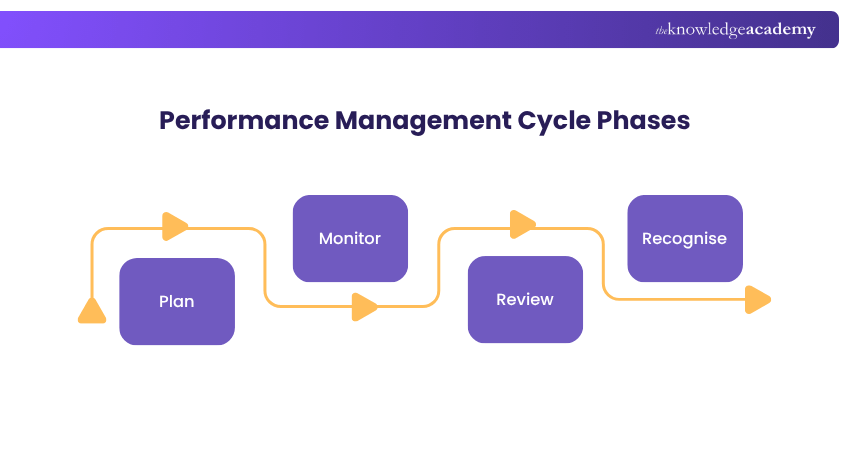
1) Plan
In this phase, Managers and employees set clear, measurable goals aligned with organisational strategy. It defines expectations, timelines, and responsibilities, creating a roadmap for success and ensuring every individual understands their contribution to the team's overall objectives.
2) Monitor
Monitoring involves regular check-ins, feedback, and progress tracking. It allows for timely adjustments, addresses performance gaps early, and encourages open communication. This phase ensures employees stay on course and feel supported throughout the performance cycle.
3) Review
The review phase assesses performance against goals. Managers evaluate outcomes, provide constructive feedback, and identify areas for improvement. This helps ensure fairness in performance appraisals and informs development plans for future growth and success.
4) Recognise
Recognition celebrates achievements, reinforces positive behaviours, and boosts motivation. Whether through praise, rewards, or development opportunities, this phase strengthens engagement, builds morale, and encourages employees to continue contributing effectively to organisational goals.
Unlock the key to achieving excellence in every managerial aspect with our Senior Management Training - Register today!
How to set up a Performance Management Cycle?
Integrated Performance Management Cycle aids organisations to monitor progress, assist development, and enhance results. The effective set-up would guarantee regularity, coherence, and continued employee involvement.
1) Get Practical
Determine the way the performance data is going to be documented and locked up. Reviews, goals, and feedback can be handled using simple systems or HR software.
2) Lay the Foundations
Set organisational objectives and performance standards. Align such objectives to your HR strategy that will provide meaningful performance discussions.
3) Get Started
Start planning personal objectives and have frequent check-ins. Generate constant feedback to aid growth and progress in performance.
Example: How the Performance Management Cycle is Used
This cycle makes it easier for the organisation to get better by means of regular feedback and clear goal setting. It ensures that the performance of individuals is in harmony with the broader objectives of the company.
The cycle not only focuses on continuous discussions but also keeps the employees involved. This method strongly supports the ideas of development, responsibility, and high performance throughout the year.
How Should the Performance Management Cycle be Used?
It ought to be treated as a continual process involving the establishment of objectives, monitoring the advancement, and providing input. Regular check-ins, rather than just yearly evaluations, ensure that personal targets are in sync with corporate goals.
Set Clear, Measurable Goals
Ensure every employee understands what’s expected by aligning individual goals with team and organisational objectives. Review these goals regularly to keep them relevant and adjust based on changing priorities.
Provide Continuous Feedback
Move beyond annual reviews. Offer real-time, constructive feedback to reinforce strengths and correct course quickly. This keeps employees engaged, motivated, and aware of how they are performing day-to-day.
Use SMART Objectives
Structure goals to be Specific, Measurable, Achievable, Relevant, and Time-bound to drive clarity and accountability. SMART goals help employees focus their efforts and measure progress effectively over time.
Invest in Manager Training
Equip Managers with the skills for conducting fair, unbiased evaluations and facilitate productive performance conversations. Well-trained Managers build trust and encourage open, honest dialogue during reviews.
Leverage Performance Analytics
Use data and KPIs to track trends, spot gaps, and make informed decisions that improve employee and team output. Analytics provide a clearer picture of performance across departments and time periods.
Encourage Employee Development
Link performance reviews to development plans, ensuring employees grow in their roles and feel motivated to excel. Offering learning opportunities shows commitment to their long-term success and boosts retention.
What are the Three Ps of Performance Management?
A successful Performance Management framework relies on aligning strategy, empowering individuals, and implementing effective systems. Here's how each of these elements plays a role:
1) Purpose: Defines the 'why' behind Performance Management, setting strategic goals and aligning performance with business objectives.
2) People: Focuses on the individuals involved, including employees, Managers, and teams, and their role in driving performance.
3) Process: Covers the systems, tools, and workflows used to plan, monitor, evaluate, and improve performance consistently.
What are the Three Pillars of the Performance Management Cycle?
The Performance Management Cycle is founded on three core pillars that ensure continuous improvement and alignment across the organisation:
1) Planning: Establishes clear objectives and performance expectations aligned with organisational goals at the start of the cycle.
2) Monitoring: Involves ongoing feedback, progress tracking, and course correction to keep performance on target throughout the cycle.
3) Reviewing: Assesses outcomes, recognises achievements, and identifies areas for development to inform future planning and growth.
Conclusion
With a properly developed Performance Management Cycle, feedback is transformed into meaningful action and development. It maintains a team at par, inspired and committed to improvement. With regular use, it enhances performance and develops long-term success.
Unleash your team's full potential with our Introduction to Managing People Training - Join now!
Frequently Asked Questions
What is PMS Goal Setting?

PMS goal setting involves defining clear, measurable objectives aligned with organisational goals to guide employee performance and development. Goal setting for the Performance Management System (PMS) is crucial in multiple companies.
Why use a Performance Management Cycle?
Using a PMC can ensure structured monitoring, feedback, and recognition, optimising employee performance and achieving organisational objectives.
What are the Other Resources and Offers Provided by The Knowledge Academy?
The Knowledge Academy takes global learning to new heights, offering over 3,000+ online courses across 490+ locations in 190+ countries. This expansive reach ensures accessibility and convenience for learners worldwide.
Alongside our diverse Online Course Catalogue, encompassing 19 major categories, we go the extra mile by providing a plethora of free educational Online Resources like Blogs, eBooks, Interview Questions and Videos. Tailoring learning experiences further, professionals can unlock greater value through a wide range of special discounts, seasonal deals, and Exclusive Offers.
What is The Knowledge Pass, and How Does it Work?
The Knowledge Academy’s Knowledge Pass, a prepaid voucher, adds another layer of flexibility, allowing course bookings over a 12-month period. Join us on a journey where education knows no bounds.
What are the Related Courses and Blogs Provided by The Knowledge Academy?
The Knowledge Academy offers various Management Courses, including the Managing Remote Teams Training, Introduction To Management Training, and Senior Management Training. These courses cater to different skill levels, providing comprehensive insights into Effective Team.
Our Business Skills Blogs cover a range of topics related to Performance Management Cycle, offering valuable resources, best practices, and industry insights. Whether you are a beginner or looking to advance your Business skills, The Knowledge Academy's diverse courses and informative blogs have got you covered.

James Smith


Digital Marketing Manager and Trainer
James Smith is a digital marketing professional with over a decade of experience in SEO, content strategy, paid media and analytics. He has supported both SMEs and global brands in transforming their digital presence. James’s writing and training are rooted in results-driven tactics and the latest marketing trends.
View Detail
Upcoming Business Skills Resources Batches & Dates
Date
 Personal & Organisational Development
Personal & Organisational Development
Fri 31st Jul 2026
Personal & Organisational Development
Fri 13th Nov 2026

 If you wish to make any changes to your course, please


