


 Top Rated Course

We may not have the course you’re looking for. If you enquire or give us a call on +800 312616 and speak to our training experts, we may still be able to help with your training requirements.
Word of Mouth Marketing: Types, Benefits, and Tips
The Knowledge Academy 06 March 2026Curious about Word of Mouth Marketing? It’s a strategy that drives people to share positive experiences about a product, service, or brand, fostering trust and organic growth. This type of marketing relies on the natural conversations and recommendations that occur between consumers, often leading to increased trust and credibility.

Training Outcomes Within Your Budget!
We ensure quality, budget-alignment, and timely delivery by our expert instructors.
Table of Contents
Ever found yourself raving about a new café or a Netflix series to friends? That’s the magic of Word of Mouth Marketing—a centuries-old strategy that thrives on genuine enthusiasm and trust. This powerhouse Marketing tool blends personal recommendations with buzz to shape buying decisions like never before.
From casual conversations to viral posts, Word of Mouth Marketing is proof that nothing beats a genuine recommendation. It’s simple: people trust people, not polished ads. But how can you turn everyday chatter into marketing gold? Let’s explore the key to sparking conversations that matter—and keeping your audience engaged!
Table of Contents
1) What is Word of Mouth Marketing?
2) Types of Word of Mouth Marketing
3) Benefits of Word-of-Mouth Marketing
4) Tips for Generating Positive Word-of-Mouth Marketing
5) Examples of Word of Mouth Marketing
6) Conclusion
What is Word of Mouth Marketing?
Word of Mouth Marketing (WOMM) is all about using genuine conversations and recommendations to spread the word and inspire action. Unlike paid ads, WOMM taps into the power of real people—whether customers, Influencers, or brand advocates—who share their honest experiences with others. These personal recommendations feel authentic and trustworthy, which is why they often have more impact than traditional advertising.
Here’s Why WOMM Works:
a) Authenticity: Personal recommendations feel more genuine than any ad.
b) Trust: Customers trust their peers more than they trust brands.
c) Community: WOMM thrives on the connections we make with others.
d) Digital Evolution: In the age of social media, WOMM can spread faster and farther than ever.
Whether it’s a friend's glowing review or a viral TikTok video, WOMM harnesses the power of community and connection, offering new ways to make an impact and reach audiences in fresh, exciting ways.
Types of Word-of-Mouth Marketing
Word-of-Mouth Marketing (WOMM) is like the trusted advice you get from a friend—it’s powerful, organic, and can influence decisions like nothing else. Let’s dive deeper into the various types of WOMM, breaking them down with real-life examples so you can see how they spark conversations and drive action.
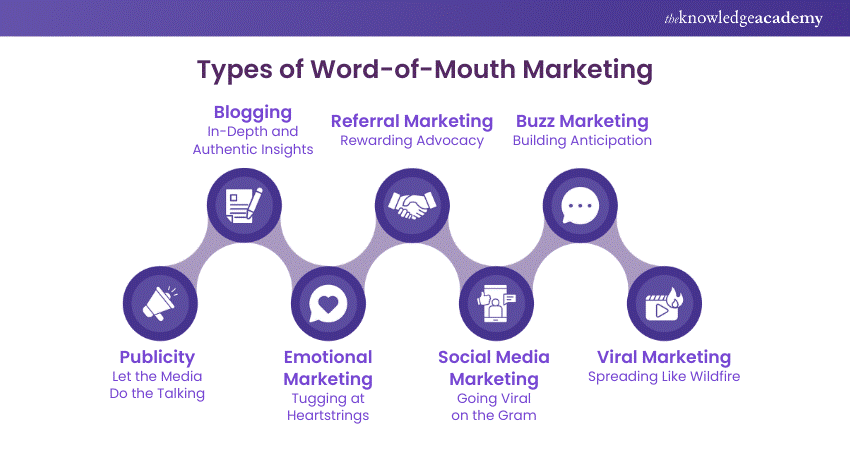
Publicity: Let the Media Do the Talking
When the media talks about your brand, people listen. Publicity is about getting your story featured in a way that makes waves, whether it’s on a popular blog, YouTube channel, or major publication.
a) Example: Remember the Barbie movie buzz in 2023? It wasn’t just about the film—it was a publicity masterclass! From Barbie-themed Airbnb stays to pink-themed billboards lighting up cities, the campaign turned Barbie into a cultural event everyone wanted to talk about.
Why it Works: Publicity leverages the credibility of third-party sources to create excitement and trust.
Elevate your marketing skills with our Introduction To Marketing Training - Sign up today!
Blogging: In-Depth and Authentic Insights
Blogs have been a go-to for recommendations for years. A well-written blog can provide detailed, trustworthy reviews and insights, making it a natural driver of WOMM.
a) Example 1: Wirecutter’s detailed product reviews have become a gold standard for shoppers. From laptops to kitchen gadgets, their recommendations influence buying decisions worldwide.
b) Example 2: Travel bloggers like Nomadic Matt create itineraries that inspire wanderlust, helping readers discover hidden gems and unique customer experiences.
Why it Works: People trust blogs because they often offer real experiences, honest opinions, and relatable stories.
Emotional Marketing: Tugging at Heartstrings
Want people to share your marketing campaign? Make them feel something. Emotional marketing connects with audiences on a deeper level, making them want to spread the word.
a) Example 1: Dove’s “Real Beauty” campaign celebrated women’s natural beauty, sparking meaningful conversations about self-esteem and body positivity.
b) Example 2: Nike’s “Dream Crazy” ad featuring Colin Kaepernick inspired millions to talk about social justice and perseverance.
Why it Works: People naturally share content that resonates with their emotions, whether it’s joy, empathy, or inspiration.
Referral Marketing: Rewarding Advocacy
Turn your satisfied customers into your biggest promoters by incentivising them to share. Referral marketing works because people trust recommendations from those they know.
a) Example 1: Dropbox nailed this with their referral program. Users who referred friends earned extra storage space, resulting in exponential growth.
b) Example 2: Uber’s referral program offered discounts to both the referrer and the referred, making it easy for new users to try the service.
Why it Works: Customers feel appreciated, and potential users feel more confident trying a service when referred by someone they trust.
Transform your marketing career with our Mobile Marketing Course - Join now!
Social Media Marketing: Going Viral on the Gram
Social Media Platforms are a treasure trove for WOMM, with trends and viral moments capable of reaching millions overnight.
a) Example: Remember Nathan Apodaca (420doggface208) skateboarding to Fleetwood Mac’s Dreams while sipping Ocean Spray cranberry juice? That simple, unscripted moment turned into a viral sensation, boosting Ocean Spray’s visibility and sales.
Why it Works: Social media makes it easy for people to share and engage with content they love, amplifying its reach.
Buzz Marketing: Building Anticipation
Buzz marketing is about creating hype and getting people talking before a launch or event. It’s all about exclusivity, urgency, and intrigue.
a) Example 1: Supreme’s limited-edition drops have built a loyal fanbase. Their scarcity model creates urgency, ensuring every drop is an event.
b) Example 2: Apple’s product launches are legendary. By keeping details under wraps, they generate excitement and speculation that has the world waiting on the edge of their seats.
Why it Works: People love being part of something exclusive and exciting—it makes them feel special.
Viral Marketing: Spreading Like Wildfire
Viral marketing is the holy grail of WOMM. It’s when content catches fire and spreads across the internet, creating massive buzz for your brand.
a) Example: The Ice Bucket Challenge was a game-changer. Not only did it raise over £92.06 million for ALS research, but it also inspired millions of people to participate and share their videos.
Why it Works: Viral campaigns thrive on their shareability, relatability, and the thrill of being part of a movement.
Benefits of Word-of-Mouth Marketing
Word-of-Mouth Marketing (WOMM) isn’t just about starting conversations—it’s about turning those conversations into tangible benefits for your brand. Let’s explore why WOMM is so powerful and how it can elevate your marketing game:
Reaching Older Generations
Not everyone is glued to social media, especially older generations who rely more on personal recommendations. WOMM bridges this gap by ensuring your message resonates across all age groups.
a) Example: Think about a family dinner where someone talks about a great local restaurant they visited. That single recommendation often carries more weight than an ad or social post.
Why it matters: It’s a natural way to expand your audience and build trust across demographics.
Building Brand Affinity and Trust
People trust their friends and family more than flashy ads. A genuine recommendation from someone they know can instantly build credibility, strengthen Brand Affinity, and create a positive perception of your brand.
a) Example: If a friend raves about a new skincare product, you’re much more likely to give it a try compared to seeing a random ad online.
Why it matters: WOMM creates a foundation of trust, which is essential for long-term success.
Driving Social Engagement and Buzz
WOMM has the power to spark a chain reaction. A single viral tweet, a popular TikTok challenge, or a shared Facebook post can catapult your brand into the spotlight—often with little to no ad spend.
a) Example: Remember the viral Ocean Spray video featuring a TikToker skateboarding to Fleetwood Mac? That moment drove massive attention to the brand without them even planning it.
Why it matters: It’s cost-effective and has the potential to reach millions in a short amount of time.
Fostering Customer Loyalty
Happy customers are your brand’s best advocates. When you exceed their expectations, they’re not just likely to come back—they’ll also spread the word to others.
a) Example: Zappos has built a reputation for going above and beyond with their customer service, creating loyal customers who rave about their experiences.
Why it matters: Loyal customers bring in new ones, creating organic growth for your brand.
Tips for Generating Positive Word-of-Mouth Marketing
Now that you know why WOMM is so impactful, let’s talk about how you can create that buzz for your brand. Here are some practical and easy-to-follow tips:
Provide Exceptional Customer Service
People remember how you make them feel, so make every interaction count. A memorable customer experience can turn an ordinary customer into a loyal advocate.
a) Example: Zappos is famous for its extraordinary customer service. From helping customers find the perfect shoes to offering free returns, they’ve made service their secret weapon.
b) What to do: Listen to your customers, solve their problems quickly, and always go the extra mile.
Unlock the secrets of successful marketing with our Marketing Research Training - Register now!
Implement Referral Programmes
Encourage your customers to spread the word by offering them something in return. A good referral program is a win-win for everyone involved.
a) Example: Airbnb’s referral program offered travel credits to both the referrer and the referred, helping the company grow rapidly.
b) What to do: Make your referral program simple, appealing, and rewarding.
Collaborate with Influencers
Influencers can amplify your message to a much larger audience. The key is to find creators who genuinely align with your brand.
a) Example: When beauty influencer NikkieTutorials partners with makeup brands, her target audience listens because they trust her expertise.
b) What to do: Choose influencers whose values and followers match your target audience.
Develop Shareable Content
Create content that people want to share—whether it’s funny, inspiring, or thought-provoking. The more shareable it is, the more exposure your brand will get.
a) Example: Nike’s “You Can’t Stop Us” ad resonated deeply with viewers, going viral for its powerful message of resilience and inclusivity.
b) What to do: Focus on content that’s emotional, entertaining, or educational to encourage sharing.
Build and Engage with a Community
People love being part of something bigger. When you build a community around your brand, you create loyal advocates who feel connected to your mission.
a) Example: Glossier has cultivated a community where customers feel valued and heard, turning them into vocal supporters.
b) What to do: Interact with your audience through social media, forums, or events to foster a sense of belonging.
Encourage User-Generated Content (UGC)
UGC is powerful because it’s authentic and relatable. Encourage your customers to share their experiences with your brand.
a) Example: Starbucks’ #RedCupContest invited customers to share photos of their holiday-themed cups, driving massive engagement and brand visibility.
b) What to do: Create hashtags, contests, or campaigns that motivate your audience to share.
Offer Exclusive Sneak Peeks or Trials
Make your customers feel special by giving them early access to new products or services. It creates excitement and encourages them to share their experiences.
a) Example: Apple’s Brand Strategy of previewing new devices generates buzz among loyal fans, who then share their excitement with others.
b) What to do: Reward your loyal customers with exclusive perks or first looks.
Organise Contests or Challenges
Interactive campaigns, like contests or challenges, can create massive buzz and get people talking.
a) Example: Guess’s #InMyDenim challenge on TikTok encouraged users to showcase their denim outfits, driving visibility and engagement.
b) What to do: Make your contest fun, simple, and relevant to your brand to encourage participation.
Examples of Word of Mouth Marketing
Some brands have truly mastered the art of WOMM, turning everyday interactions into powerful marketing moments. Here’s how they do it:
Casper
Casper revolutionised the mattress industry by making mattresses—a traditionally boring product—a hot topic of conversation.
1) How They Did It:
a) Witty and relatable marketing campaigns that spoke directly to modern consumers.
b) Engaging in social media content that sparked conversations about sleep and comfort.
2) Why it Worked: They made their product fun, approachable, and easy to talk about, creating buzz both online and offline.
Zappos
Zappos is synonymous with exceptional customer service, and they’ve turned that into a WOMM powerhouse.
1) How They Did It:
a) Personalised gestures like handwritten notes or surprise upgrades.
b) “Wow,” moments, like overnight shipping and going above and beyond to solve customer problems.
2) Why it Worked: These memorable experiences encourage customers to share their stories, building trust and loyalty.
Threadless
Threadless transformed t-shirt shopping into a community-driven experience by involving its customers in the creative process.
1) How They Did It:
a) Customers submit t-shirt designs, and the community votes on their favourites.
b) Winning designs are printed, making customers feel like co-creators.
2) Why it Worked: This model fosters a sense of belonging and encourages customers to promote designs they love.
Sozy
Sozy is a women’s clothing brand that leverages emotional marketing and ethical practices to inspire WOMM.
1) How They Did It:
a) Highlighting their commitment to sustainability and women’s empowerment in their messaging.
b) Encouraging customers to share their “Sozy stories” about how the brand has impacted their lives.
2) Why it Worked: Authentic, feel-good stories resonate deeply and make people want to share their experiences.
Canva
Canva has become the go-to design tool for millions, and they’ve leveraged WOMM brilliantly.
1) How They did it:
a) An easy-to-use platform with shareable templates that naturally promote their brand.
b) A referral program that rewards users for bringing in new customers.
2) Why it Worked: Canva empowers its users to create and share beautiful designs, making the tool itself a conversation starter.
Conclusion
Word of Mouth Marketing isn’t just about getting people to talk; it’s about creating genuine connections and memorable experiences. Understanding its types, benefits, and strategies helps craft campaigns that capture attention and build lasting relationships. Authenticity is key, whether through viral trends, community initiatives, or standout customer experiences.
Stay ahead of the curve with proven marketing techniques with our Strategic Marketing Course - Join today!
Frequently Asked Questions
What Are the Four P’s of Word-of-Mouth Marketing?

The 4 P’s of word-of-mouth marketing are Product, People, Platform, and Promotion. A great product sparks organic sharing, with customers and influencers spreading the word. Social media platforms amplify reach, while promotions enhance engagement through incentives or campaigns.
What Are the Three Main Forms of Word-of-Mouth Marketing?
The three main forms are Experiential, Consequential, and Intentional WOM. Experiential WOM comes from personal product experiences. Consequential WOM happens naturally through brand visibility. Intentional WOM involves strategic efforts, such as referral programmes or influencer marketing, to spark discussions.
What are the Other Resources and Offers Provided by The Knowledge Academy?
The Knowledge Academy takes global learning to new heights, offering over 3,000 online courses across 490+ locations in 190+ countries. This expansive reach ensures accessibility and convenience for learners worldwide.
Alongside our diverse Online Course Catalogue, encompassing 17 major categories, we go the extra mile by providing a plethora of free educational Online Resources like Blogs, eBooks, Interview Questions and Videos. Tailoring learning experiences further, professionals can unlock greater value through a wide range of special discounts, seasonal deals, and Exclusive Offers.
What is The Knowledge Pass, and How Does it Work?
The Knowledge Academy’s Knowledge Pass, a prepaid voucher, adds another layer of flexibility, allowing course bookings over a 12-month period. Join us on a journey where education knows no bounds.
What are the Related Courses and Blogs Provided by The Knowledge Academy?
The Knowledge Academy offers various Marketing Courses, including the Strategic Marketing Course, Marketing Budget Course and the Business Marketing Strategies Training. These courses cater to different skill levels, providing comprehensive insights into What is Social Networking.
Our Digital Marketing Blogs cover a range of topics related to Mouth Marketing, offering valuable resources, best practices, and industry insights. Whether you are a beginner or looking to advance your Marketing Skills, The Knowledge Academy's diverse courses and informative blogs have got you covered.

The Knowledge Academy


Global Training Provider
The Knowledge Academy is a world-leading provider of professional training courses, offering globally recognised qualifications across a wide range of subjects. With expert trainers, up-to-date course material, and flexible learning options, we aim to empower professionals and organisations to achieve their goals through continuous learning.

Upcoming Digital Marketing Resources Batches & Dates
Date
 Strategic Marketing Course
Strategic Marketing Course
Thu 6th Aug 2026
Strategic Marketing Course
Thu 5th Nov 2026

 If you wish to make any changes to your course, please


