




Edmonton is the capital city of the province of Alberta in Canada. It’s the second largest city in Alberta and the fifth in Canada, with a population of around 850,000 people. Edmonton is known as ‘Canada’s Festival City’ for the fact is hosts a large amount of festivals over the year. Edmonton is the centre of a number of large oil sands projects and diamond mining activities occurring in the northwest territories of Canada. There are two English school boards in Edmonton and one French school board which govern the public schools. There are also a large amount of private schools, not governed by any board, and many parents choose to home-school their children. Schools in Edmonton are funded by property taxes and a large number of provincial grants but also provide resources and support for those who home-school or are home-schooled. There are six universities in Edmonton; Concordia University College of Alberta, MacEwan University, The King's University College, NorQuest College, Northern Alberta Institute of Technology (NAIT) and the University of Alberta, providing a large amount of degrees and programs for students. The largest is the University of Alberta and educates up for 40,000 students on around 400 programs. The second in the MacEwan University which caters to around 40,000 students, 14,000 of these being full-time. This university provides degrees, diplomas and certificates in a wide number of programs. Miscellaneous educational institutions include Taylor University College and Seminary and the Yellowhead Tribal College, which is a First Nations college.
NEBOSH HSE Introduction To Incident Investigation Training | NEBOSH Courses in Edmonton
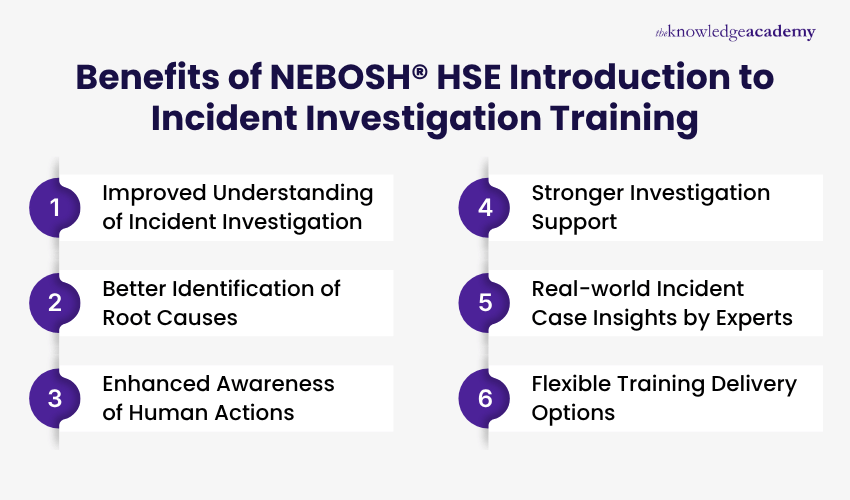
With NEBOSH HSE Introduction to Incident Investigation Training in Edmonton, professionals explore key principles of incident investigation, evidence gathering, and reporting standards. This training ensures learners enhance workplace safety, identify root causes, and support effective prevention strategies.
- Develop investigation skills with NEBOSH HSE Introduction to Incident Investigation
- Learn root-cause analysis techniques that improve workplace safety performance
- Strengthen safety culture by applying corrective actions that prevent future incidents


 If you miss out, enquire to get yourself on the waiting list for the next day!













 If you wish to make any changes to your course, please


